Word identification Normal Worksheets for Ages 6-8
8 filtered results
-
From - To
Enhance your child’s reading skills with our Word Identification Normal Worksheets for ages 6-8. These engaging and expertly designed worksheets focus on identifying, understanding, and using words in various contexts. Perfect for young learners, the exercises help to build a solid foundation in vocabulary, spelling, and reading comprehension. With activities such as matching words to pictures and identifying words in sentences, children will develop their ability to recognize and understand new words, boosting their confidence and proficiency in reading. Ideal for both classroom and home use, these worksheets make learning fun and effective.
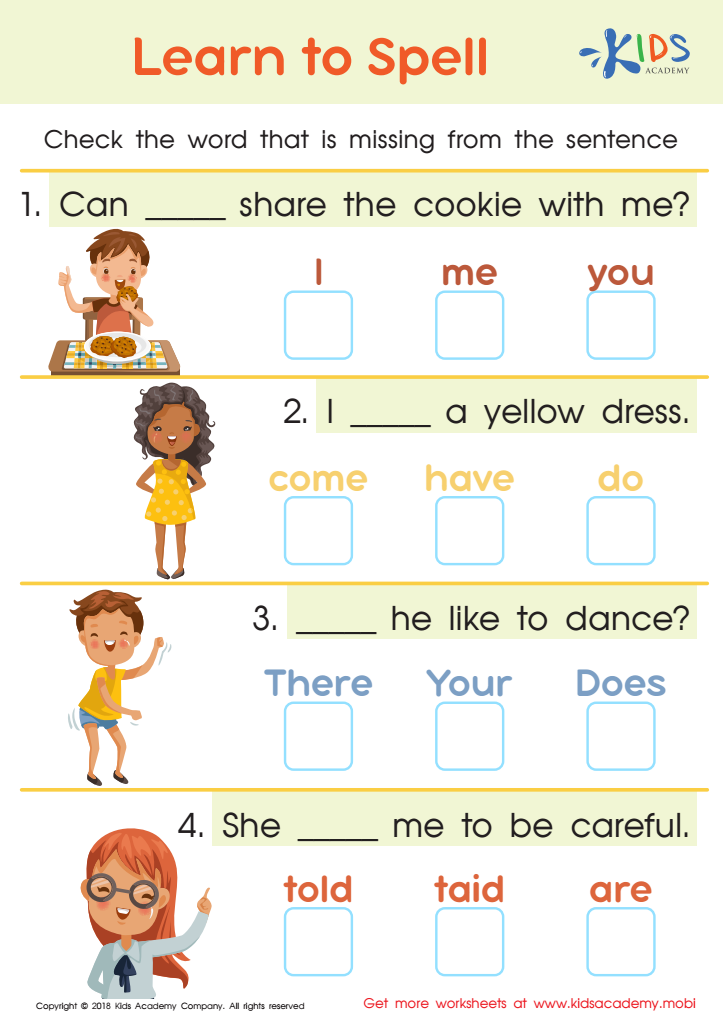
Learn to Spell Worksheet
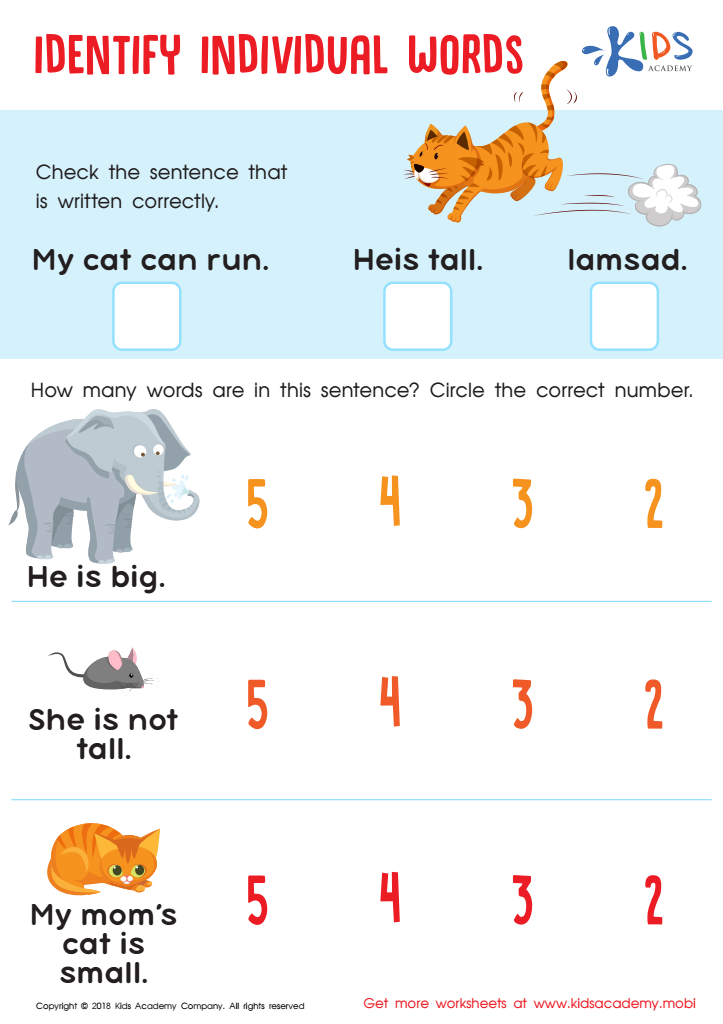
Identify Individual Words Worksheet
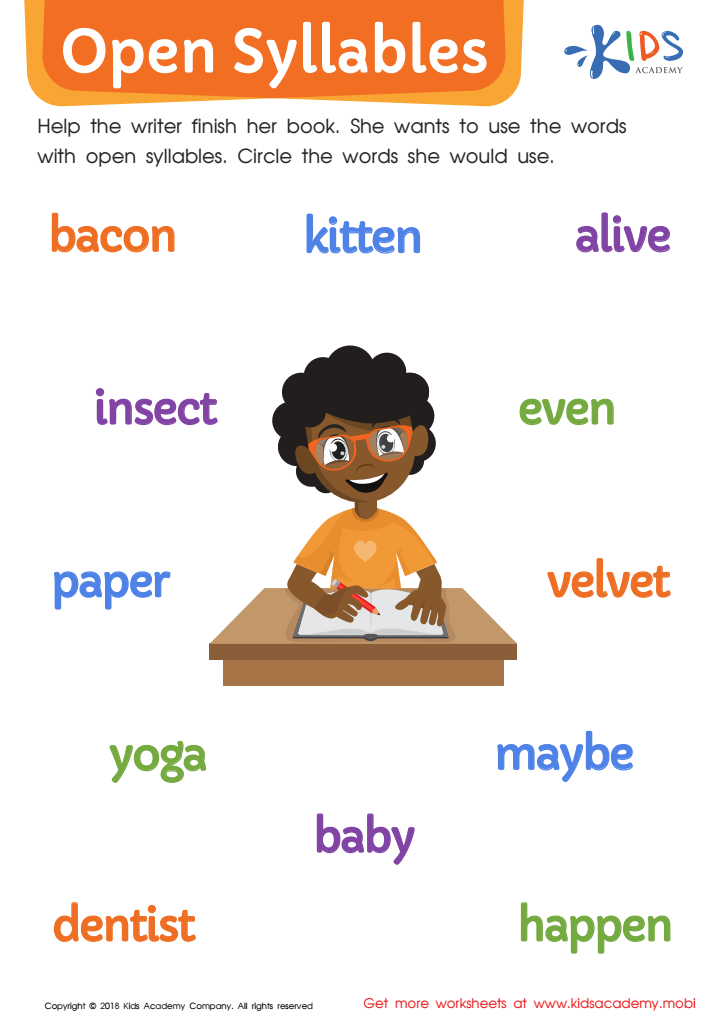
Open Syllables Worksheet
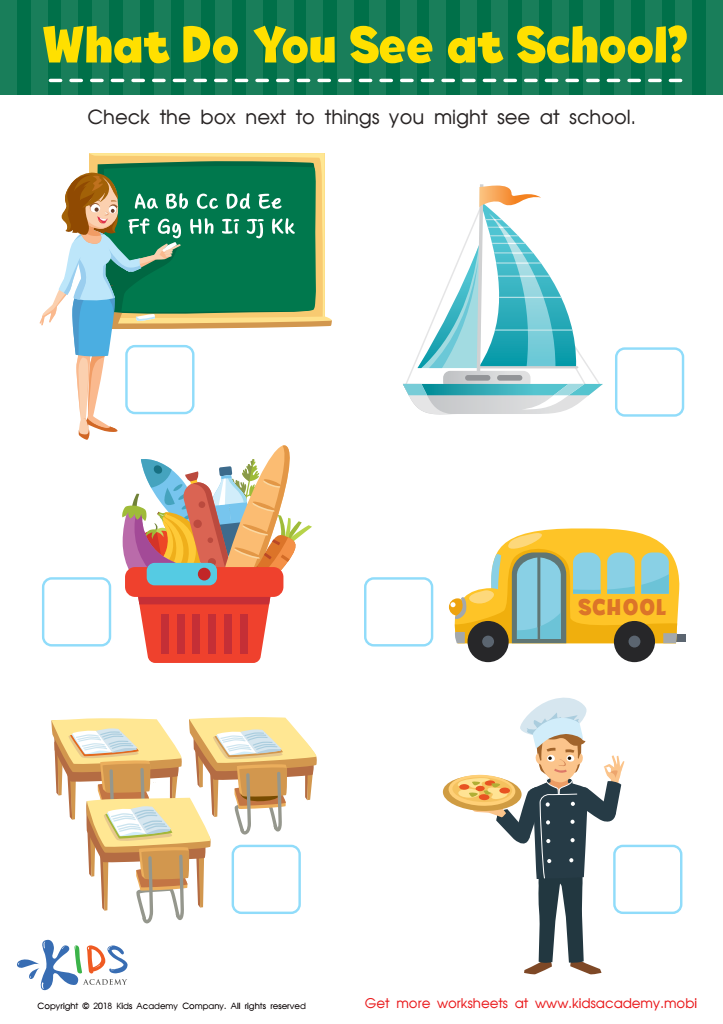
What Do you See at School? Worksheet
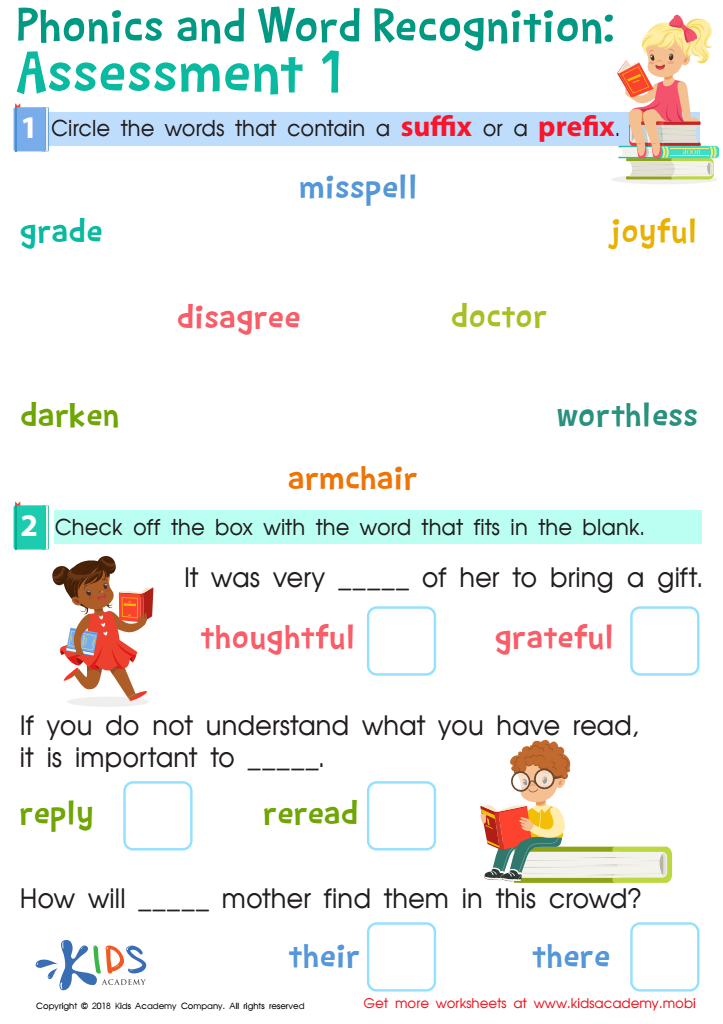
Phonics and Word Recognition: Assessment 1 Worksheet
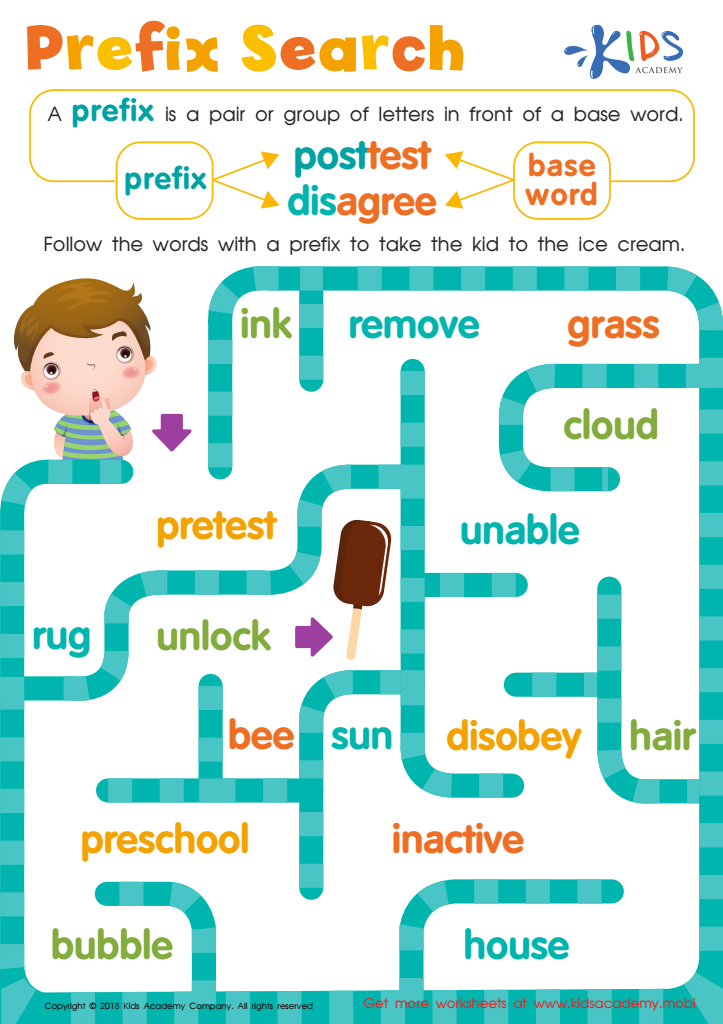
Reading: Prefix Search Worksheet
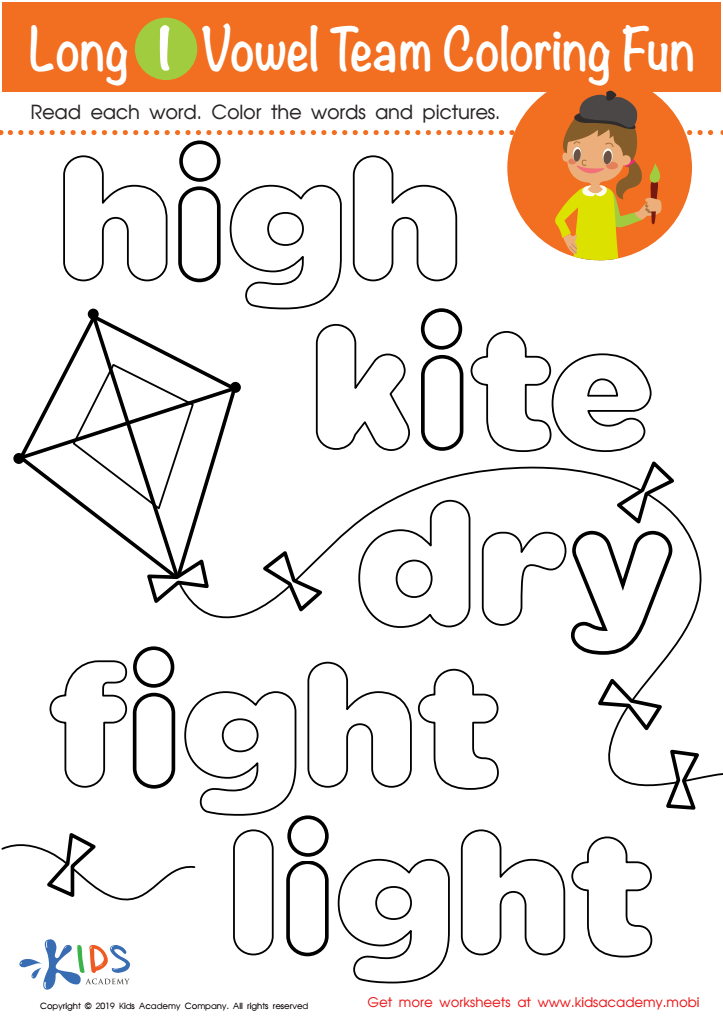
Long I Vowel Team Coloring Worksheet
 Assign to My Students
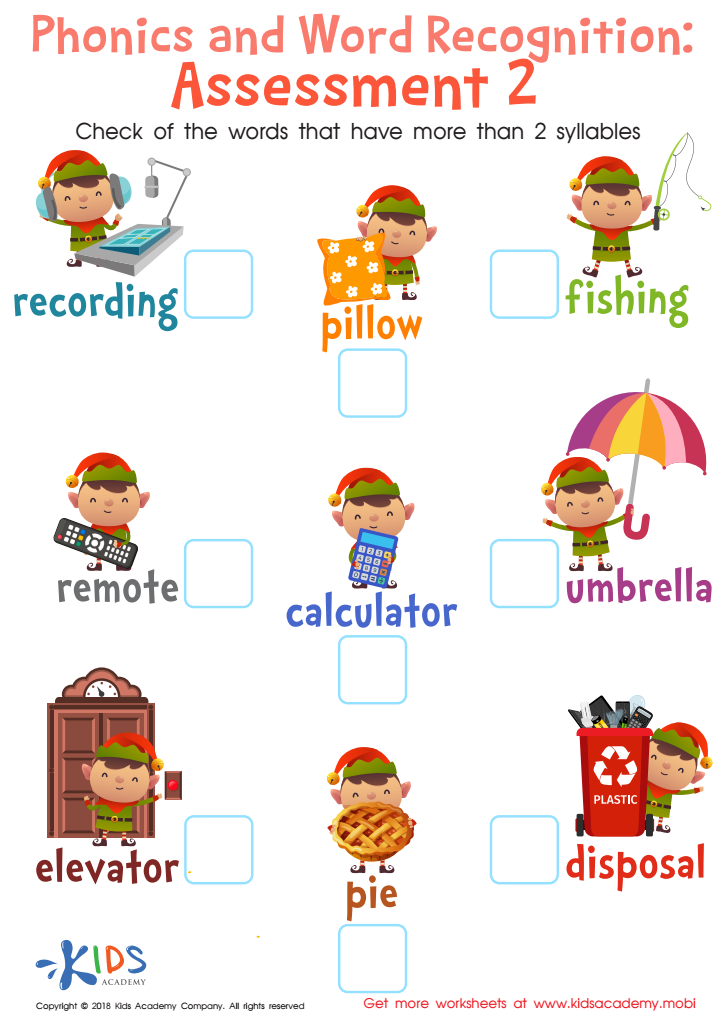
Phonics and Word Recognition: Assessment 2 Worksheet








Word identification plays a crucial role in the early stages of a child's reading development, particularly around ages 6-8. During this period, children typically transition from using picture cues to recognizing words by sight, matching printed words with their spoken counterparts. Proficiency in word identification not only bolsters reading fluency but also supports overall academic success as reading is integral across all subjects.
Parents and teachers should prioritize this skill because it directly impacts a child's ability to comprehend texts effectively. When children can quickly and accurately identify words, they free up cognitive resources to focus on understanding and interpreting content, fostering deeper learning experiences. Additionally, successful word identification builds children's confidence and motivation to read, encouraging a positive attitude towards reading and learning in general.
Failing to support children in developing robust word identification skills can lead to reading difficulties, affecting their confidence and academic performance. Early intervention can prevent these potential struggles. Parents and teachers can reinforce these skills through read-aloud sessions, playful word games, and individualized reading practice to ensure children receive the support they need. Thus, paying attention to word identification skills in children aged 6-8 lays a vital foundation for lifelong learning and academic achievement.








