Subtraction practice Normal Addition and Subtraction Word Problems Worksheets for Ages 6-8
3 filtered results
-
From - To
Enhance your child's subtraction skills with our engaging and educational Subtraction Practice worksheets! Specifically designed for ages 6-8, these worksheets provide a fun mix of normal addition and subtraction word problems. Each exercise aims to build a solid foundation in essential math concepts while improving critical thinking and problem-solving abilities. Perfect for both classroom and home use, these printable worksheets cater to various learning styles and encourage independent practice. Help your young learner master subtraction in an enjoyable and effective way with our comprehensive collection, ensuring they gain confidence and proficiency in basic math.
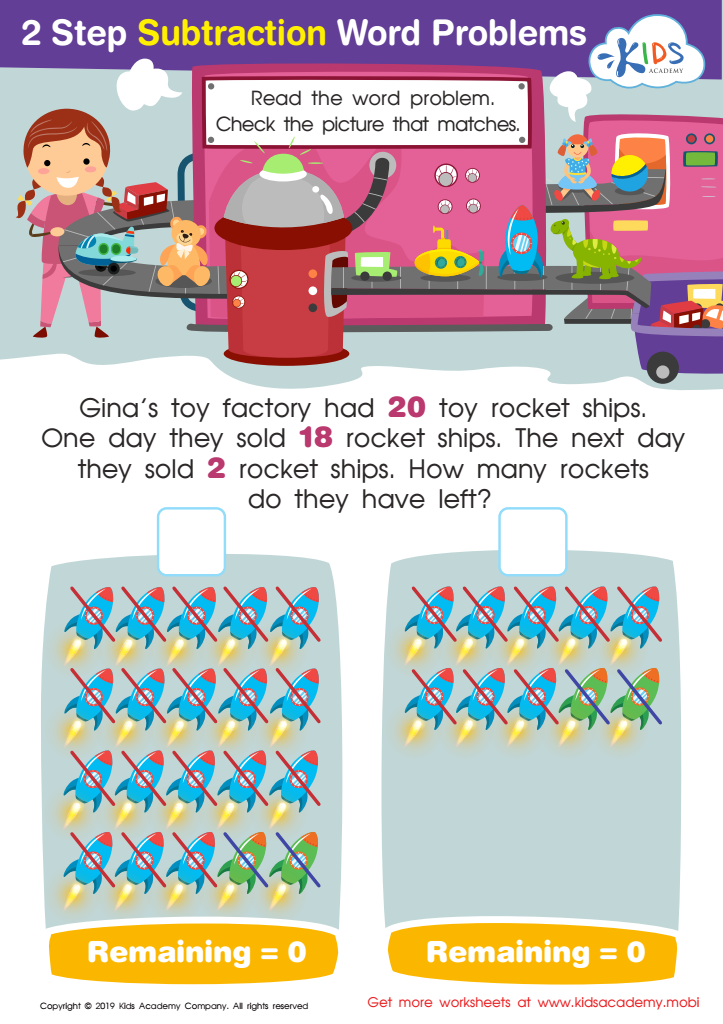
Step Subtraction Word Problems Worksheet
 Assign to My Students
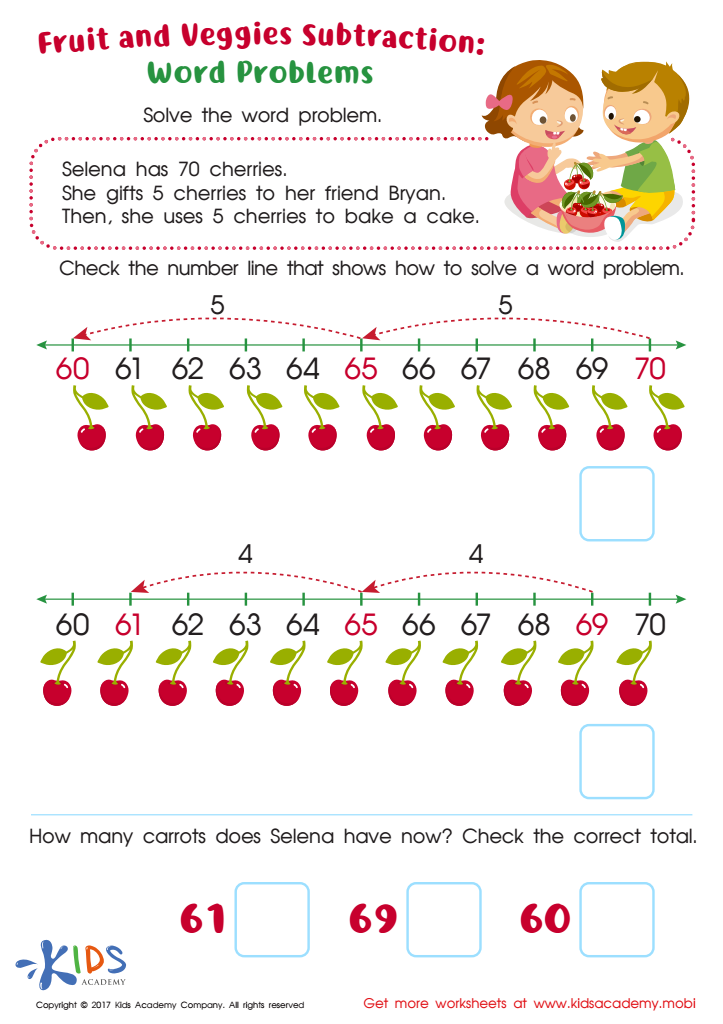
Subtraction Word Problems Free Printable
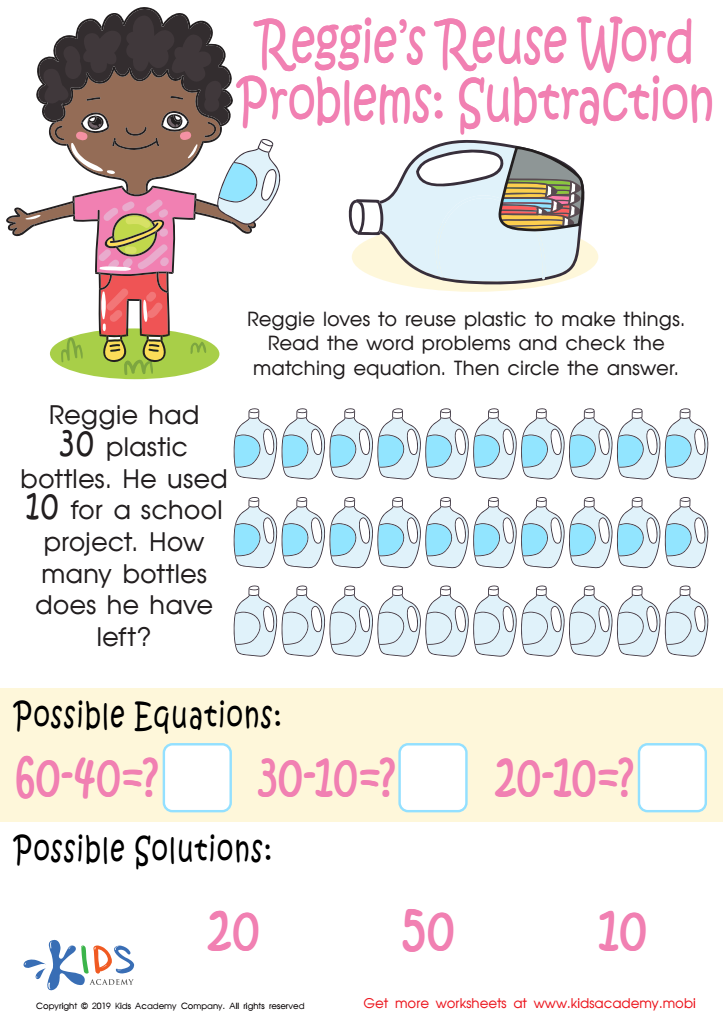
Reggie's Reuse Word Problems: Subtraction Worksheet








Subtraction practice and mastering normal addition and subtraction word problems are pivotal for children aged 6-8, forming a cornerstone of their early mathematical development. During these formative years, comprehension of basic arithmetic is essential because it lays the groundwork for future complex mathematical concepts. Engaging in regular subtraction exercises helps kids develop critical thinking and problem-solving skills. For instance, ability to handle subtraction is not just confined to mathematics—it is a life skill necessary for budgeting allowances, navigating time, and understanding concepts like distance and difference in everyday activities.
Addition and subtraction word problems play an additional significant role in education. These problems promote analytical thinking by challenging students to translate textual information into mathematical operations, effectively bridging literacy and numeracy. Solving such problems enhances reading comprehension and cognitive flexibility, teaching kids to discern relevant information, sequence steps appropriately, and achieve solutions through logical progression.
Furthermore, for children aged 6-8, who are typically in grades 1-3, confidence built from mastering these fundamental skills can lead to increased enthusiasm and openness to embracing more challenging educational content in later years. By caring about and prioritizing these aspects of their children's education, parents and teachers are nurturing a supportive learning environment that encourages a lifelong inclination towards learning and applying mathematics with confidence.