Hand-eye Coordination Normal Addition & Subtraction Worksheets for Ages 6-8
3 filtered results
-
From - To
Discover our engaging Hand-eye Coordination Normal Addition & Subtraction Worksheets designed specifically for children aged 6-8! These educational resources seamlessly integrate foundational math skills with essential hand-eye coordination practice. Each worksheet features colorful illustrations and interactive exercises that captivate young learners while reinforcing their addition and subtraction abilities. As kids solve fun problems, they simultaneously enhance their fine motor skills, making learning both effective and enjoyable. Perfect for homework help, classroom activities, or at-home learning, these worksheets provide the ideal balance of education and fun. Shape your child's mathematical journey with activities that inspire confidence and promote skill mastery today!
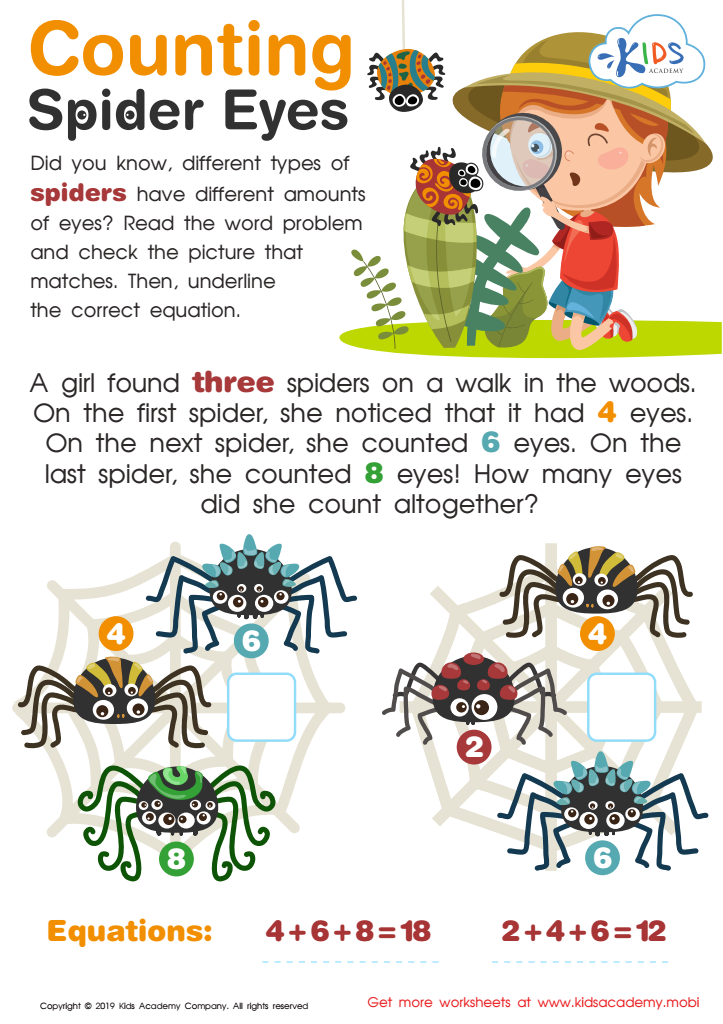
Counting Spider Eyes Worksheet
 Assign to My Students
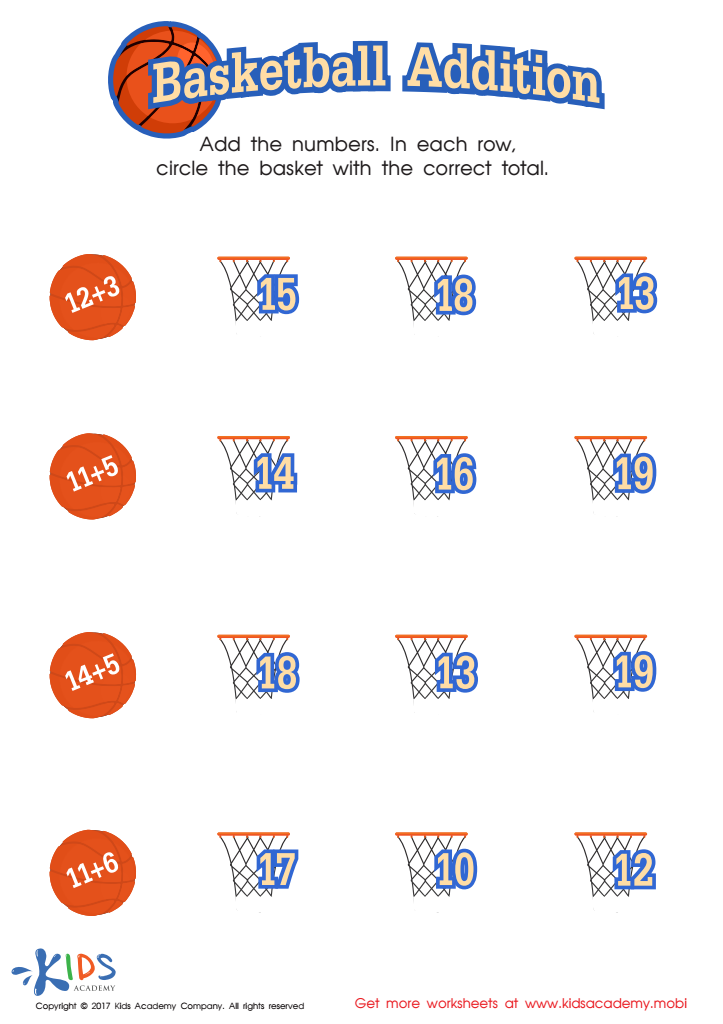
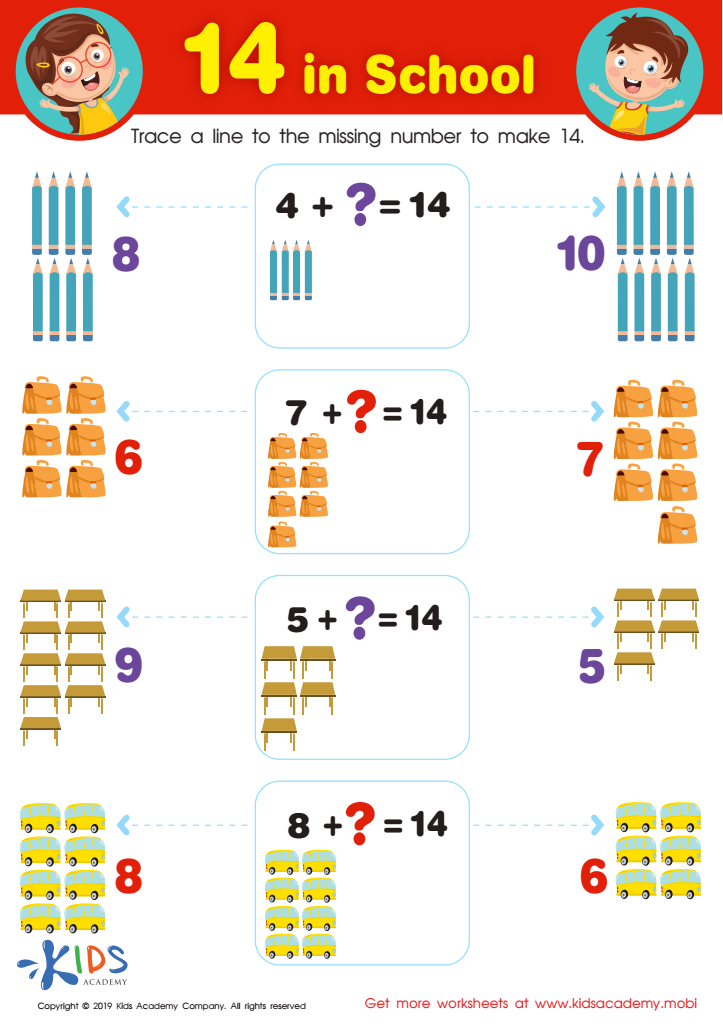
14 in School Worksheet








Hand-eye coordination is a crucial skill that develops in early childhood and affects a child’s ability to perform everyday tasks, such as writing, drawing, and manipulating objects. For children aged 6-8, good hand-eye coordination enhances their learning experiences, particularly in subjects like math, where skills like normal addition and subtraction are being mastered. By effectively combining visual input with motor control, children can approach mathematical problems more confidently, often leading to better academic achievement.
Teachers and parents should care about this developmental aspect because it impacts not only academic performance but also a child’s self-esteem and social skills. When children can effectively engage in hands-on activities, such as using manipulatives for math, they become more active participants in their learning process. Moreover, these skills lay the groundwork for future learning, supporting more complex tasks in later grades, such as problem-solving and spatial reasoning.
Encouraging activities that promote hand-eye coordination, such as puzzles, crafts, or sports, combined with focused practice in basic arithmetic, can greatly benefit children in this age bracket. Such investments in skill development prepare them not just for school, but for everyday life and future academic success.








