Understanding addition Normal Addition & Subtraction Worksheets for Ages 6-8
8 filtered results
-
From - To
Explore our engaging "Understanding Addition" worksheets designed for children aged 6-8! These normal addition and subtraction worksheets provide a fun and interactive way to help young learners master essential math skills. With a variety of exercises that encourage problem-solving and critical thinking, kids can practice addition in different contexts, reinforcing their understanding of numbers. Ideal for classroom activities or home learning, our worksheets cater to various learning styles, ensuring every child can thrive. Built to support early arithmetic development, these resources are perfect for fostering confidence in math. Start your child's journey to mathematical mastery today!
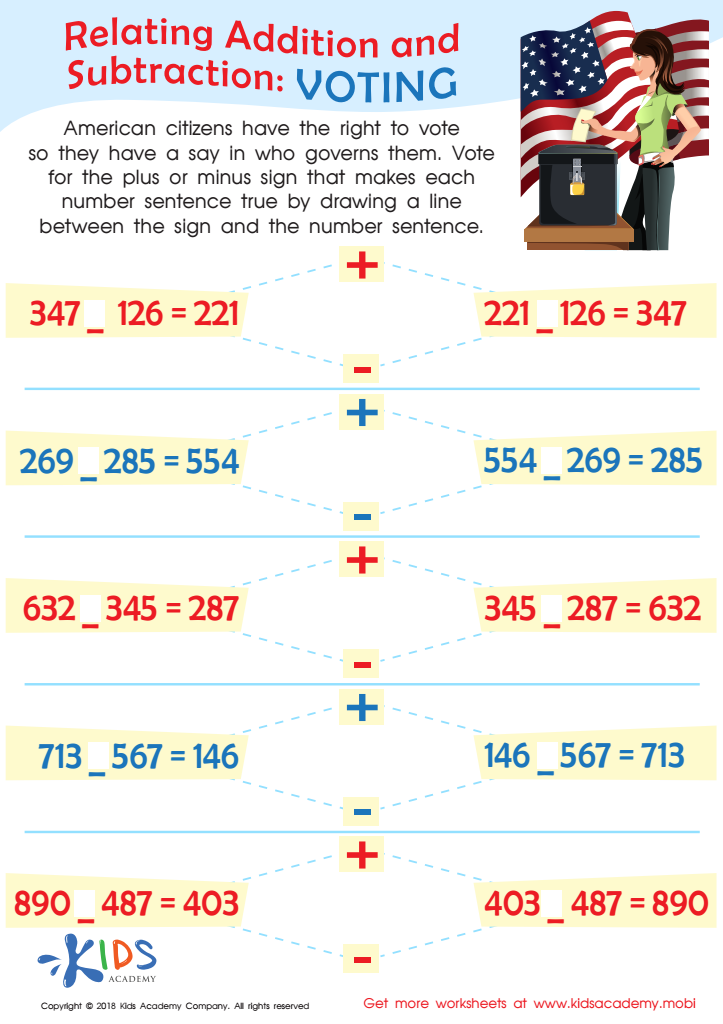
Voting Worksheet
 Assign to My Students
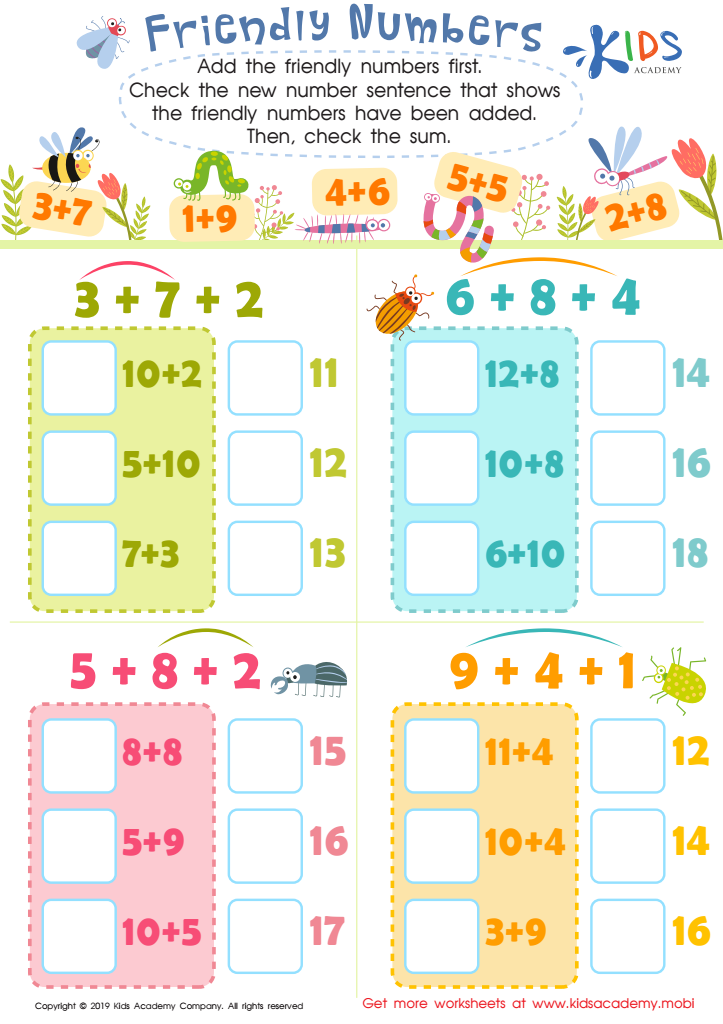
Friendly Numbers Worksheet
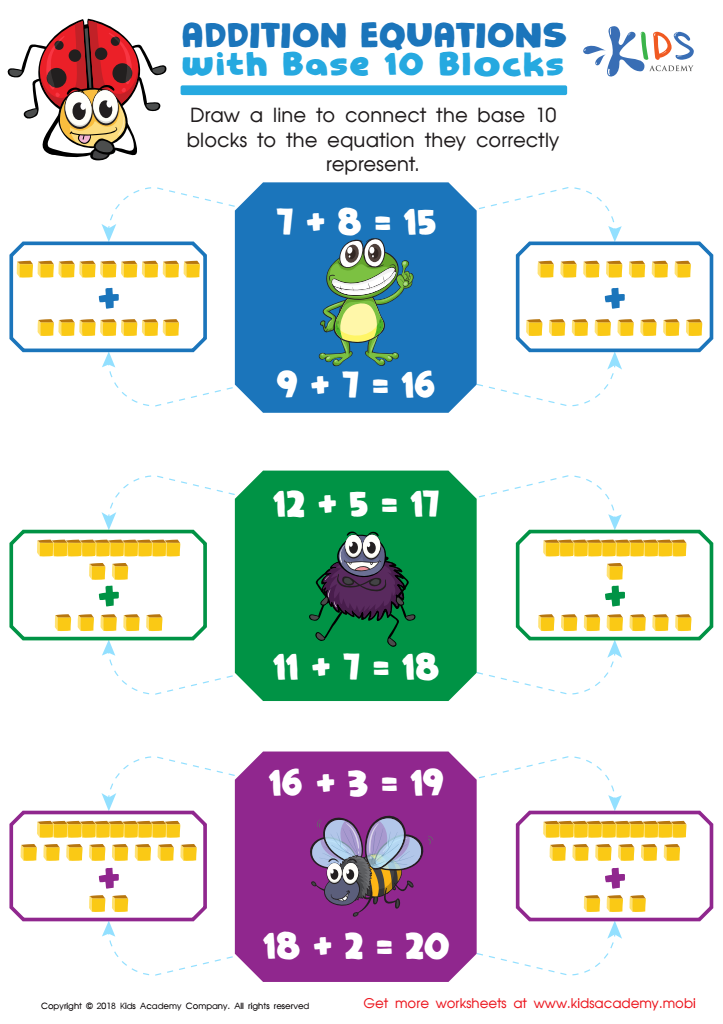
Addition Equations With Base 10 Blocks Worksheet
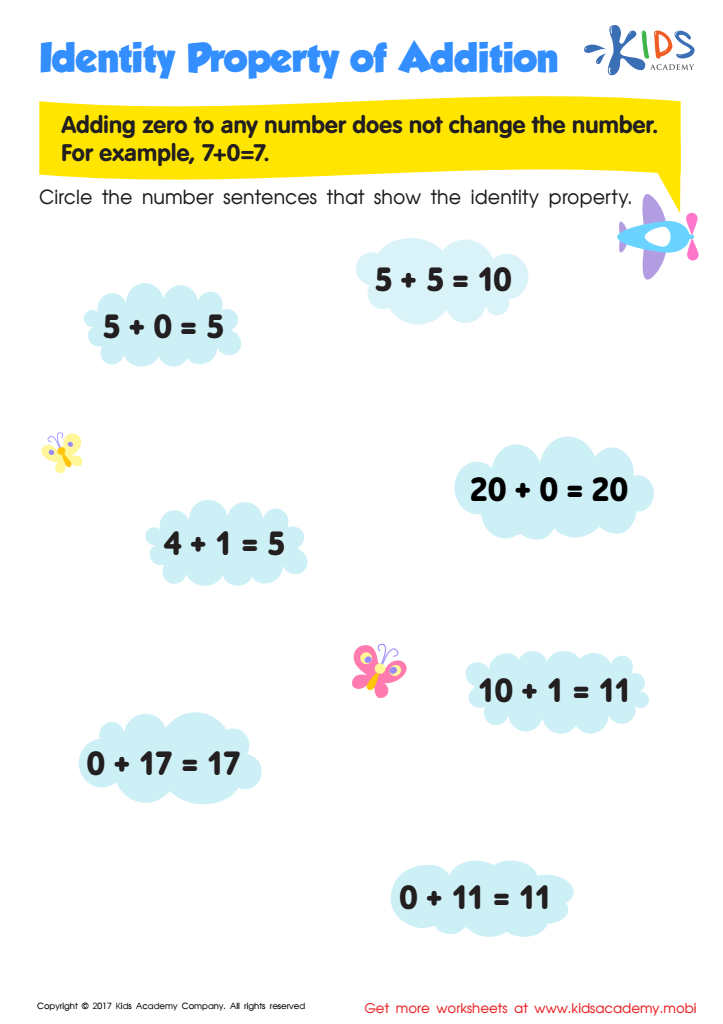
Identity Property of Addition Worksheet
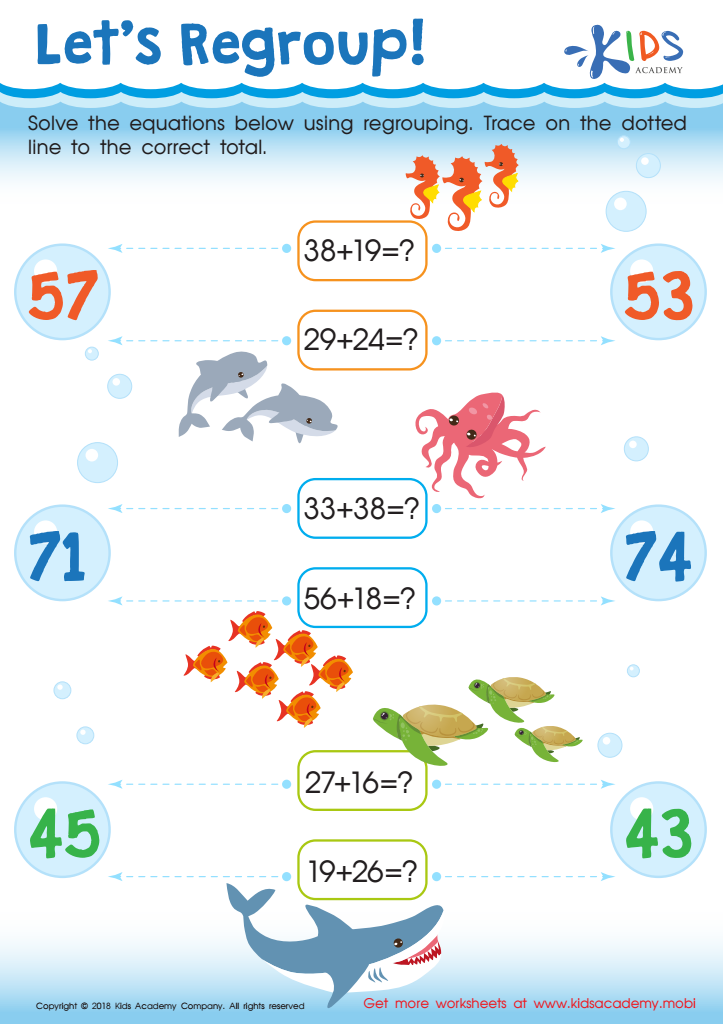
Let's Regroup! Worksheet
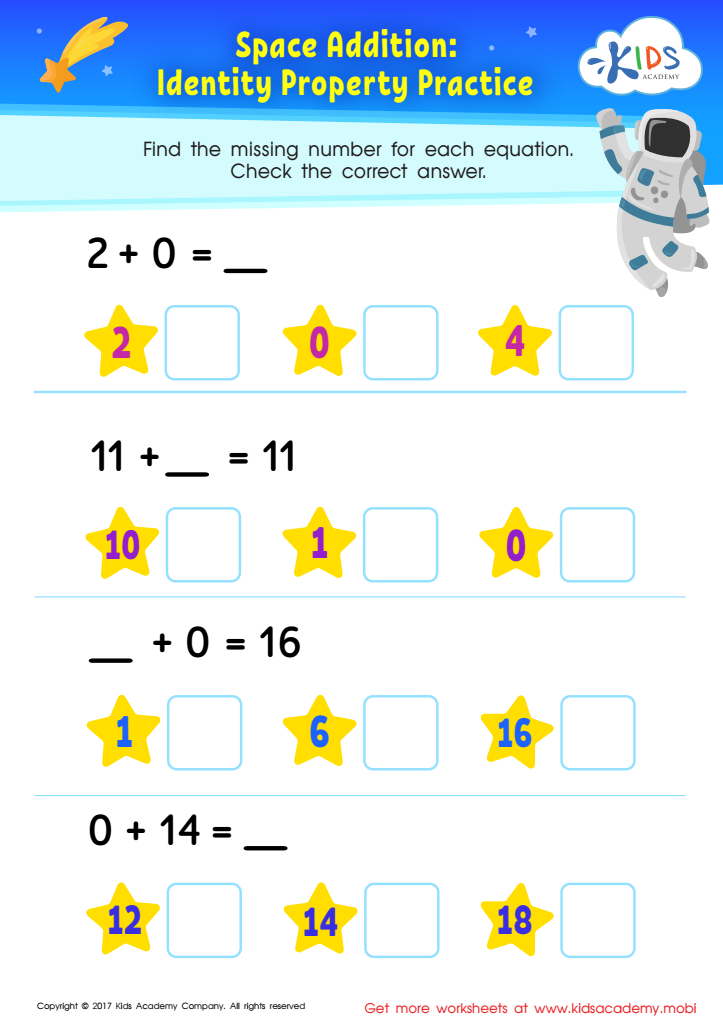
Space Addition: Identity Property Practice Worksheet
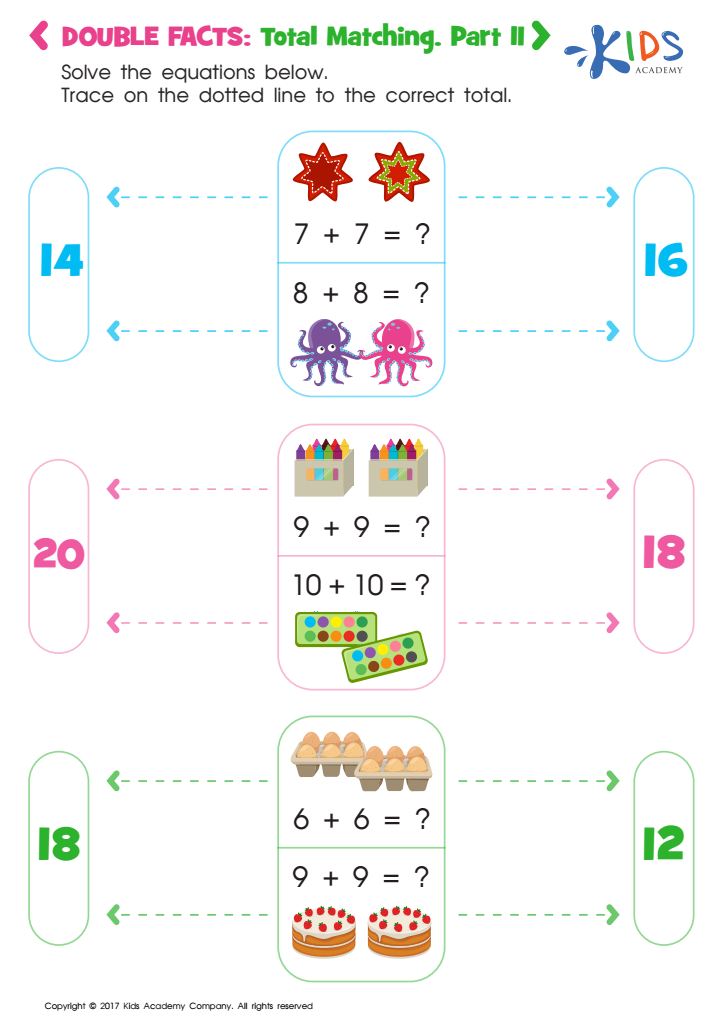
Double Facts: Total Matching 2 Worksheet
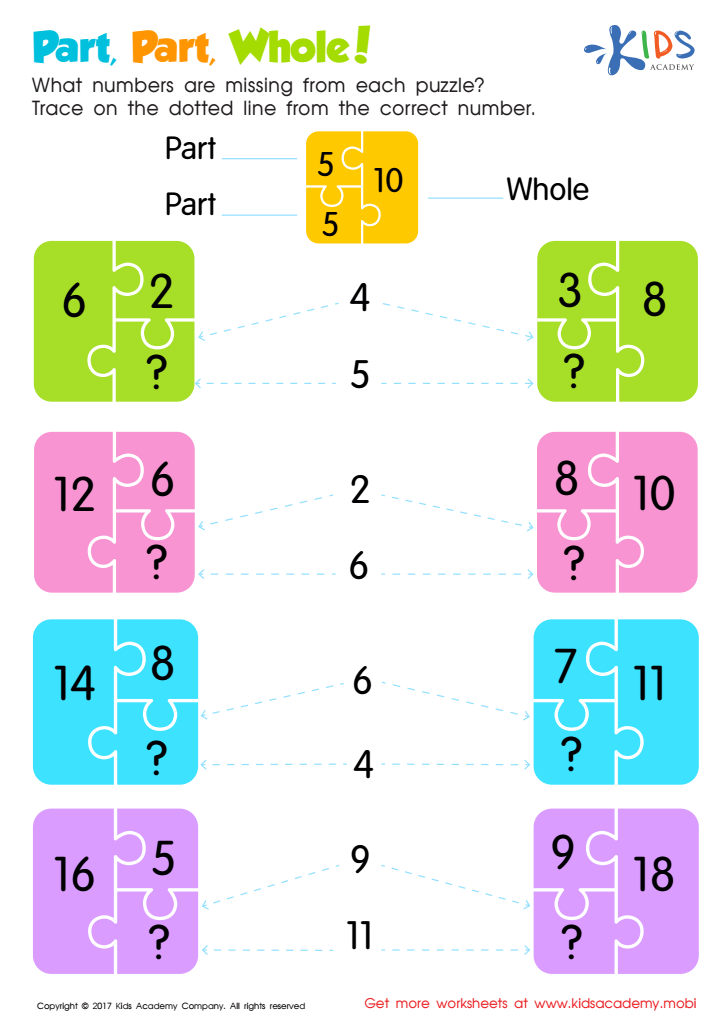
Part, Part, Whole Worksheet








Understanding normal addition and subtraction is essential for children aged 6-8 as it forms the foundation for their mathematical development and overall academic success. During these formative years, children are developing critical thinking and problem-solving skills, which are deeply connected to their ability to grasp basic arithmetic concepts.
Parents and teachers should care about this because proficiency in addition and subtraction goes beyond mere rote memorization; it fosters a deeper understanding of numbers, relationships, and patterns. This knowledge supports their ability to tackle more complex mathematical operations in later grades.
Additionally, strong math skills can enhance children's confidence and motivation, making them more willing to engage with challenging material. Early mastery of these skills lays the groundwork for a positive mindset towards math and learning in general, helping to combat math anxiety.
Furthermore, addition and subtraction are not just academic skills; they are essential for everyday life, enabling children to manage tasks like budgeting their allowance or understanding time. Supporting children in these areas can cultivate a love for learning, ensuring they become competent and capable individuals as they grow. Therefore, fostering a solid understanding of addition and subtraction should be a priority for both parents and educators.








