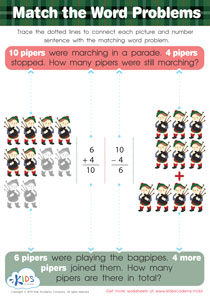
Understanding subtraction Normal Addition Worksheets for Ages 6-8
4 filtered results
-
From - To
Unlock your child's math potential with our "Understanding Subtraction Normal Addition Worksheets" designed specifically for ages 6-8. These worksheets provide a unique approach to help young learners grasp the concept of subtraction through relatable activities and engaging examples. By integrating subtraction into addition exercises, children can visualize and better understand the relationship between these fundamental operations. Our printable resources promote critical thinking, enhance problem-solving skills, and build confidence in mathematical abilities. Ideal for both classroom and at-home learning, these worksheets make learning subtraction fun and accessible. Encourage your child's math journey today with our thoughtfully crafted resources!
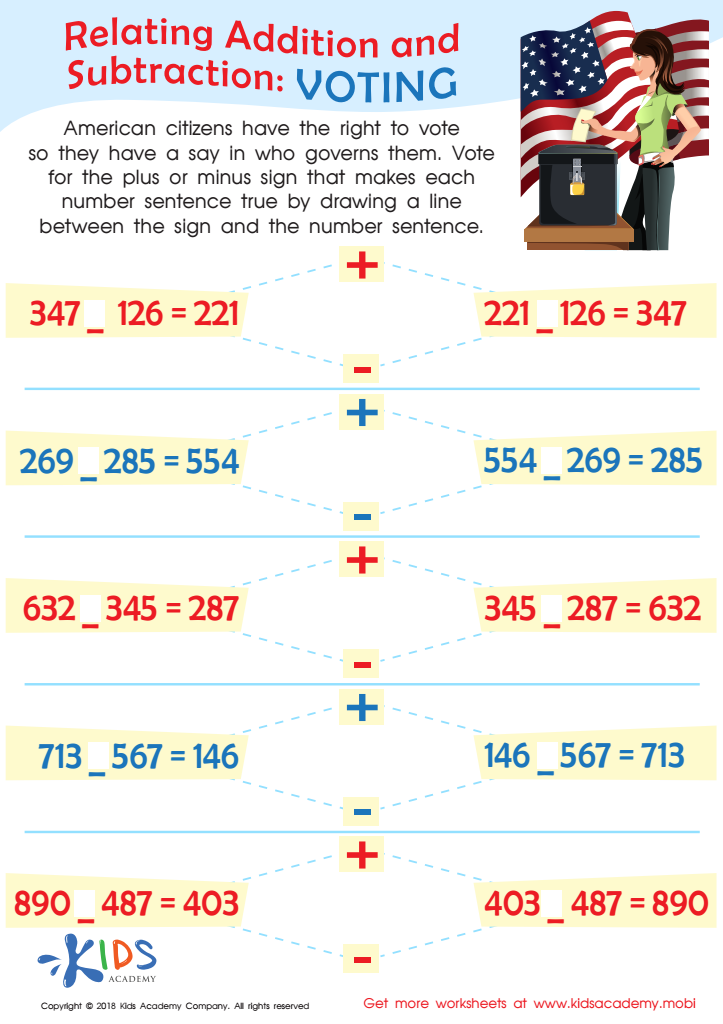
Voting Worksheet
 Assign to My Students
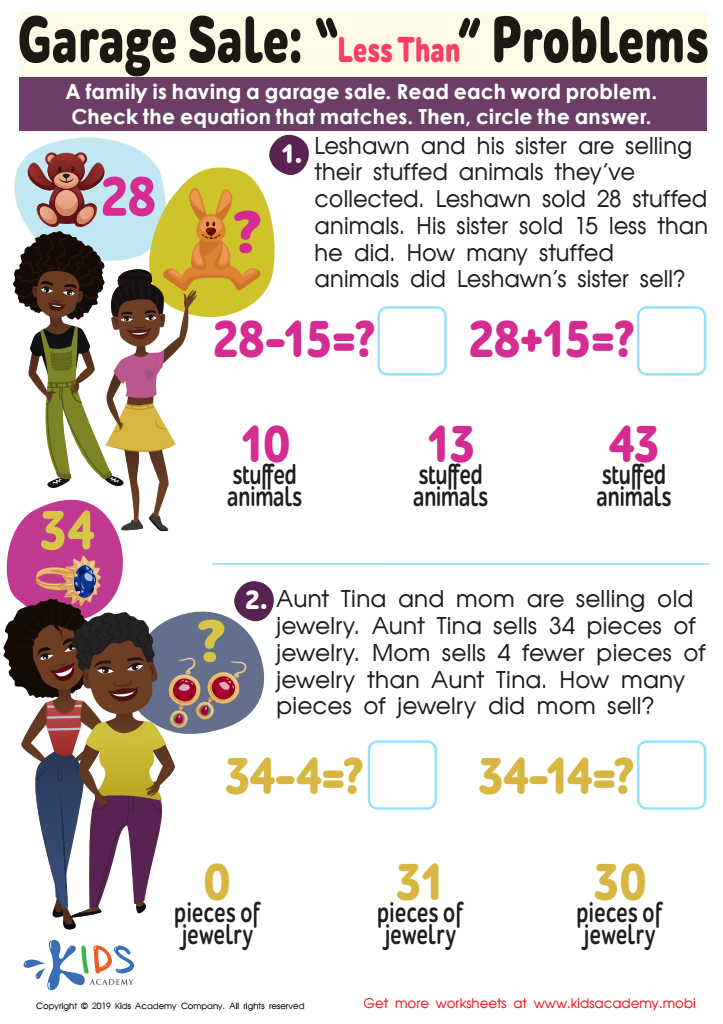
Garage Sale Less Than Worksheet
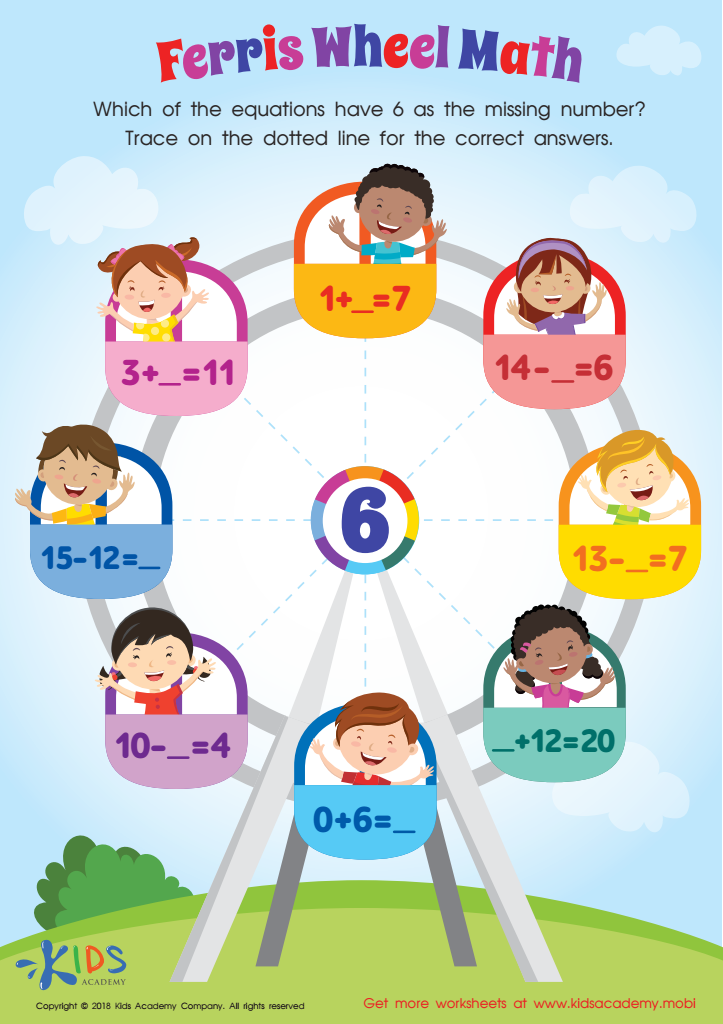
Missing Number: Ferris Wheel Math Worksheet
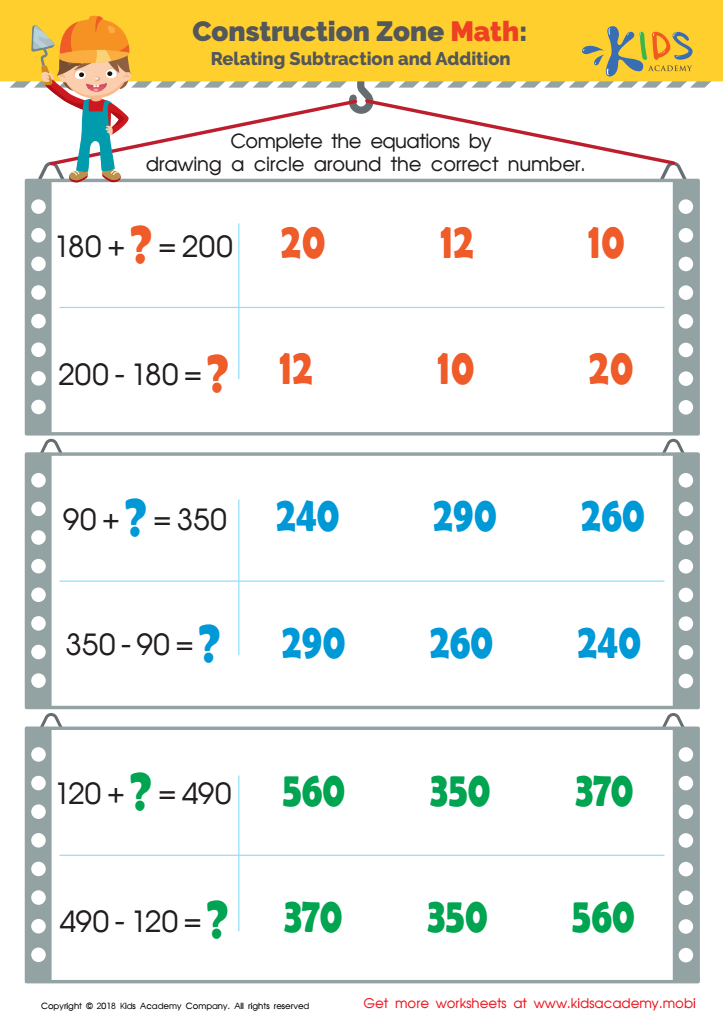
Construction Zone Math: Relating Subtraction and Addition Worksheet








Understanding subtraction as a natural part of addition is crucial for children aged 6-8. This foundational concept lays the groundwork for future mathematical understanding. During these formative years, children are developing their own number sense, and grasping the relationship between addition and subtraction enhances this learning.
When children recognize subtraction as essentially the reverse of addition, they develop greater flexibility in their problem-solving abilities. It encourages mental math skills, allowing them to consider different strategies and approaches. Teachers and parents play a pivotal role in reinforcing this understanding through real-life scenarios, games, and visual aids which make these concepts engaging.
Moreover, mastering subtraction can build a student's confidence and reduce anxiety surrounding mathematics, providing them with the skills to tackle more complex operations as they progress in their education. Early comprehension of subtraction also supports critical thinking, enabling children to approach problems with a more analytical mindset. Ultimately, by fostering an environment where addition and subtraction are understood as intertwined, educators and parents can empower children to apply these essential skills throughout their academic journeys and everyday life, creating a strong mathematical foundation for their future success.