Counting practice Normal Geometry Worksheets for Ages 6-8
3 filtered results
-
From - To
Unlock your child's mathematical potential with our Counting Practice Normal Geometry Worksheets designed for ages 6-8. These engaging, printable worksheets provide a fun and effective way to enhance counting skills within the context of geometry. Perfectly tailored for young learners, the exercises cover fundamental concepts such as shapes, patterns, and spatial understanding. By combining math and geometry, children not only master counting but also improve their cognitive and problem-solving abilities. Ideal for both classroom environments and at-home learning, these worksheets stimulate curiosity and make mathematics an enjoyable adventure. Give your child a head-start in math today!
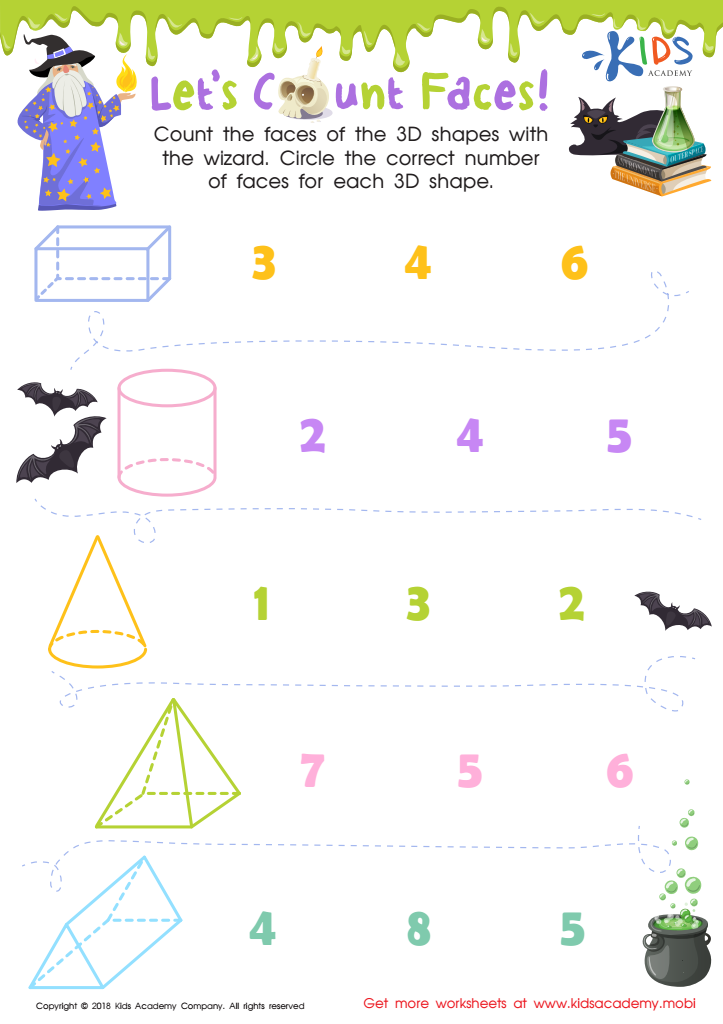
Let's Count Faces! Worksheet
 Assign to My Students











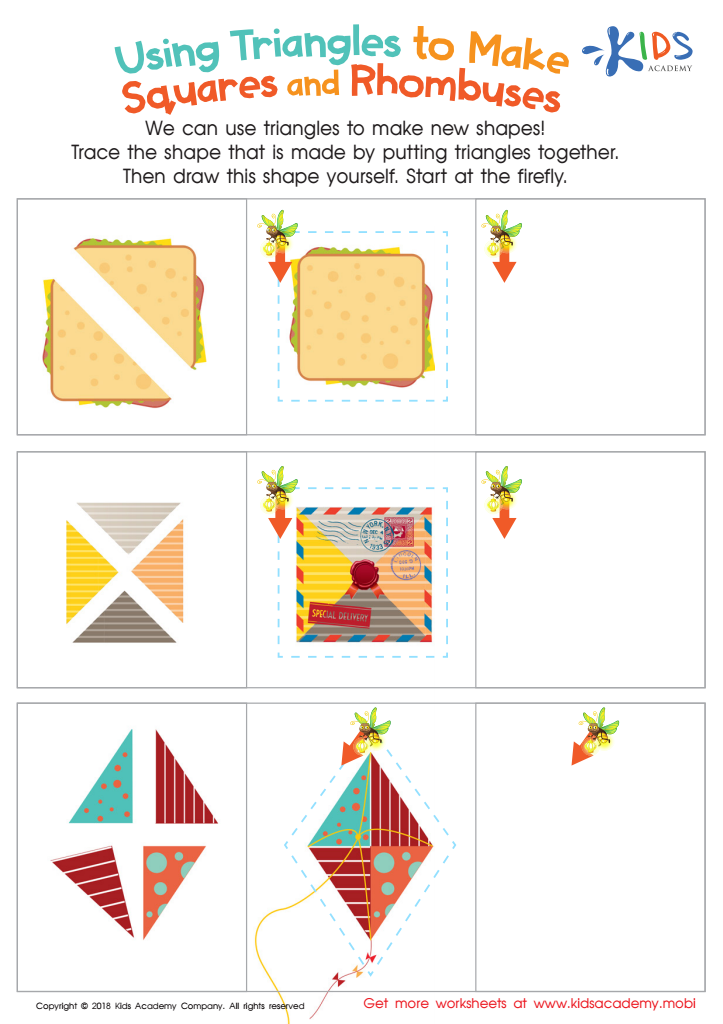
Using Triangles to Make Squares and Rhombuses Worksheet
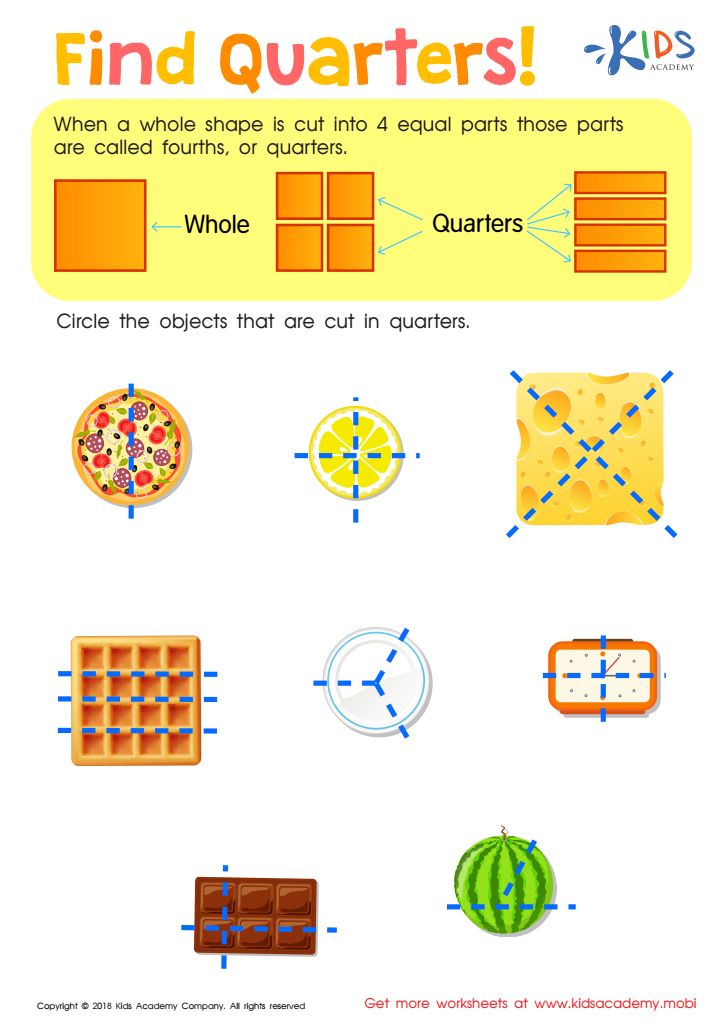
Find Quarters Worksheet








Counting practice and basic geometry are fundamental building blocks for young children, ages 6-8, and parents or teachers should prioritize these skills for several reasons.
Firstly, counting forms the base of all mathematical concepts. It enhances number sense, which is critical for understanding more complex concepts like addition, subtraction, and eventually multiplication and division. Frequent counting practice helps children to recognize patterns, understand sequencing, and develop the ability to make connections between numbers in real-life scenarios.
Secondly, introducing normal geometry at an early age fosters spatial reasoning and critical thinking. Learning about shapes, sizes, and properties of objects helps children with problem-solving skills. Geometry practice also supports fine motor skills as kids often draw shapes and construct objects, helping them get ready for more handwriting and detailed work in the future.
Furthermore, the ability to integrate counting and geometry helps with everyday tasks such as sorting objects, following directions, and drawing. These skills are also foundational for STEM (science, technology, engineering, and mathematics) education, fostering an interest in these fields from a young age.
Overall, a strong foundation in counting and basic geometry empowers children academically and practically, encouraging intellectual growth and real-world competence. Parents and teachers play a crucial role in making these learning experiences both fun and effective, setting children up for future success.








