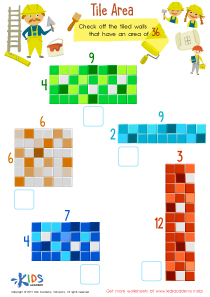
Boost your child's arithmetic abilities with our "Addition Skills Normal Numbers Worksheets for Ages 6-8." These engaging and educational worksheets are expertly designed to help young learners understand and practice addition with confidence. Each worksheet provides a variety of problems that develop critical thinking and ensure children master their addition skills incrementally. With fun illustrations and age-appropriate challenges, these printables make learning math both enjoyable and effective. Perfect for classroom activities or additional practice at home, our worksheets aim to make foundational math skills a breeze for your 6-8-year-old. Get started on enhancing your child's math proficiency today!

Check out this FREE Trial Lesson on Numbers for age 6-8!

Place Value Adding with Base 10 blocks (no regrouping)

Favorites
With answer key
Interactive
  • 6-8
  • Addition skills
  • Numbers
  • Normal
Base ten block worksheets for 3rd grade

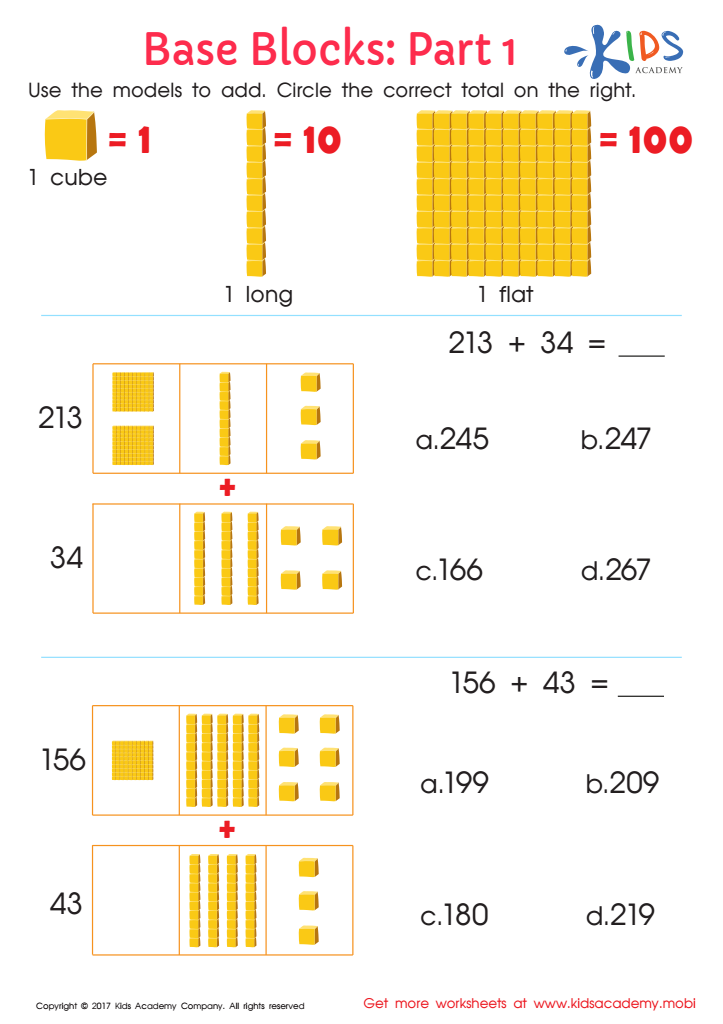
Base Ten Blocks Worksheet: Part 1

They promote numeracy and are a great substitute when kids don't have access to physical blocks.
Base Ten Blocks Worksheet: Part 1
Worksheet
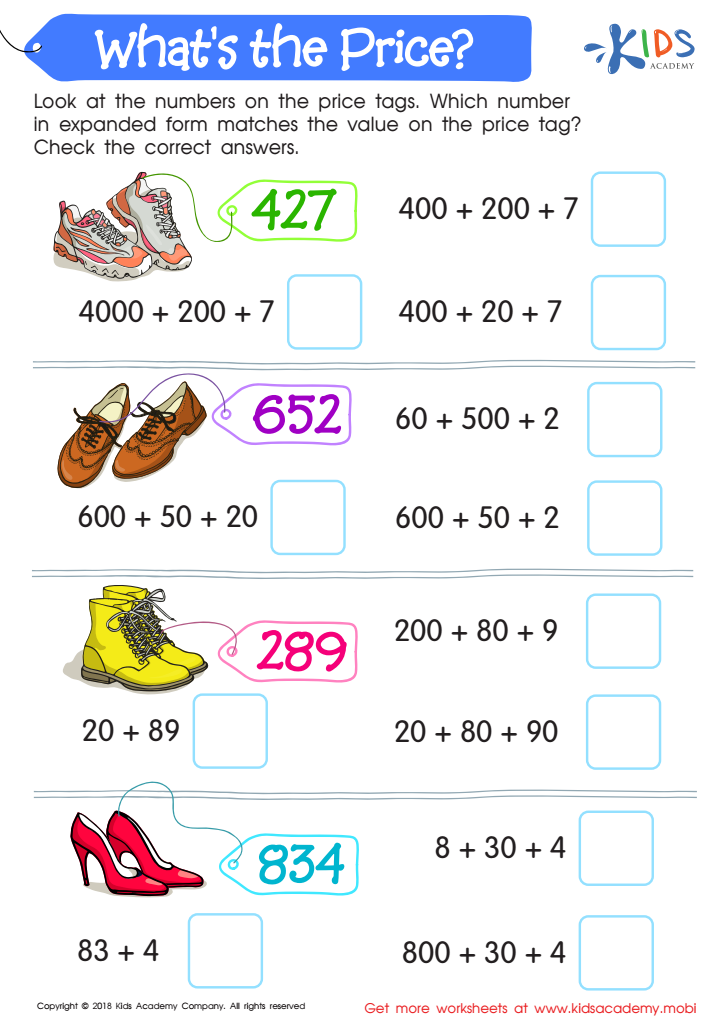
What's the Price? Worksheet

What's the Price? Worksheet

With this price tag worksheet, you and your kids can have some educational fun! Check the numbers on the tags, ask your child to work out their expanded form, and circle the correct answers. It's a great way to teach math and keep them entertained!
What's the Price? Worksheet
Worksheet
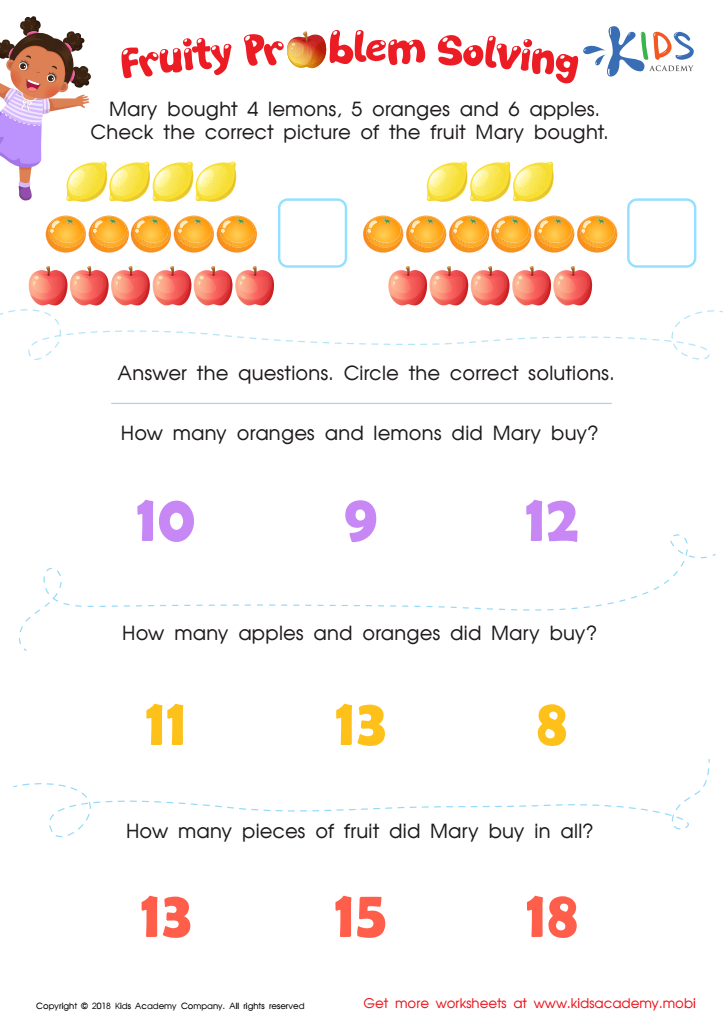
Fruity Problem Solving Worksheet

Fruity Problem Solving Worksheet

Practice addition word problems with young mathematicians using this PDF worksheet featuring fruit. As they read each problem carefully and circle the correct sums, they'll reinforce attention to detail and fine motor skills. Tangible representations are key to helping them with basic addition.
Fruity Problem Solving Worksheet
Worksheet
Adding With Longs and Cubes Worksheet

Adding With Longs and Cubes Worksheet

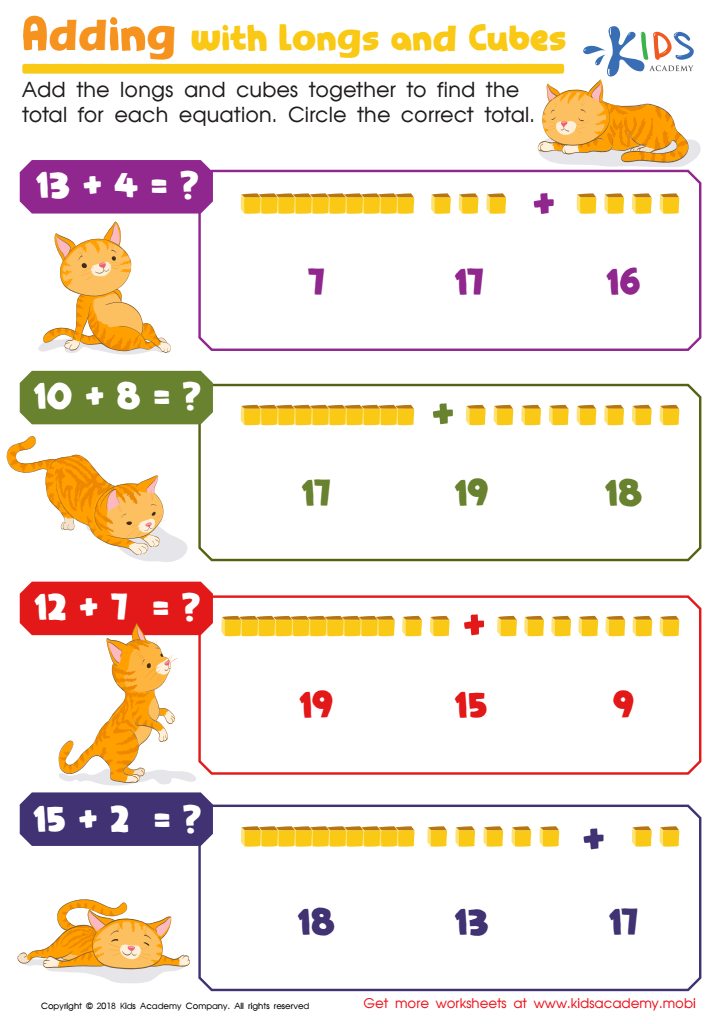
Math might not be your child's favorite, but they must master it to advance. If they're having difficulties or don't like it, use this worksheet to make it easier. Have them add longs and cubes together to find the total for each question, then circle the correct answer. This exercise can help make math experiences better.
Adding With Longs and Cubes Worksheet
Worksheet
At the market - multiplication worksheet for 3rd grade

At the Market Worksheet

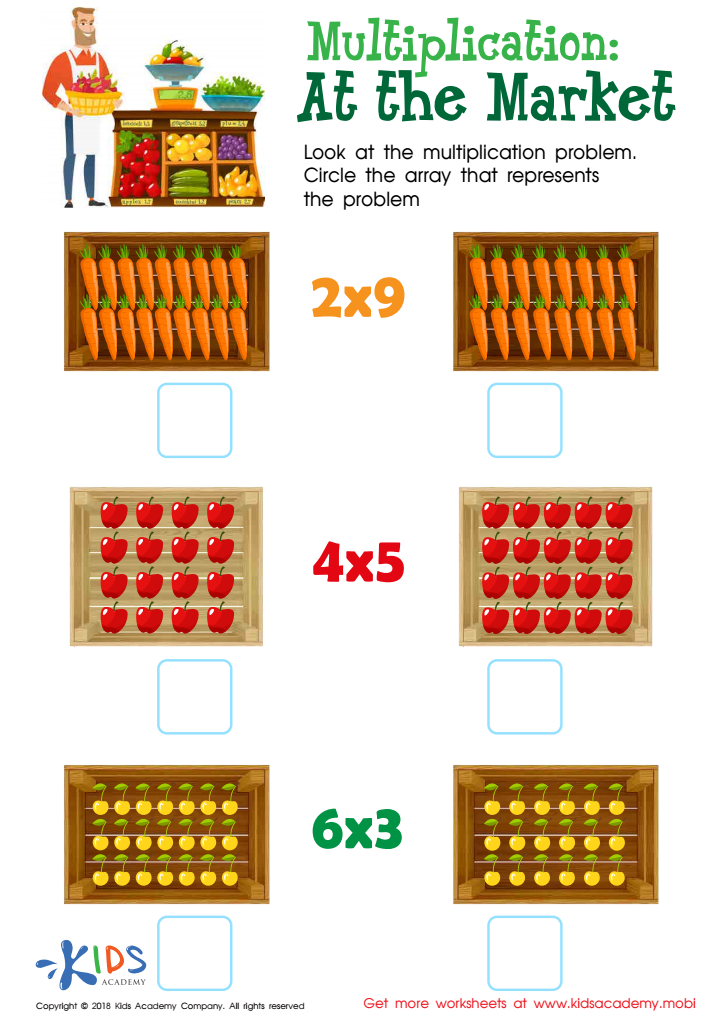
Head to At the Market! This attractive worksheet features arrays of delicious fruits and veggies that'll have 3rd graders working on their multiplication. Solve the problems, choose the correct answer, and learn while having fun!
At the Market Worksheet
Worksheet
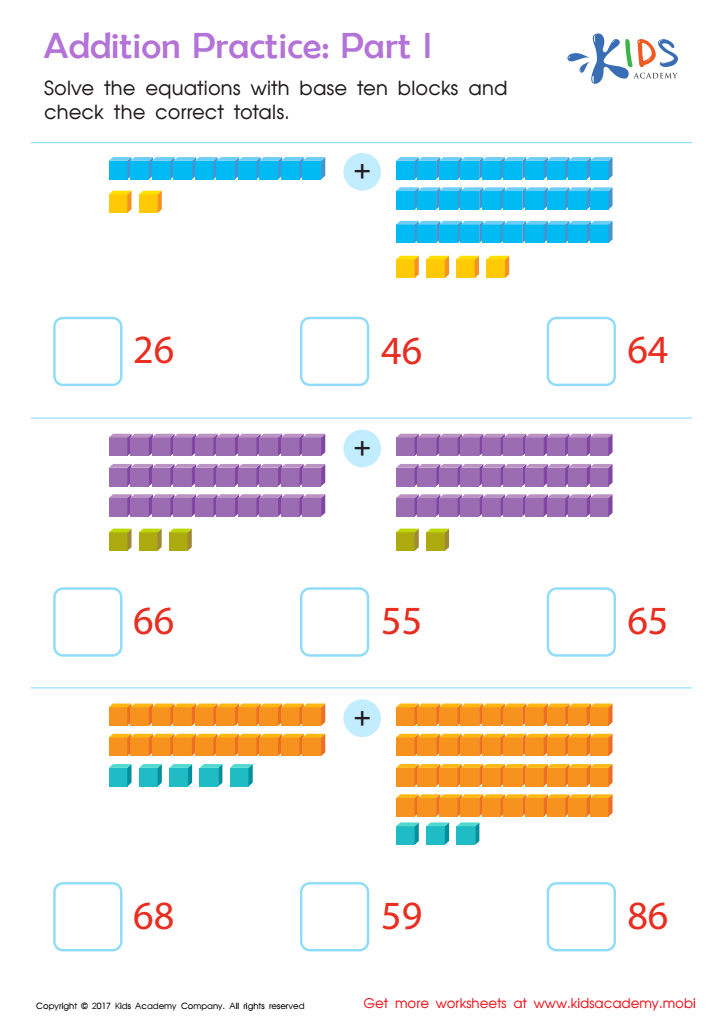
Addition Practice Sheet: Part 1

Addition Practice Sheet: Part 1

Kids Academy offers a free worksheet to help kids learn addition with base ten blocks, with or without actual manipulatives. Help your Kindergarten or First Grader flex and increase their knowledge of place value and understand math more deeply. Download this useful page for images that will promote success.
Addition Practice Sheet: Part 1
Worksheet
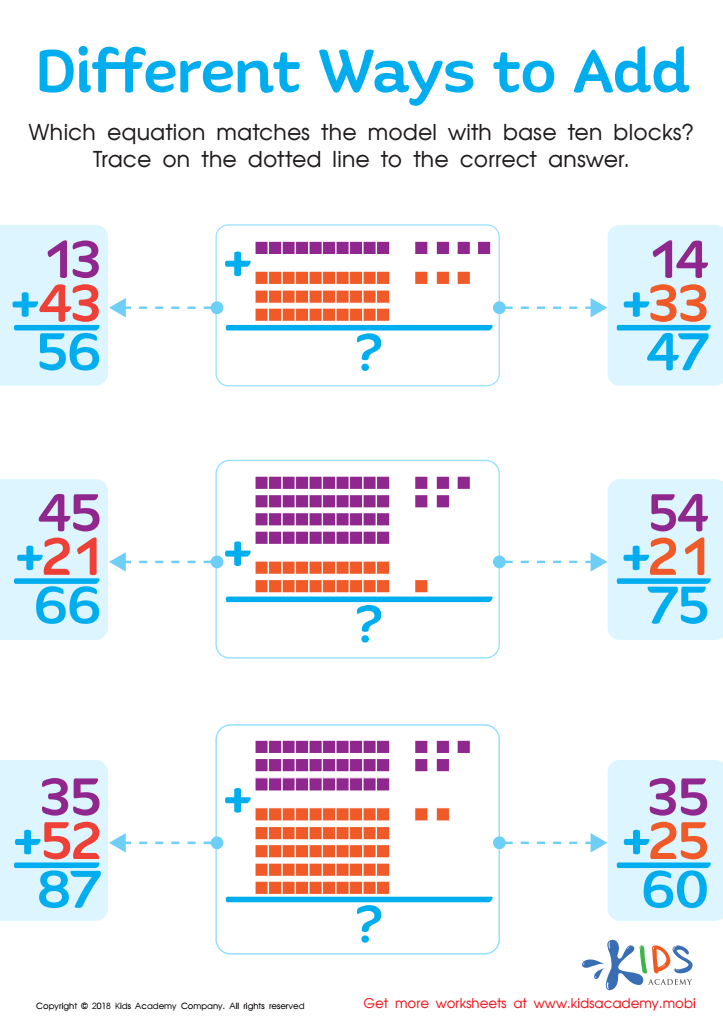
Different Ways to Add Worksheet


Different Ways to Add Worksheet

This worksheet enhances math skills by having students match equations to base ten pictures and tracing lines. It not only helps with fine motor skills, but also encourages number sense, with various ways to add and build upon existing math knowledge.
Different Ways to Add Worksheet
Worksheet


Addition skills with normal numbers are foundational for children aged 6-8, and it’s important for parents and teachers to prioritize this aspect of early education.

Firstly, addition is a fundamental building block of math that permeates everyday activities and higher-level math concepts. At this age, children begin to grasp the idea of joining sets of objects and understanding numerical relationships, which lays the groundwork for more complex operations like subtraction, multiplication, and division.

Additionally, mastering addition enhances cognitive development. It improves memory, concentration, and logical thinking, as children learn to focus on details and follow sequential steps to solve problems. These skills are not confined to math alone but are transferable to other academic areas and everyday situations, promoting better overall academic performance.

Furthermore, confidence in math fosters a positive attitude toward learning. As children successfully learn to add, they build a sense of achievement, which motivates them to tackle more challenging subjects with resilience and curiosity. This self-confidence can translate into improved performance in other areas and a lifelong love for learning.

In short, focusing on addition skills in early education ensures that children develop essential mathematical understanding, cognitive skills, and a positive approach toward academics, equipping them with crucial tools for future success.