Animal recognition Normal Numbers Worksheets for Ages 6-8
4 filtered results
-
From - To
Enhance your child's learning experience with our engaging Animal Recognition Normal Numbers Worksheets for ages 6-8! Designed to combine fun with education, these worksheets foster number recognition while introducing children to various animals. Ideal for young learners, they encourage counting, matching, and identifying animals through colorful illustrations and interactive activities. These worksheets not only support fundamental math skills but also spark curiosity about wildlife, making learning enjoyable. Suitable for home or classroom use, they promote independent learning and critical thinking. Help your child develop a strong numerical foundation while exploring the wonderful world of animals—get started today!
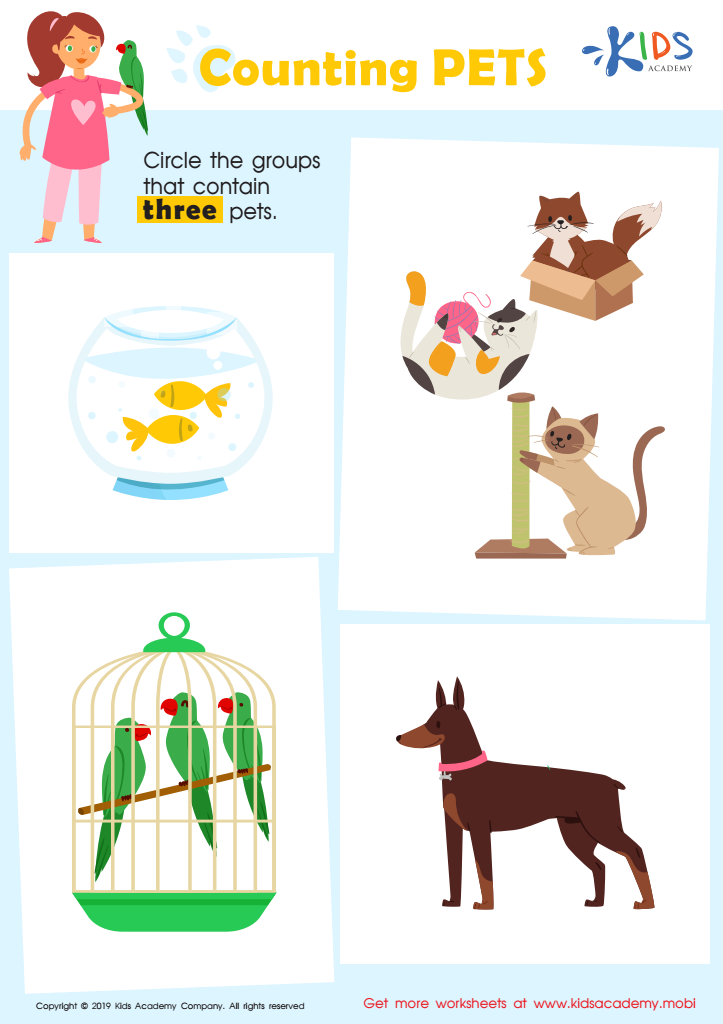
Counting Pets Worksheet
 Assign to My Students
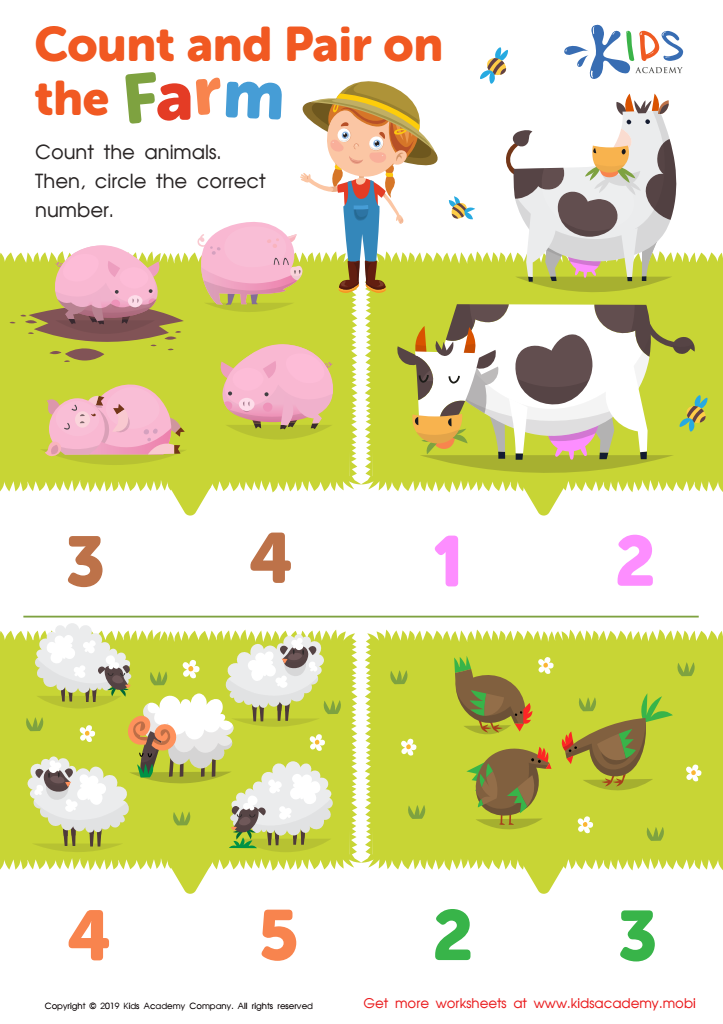
Count and Pair on the Farm Worksheet
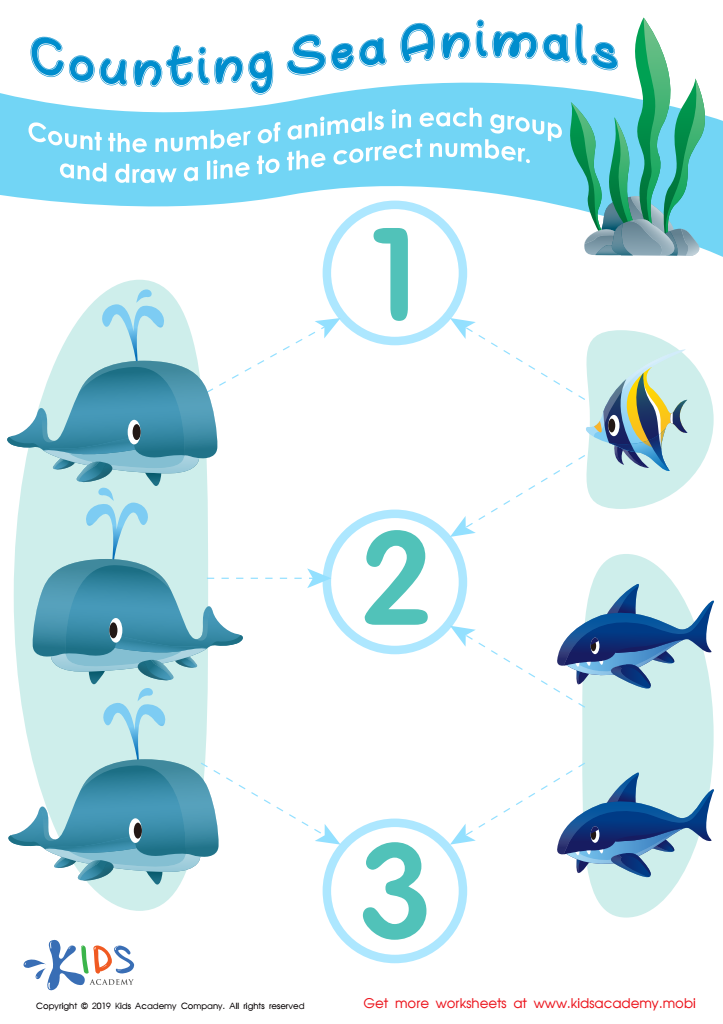
Counting Sea Animals Worksheet
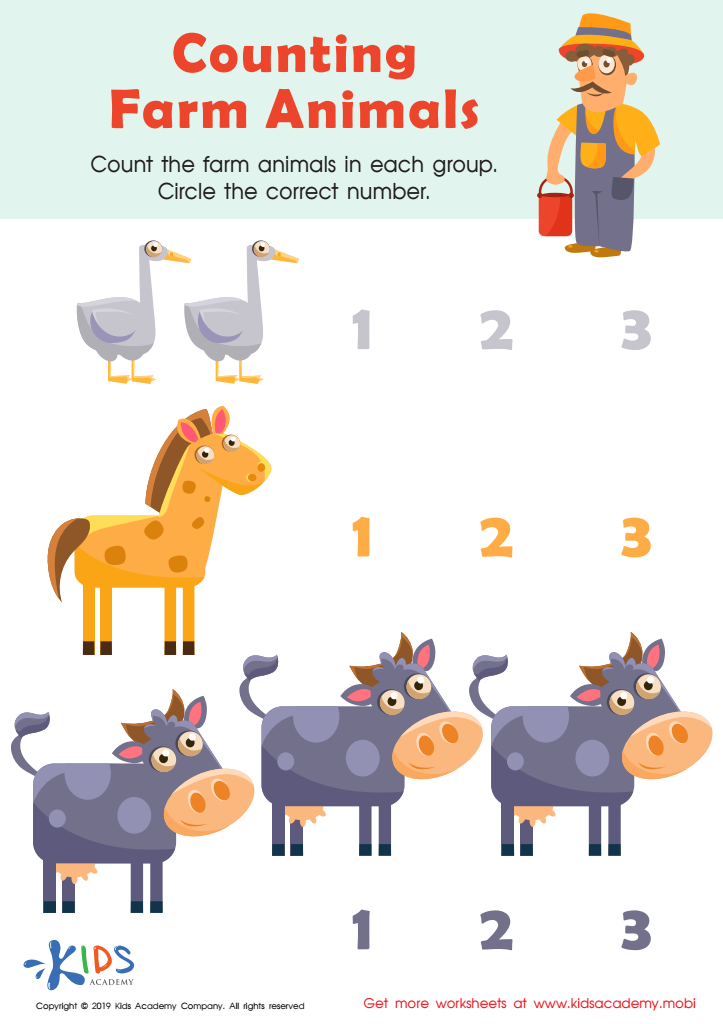
Counting Farm Animals Worksheet








Animal recognition and normal numbers are crucial educational concepts for children aged 6-8, laying the foundation for cognitive and social development. Parents and teachers should care about these skills because they foster literacy and numeracy, essential for academic success.
Animal recognition helps children build vocabulary and comprehension. By identifying various animals, children enhance their observational skills and connect with the natural world, promoting curiosity and environmental awareness. This recognition often encourages storytelling and creative play, nurturing imagination and communication skills.
Parallelly, understanding normal numbers is foundational for later mathematical skills. Learning to recognize, count, and utilize numbers helps children develop quantitative reasoning and problem-solving abilities. It introduces them to concepts like addition and subtraction, guiding their logical thinking.
Moreover, combining animal recognition with normal numbers allows for engaging interdisciplinary learning experiences. Activities like counting animals or sorting them numerically can make math more exciting while enhancing their understanding of biology and ecology.
Ultimately, fostering these skills equips children with essential tools for learning, social interaction, and self-confidence, ensuring they are well-prepared for future educational challenges and life skills. Parents and teachers play a pivotal role in nurturing these abilities, setting the stage for lifelong learning.








