Color Identification Normal Numbers Worksheets for Ages 6-8
4 filtered results
-
From - To
Boost your child’s learning with our Color Identification Normal Numbers Worksheets, perfect for ages 6-8! These engaging worksheets combine essential math skills with vibrant color recognition activities. Designed to enhance cognitive development, they help young learners identify numbers while using colors for better engagement and retention. Our resources provide a fun and interactive approach, making number learning an enjoyable experience. Children will practice counting, writing numbers, and associating colors effectively, laying a solid foundation for future math concepts. Download these worksheets today and watch your child thrive in this crucial stage of learning while fostering creativity and analytical thinking!
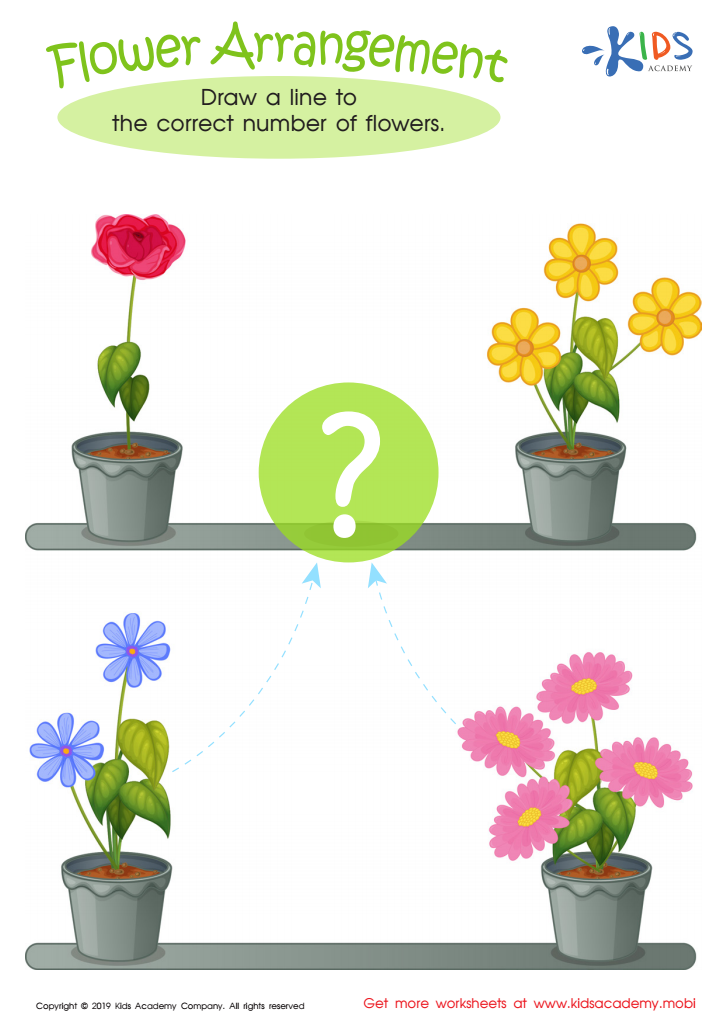
Flower Arrangement Worksheet
 Assign to My Students
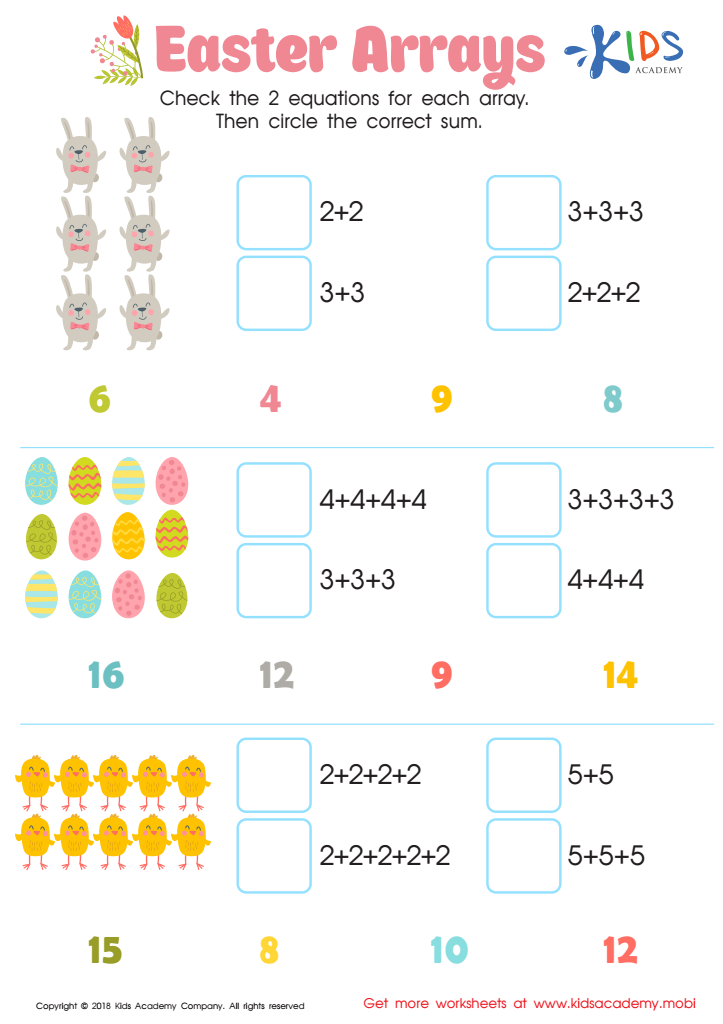
Easter Arrays Worksheet
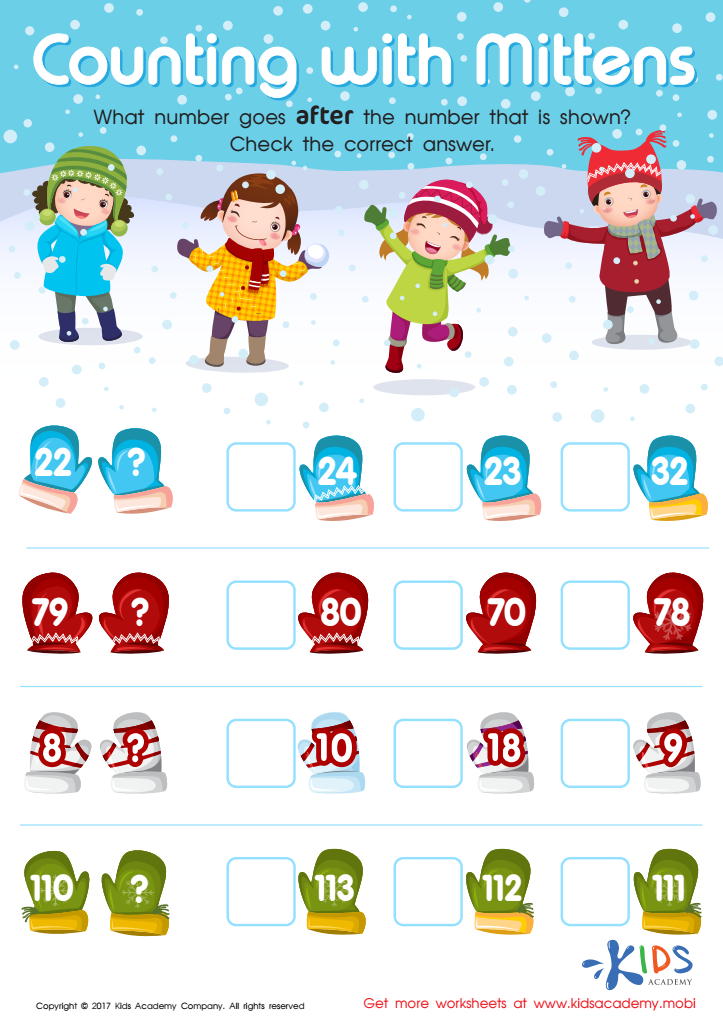
Counting with Mittens Worksheet
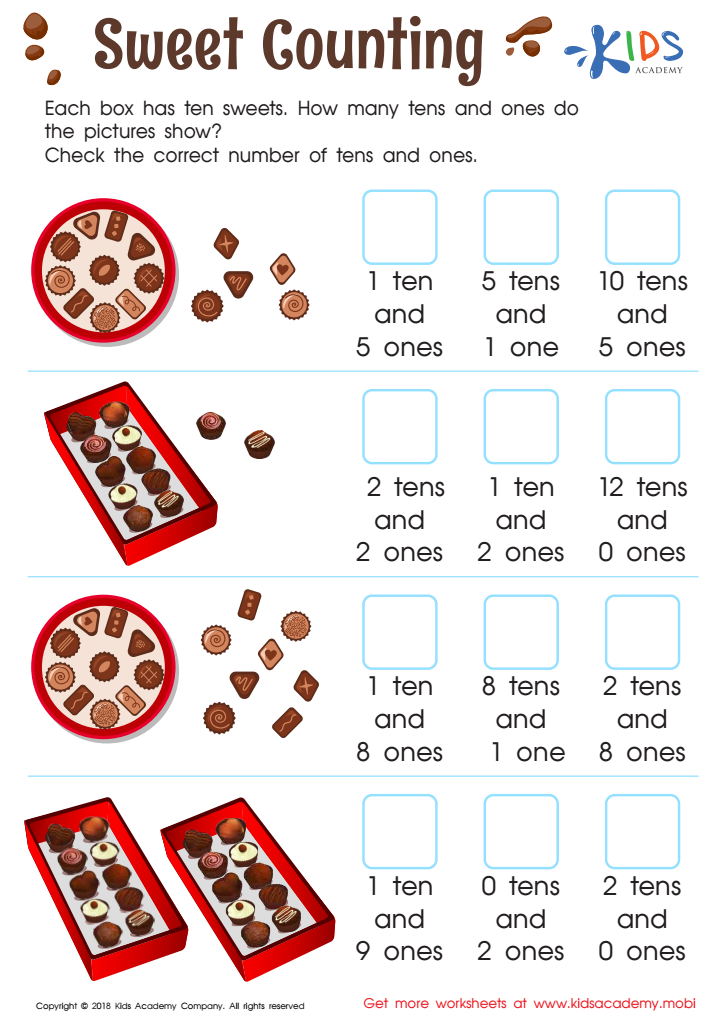
Sweet Counting - Part 2 Worksheet








Color Identification Normal Numbers are an important aspect of early childhood education for children aged 6-8, as they serve as a foundation for various cognitive and social skills. Parents and teachers should care about this because color recognition enhances language development and vocabulary. When children learn to identify and name colors, they expand their ability to describe the world around them, which is essential for effective communication.
Moreover, understanding colors helps in the development of critical thinking and problem-solving skills. For instance, engaging children in activities that involve sorting and categorizing objects based on color fosters analytical thinking, as they learn to identify similarities and differences.
In addition, mastering color identification is vital for understanding concepts in art, math, and science. Colors play a significant role in visual learning, and recognizing them can help children grasp concepts more easily, like measuring and patterns.
Finally, color identification encourages social interaction during cooperative play. Children often engage in games and projects involving colors, promoting teamwork and collaborative skills as they work together to create, identify, or sort colored items. Thus, supporting color identification in early education not only lays the groundwork for academic success but also fosters social development and emotional well-being.








