
Comparing sizes Normal Math Worksheets for Ages 6-8
3 filtered results
Difficulty Level
Grade
Age
-
From - To
Subject
Activity
Standards
Discover our engaging comparing sizes math worksheets designed for children aged 6-8! These printable resources make learning about larger and smaller sizes fun and interactive. Our worksheets encourage young learners to practice essential skills by identifying and comparing objects, reinforcing their understanding of measurement concepts in real-world contexts. Each worksheet is thoughtfully crafted to challenge students at varying levels, ensuring they grasp the fundamentals of comparing sizes with ease. Perfect for classroom activities or at-home learning, these normal math worksheets help build confidence and improve math proficiency while sparking curiosity about the world around them. Get started on your learning journey today!
Favorites
With answer key
Interactive
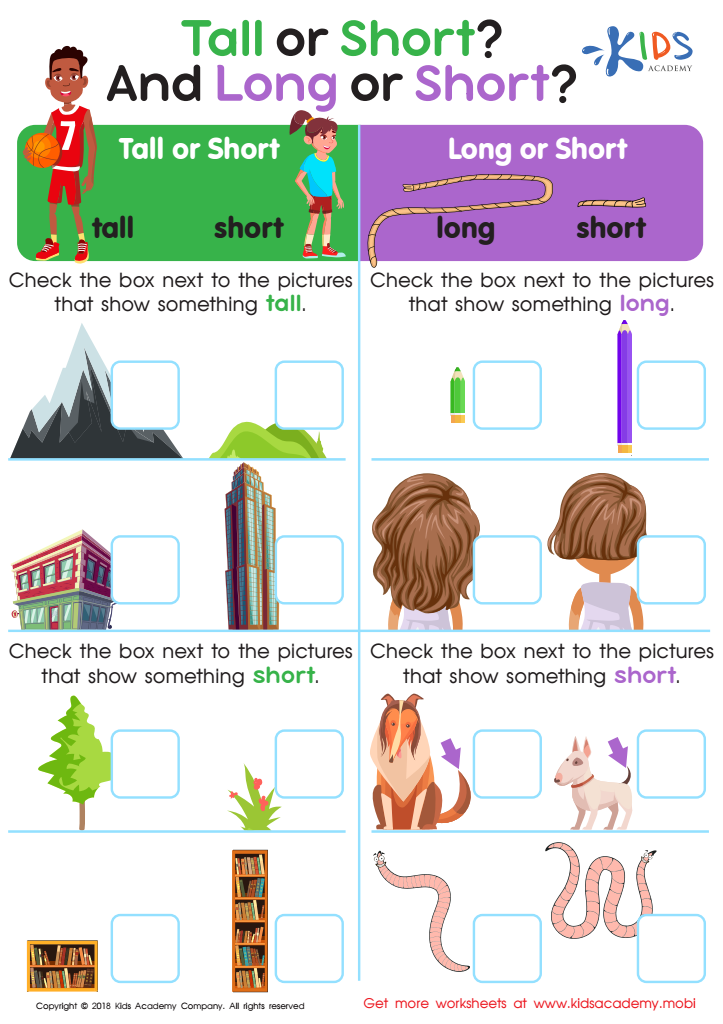
Tall or Short and Long or Short? Worksheet
This worksheet is fun and helpful for kids to understand the difference between height and length. With pictures of familiar objects, they can compare and choose the box with the right answer. This helps them gain skills and a better foundation for future measuring.
 Assign to My Students
Tall or Short and Long or Short? Worksheet
Worksheet
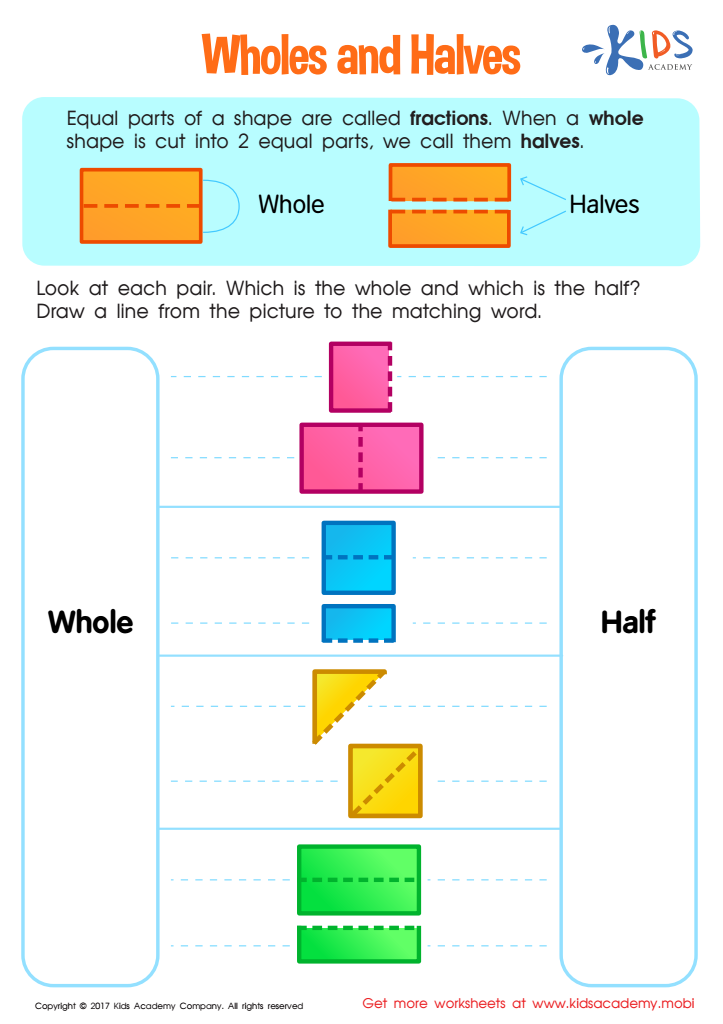
Wholes and Halves Worksheet
Students can feel overwhelmed with fractions. Help take the stress off by using a colorful worksheet to explain whole shapes and how to find halves. Ask them to identify the whole and point to the matching word for the half. A free printout can help guide them.
Wholes and Halves Worksheet
Worksheet
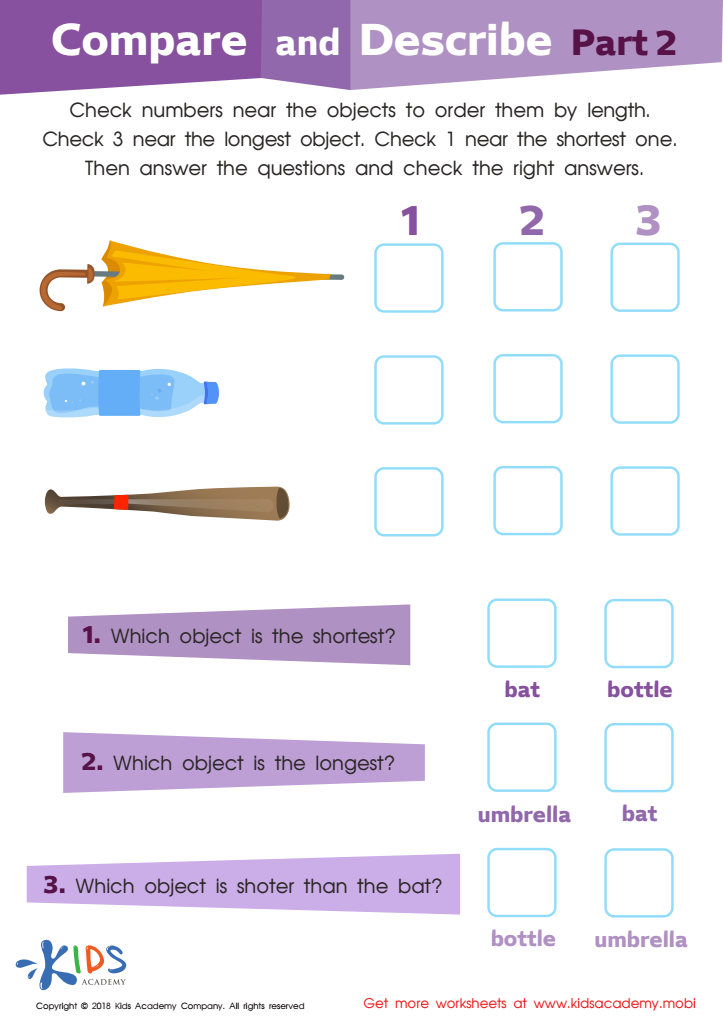
Compare and Describe: Part 2 Worksheet
Help kids hone their comparison skills with this fun measurement worksheet! Kids will sort objects by length and check off the boxes as they go. At the bottom, they'll read the questions and take a final look at the images to complete the exercise. An exciting way to learn measurement!
Compare and Describe: Part 2 Worksheet
Worksheet
Join Kids Academy for Free
Who is primarily going to use this learning content?








Comparing sizes is a foundational concept in mathematics for children aged 6-8, and understanding this topic provides essential skills that extend beyond the classroom. Firstly, it cultivates critical thinking and analytical skills, allowing children to make observations and draw conclusions based on their environment. By comparing sizes, children learn to differentiate between larger and smaller objects, which aids in their cognitive development.
Additionally, this concept has real-world applications that parents and teachers should prioritize. Understanding size comparison helps children in everyday situations, such as organizing their belongings, understanding measurements in cooking, or even when engaging in outdoor activities. It’s also a precursor to more complex mathematical ideas like measurement and volume, acting as a stepping stone for future learning.
Furthermore, promoting size comparison enriches language development as children express their observations and encourage discussions. It fosters collaboration in a group setting as they may compare items with peers. Ultimately, brushing up on comparing sizes supports a child’s overall growth – mathematically, socially, and cognitively – making it a crucial area of focus for parents and teachers during these formative years. Investing time in this concept is key to nurturing confident and capable learners.








