Enhancing problem-solving skills Normal Math Worksheets for Ages 6-8
6 filtered results
-
From - To
Unlock your child's potential with our "Enhancing Problem-Solving Skills Normal Math Worksheets" designed specifically for ages 6-8. These worksheets aim to make learning engaging and effective, fostering critical thinking and analytical skills in young learners. Each activity encourages kids to tackle problems creatively, develop perseverance, and understand fundamental math concepts through fun, age-appropriate exercises. With a variety of topics and exercises, our worksheets are perfect for classroom use or at-home practice. Help your child build a solid foundation in math while boosting their confidence and independence in problem-solving. Empower your little ones to approach challenges with enthusiasm and a positive mindset!
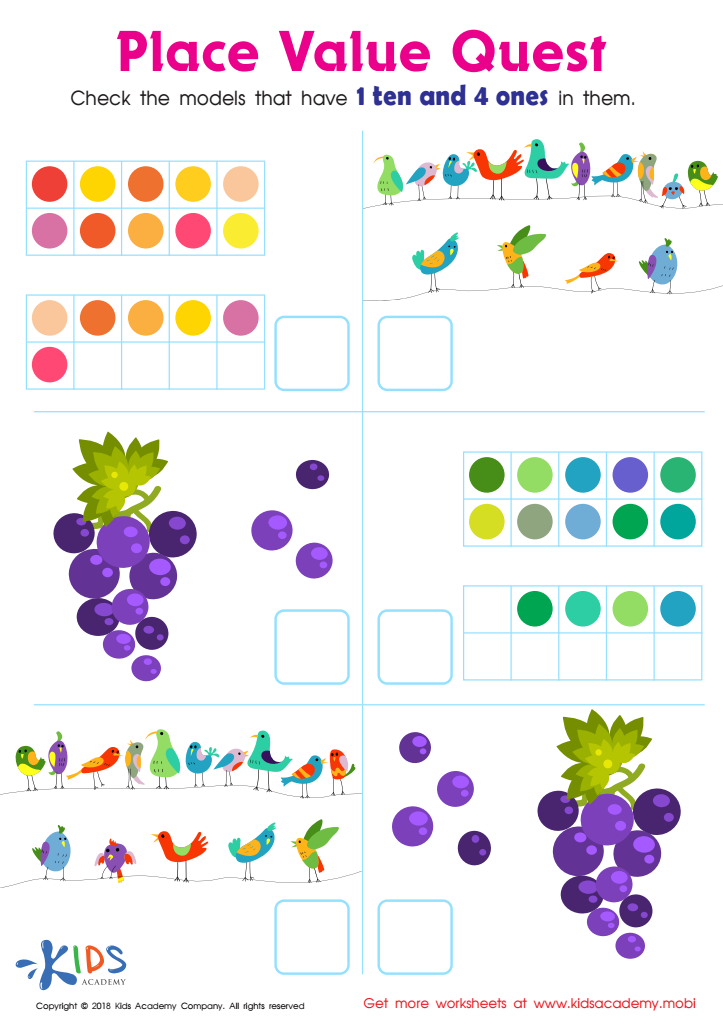
Place Value Quest Worksheet
 Assign to My Students
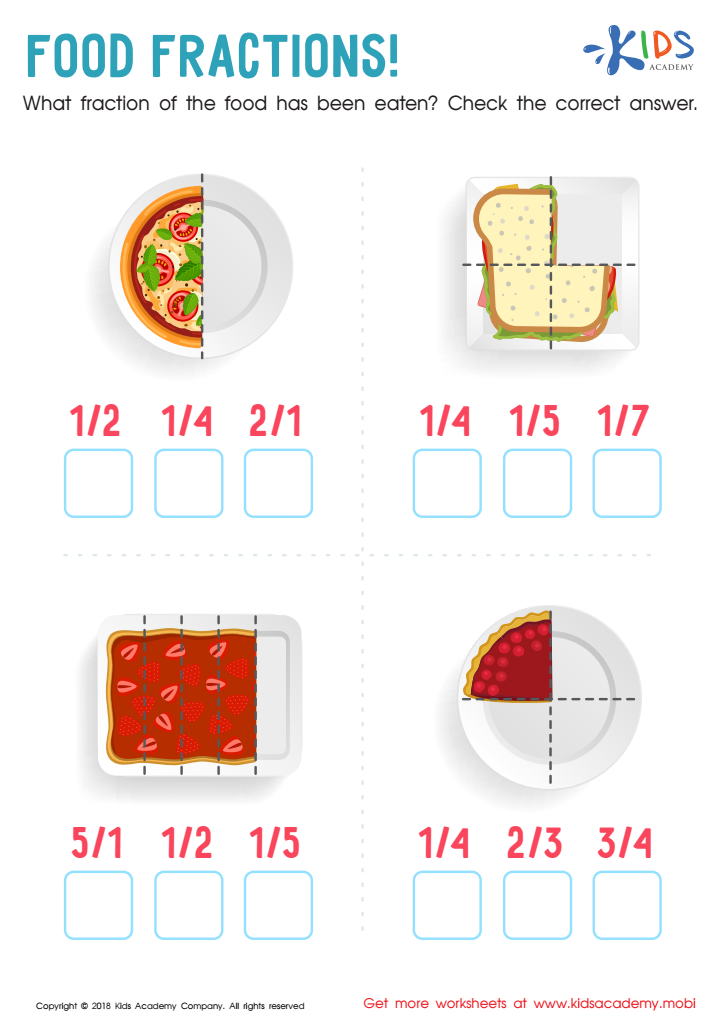
Food Fractions Worksheet
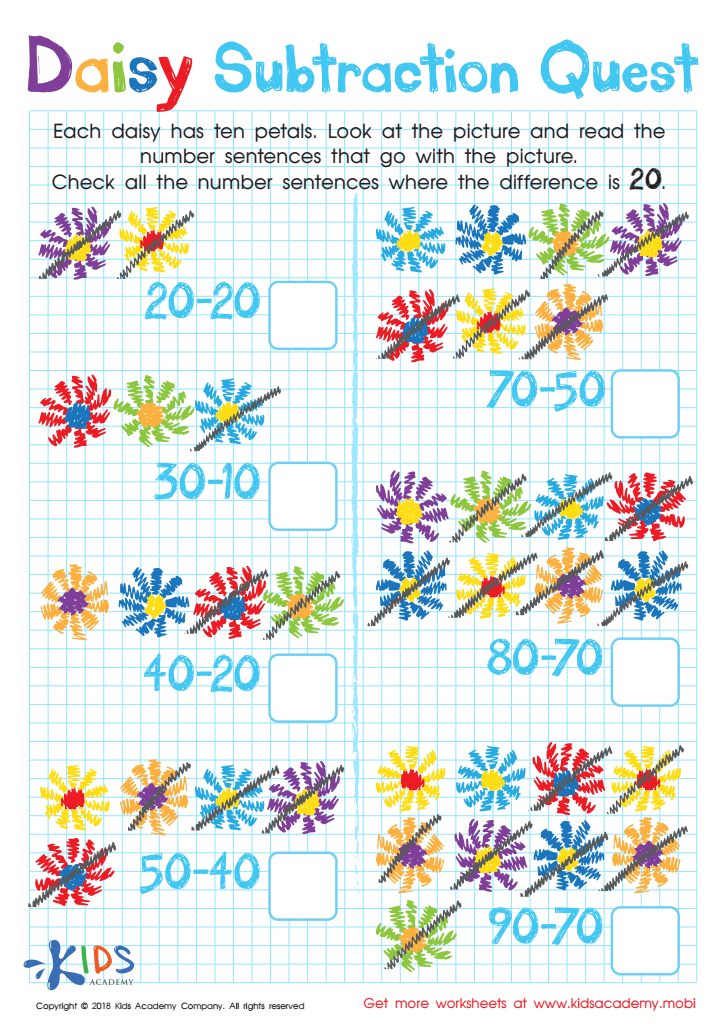
Daisy Subtraction Quest Worksheet
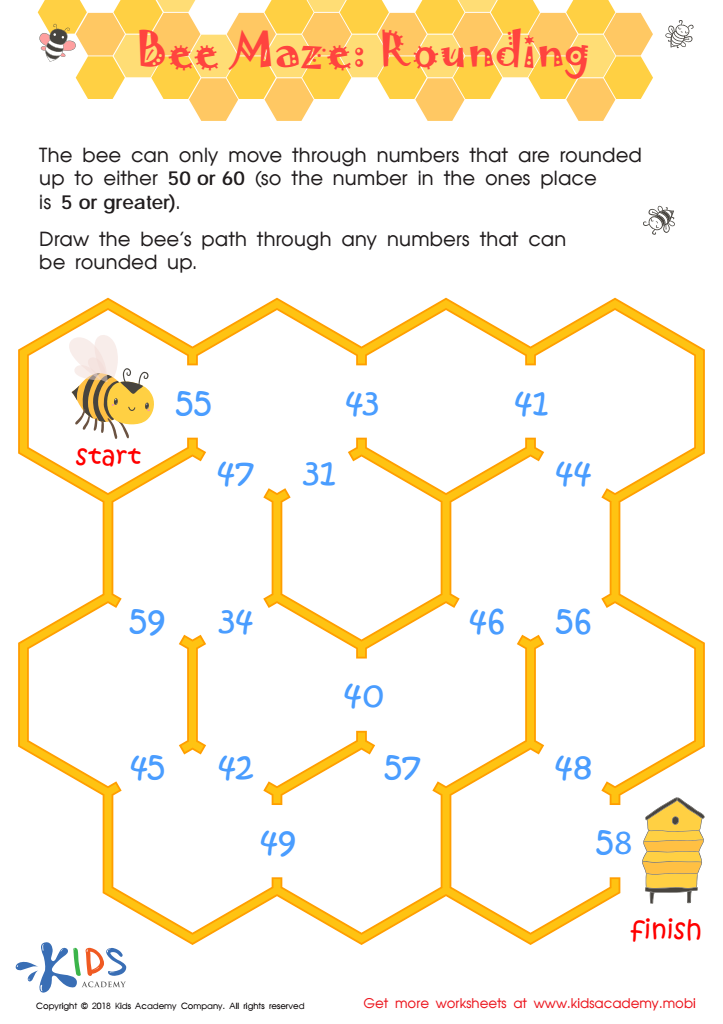
Bee Maze Rounding Worksheet
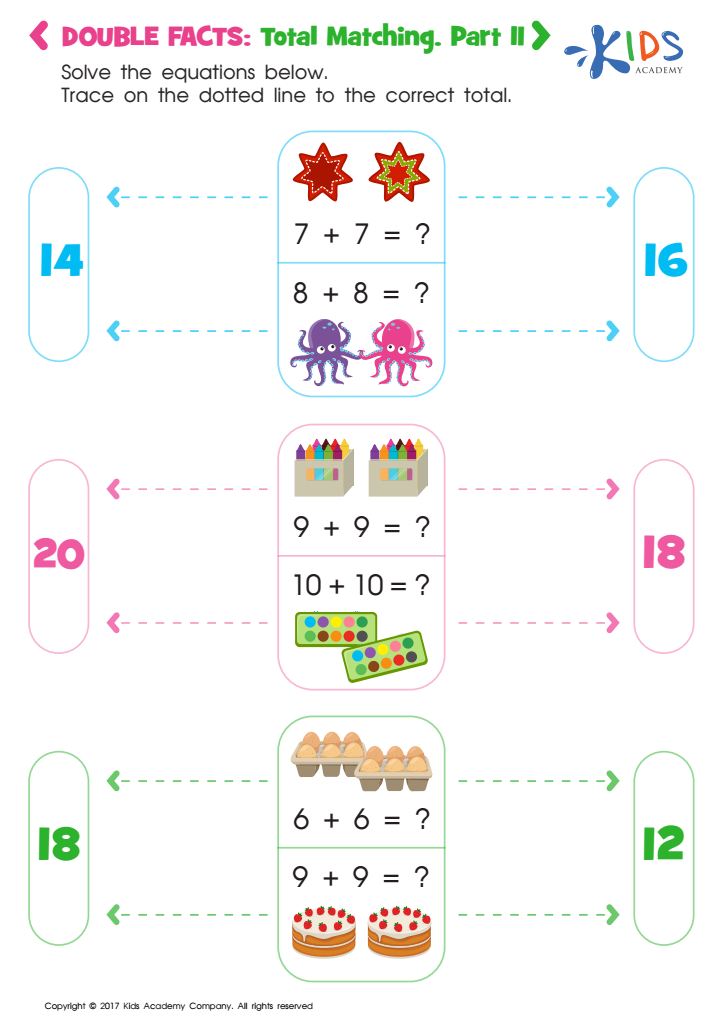
Double Facts: Total Matching 2 Worksheet
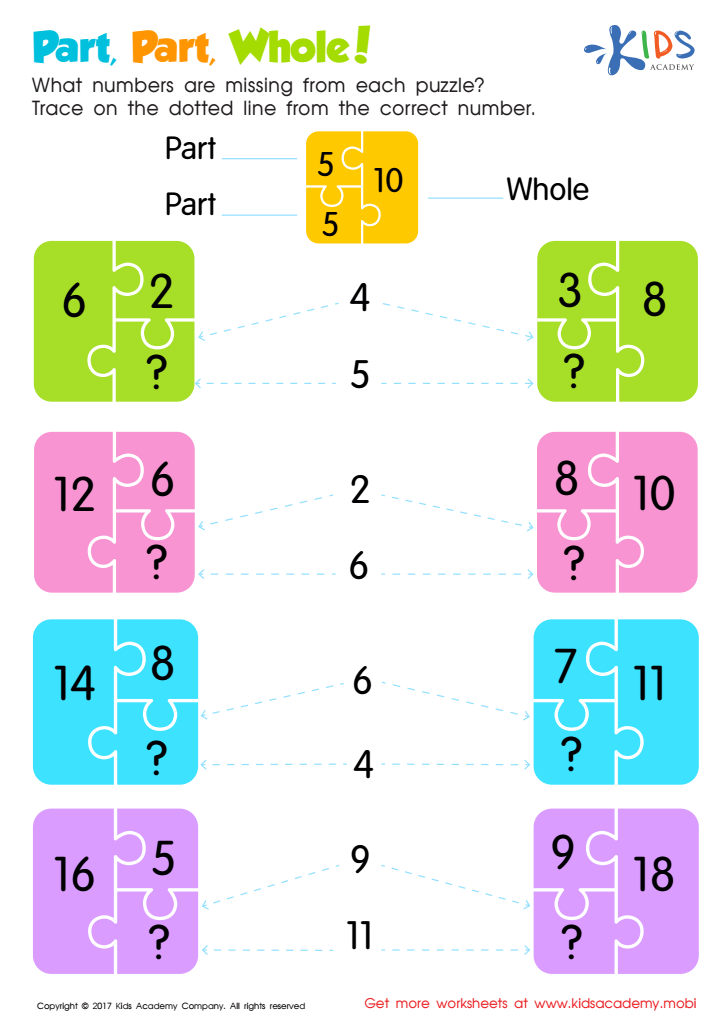
Part, Part, Whole Worksheet





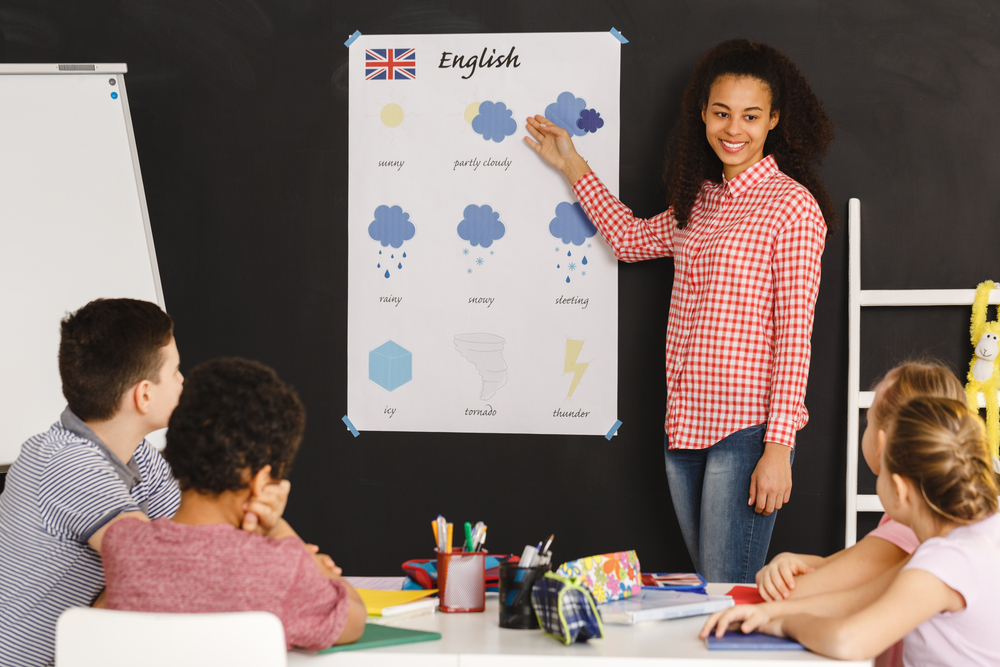


Enhancing problem-solving skills in children aged 6-8 is crucial for several reasons. At this developmental stage, children are beginning to form foundational thinking and reasoning abilities, and effective problem-solving strategies greatly enhance their mathematical understanding. By focusing on problem-solving in normal math, parents and teachers equip children with the tools necessary to approach challenges logically and creatively. This not only aids in math but also fosters critical thinking skills that are applicable across various subjects and real-life situations.
Furthermore, good problem-solving skills encourage persistence and resilience in children, essential traits for overcoming obstacles. When students encounter difficulties, learning how to break down problems into manageable parts helps build confidence and independence. Engaging with problem-solving also nurtures collaboration, as children often work together to discuss and find solutions.
Additionally, the gradual introduction of complex concepts in a supportive environment can reduce math anxiety and create a positive view of mathematics, making them more likely to excel in future academic endeavors. Overall, parental and educator involvement in enhancing these skills ensures children develop a strong arithmetic foundation, promoting success not only in school but throughout their lives.








