
Matching numbers Normal Math Worksheets for Ages 6-8
5 filtered results
Difficulty Level
Grade
Age
-
From - To
Subject
Activity
Standards
Welcome to our Matching Numbers Normal Math Worksheets, specially designed for children ages 6-8! These engaging and educational resources aim to enhance numerical recognition and improve counting skills. With vibrant visuals and interactive exercises, young learners will find joy in connecting numbers with corresponding objects. Each worksheet promotes critical thinking, encourages attention to detail, and fosters early math proficiency. Perfect for classroom activities or at-home learning, our worksheets cater to varying skill levels, ensuring every child can thrive. Explore our collection today and help your child build a strong foundation in math while having fun!
Favorites
With answer key
Interactive
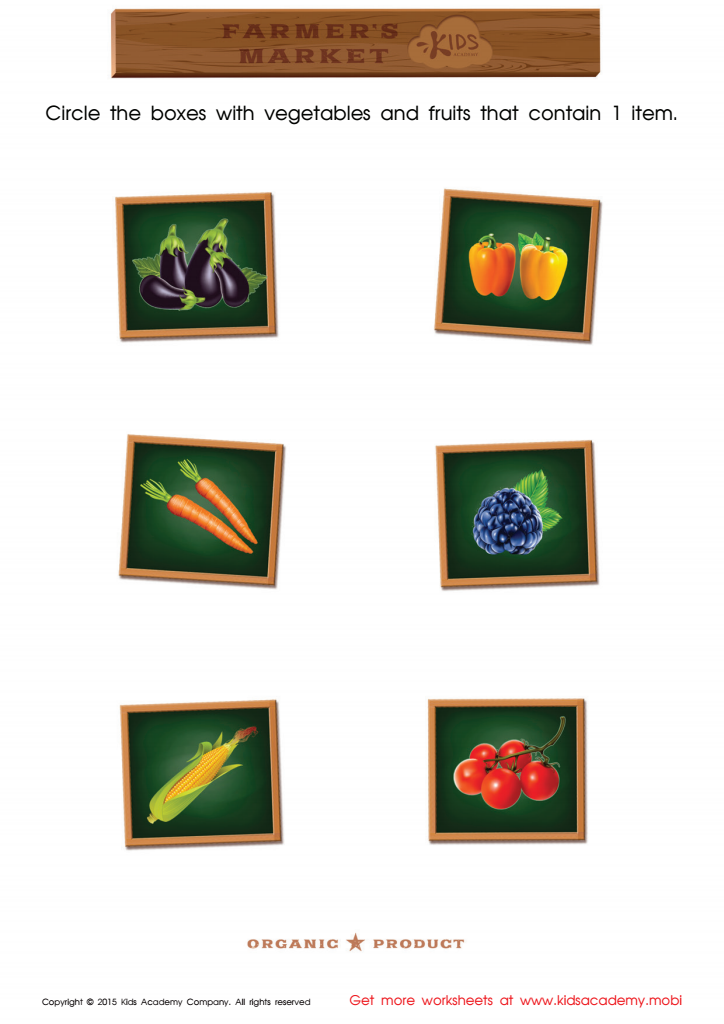
Count and Match Boxes with Vegetables
Print one and help your kid sharp his counting skills. With a variety of veggies to count, such as raspberries and eggplants, your little mathematician will have lots of fun.
 Assign to My Students
Count and Match Boxes with Vegetables
Worksheet
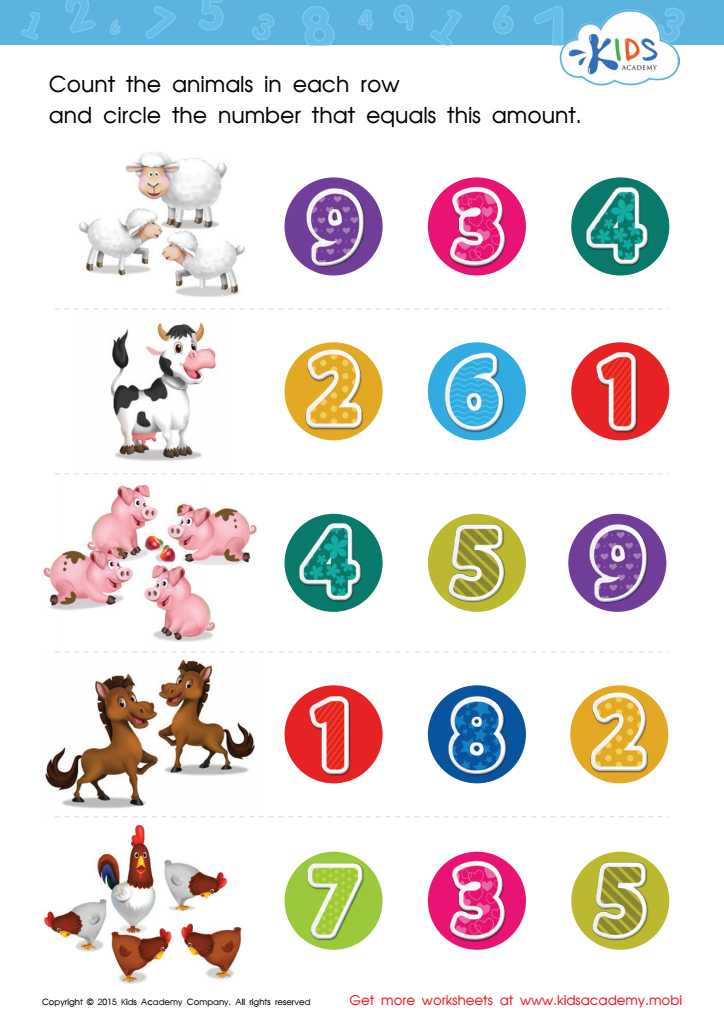
Count and Match 1 – 5 Math Worksheet
Find the colorful worksheet aimed to help your little learner develop their math skills. Count the cute animals and identify the correct numbers based on the Singapore Math method. This worksheet is a fantastic way to start your kid on their mathematical journey.
Count and Match 1 – 5 Math Worksheet
Worksheet
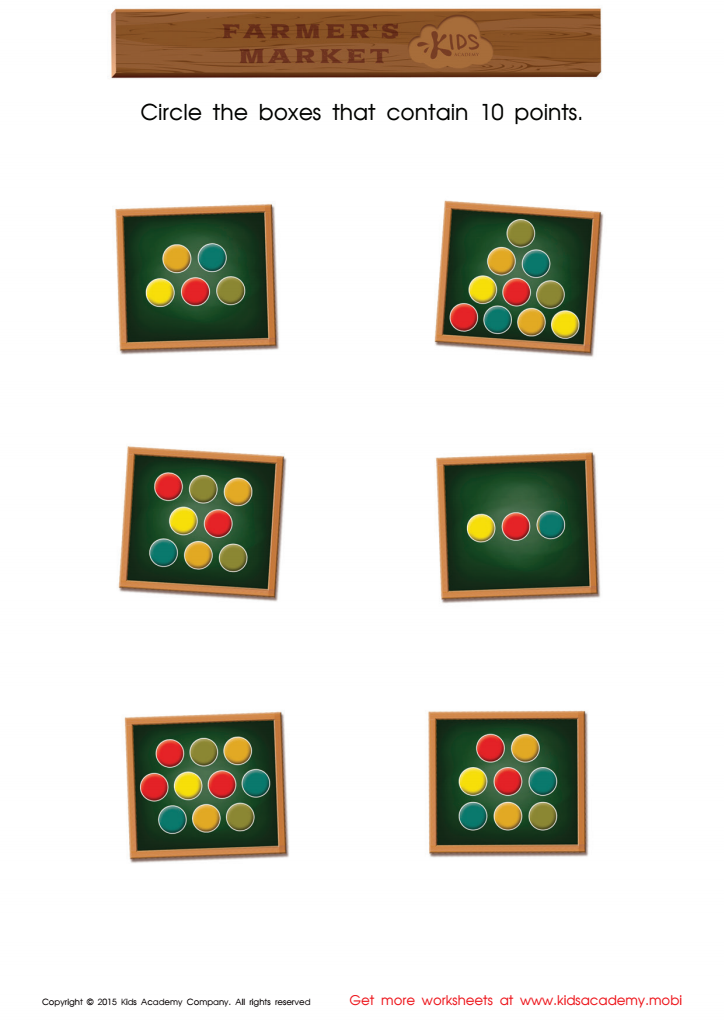
Count and Match Points 10 Math Worksheet
Help your youngster practice counting with this worksheet. Count the points in each box and circle any with up to 10 points. It will improve their counting and matching ability. Forget about addition and subtraction; it's time for a fun exercise for you both!
Count and Match Points 10 Math Worksheet
Worksheet
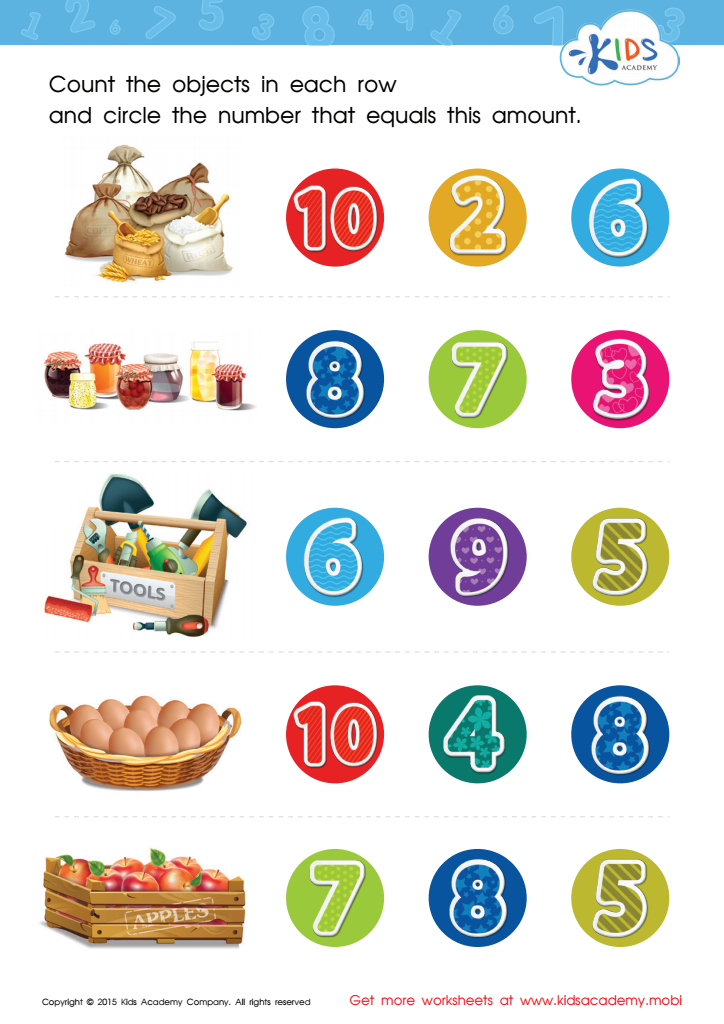
Count and Match 6 – 10 Math Worksheet
Print this fun math worksheet for your kindergartener and help them practice counting up to ten! They'll draw a line from the objects to the correct numbers, visualizing the problem and having fun at the same time. Kids Academy offers more free printable worksheets. Get them now!
Count and Match 6 – 10 Math Worksheet
Worksheet
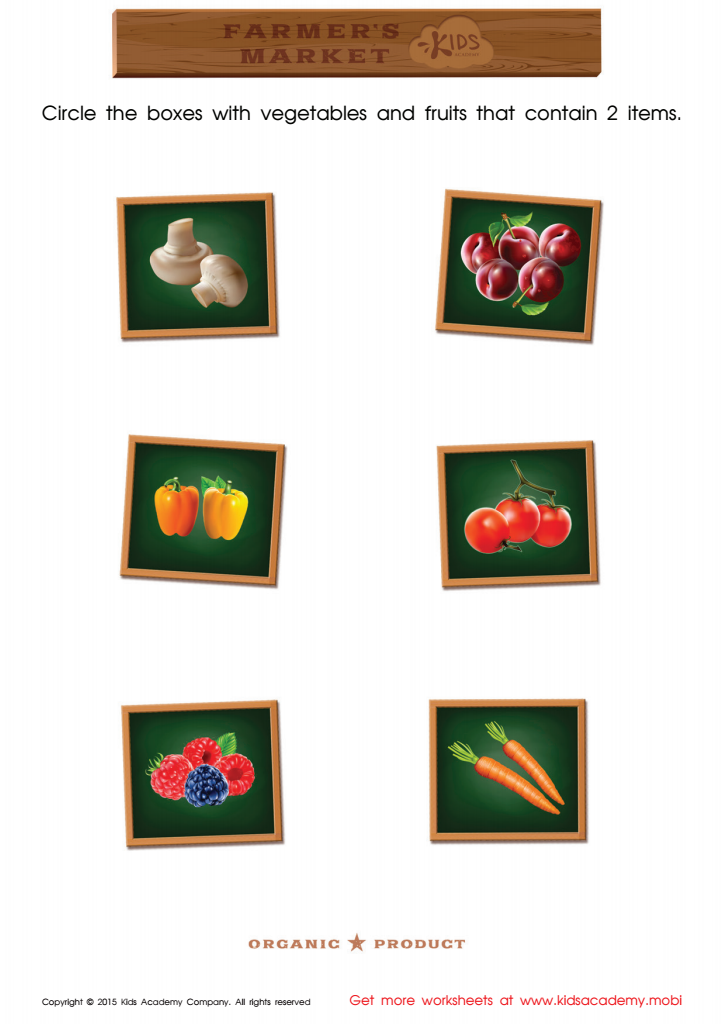
Count and Match Vegetables and Points Math Worksheet
Make your kids excited about math with this free printable kindergarten worksheet! Kids will count up to seven and match boxes with the same number of vegetables. Visualizing the task with this worksheet layout will entertain them while they practice math. Download additional worksheets by topic on Kids Academy.
Count and Match Vegetables and Points Math Worksheet
Worksheet
Join Kids Academy for Free
Who is primarily going to use this learning content?








Parents and teachers should prioritize teaching Matching Numbers Normal Math for ages 6-8 because it lays a crucial foundation for numerical understanding and problem-solving skills. At this developmental stage, children are naturally curious and eager to explore mathematical concepts. Matching numbers helps them recognize relationships between quantities and symbols, fostering early numeracy skills.
This activity teaches critical thinking, improves memory, and enhances cognitive abilities. By engaging with matching exercises, children develop the ability to identify patterns, categorize information, and associate numerical values with their corresponding quantities. This not only accelerates their arithmetic capabilities but also promotes confidence in their mathematical skills.
Moreover, mastering these foundational skills is essential for future success in math. As children progress, they will encounter more complex concepts that build on their understanding of numbers. If educators and parents reinforce matching number exercises in a fun and engaging way, it can bolster students' enthusiasm for learning, making math less intimidating.
In summary, investing time in Matching Numbers Normal Math is vital for children’s overall academic development, equipping them with essential skills for everyday situations and preparing them for future mathematical challenges.








