Math problem-solving Normal Math Worksheets for Ages 6-8
5 filtered results
-
From - To
Our Math Problem-Solving Worksheets for ages 6-8 are thoughtfully crafted to enhance young learners' critical thinking and problem-solving skills. From basic addition and subtraction to more complex puzzles, these worksheets engage kids in fun and educational exercises that develop their math confidence. With vibrant visuals and interactive tasks, children stay motivated and enjoy the learning process, laying a solid foundation for future math success. Perfect for classroom use or home practice, these worksheets cater to different learning levels, ensuring every child thrives. Boost your child's math abilities with our comprehensive and engaging resources today!
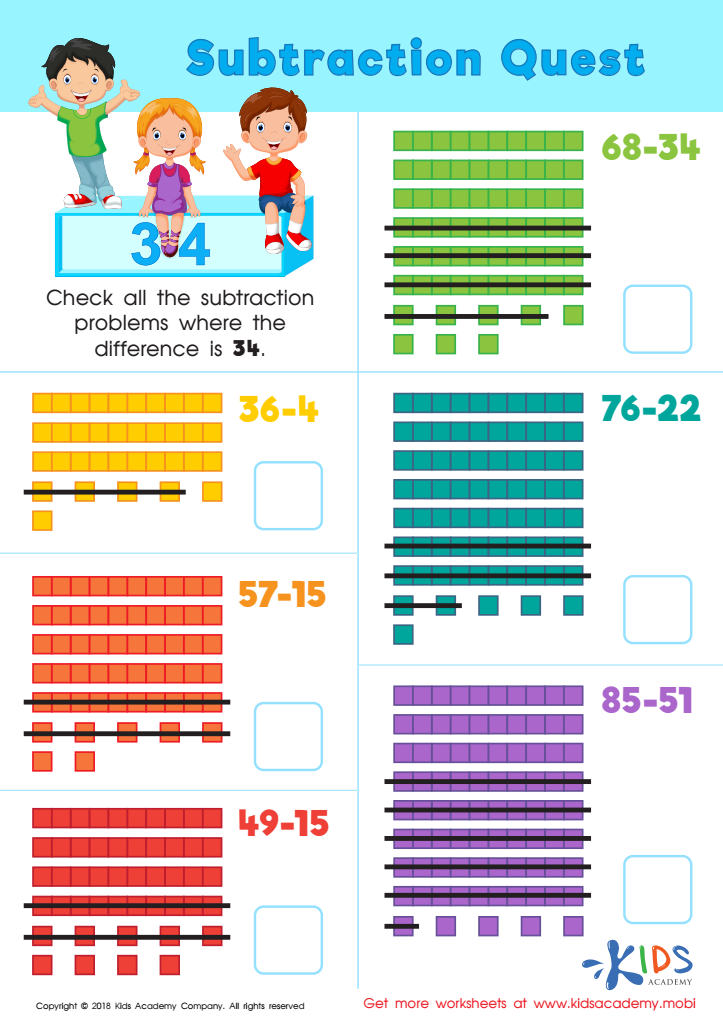
Subtraction Quest Worksheet
 Assign to My Students
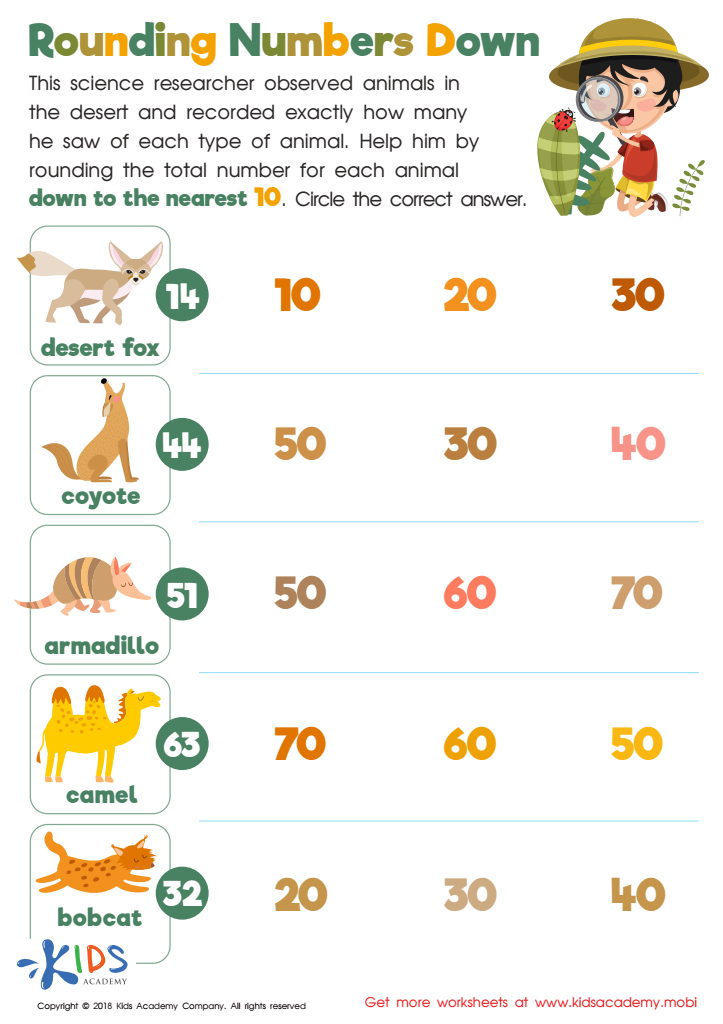
Rounding Numbers Down Worksheet
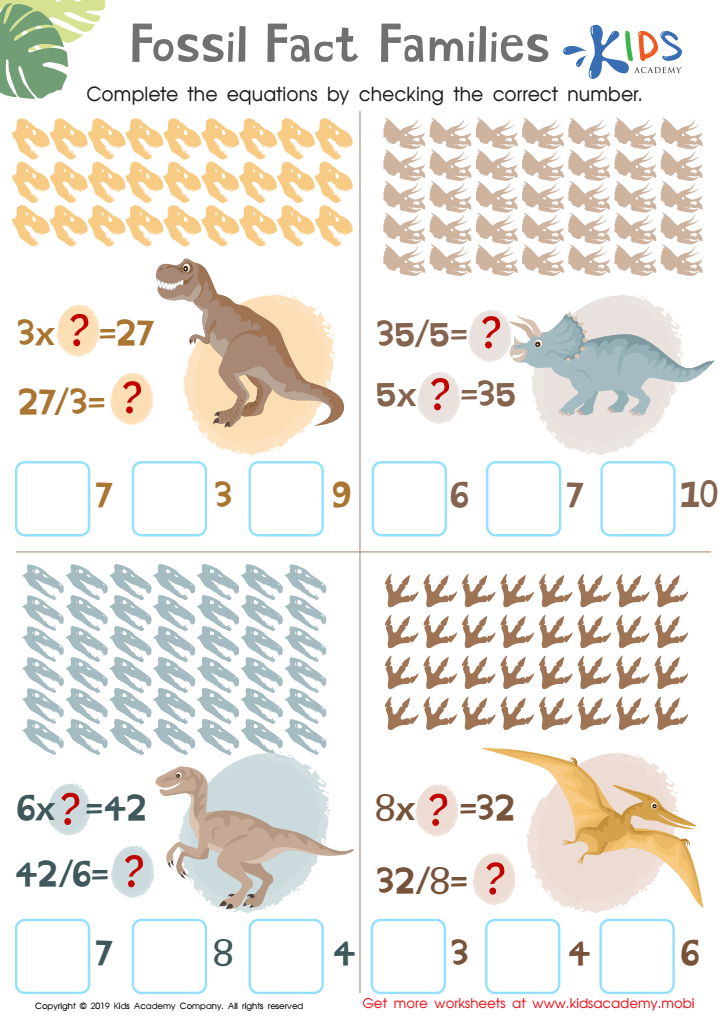
Fossil Fact Families Worksheet
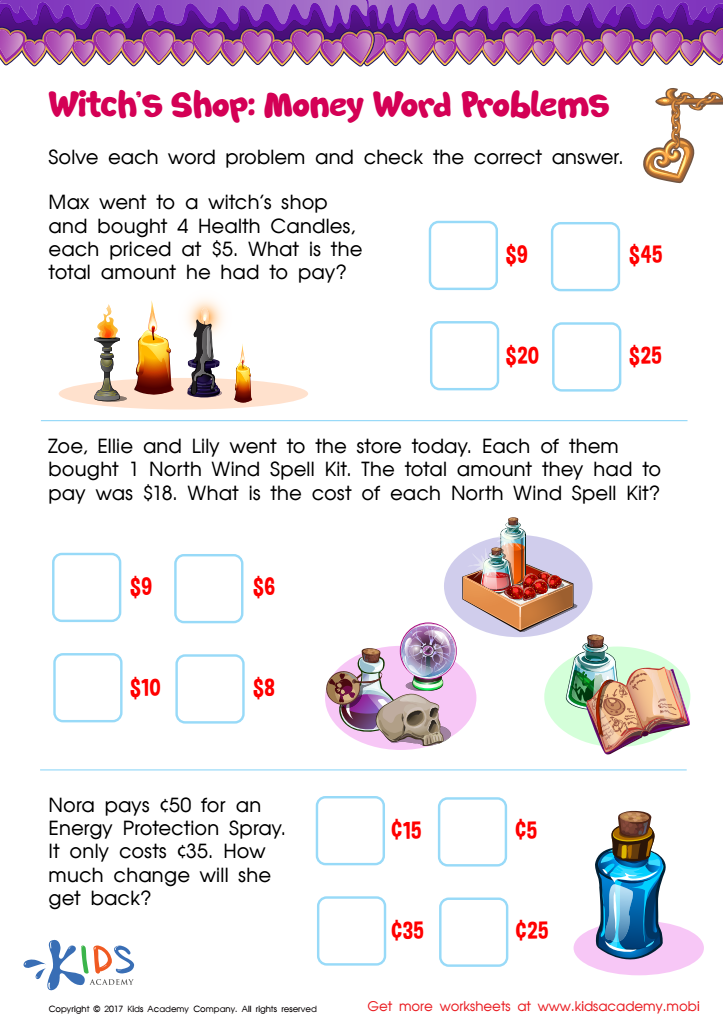
Money Word Problems Printable
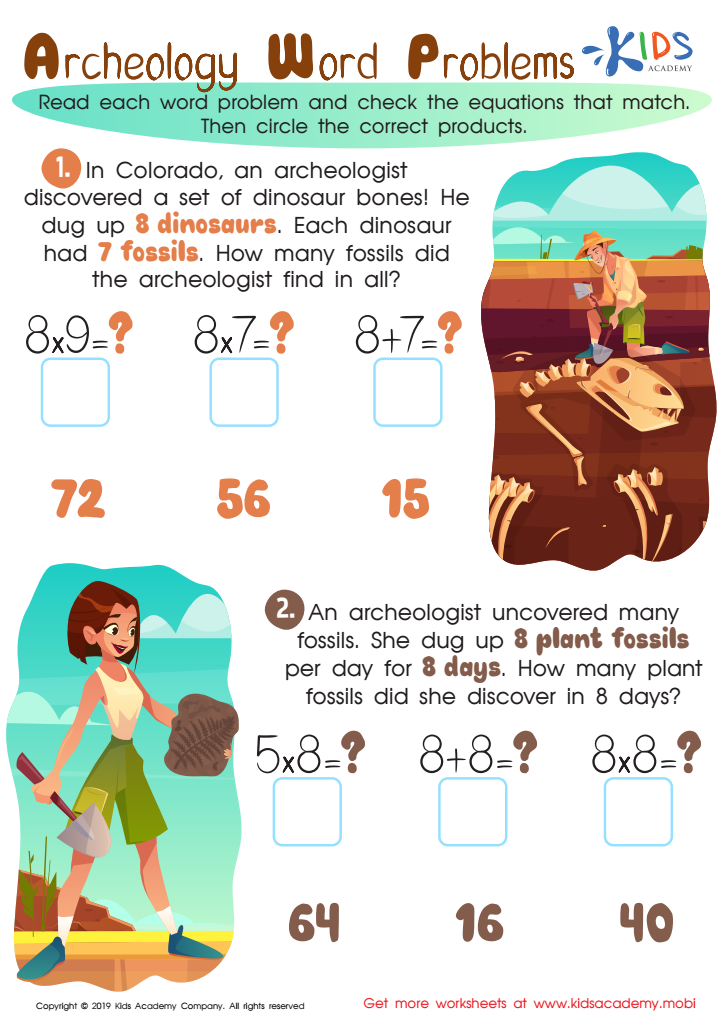
Archeology Word Problems Worksheet








Math problem-solving skills are essential for children aged 6-8 as they lay the foundation for critical thinking, logical reasoning, and analytical abilities. At this developmental stage, children are naturally curious and their brains are rapidly absorbing new information. Engaging in math problem-solving activities boosts cognitive development and helps them bridge the gap between concrete and abstract thinking.
Parents and teachers should prioritize math problem-solving because it nurtures patience and perseverance in young learners. These skills, when cultivated early, are crucial for tackling more complex problems both in academics and everyday life. Additionally, regular practice in solving math problems builds confidence and a positive attitude towards tackling new challenges.
Furthermore, math competency at an early age can correlate with better performance in school, as it is interconnected with other subjects such as science and literacy. Strong problem-solving skills enable continuous academic achievement and open future career opportunities in a variety of fields.
Lastly, developing problem-solving strategies early on creates a framework for lifelong learning. As students learn to understand problems, think critically about possible solutions, and follow through with logic and reasoning, they become better equipped to make informed decisions. Motivating children to engage in math problem-solving is an investment in their overall intellectual growth and future success.








