
Practice addition Normal Math Worksheets for Ages 6-8
3 filtered results
Difficulty Level
Grade
Age
-
From - To
Subject
Activity
Standards
Welcome to our Practice Addition Normal Math Worksheets designed for children aged 6-8! Our engaging worksheets embellish the learning process, making math fun while solidifying crucial addition skills. Each worksheet features vibrant illustrations and varied problems that cater to different learning levels, ensuring that every child can confidently build their math abilities. With a combination of single-digit and double-digit addition exercises, these resources help enhance numerical fluency and problem-solving skills. Ideal for home learning or classroom activities, our printable worksheets foster independence and encourage young learners to master addition concepts in an enjoyable and interactive way. Start your child’s math journey today!
Favorites
With answer key
Interactive
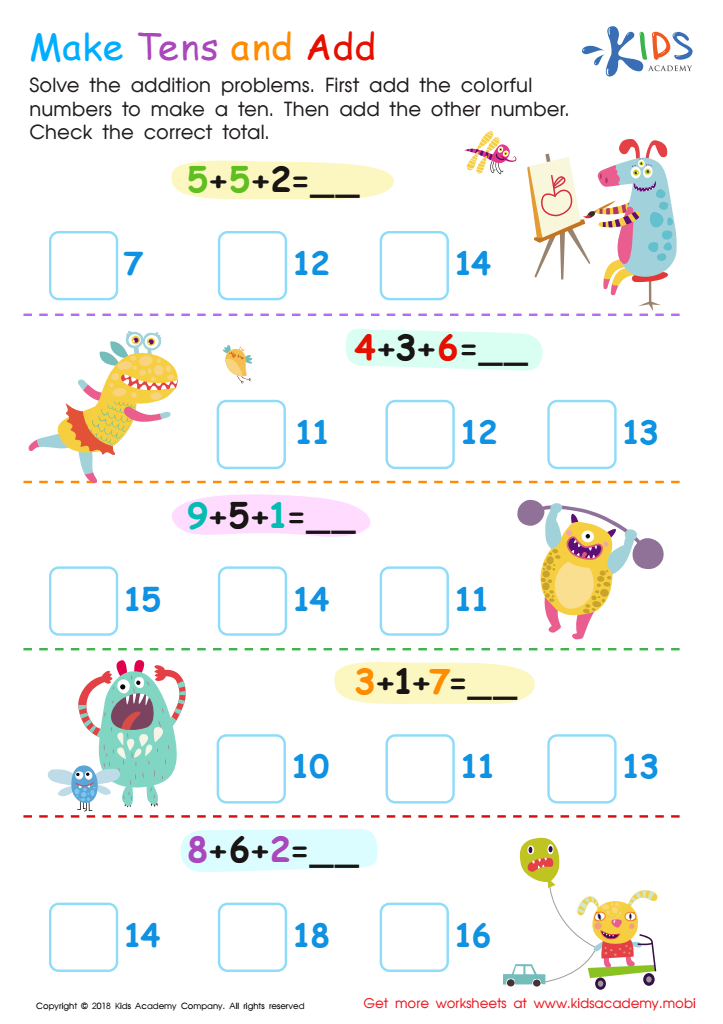
Make Tens and Add Worksheet
Making a "ten" is a powerful strategy to use when computing, but we may not realize it. This PDF worksheet will help kids understand how easy it is to add three numbers with this strategy. Plus, they'll have fun with the monsters and strengthen fine motor skills as they check the right answer boxes.
 Assign to My Students
Make Tens and Add Worksheet
Worksheet
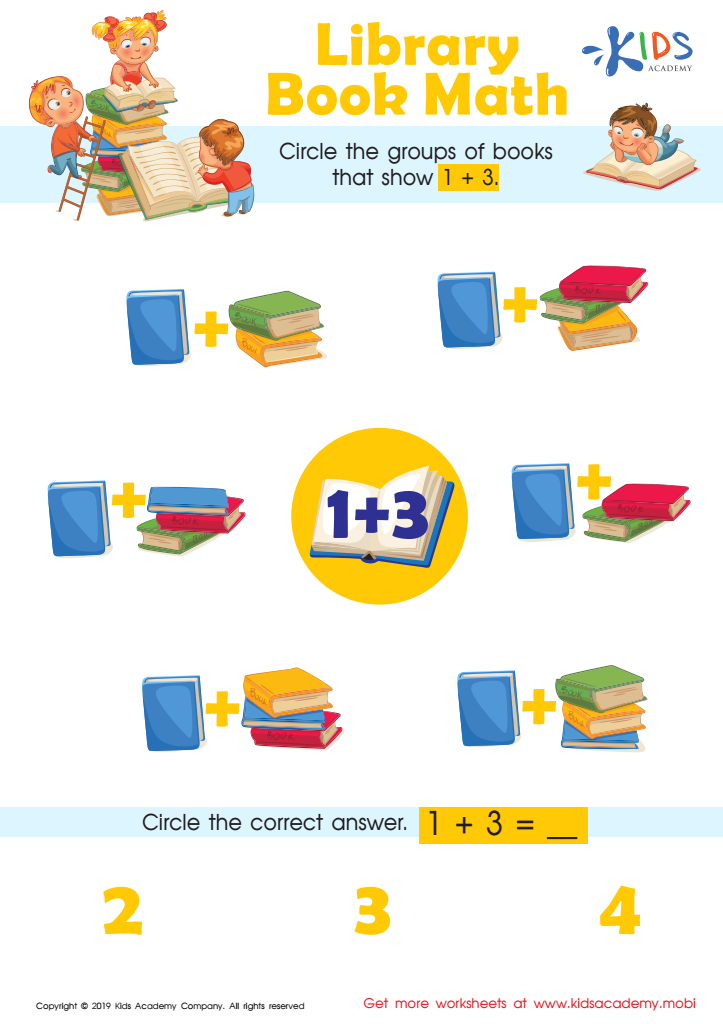
Library Book Math Worksheet
=4.
It's essential for your child's growth to know how to count and add. Help them by giving simple tasks and encouraging them. This worksheet is a great tool to use. Ask your kids to name the objects in the picture and help them circle the groups of books that show 1+3=4.
Library Book Math Worksheet
Worksheet
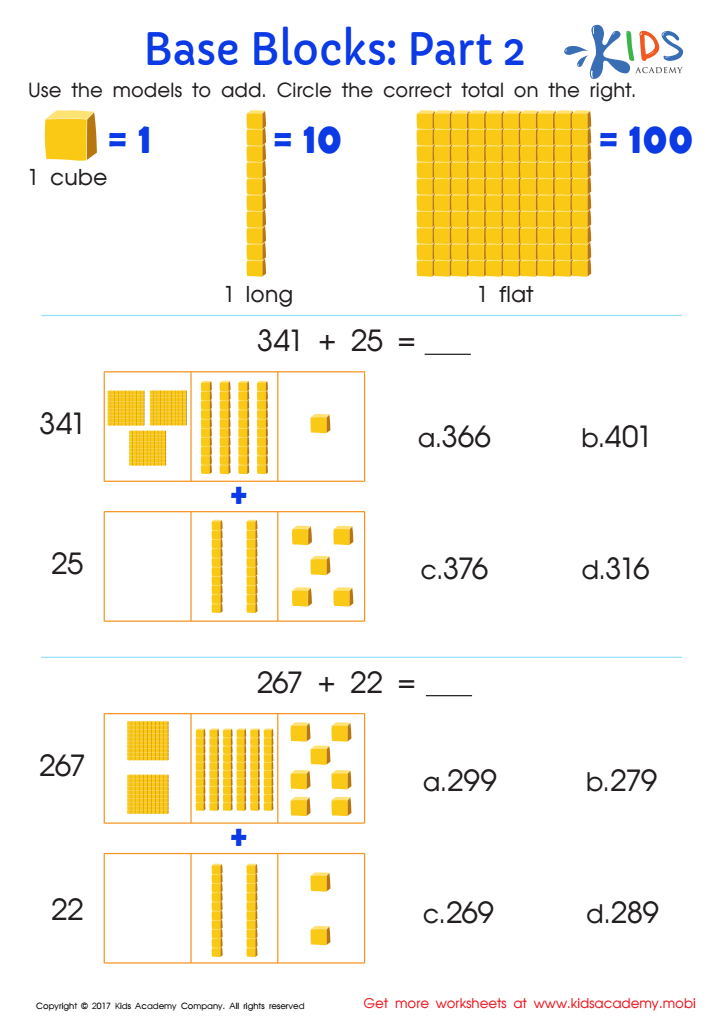
Base Ten Blocks Worksheet: Part 2
It provides kids with the practice needed to get a better grip on numeracy and multi-digit addition. Get the PDF today and give your child the resources they need.
This worksheet uses base blocks to help kids recognize and add multi-digit numbers. It gives kids the practice they need to become more numerate and handle multi-digit addition with confidence. Download the PDF now and give your child the tools they need to succeed.
Base Ten Blocks Worksheet: Part 2
Worksheet
Join Kids Academy for Free
Who is primarily going to use this learning content?







Parents and teachers should prioritize practice in addition for children aged 6-8 as it lays the foundation for essential mathematical understanding. At this age, children are developing their number sense, which is crucial for more complex concepts later in their education. Mastery of addition helps build their confidence and fosters a positive attitude towards math.
Regular practice in addition enhances cognitive skills, including problem-solving and critical thinking. It aids in developing not only mathematical accuracy but also speed, allowing students to perform calculations mentally and more efficiently. Moreover, as students encounter real-world applications of addition in scenarios like shopping or cooking, they build practical skills for daily life.
Furthermore, practicing addition supports collaborative learning experiences and reinforces classroom concepts at home. Engaging with children through math games or simple exercises can make the learning process enjoyable and less intimidating. This interaction not only nurtures their academic growth but also strengthens the parent-child or teacher-student bond.
In summary, investing time in addition practice during early elementary years plays a pivotal role in fostering essential skills, building confidence, and promoting a lifelong appreciation for mathematics. Keeping math fun and relevant during these formative years encourages children to embrace challenges as they progress in their academic journey.








