
Understanding Sequences Normal Math Worksheets for Ages 6-8
3 filtered results
Difficulty Level
Grade
Age
-
From - To
Subject
Activity
Standards
Discover our engaging "Understanding Sequences" normal math worksheets designed for children ages 6-8. These interactive resources help young learners grasp the concept of sequencing, an essential math skill. Through fun exercises and illustrative examples, students will enhance their ability to recognize patterns, predict outcomes, and develop logical reasoning. Our worksheets cater to different learning styles, ensuring that every child can enjoy practicing sequences at their own pace. Perfect for both classroom and home learning, these worksheets promote early math proficiency while fostering critical thinking. Start your child's journey towards math mastery today with our thoughtfully crafted sequence activities!
Favorites
With answer key
Interactive
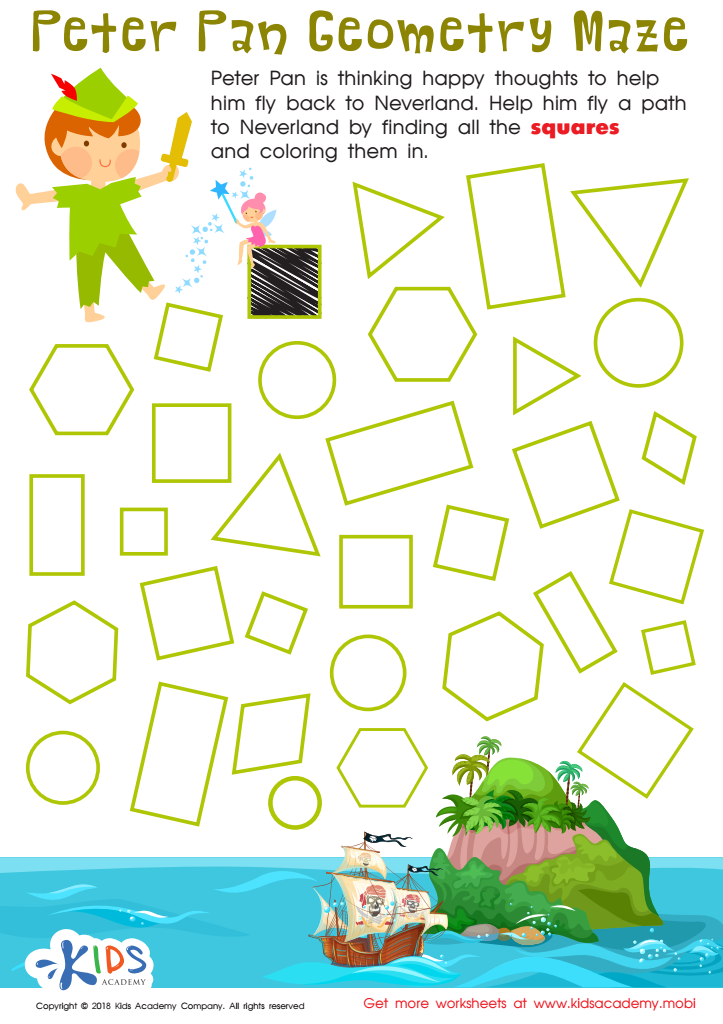
Peter Pan Worksheet
Kindergarteners can join Peter Pan on an adventure to Neverland! They can help him by coloring squares to create a path, strengthening their shape identification skills in a fun maze. Let the journey begin!
 Assign to My Students
Peter Pan Worksheet
Worksheet
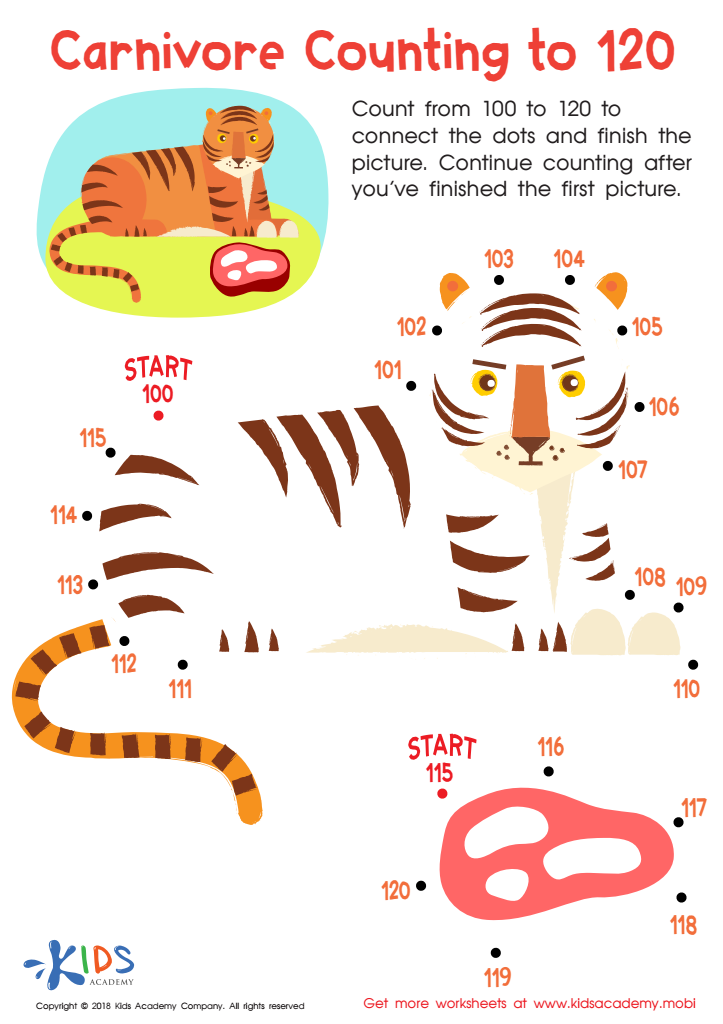
Carnivore Counting to 120 Worksheet
Ask your child to name some popular carnivores. Can they tell you what the animal in the worksheet is? A Tiger? Get them to count from 100 to 120 to connect the dots. After they finish the first picture, keep counting to help them practice!
Carnivore Counting to 120 Worksheet
Worksheet
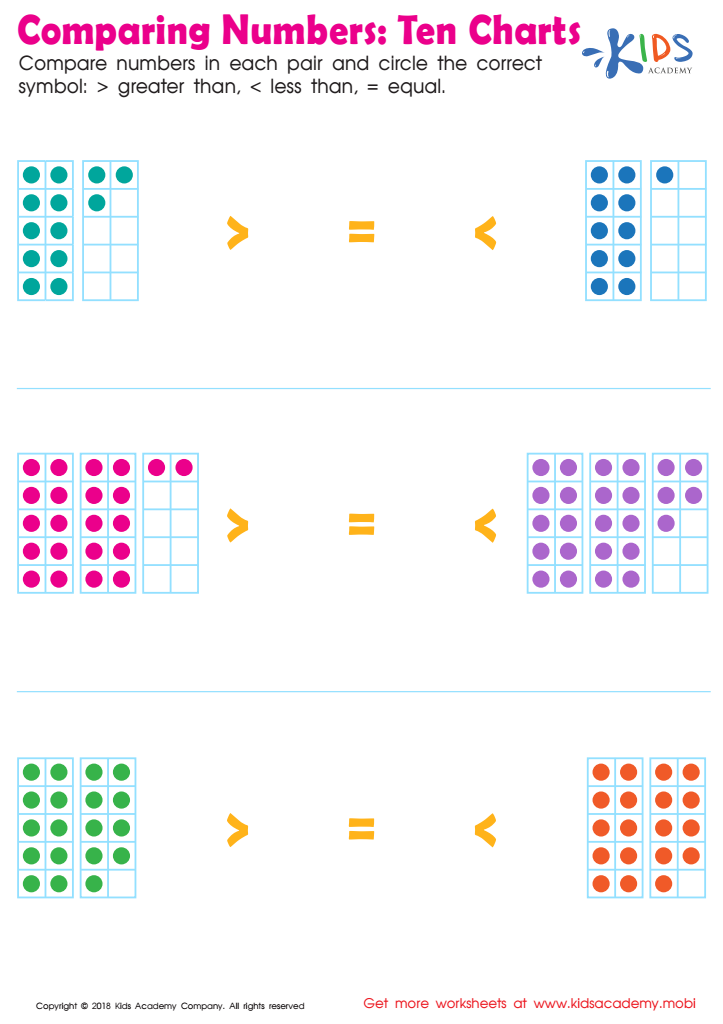
Ten Charts Worksheet
Help your child learn numbers in a creative way using this printable worksheet. They'll learn the difference between numbers, how to add them, and the symbols of "greater than", "less than" and "equals to". They can compare two sides, and identify which is greater, less or equal. Let their maths knowledge bloom!
Ten Charts Worksheet
Worksheet
Join Kids Academy for Free
Who is primarily going to use this learning content?







Understanding sequences in mathematics is crucial for children aged 6 to 8, as it lays the foundation for more advanced mathematical concepts and logical reasoning skills. Parents and teachers should care about this topic for several reasons.
Firstly, grasping sequences enhances children's ability to recognize patterns, which is a fundamental skill in math and other areas of learning. Recognizing patterns helps solidify arithmetic operations and fosters problem-solving capabilities. By comprehending how numbers or shapes follow one another, children can develop critical thinking skills that are applicable across various subjects.
Secondly, a strong understanding of sequences aids in mastering early arithmetic concepts, such as addition and multiplication. For instance, recognizing sequences helps children better understand addition as a series of repeated operations. This understanding is crucial as they progress to more complex operations.
Moreover, sequences play a powerfully connected role in real-life situations, aiding children in grasping everyday tasks such as telling time, following instructions, or organizing information chronologically.
Lastly, fostering an interest in mathematical sequences can enhance children's confidence and readiness for future learning. Engaging parents and teachers in this area of learning nurtures a supportive environment where children's mathematical proficiency can flourish over time.








