Addition skills Normal Word Problems Worksheets for Ages 6-8
4 filtered results
-
From - To
Enhance your child's addition skills with our engaging Normal Word Problems Worksheets, designed specifically for ages 6-8. These printable resources offer real-life scenarios that make learning math fun and relatable. Children will tackle various word problems that encourage critical thinking and strengthen their ability to apply addition in everyday contexts. By integrating fun illustrations and relatable situations, our worksheets inspire confidence in young learners as they practice solving addition problems independently. Ideal for both classroom instruction and at-home practice, these worksheets will help ensure mastery of fundamental addition concepts while nurturing a love for math. Download your free worksheets today!
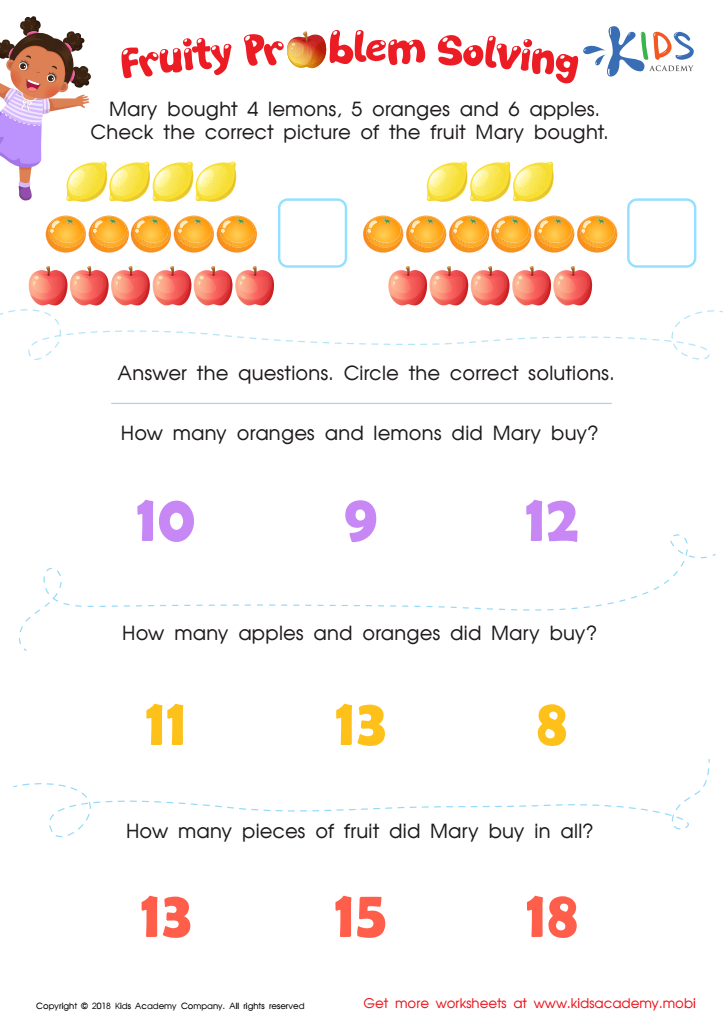
Fruity Problem Solving Worksheet
 Assign to My Students
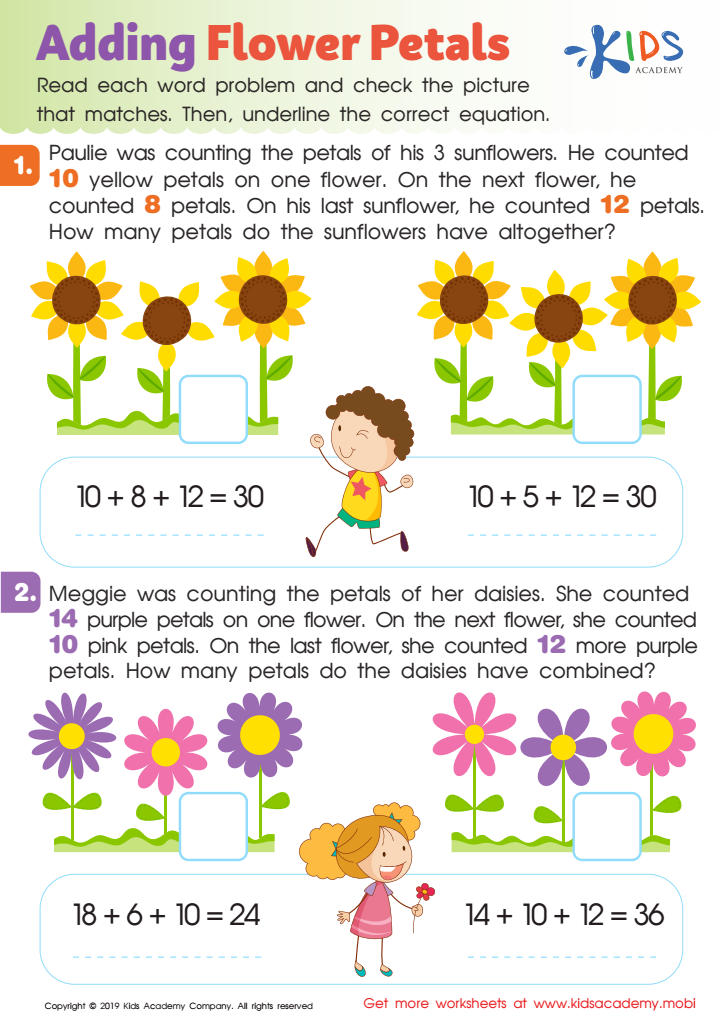
Adding Flower Petals Worksheet
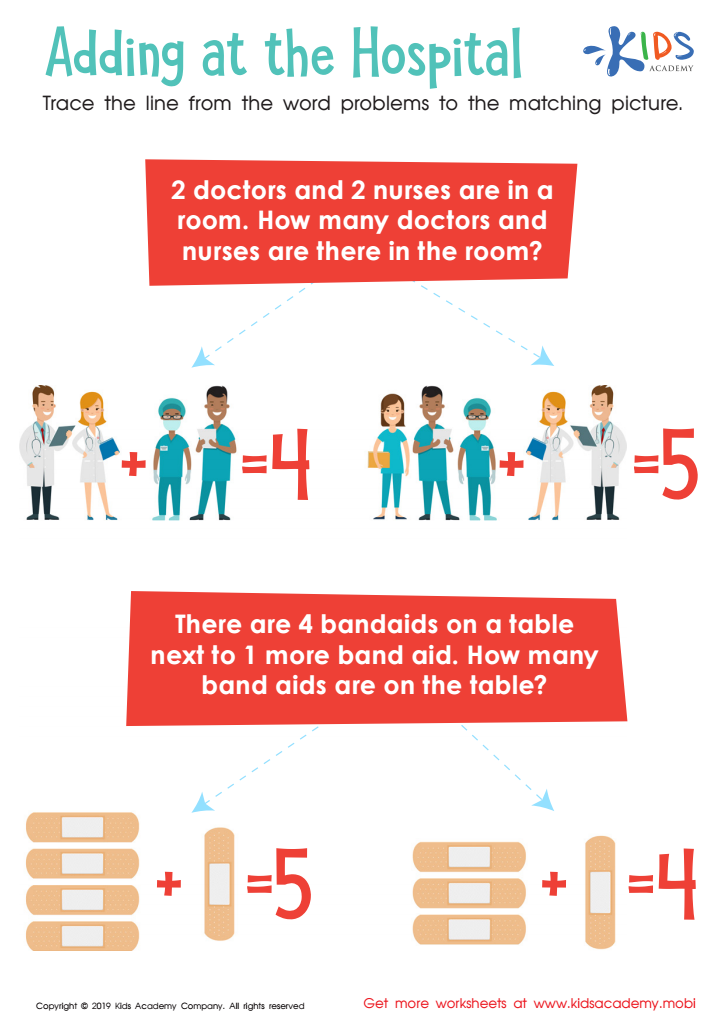
Adding at the Hospital Worksheet
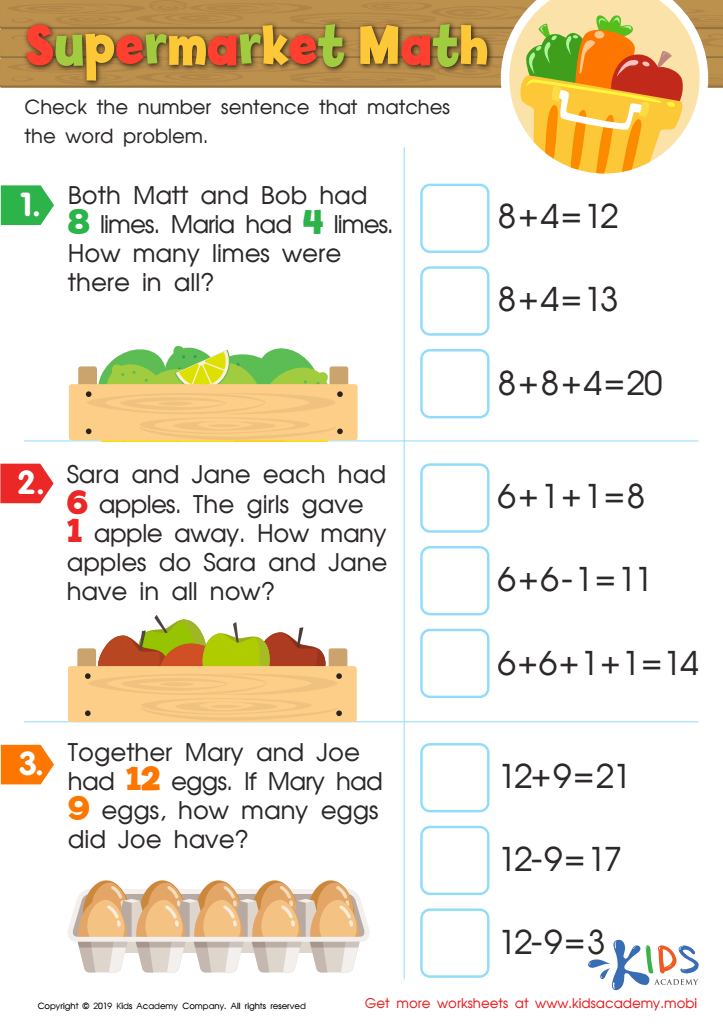
Supermarket Math Worksheet








Addition skills and the ability to solve normal word problems are crucial for children ages 6-8 as they lay the foundation for mathematical understanding and real-life problem-solving abilities. At this developmental stage, children are transitioning from concrete representations of numbers to more abstract concepts. Engaging with word problems not only enhances their addition skills but also strengthens critical thinking and reasoning.
Parents and teachers should care because word problems help children connect mathematics to everyday situations. This relevance fosters engagement and motivation, making learning meaningful. When children learn to translate words into numerical expressions, they practice comprehension skills, which are vital in all academic fields.
Furthermore, mastering addition through word problems provides the groundwork for more complex mathematical operations, such as subtraction, multiplication, and division, in later grades. In addition, early proficiency in math skills correlates with future academic success and encourages a positive attitude toward mathematics.
Additionally, discussing and solving word problems promotes collaborative learning, as children often work together, verbalizing their thought processes. This social aspect not only enhances their communication skills but also builds confidence in tackling challenges, setting a positive trajectory for future learning experiences.








