Take young readers on an exciting journey to enhance their skills with our “Improve Reading Comprehension” worksheets tailored for ages 6-8. These engaging and educational printable materials focus on boosting kids' understanding and retention through a variety of stories and exercises. Designed to develop essential reading strategies, our worksheets cover components such as summarizing, predicting, and questioning, making learning fun and effective. Ideal for both classroom use or additional practice at home, our carefully crafted resources are perfect for nurturing confident, fluent readers. Give your child the tools they need to succeed in their reading adventure.

Check out this FREE Trial Lesson on Reading for age 6-8!

Text Features

Favorites
With answer key
Interactive
  • 6-8
  • Improve reading comprehension
  • Reading
  • Normal
Synonyms or Antonyms: Assessment Worksheet

Synonyms or Antonyms: Assessment Worksheet

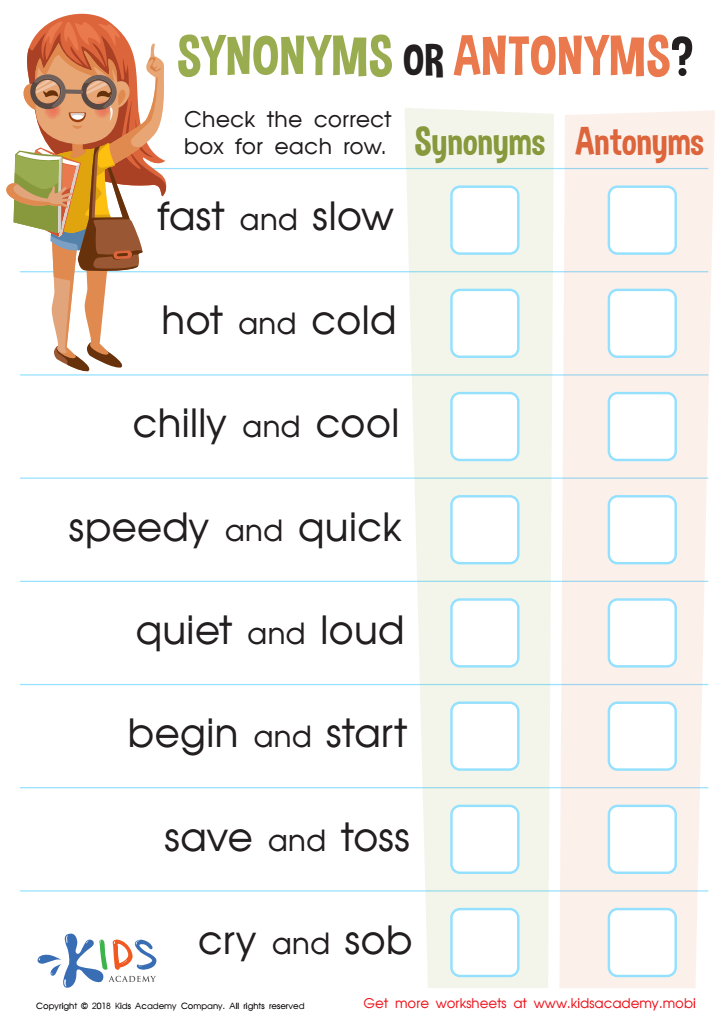
Test your child's knowledge with this fun worksheet! Ask them to read the words and select if they are synonyms or antonyms - e.g. 'happy' is a synonym and 'bad' is an antonym. For an extra challenge, ask them to provide two synonyms and two antonyms for each word.
Synonyms or Antonyms: Assessment Worksheet
Worksheet
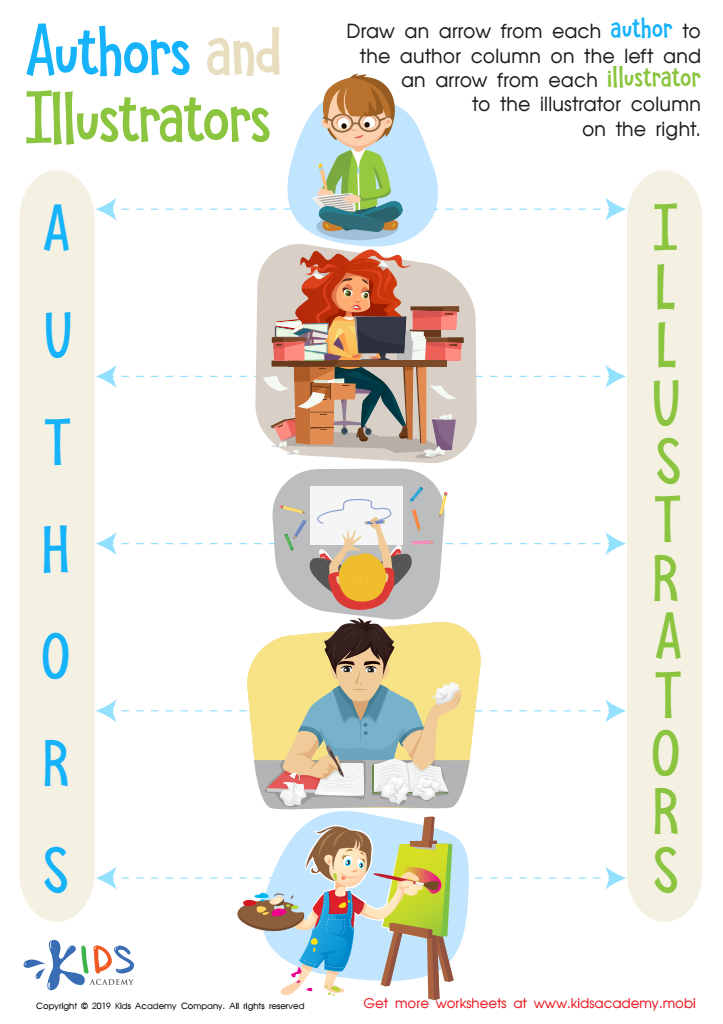
Authors and Illustrators Worksheet

Authors and Illustrators Worksheet

This free PDF provides a simple and fun way to understand the roles of authors and illustrators for beginning readers. It offers concrete pictures of what each one does and traceable lines for children to decide whether they are an author or an illustrator. It will help build their critical thinking skills and foster a better understanding of the book-making process.
Authors and Illustrators Worksheet
Worksheet
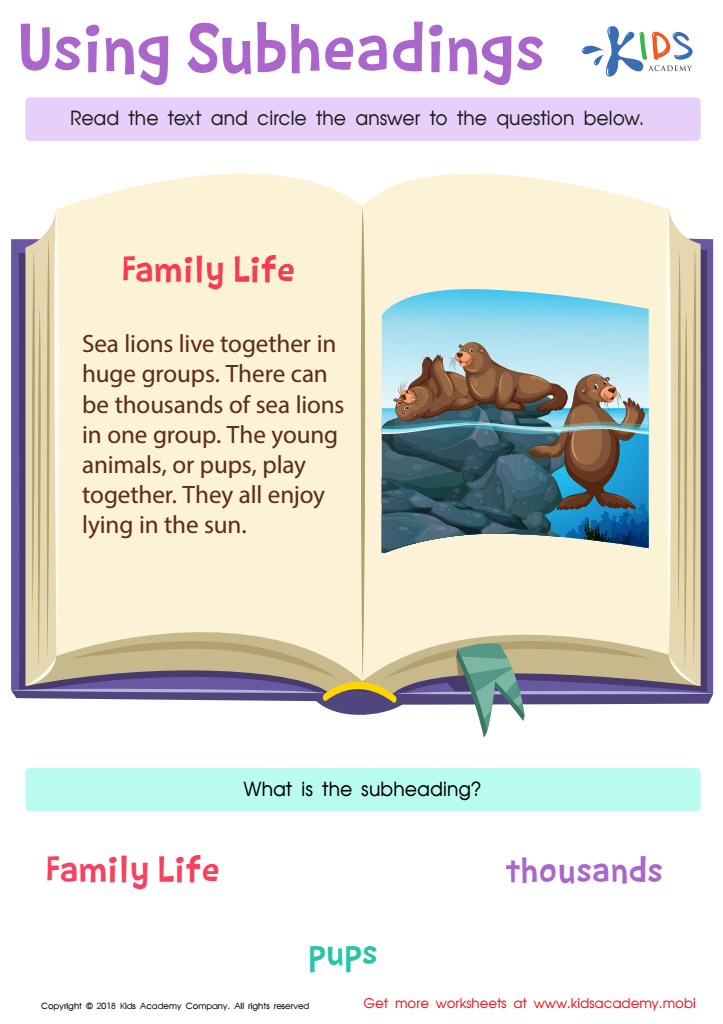
Using Subheadings Worksheet

Using Subheadings Worksheet

Writers must follow many rules to make their work organized and easier to read. Subheadings are usually in bold font and centered at the top of the page. Read the text to your kids and have them circle the correct answer.
Using Subheadings Worksheet
Worksheet
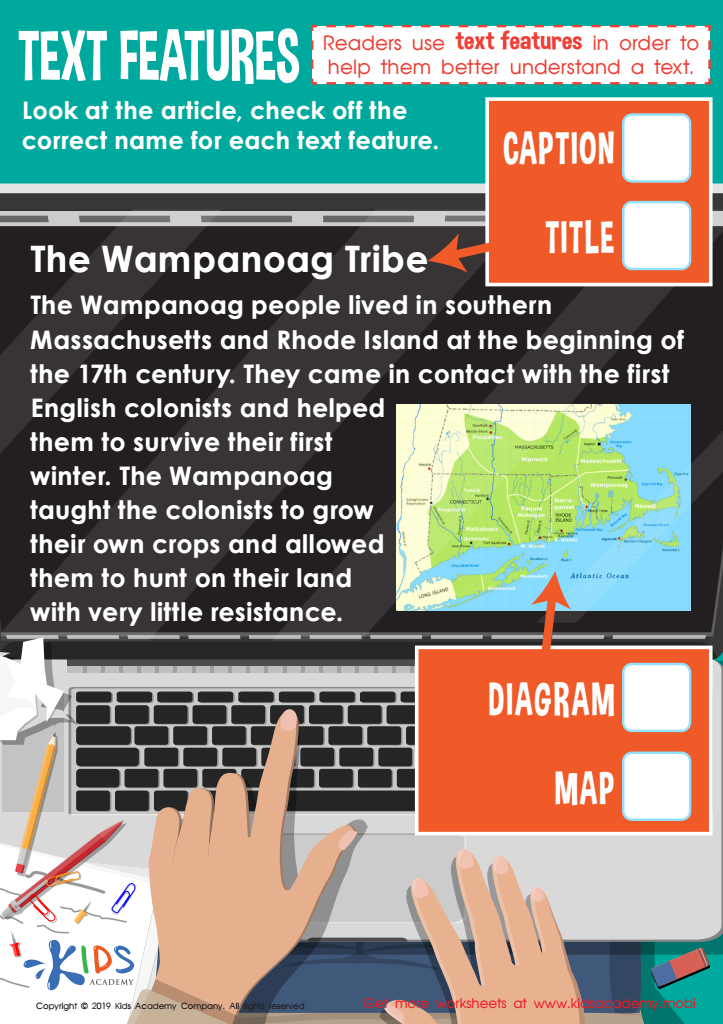
Text Features Worksheet

Text Features Worksheet

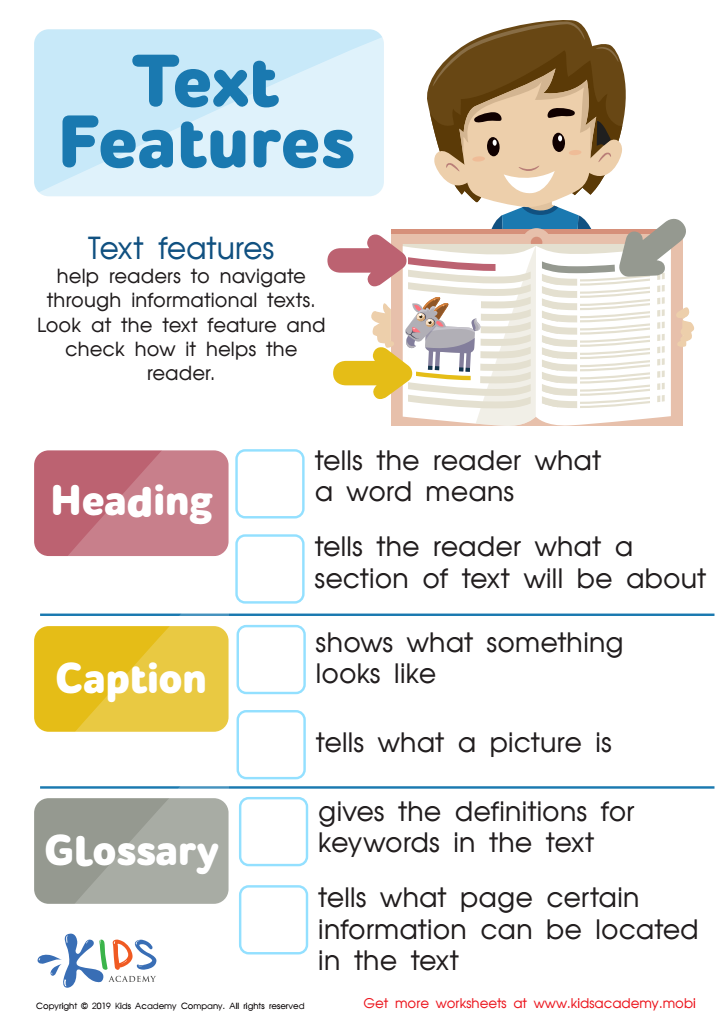
Help your kids get better at processing and analyzing texts by getting them to practice. Our worksheet with text features will help them find their way. This will help them understand how the features assist in finding information. Encourage practice, and they'll be able to improve quickly.
Text Features Worksheet
Worksheet
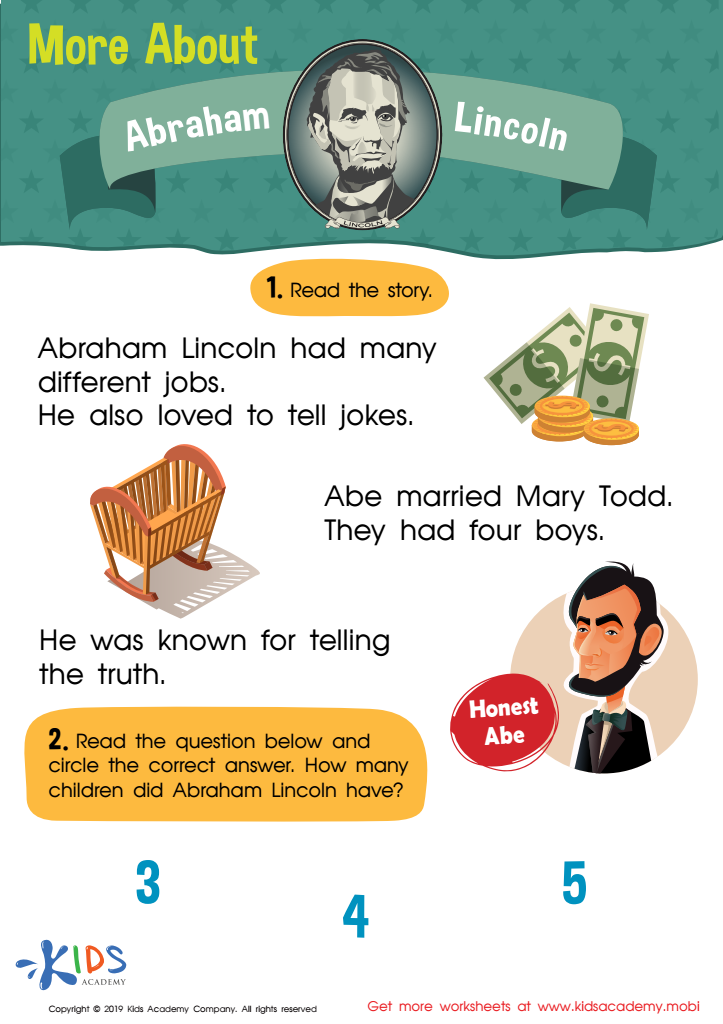
More About Abraham Lincoln Worksheet

More About Abraham Lincoln Worksheet

Read the short story in the worksheet with your kids. Show them the pictures representing the sentences, then ask the questions and help them circle the correct answer. Make sure they are actually paying attention and learning from the stories.
More About Abraham Lincoln Worksheet
Worksheet
First Person Worksheet

First Person Worksheet

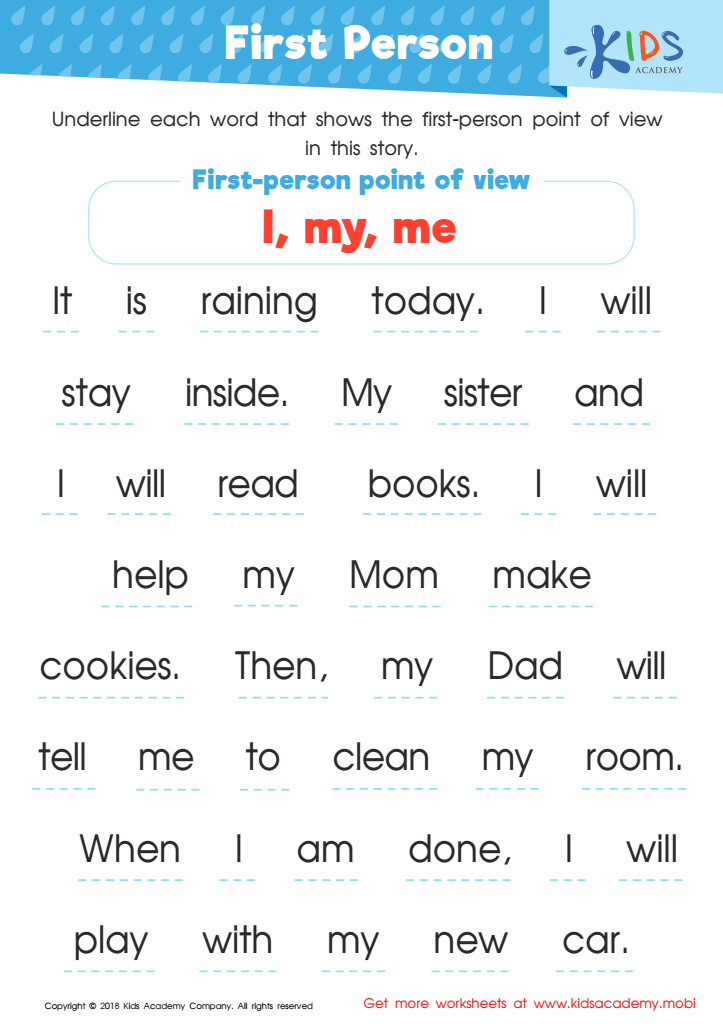
Teachers help students understand and recognize why authors choose different points of view. This worksheet focuses on first person point of view and its pronouns (I, me and my). Students will read a story, then circle each first-person pronoun. Through this activity, they'll practice identifying the POV in a text.
First Person Worksheet
Worksheet
Text Features Worksheet

Text Features Worksheet

Encourage your child to read- it'll pay off! Reading teaches us new words, spelling, and information on various topics. Plus, readers use text features- such as tables, indexes, and diagrams- to help comprehend. Read the worksheet with your child and help them identify and understand the different features.
Text Features Worksheet
Worksheet


Reading comprehension is foundational for academic success, especially for children ages 6-8, who are in critical developmental years. During this period, kids transition from ‘learning to read’ to ‘reading to learn.’ When children understand what they're reading, they can enjoy stories, gain knowledge, and perform better in various subjects, from science to social studies.

First, strong reading comprehension skills enhance vocabulary and language development. This not only impacts their ability to understand text but also improves communication skills, which are essential for classroom participation and social interactions.

Second, comprehension fosters critical thinking and analytical skills. As children grapple with stories or informational texts, they learn to identify main ideas, details, sequences, and cause-and-effect relationships, which are crucial for problem-solving both in and out of school.

Third, improved reading comprehension can boost a child's confidence and love for reading. When children understand texts, they're more likely to find reading enjoyable, leading to more frequent reading. Repeated practice reinforces their skills, creating a positive feedback loop.

Lastly, early comprehension skills have long-term benefits. Proficient young readers are more likely to achieve academic success, complete higher education, and possess the analytical abilities needed in today’s job market. Parents and teachers play vital roles by providing supportive environments and reading practices to strengthen these skills.