Vocabulary expansion Normal Animals Worksheets for Ages 6-8
5 filtered results
-
From - To
Discover our engaging Vocabulary Expansion Normal Animals Worksheets designed specifically for children aged 6-8. These worksheets provide a fun and interactive way for young learners to enhance their vocabulary while exploring the fascinating world of animals. With activities tailored to strengthen their language skills, children will learn animal names, characteristics, and related terminology through puzzles, matching games, and creative exercises. Our resources promote critical thinking and stimulate curiosity, ensuring a solid foundation in vocabulary development. Perfect for home or classroom use, these worksheets make learning enjoyable and effective. Start your child’s vocabulary journey today with our captivating animal-themed resources!
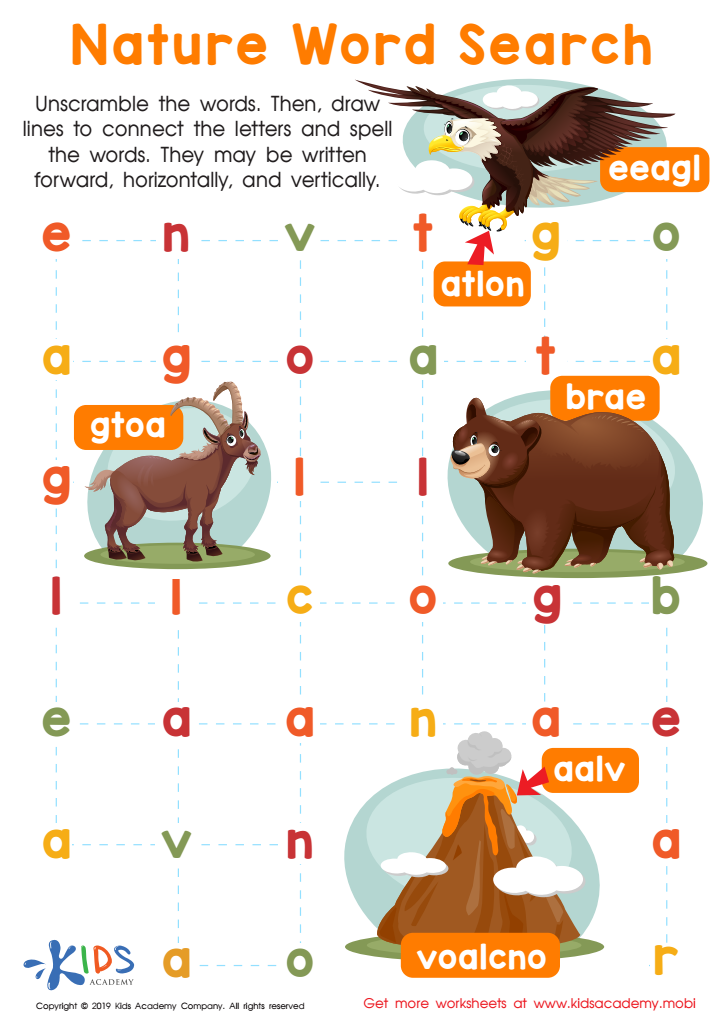
Nature Word Search Worksheet
 Assign to My Students
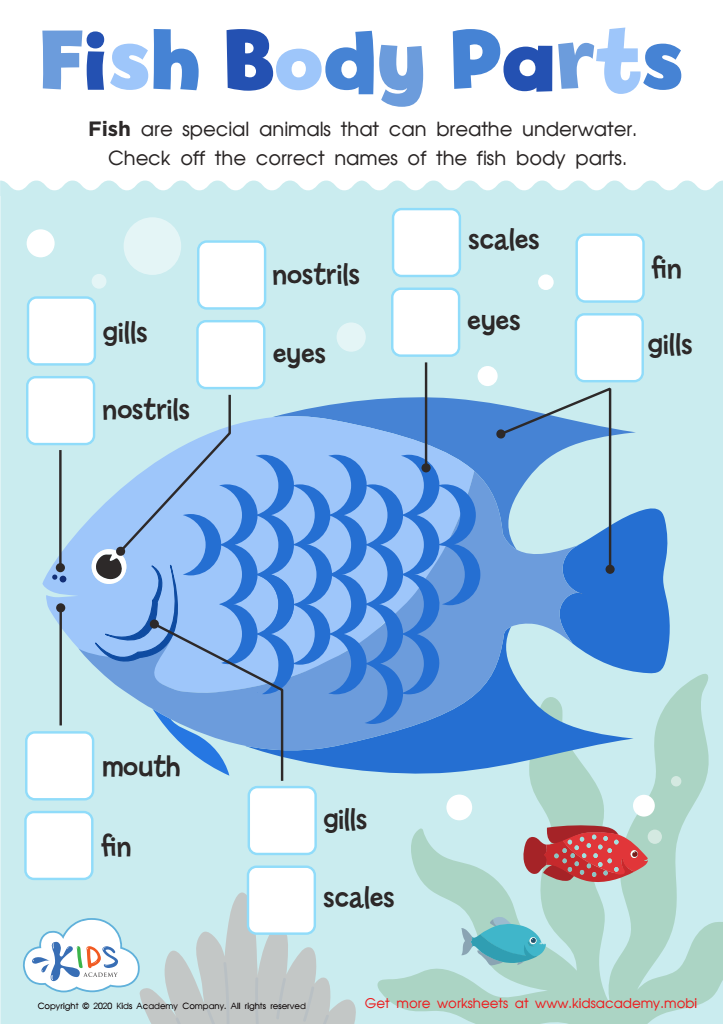
Fish Body Parts Worksheet
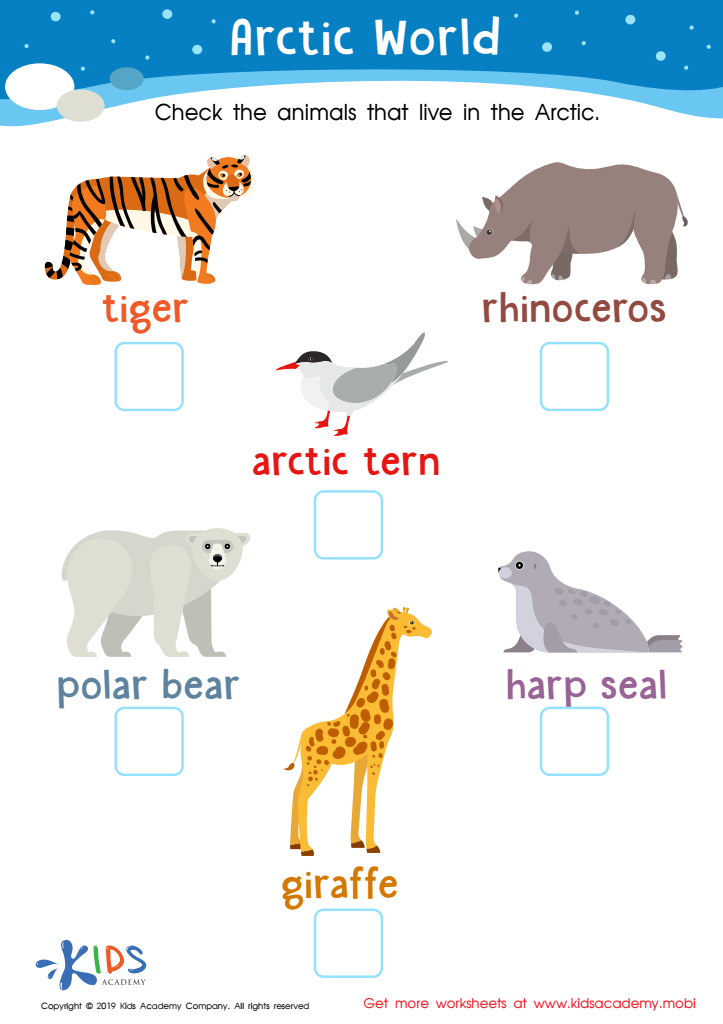
Arctic World Worksheet
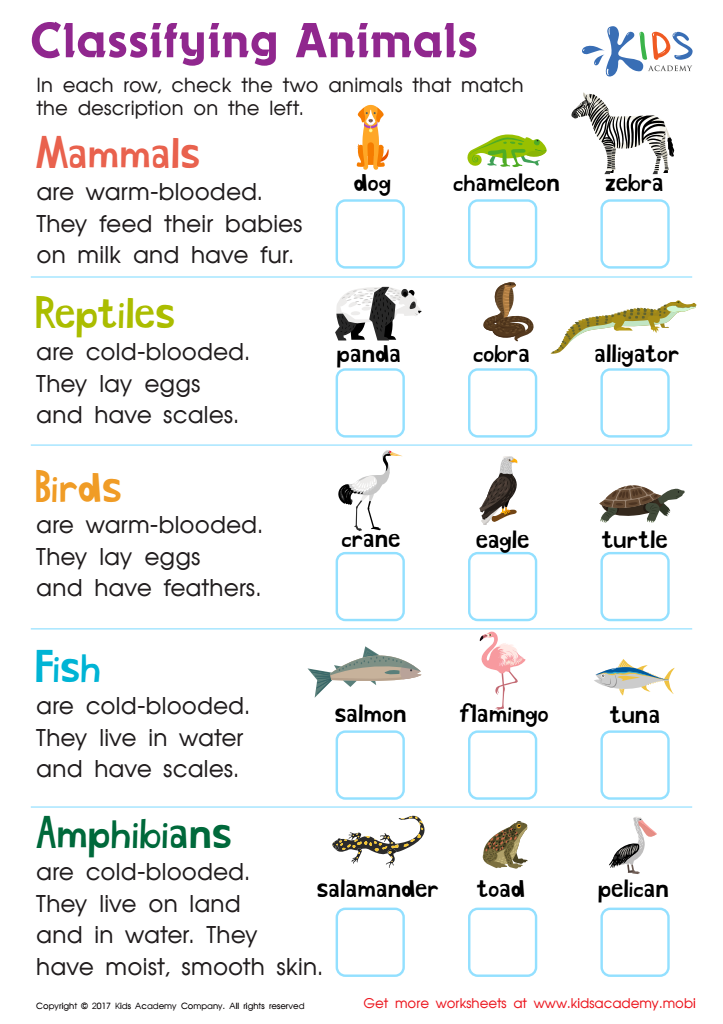
Classifying Animals Worksheet
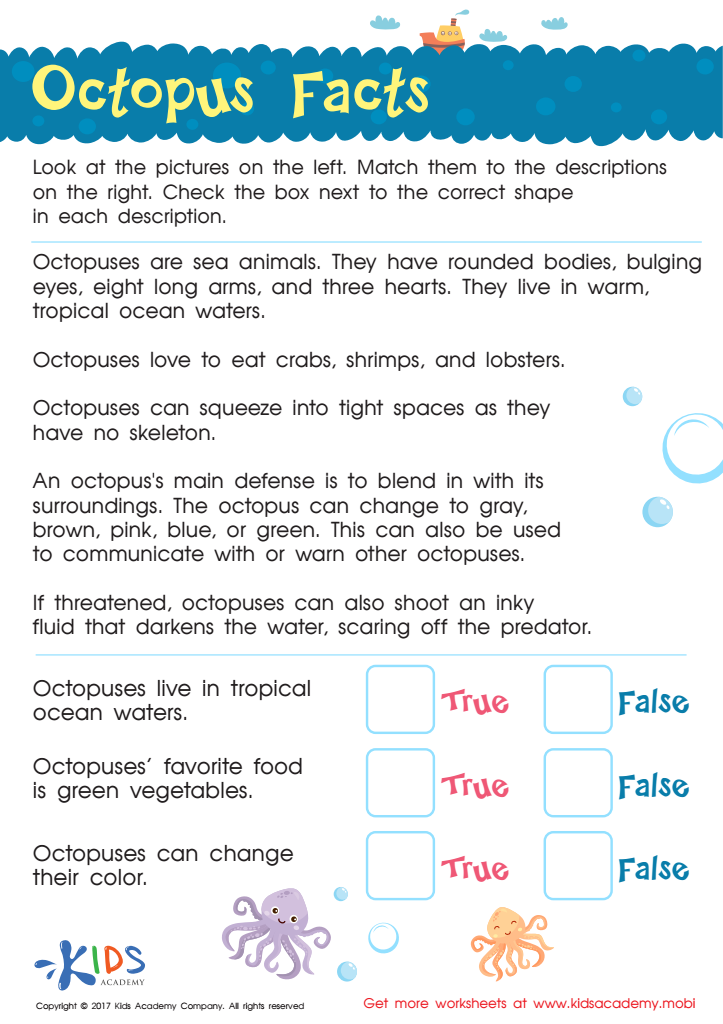
Octopus Facts Worksheet For Kids








Parents and teachers should prioritize vocabulary expansion for young children, particularly in understanding normal animals, as it plays a crucial role in their cognitive and social development. From ages 6 to 8, children's brains are highly receptive to learning new concepts and words, shaping their communication skills and self-confidence.
A robust vocabulary helps children express themselves more clearly and effectively, whether in writing or conversations. When children learn terms related to animals, they not only expand their language skills but also enhance their understanding of the natural world. This prompts curiosity and promotes critical thinking, nurturing a lifelong love of learning.
Moreover, discussing animals can lead to valuable lessons in empathy and compassion as children understand different traits and behaviors. It fosters connections to the environment, paving the way for awareness about conservation and the importance of wildlife preservation.
In engaging children with animal-related vocabulary, teachers can integrate storybooks, interactive games, and hands-on activities that make learning enjoyable. Ultimately, vocabulary development in this domain can set the foundation for literacy skills, better relationships, and enriched learning experiences as children progress in school and beyond.








