Color Identification Normal Social Studies Worksheets for Ages 6-8
3 filtered results
Difficulty Level
Grade
Age
-
From - To
Subject
Activity
Standards
Explore our engaging Color Identification Normal Social Studies Worksheets designed specifically for children aged 6-8. These printable resources enhance understanding of color concepts while integrating essential social studies themes. Dedicated to fostering creativity and critical thinking, our worksheets invite young learners to identify and match colors with real-world social contexts, promoting visual recognition and cognitive development. Each activity encourages teamwork, cultural awareness, and attention to detail, making learning both fun and effective. Perfect for classrooms or at-home study, our worksheets will capture your child’s interest and boost their confidence as they navigate the vibrant world around them. Download now and watch them thrive!
Favorites
With answer key
Interactive
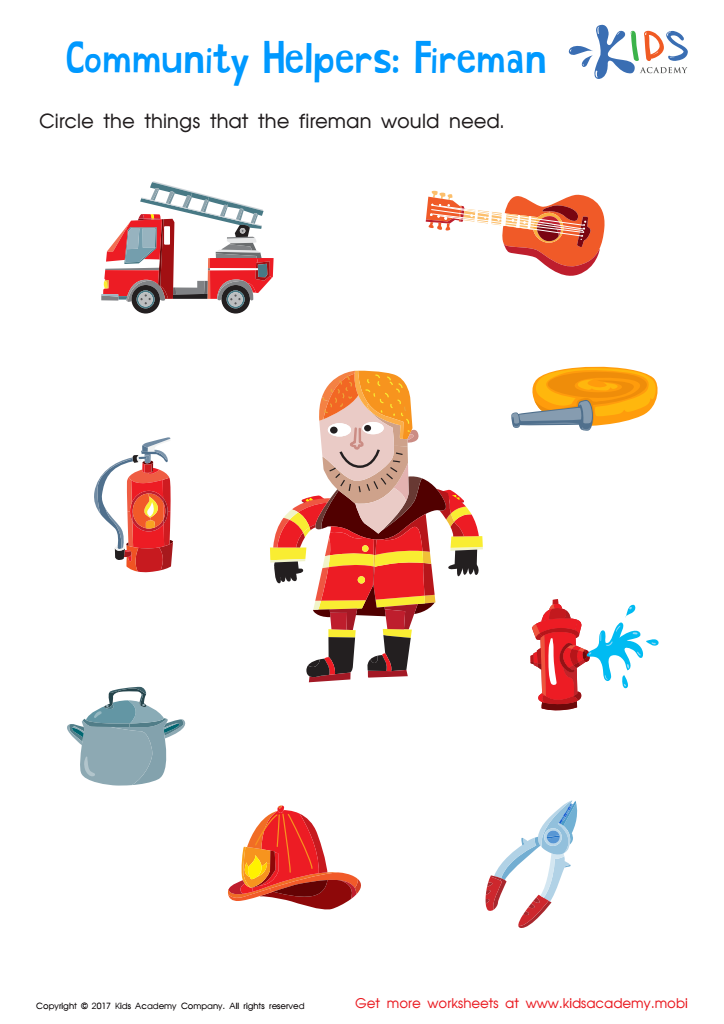
Fireman Worksheet
Kids love firemen and their big fire engines! Inspire your child to learn about their duties with this fun fireman worksheet. It'll help your child understand the role of firemen, as well as develop matching and problem solving skills. Get your kid started on understanding a key role in society and have fun too!
 Assign to My Students
Fireman Worksheet
Worksheet
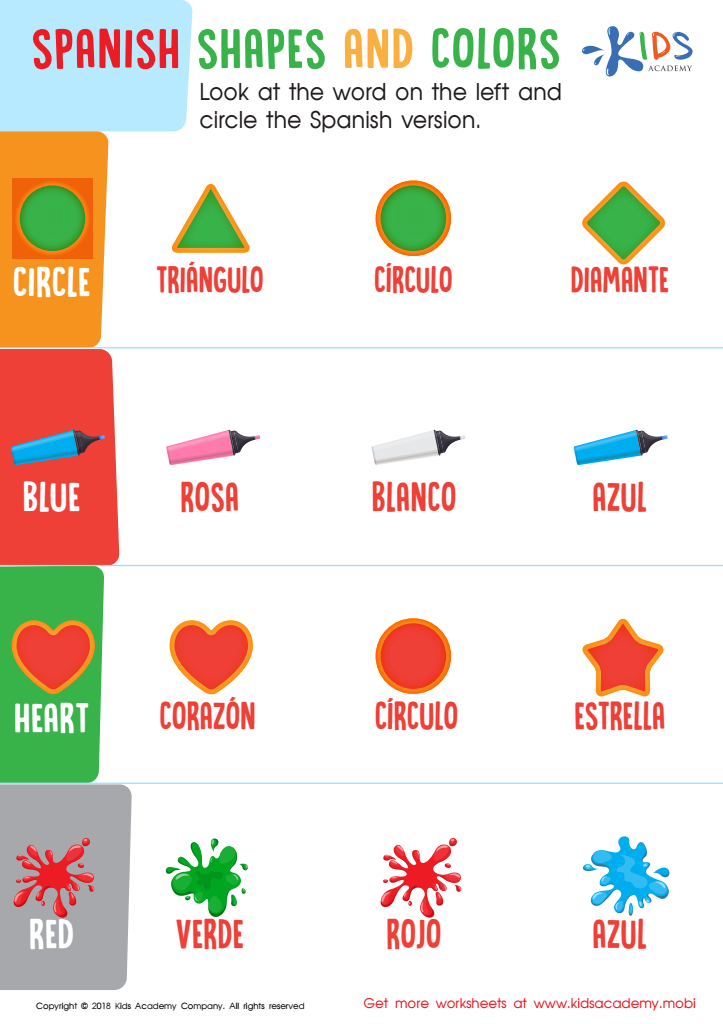
Spanish Shapes and Colors Worksheet
Encourage your children to learn another language from an early age. For example, Spanish - use a worksheet to help with the basics. Point to the English word and ask them to identify and circle the corresponding Spanish word on the right. This way, your kids will grow up with familiarity of the language.
Spanish Shapes and Colors Worksheet
Worksheet
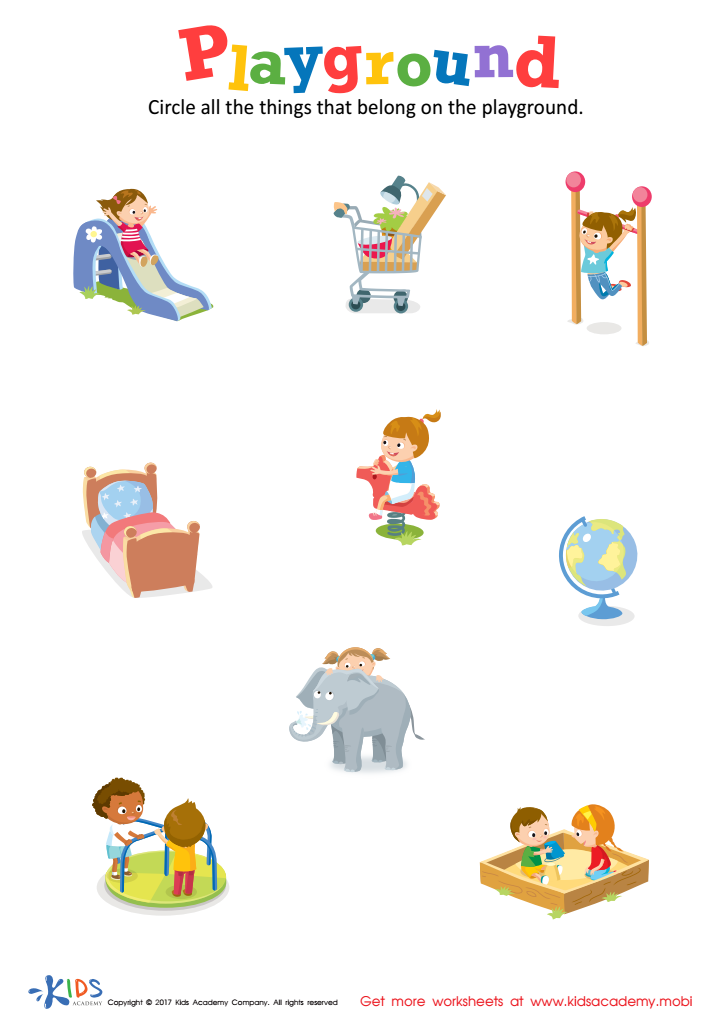
Playground Worksheet
Head to the park with this playground worksheet! It strengthens sorting and cognitive skills while encouraging problem solving. Plus, it's fun-filled and engaging! When finished, head out to the park to see what items your child finds in the playground!
Playground Worksheet
Worksheet
Join Kids Academy for Free
Who is primarily going to use this learning content?


.jpg)





Color identification is an essential foundational skill for children aged 6-8, forming a crucial part of social studies and overall development. Parents and teachers should care about nurturing this skill because colors play a vital role in a child's ability to communicate, understand their environment, and participate in social interactions.
In early education, identifying colors helps children categorize objects, enhancing their observational skills and critical thinking. For example, when children learn to associate colors with different subjects like geography, they can better visualize and remember geographical elements, such as a green map representing valleys or blue for rivers.
Furthermore, color recognition contributes to emotional and social development. Colors are often tied to cultural significance, allowing children to engage with concepts around identity and community inclusion. Understanding colors used in various cultural symbols fosters respect and appreciation for diversity.
By integrating color identification into social studies, parents and teachers create interactive learning opportunities that encourage discussion, collaboration, and connection among peers. Color awareness broadens children’s understanding of their world, empowering them with skills that support lifelong learning and inclusive perspectives. Supporting this development ensures they grow into socially competent individuals who value diversity and communication.