Fine Motor Skills Normal Tracing Words Worksheets for Ages 6-8
6 filtered results
-
From - To
Boost your child's fine motor skills and handwriting efficiency with our "Fine Motor Skills Normal Tracing Words Worksheets for Ages 6-8." These thoughtfully designed worksheets help children practice tracing words, enhancing coordination and precision. Each activity engages young learners in fun, skill-building exercises ideal for developing control, strength, and dexterity in their hands. Perfect for home or classroom use, our worksheets ensure that your child gains confidence and improves their writing abilities in a supportive learning environment. Transform tracing into a joyful adventure with our expertly crafted fine motor skills worksheets.
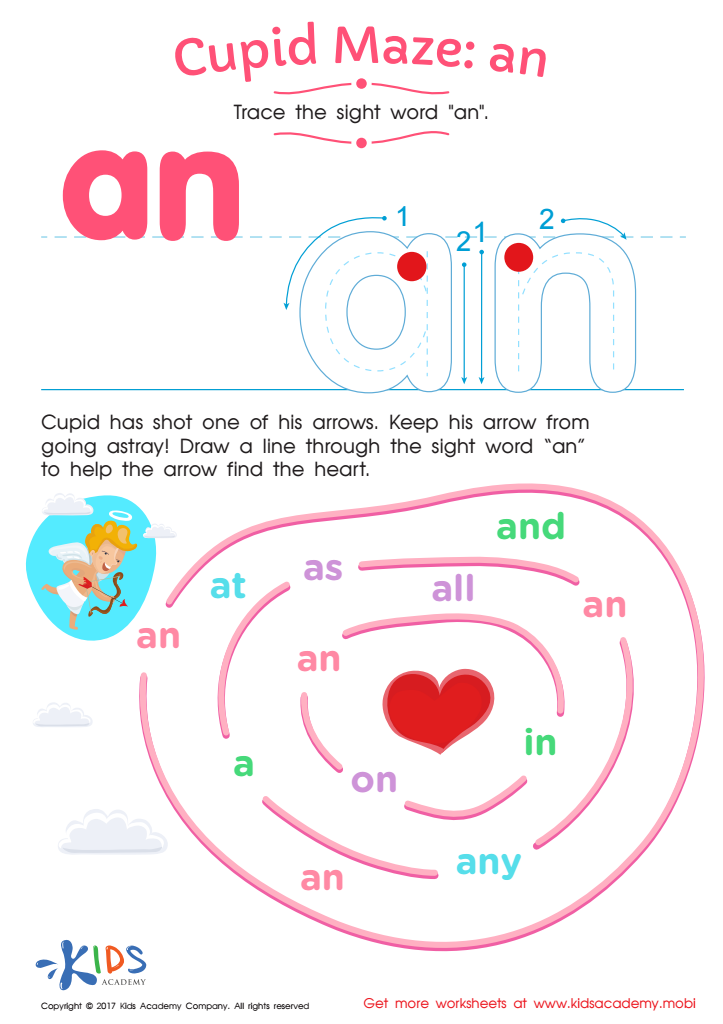
Cupid Maze: An Printable
 Assign to My Students
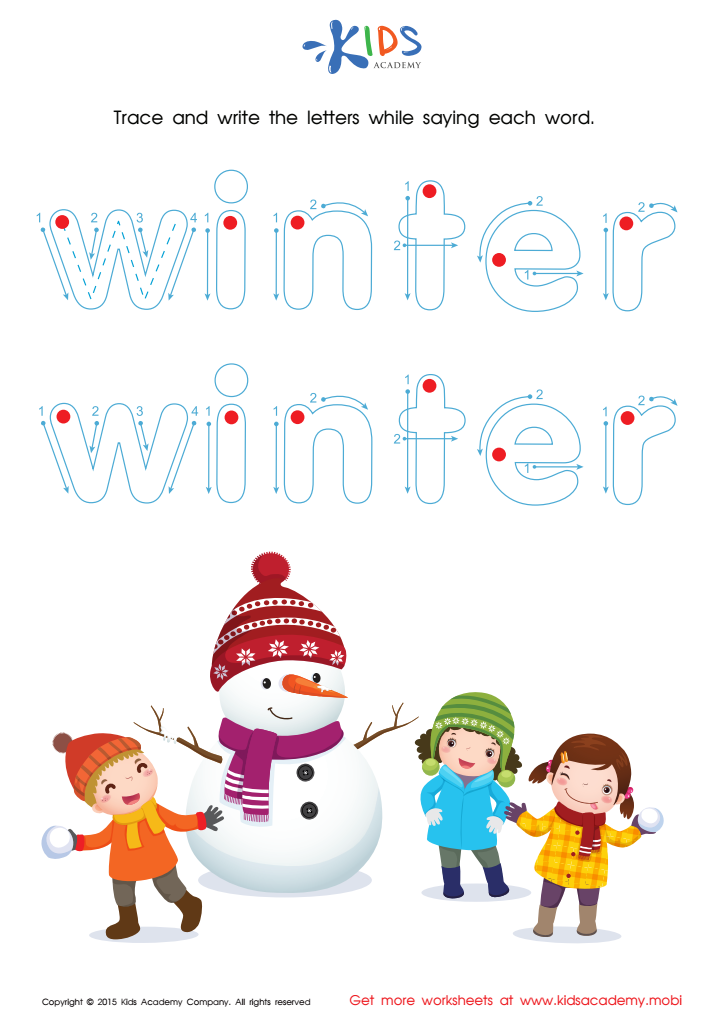
Snowman Tracing Winter Words Worksheet
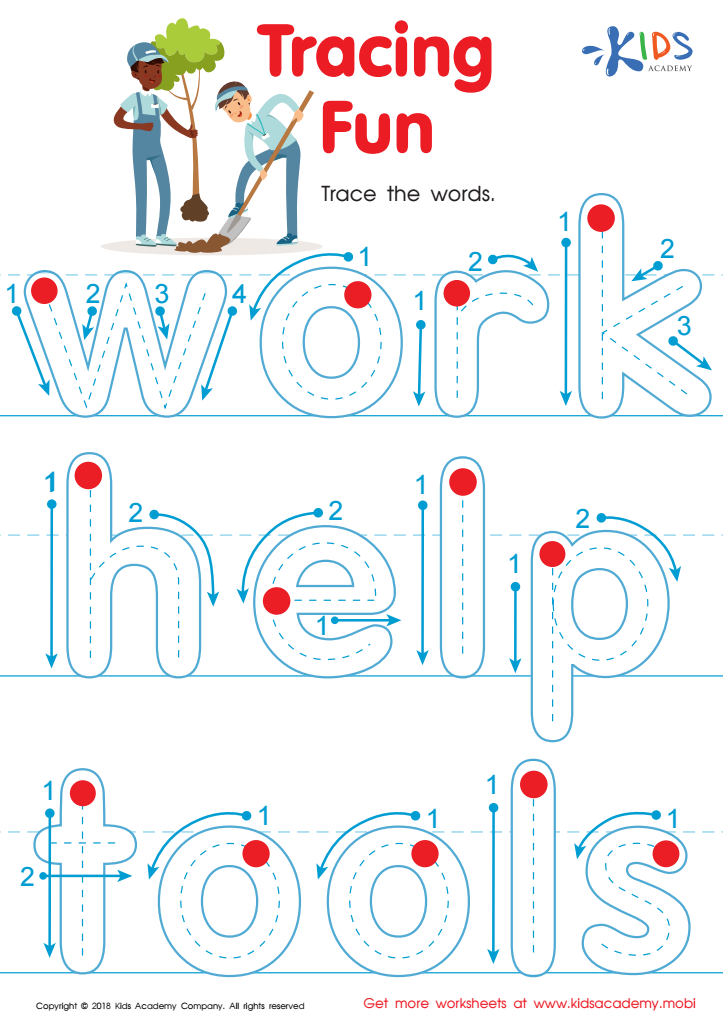
Tracing Fun Worksheet
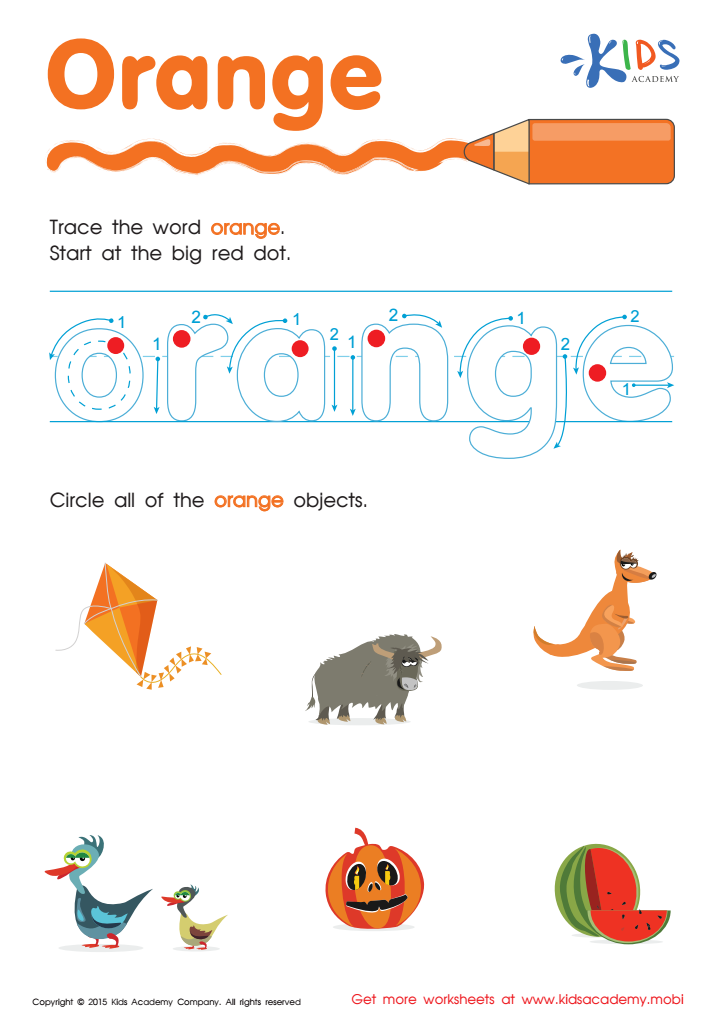
Orange Tracing Color Words Worksheet
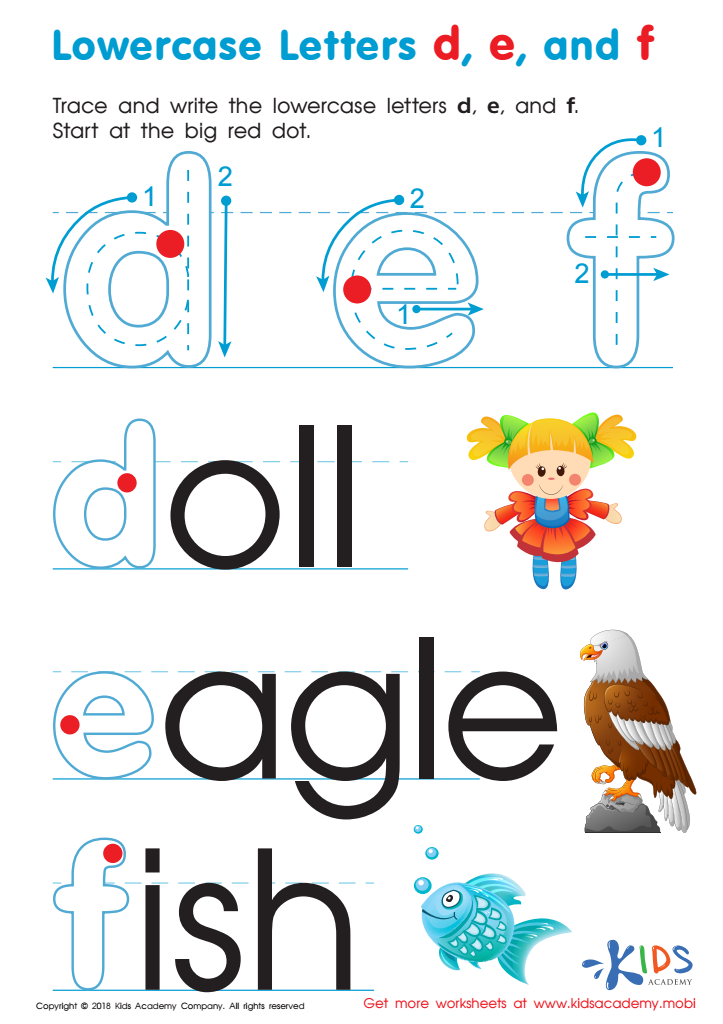
Lowercase Letters d e f Worksheet
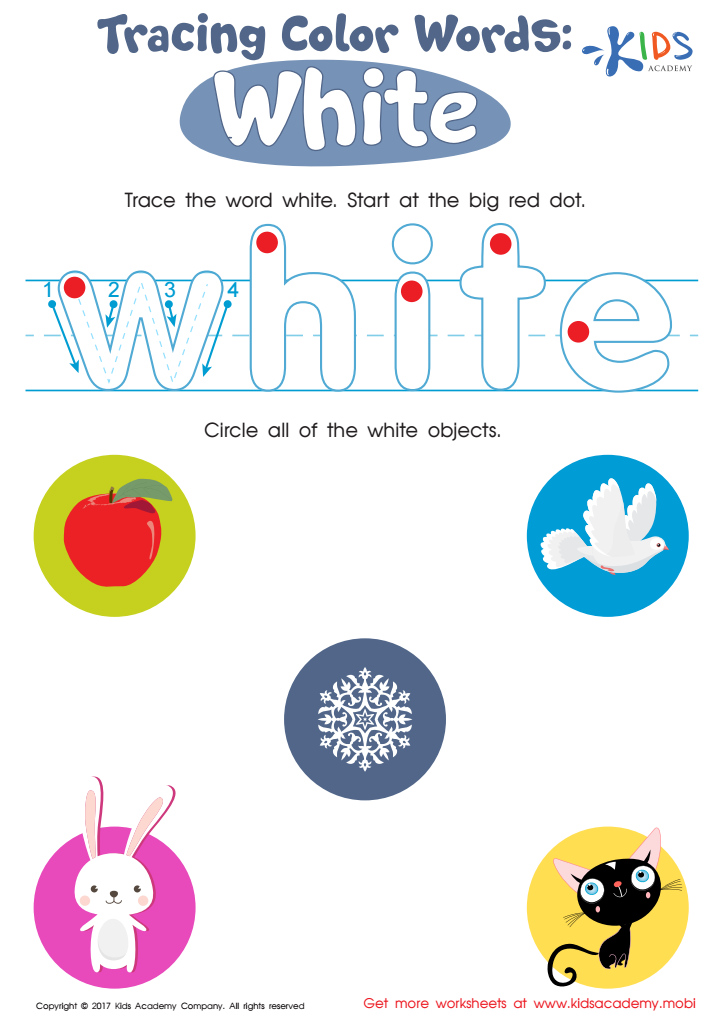
White Tracing Color Words Worksheet








Fine motor skills development is crucial for children ages 6-8 as it intricately affects their academic and daily life activities. Normal tracing words, where children trace letters and words, significantly contribute to the enhancement of these skills. By practicing tracing, children refine their hand-eye coordination, control, and dexterity, all essential for tasks such as writing, drawing, and even using digital tools effectively.
Tracing activities engage muscles in the fingers, hands, and wrists, bolstering strength and coordination necessary for gripping pencils and maneuvering objects. Improved handwriting is one direct benefit; students with better fine motor skills can write more legibly and quickly, reducing frustration and fostering confidence in their abilities. This skill not just aids academic success but also encourages broader cognitive development as the brain region associated with fine motor control is crucial for problem-solving and logical thinking.
Moreover, proficient fine motor skills empower children to perform everyday tasks like buttoning shirts, tying shoelaces, and feeding themselves independently, cultivating a sense of autonomy and self-reliance. By focusing on fine motor skills through tracing, parents and teachers can lay a solid foundation for both academic and personal growth, leading to well-rounded, capable kids prepared for future challenges.