Sound differentiation Normal Alphabet Worksheets for Ages 6-9
3 filtered results
-
From - To
Discover our "Sound Differentiation Normal Alphabet Worksheets," designed specifically for children ages 6-9. These engaging worksheets help young learners identify and differentiate sounds associated with each letter of the alphabet, enhancing their phonemic awareness. Through fun activities, kids will practice vowel sounds, consonant blends, and sound recognition, fostering crucial early literacy skills. Perfect for both classroom use and at-home learning, our worksheets provide a creative and interactive approach to mastering the alphabet. Help your child build a strong foundation for reading and writing with our thoughtfully designed resources that encourage exploration and confidence in their language abilities!
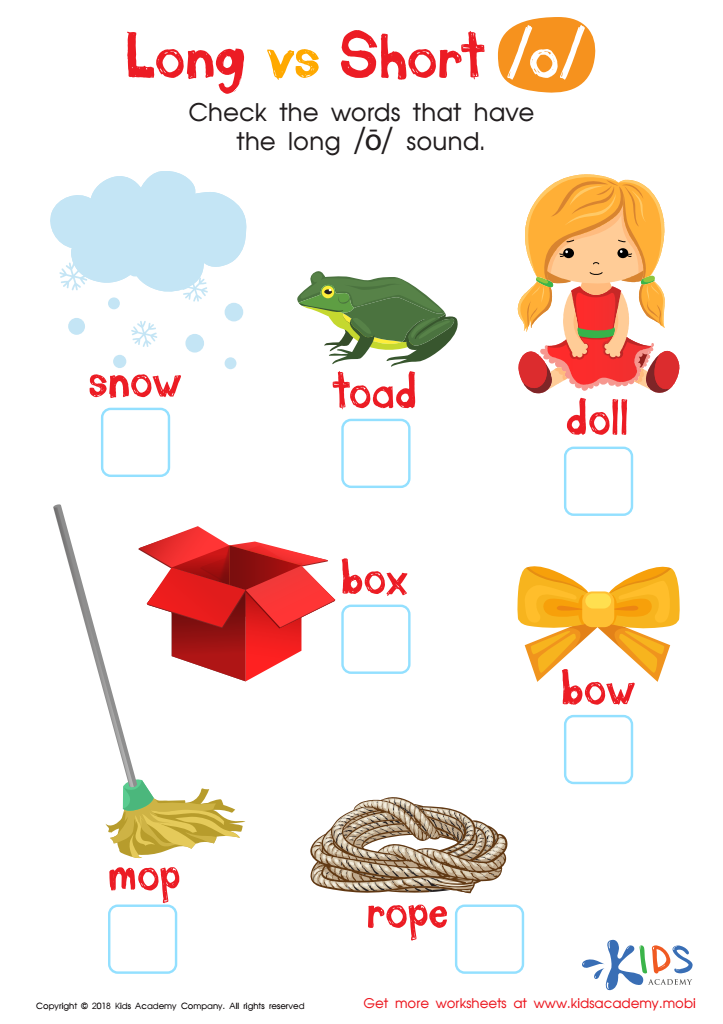
Long vs Short O Reading Worksheet
 Assign to My Students
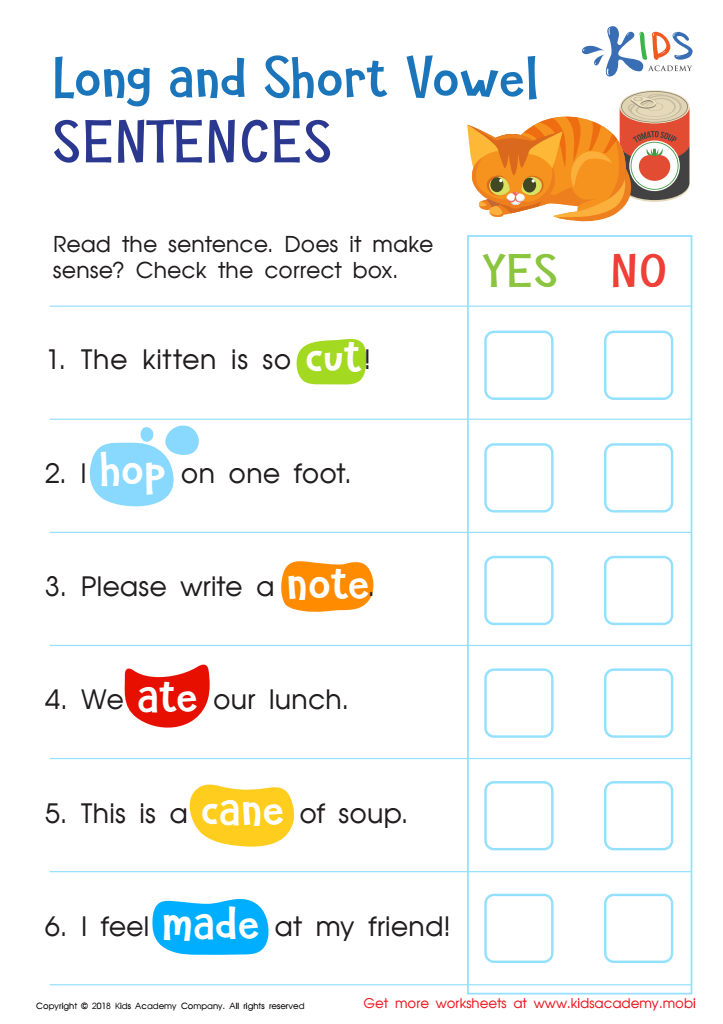
Long and Short Vowel Sentences: Assessment Worksheet
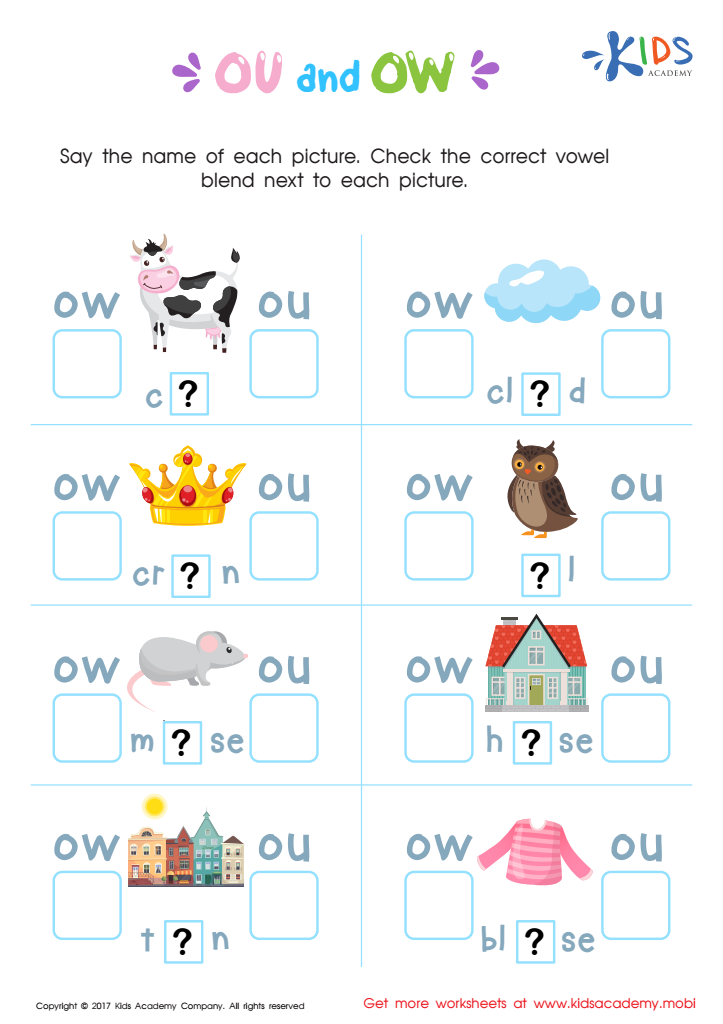
OU and OW Words Worksheet








Sound differentiation using the normal alphabet is crucial for children aged 6-9 as it lays the foundation for effective reading and writing skills. During this developmental stage, children begin to recognize patterns in language and understand the relationship between letters and their corresponding sounds. By focusing on sound differentiation, parents and teachers can help children distinguish between phonemes, the smallest units of sound in a language, which is essential for decoding words.
This skill aids in improving literacy, as competent readers are better equipped to comprehend texts and develop vocabulary. Sound differentiation enhances a child’s ability to blend sounds together to form words, contributing to stronger spelling and writing skills as well. Furthermore, it fosters greater confidence in language use, making children more likely to engage in reading and creative writing activities.
Moreover, addressing sound differentiation can identify and support those who might struggle with learning disabilities, allowing for timely interventions. Overall, embracing sound differentiation through engaging exercises and activities not only benefits academic performance but also supports a child’s communication abilities, paving the way for lifelong learning and literacy success. Parents and teachers play a pivotal role in nurturing these skills, ensuring a well-rounded educational experience.







