Sound-letter association Normal Alphabet Worksheets for Ages 6-9
3 filtered results
-
From - To
Enhance your child's literacy skills with our engaging "Sound-Letter Association Normal Alphabet Worksheets," designed for ages 6-9. These printable worksheets help young learners connect sounds to letters, fostering essential phonetic awareness that supports reading and writing mastery. With a variety of fun activities, including tracing, matching, and coloring, children will enjoy exploring the alphabet while developing critical language skills. Our resources align with educational standards and cater to diverse learning styles, making them perfect for home or classroom use. Boost your child's confidence in literacy and set a strong foundation for their educational journey with our interactive worksheets!
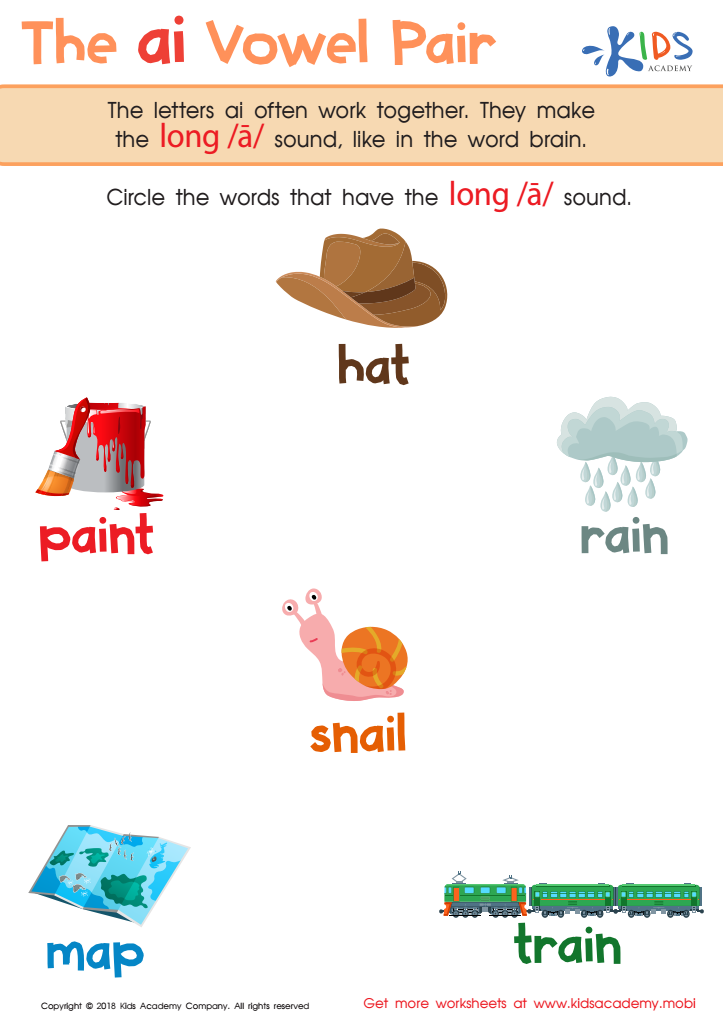
The AI Vowel Pair Worksheet
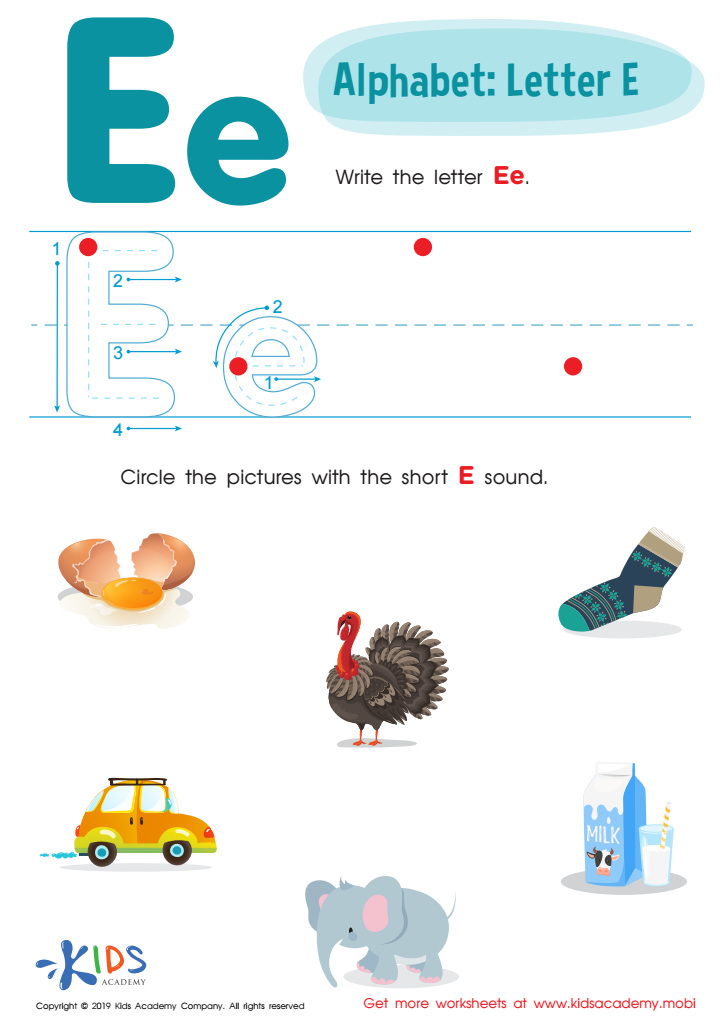
Letter E Tracing Worksheet
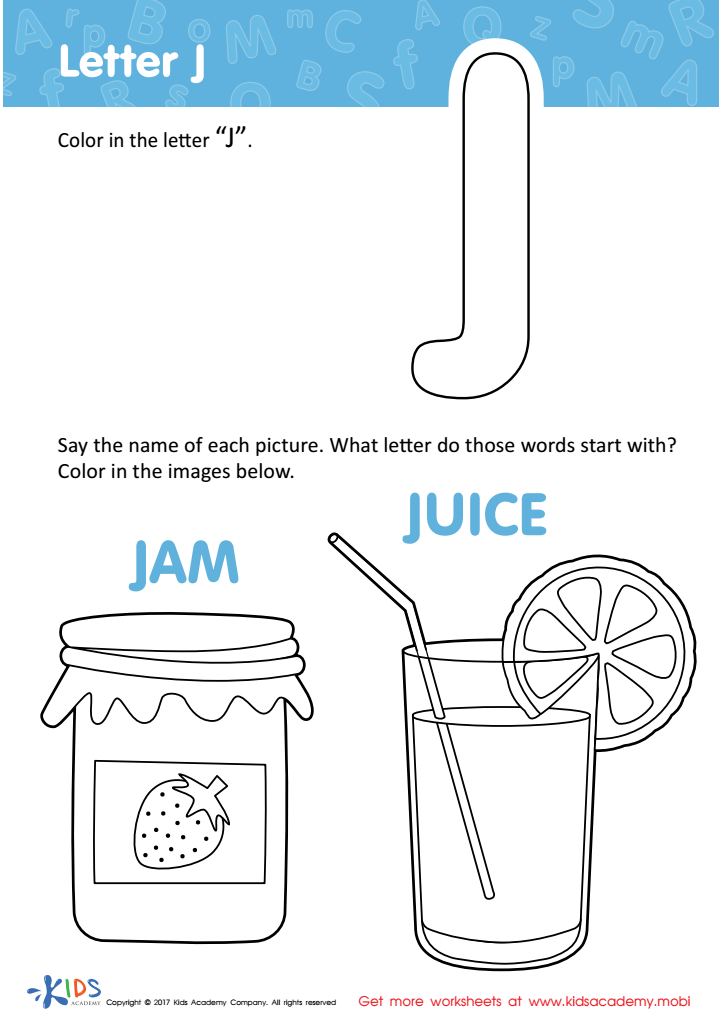
Letter J Coloring Sheet
 Assign to My Students



.jpg)


Sound-letter association, or phonics, is crucial for children aged 6-9 as it forms the foundation for reading and writing skills. This critical period in a child's development marks the transition from pre-reading to proficient reading, making understanding sound-letter relationships essential. When parents and teachers prioritize phonics, they help children decode words, leading to improved reading fluency and comprehension.
Children equipped with phonics skills can sound out unfamiliar words, boosting their confidence and encouraging independent reading. This ability nurtures a love for books and learning, setting the stage for academic success. Moreover, phonics not only supports literacy but also enhances vocabulary and spelling skills, as students learn to segment and blend sounds into words.
Furthermore, engaging in sound-letter association activities fosters cognitive development by promoting problem-solving, listening, and analytical skills. Parents and teachers play an integral role by incorporating phonics through games, reading aloud, and interactive lessons. This hands-on approach makes learning enjoyable and effective.
In conclusion, sound-letter association is vital for children aged 6-9 as it significantly impacts literacy development. Parents and teachers should actively support this learning process to equip children with essential skills for lifelong learning and success.







