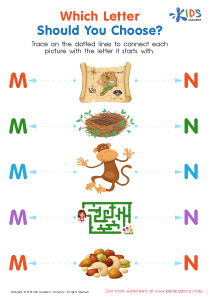
Lowercase identification Normal Lowercase/Small Letters Worksheets for Ages 6-9
4 filtered results
-
From - To
Our "Lowercase Identification: Normal Lowercase/Small Letters Worksheets" are perfect for children aged 6-9, offering a fun and engaging way to master the alphabet. These carefully designed worksheets help kids recognize and differentiate lowercase letters through a variety of exercises and activities. Ideal for reinforcing foundational literacy skills, each worksheet combines vibrant illustrations with interactive tasks that keep young learners motivated. Whether used in the classroom or at home, these printables ensure that students build confidence in their reading and writing abilities, setting the stage for future academic success. Download now and watch your child thrive!
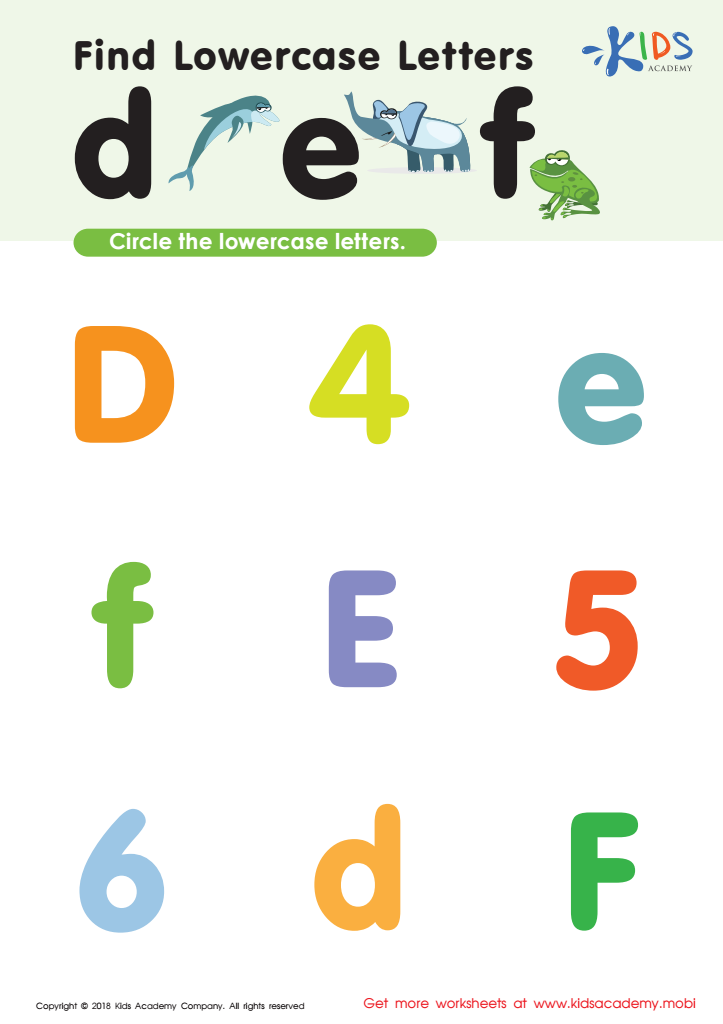
Find Lowercase Letters d e f Worksheet
 Assign to My Students
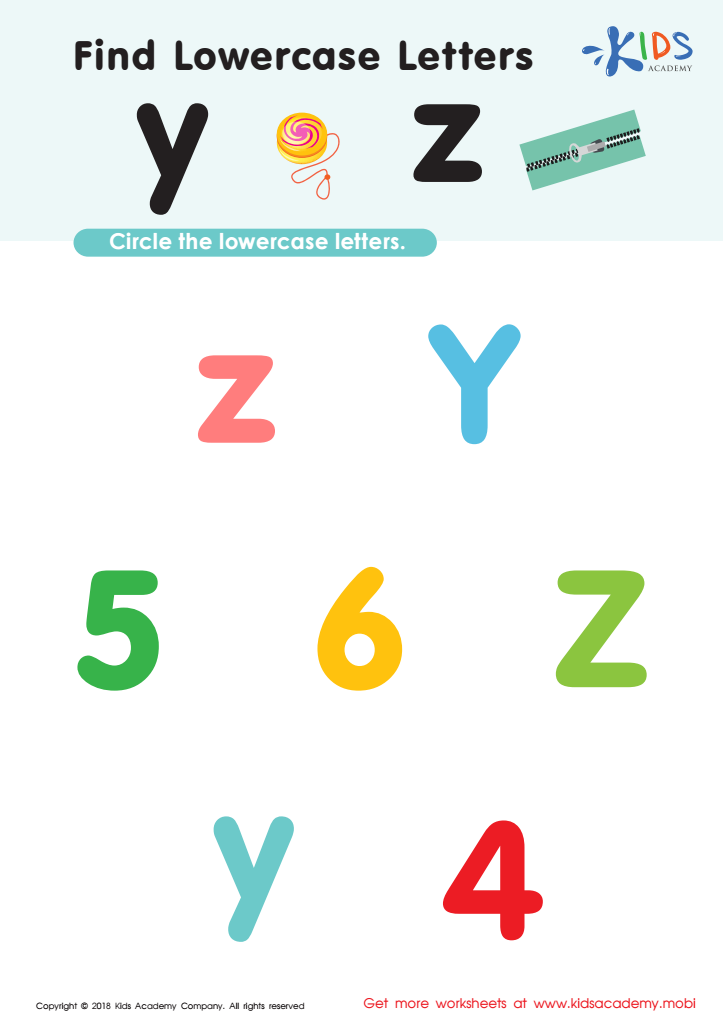
Find Lowercase Letters y z Worksheet
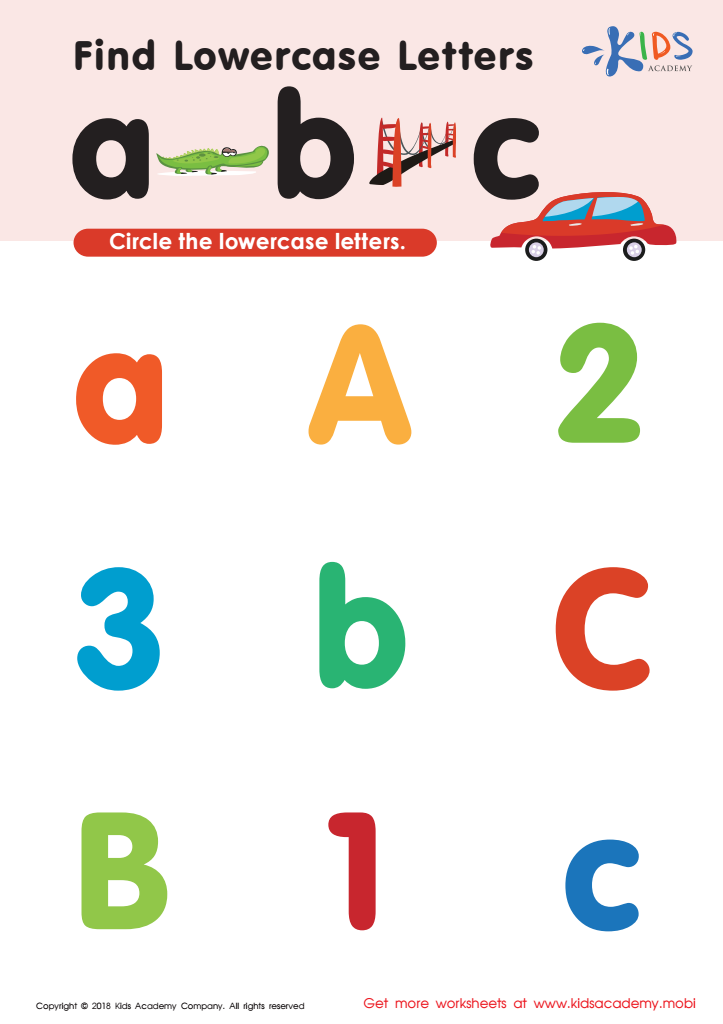
Find lowercase letters a b c Worksheet
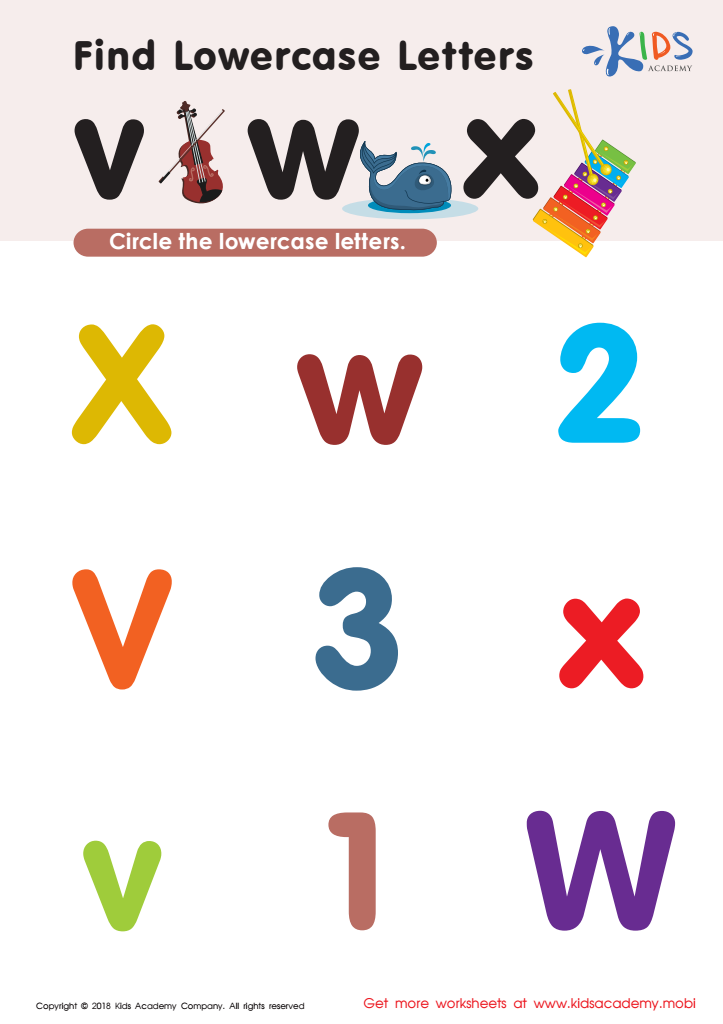
Find Lowercase Letters v w x Worksheet


Recognizing lowercase letters is a critical milestone for children between the ages of 6-9. At this developmental stage, literacy skills are rapidly evolving, and being proficient in lowercase letter identification can significantly enhance reading fluency and comprehension. Unlike uppercase letters, which are often used selectively and are familiar from the beginning stages of learning the alphabet, lowercase letters dominate written text. Therefore, understanding and identifying these letters allows children to seamlessly decode words and sentences.
Moreover, lowercase letter recognition contributes to better handwriting skills. Most written work is done in lowercase, and knowing these letters well helps children write more legibly and efficiently, setting a strong foundation for future academic work. In addition, familiarity with both cases supports better spelling, as children can more accurately associate sounds with their correct letter forms.
Parents and teachers should deeply care about this aspect of literacy because it has long-term educational implications. Struggles with lowercase letters can lead to reading difficulties, diminished confidence, and subsequent disengagement from learning. Providing engaging and encouraging environments for practice can make a substantial difference. Educational games, reading sessions, and writing exercises focused on lowercase letters can play pivotal roles in helping children achieve comprehensive literacy skills.