
Problem-Solving Skills Normal Phonics Worksheets for Ages 6-9
4 filtered results
Difficulty Level
Grade
Age
-
From - To
Subject
Activity
Standards
Discover our engaging "Problem-Solving Skills Normal Phonics Worksheets" designed for children ages 6-9! These interactive worksheets seamlessly combine phonics learning with essential problem-solving activities. Ideal for young learners, each worksheet challenges students to apply their phonics knowledge while developing critical thinking and reasoning skills. From puzzles to captivating scenarios, these resources encourage creativity and individual thought. Enhance your child's literacy and cognitive skills simultaneously, setting a foundation for future academic success. Perfect for classroom use or at-home learning, our worksheets make phonics enjoyable and educational. Explore our collection today and inspire confident, capable problem solvers in your child!
Favorites
With answer key
Interactive
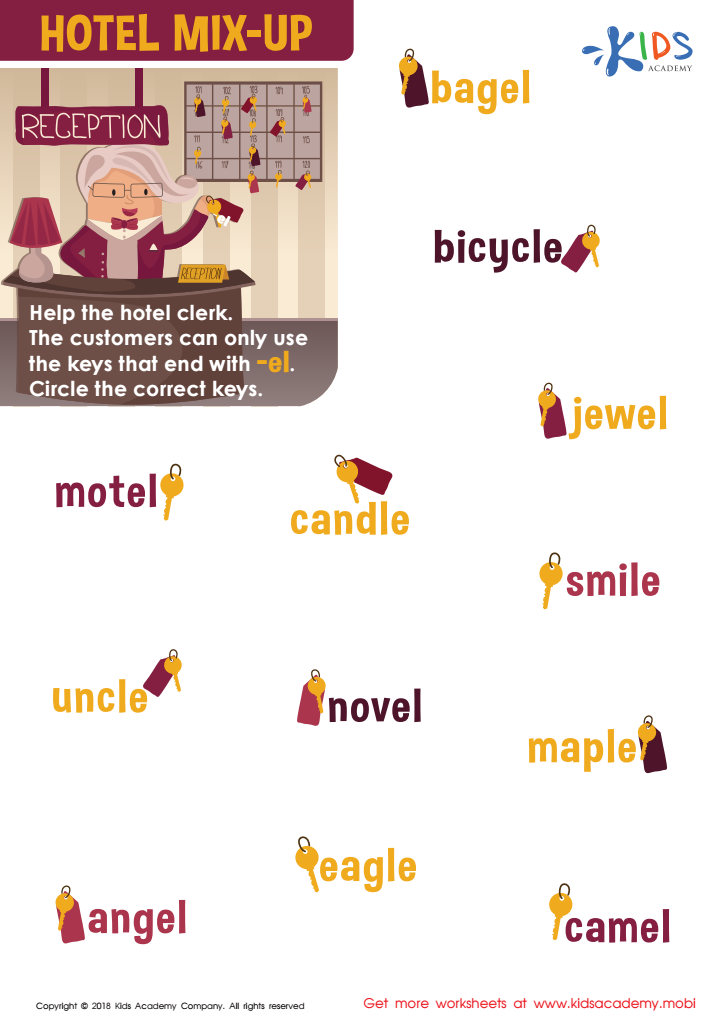
Hotel Mix-up Worksheet
Before doing this worksheet, explain to your kids what a hotel is. It's a building where guests can stay for a few days and pay for their stay. In this exercise, the hotel clerk needs help finding the correct keys. Have your kids circle words ending with -el to find the right ones.
 Assign to My Students
Hotel Mix-up Worksheet
Worksheet
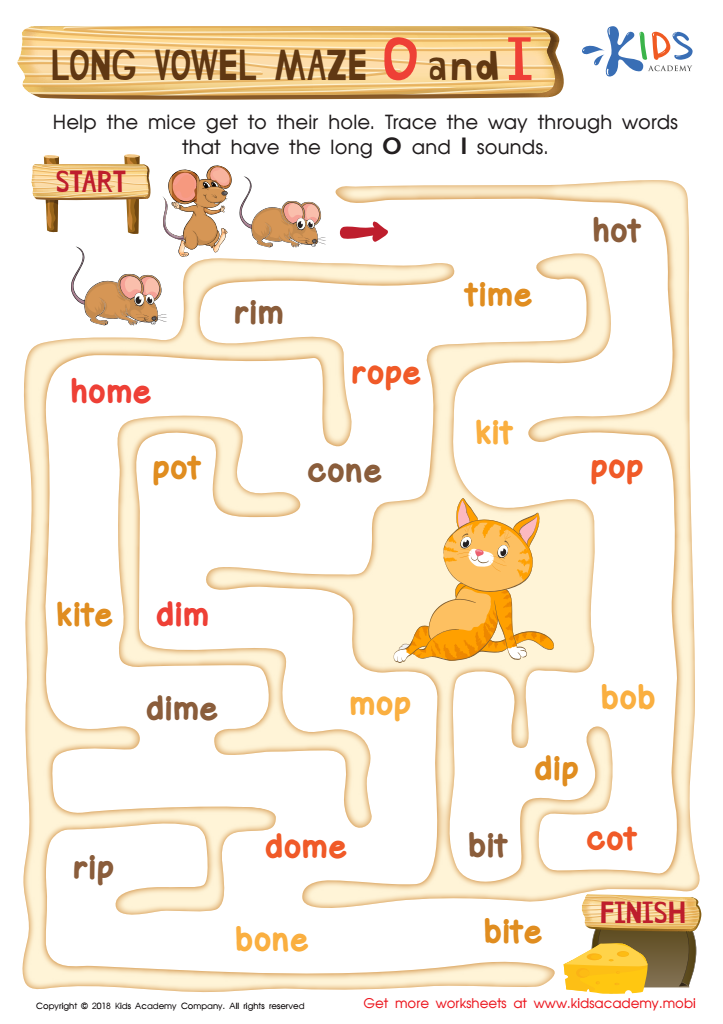
Long Vowel Maze /o/ and /i/ Worksheet
Help your new readers have fun and build their sight word vocabulary! Guide the mice to their prize cheese by having them trace the route on the worksheet, using words with the long o and long i sounds. But watch out for the kitty!
Long Vowel Maze /o/ and /i/ Worksheet
Worksheet
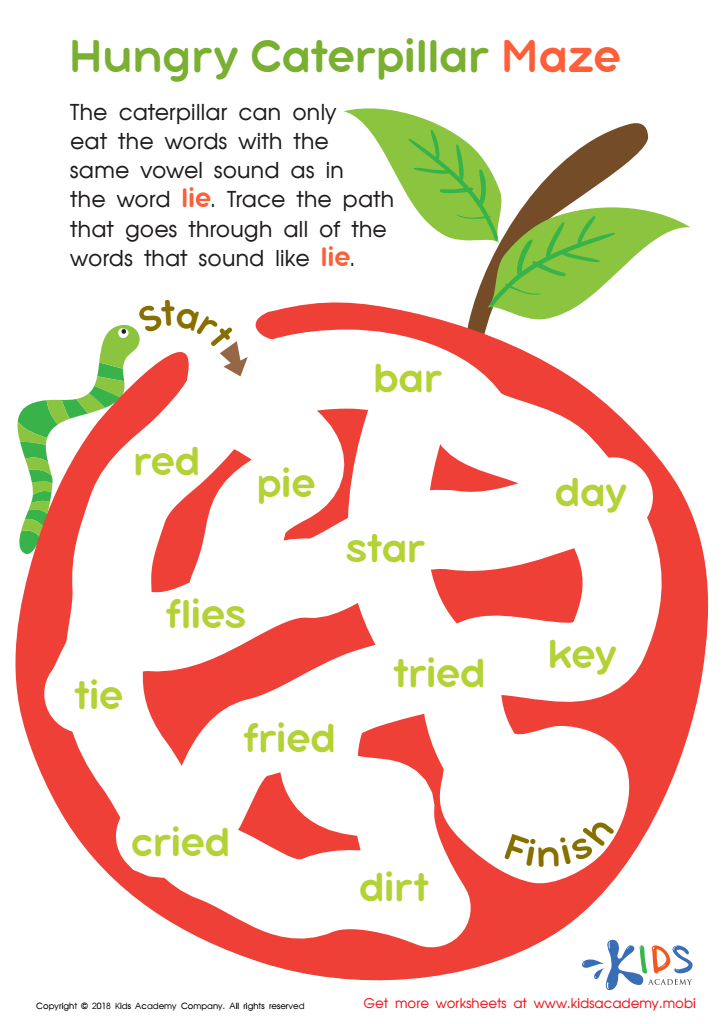
Hungry Caterpillar Maze Worksheet
Remind the kids that caterpillars turn into butterflies! This worksheet helps them practice their vowel sounds. They must trace the path of words that sound like ‘lie’ to help the caterpillar reach the finish line. It's a fun way to learn and explore!
Hungry Caterpillar Maze Worksheet
Worksheet
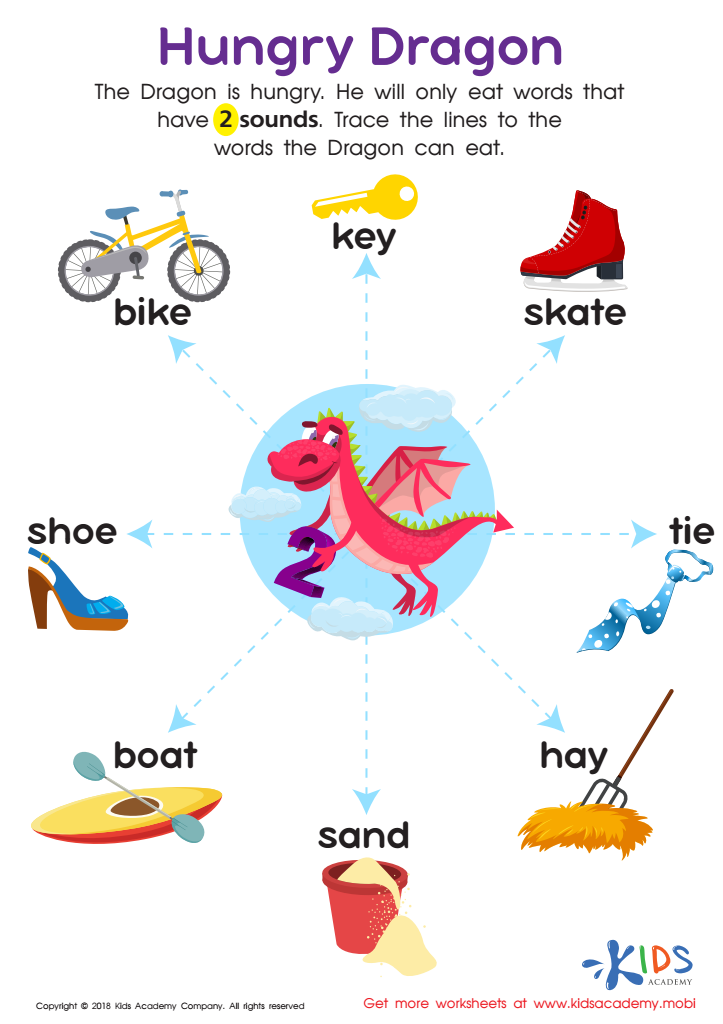
Hungry Dragon Worksheet
Feed the dragon words and watch your child strengthen their phonological awareness and auditory discrimination skills! Download this free PDF for tracing exercises that build their fine motor skills too. Kids will love spending time with the cute dragon while they unwittingly learn reading skills!
Hungry Dragon Worksheet
Worksheet
Join Kids Academy for Free
Who is primarily going to use this learning content?








Problem-solving skills combined with phonics instruction are crucial for children aged 6-9, as this combination fosters both cognitive and literacy development. During these formative years, children begin to navigate complex problems and scenarios, and effective problem-solving skills empower them to think critically, analyze information, and develop creative solutions. When educators and parents emphasize problem-solving alongside phonics, they help children make connections between sounds and letters while also teaching them to apply these skills in real-life contexts.
Phonics is foundational for reading success, and when children learn how to approach words systematically, their ability to decode language improves significantly. By integrating problem-solving with phonics activities—like word games, puzzles, or reading comprehension strategies—children not only enhance their decoding skills but also learn to navigate challenges such as unfamiliar vocabulary or writing errors.
Moreover, strong problem-solving abilities foster self-confidence and resilience. Children learn that it's okay to make mistakes, and they are encouraged to persist through difficulties. This not only aids their academic development but also prepares them for future challenges in various environments. Therefore, by prioritizing problem-solving skills within phonics instruction, parents and teachers provide children with essential tools for lifelong learning and success.







