
Alphabet Recognition Normal Tracing Letters Worksheets for Ages 6-9
21 filtered results
Difficulty Level
Grade
Age
-
From - To
Subject
Activity
Standards
Boost your child's understanding of letters with our Alphabet Recognition Normal Tracing Letters Worksheets, designed for ages 6-9. These engaging worksheets promote essential skills as young learners trace and recognize each letter of the alphabet. Perfect for reinforcing letter recognition, the activities make learning fun and interactive. Each worksheet encourages fine motor skills development while familiarizing children with both uppercase and lowercase letters. Suitable for classroom or at-home practice, these worksheets blend learning with play, providing a solid foundation for reading and writing success. Help your child shine in their literacy journey with our specialized tracing worksheets!
Favorites
With answer key
Interactive
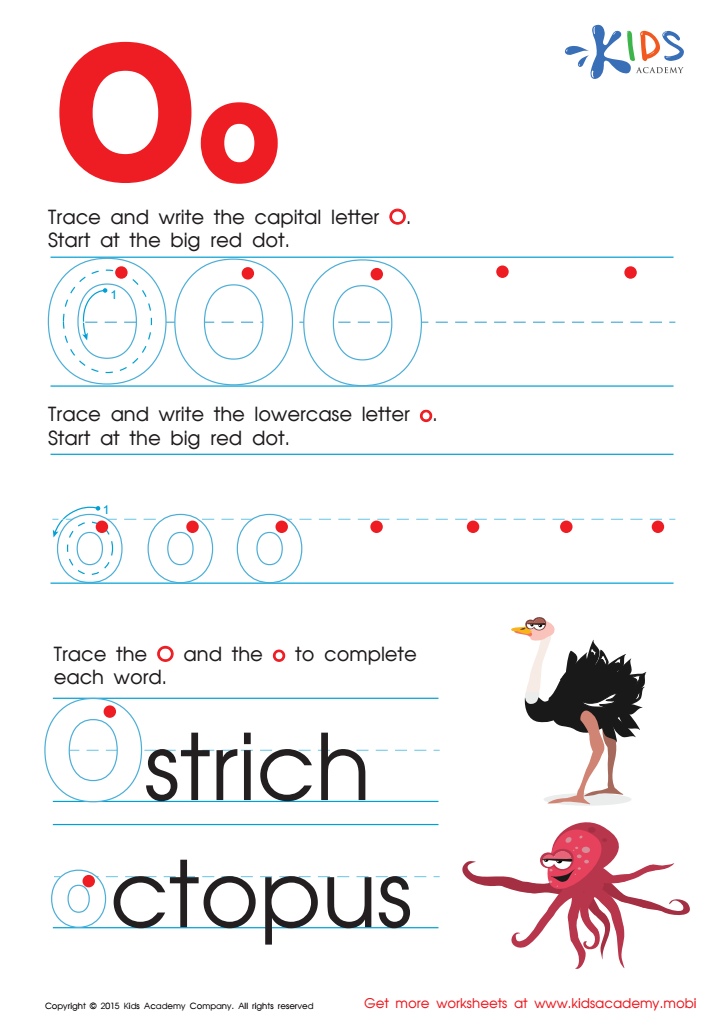
Letter O Tracing Page
Practice writing the letter "O" with our new worksheet. Trace and write the letter several times, starting at the red dot. First do the uppercase letter, then the lowercase. Use the pictures to complete the words "Ostrich" and "octopus". Kids Academy offers more fun alphabet worksheets.
 Assign to My Students
Letter O Tracing Page
Worksheet
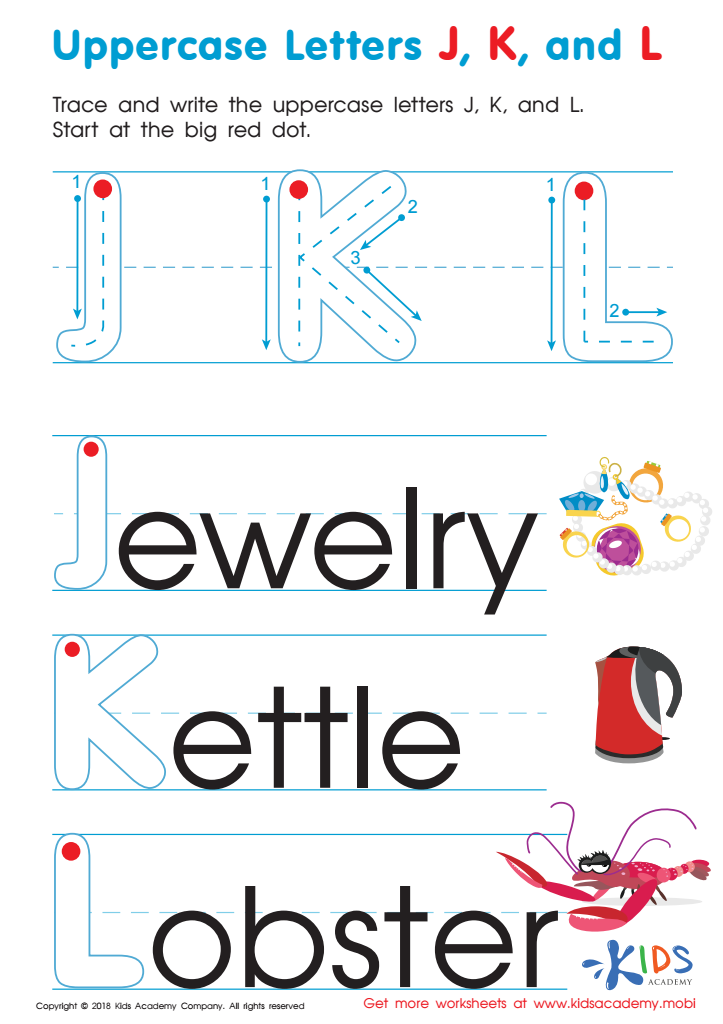
Uppercase Letters J, K, and L Worksheet
Jewelry, kettle and lobster share a common trait: their names start with J, K and L, 3 letter neighbors found in the middle of the alphabet. This traceable worksheet helps kids learn letter sounds and practice writing. Arrows and tracing lines make it easy to form neat pencil strokes. Red dot shows where kids should start. Perfect for preschoolers and kindergarteners!
Uppercase Letters J, K, and L Worksheet
Worksheet
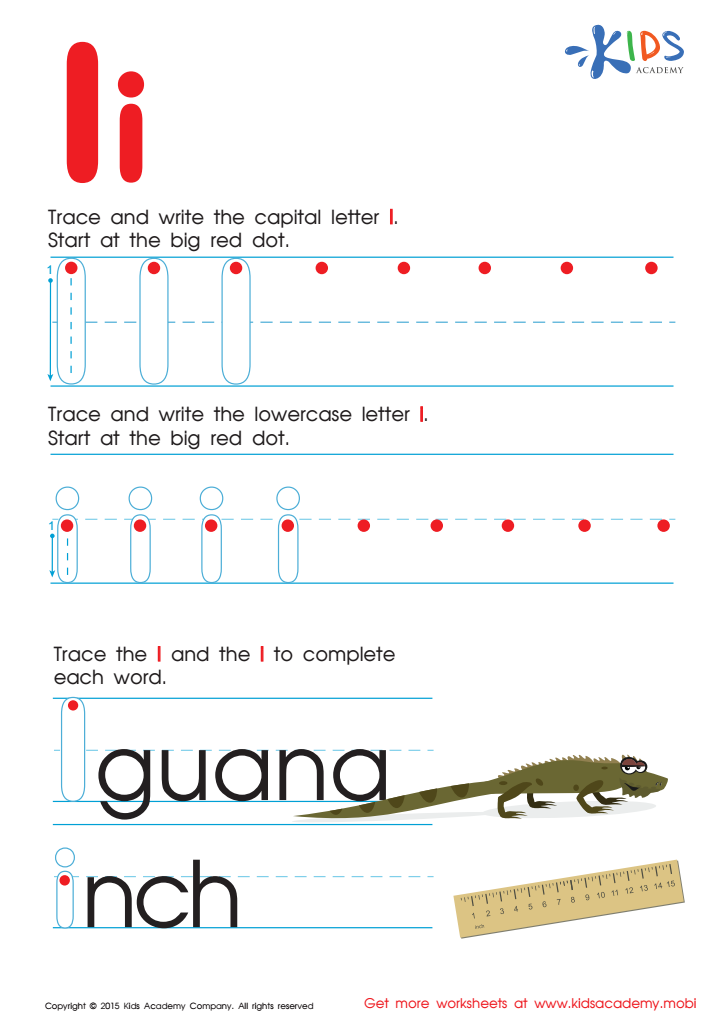
Letter I Tracing Page
Trace and write "I" uppercase and lowercase. An iguana's tail looks like the uppercase "I" and the lowercase "i" is as small as an inch. Make learning fun with Kids Academy worksheets.
Letter I Tracing Page
Worksheet
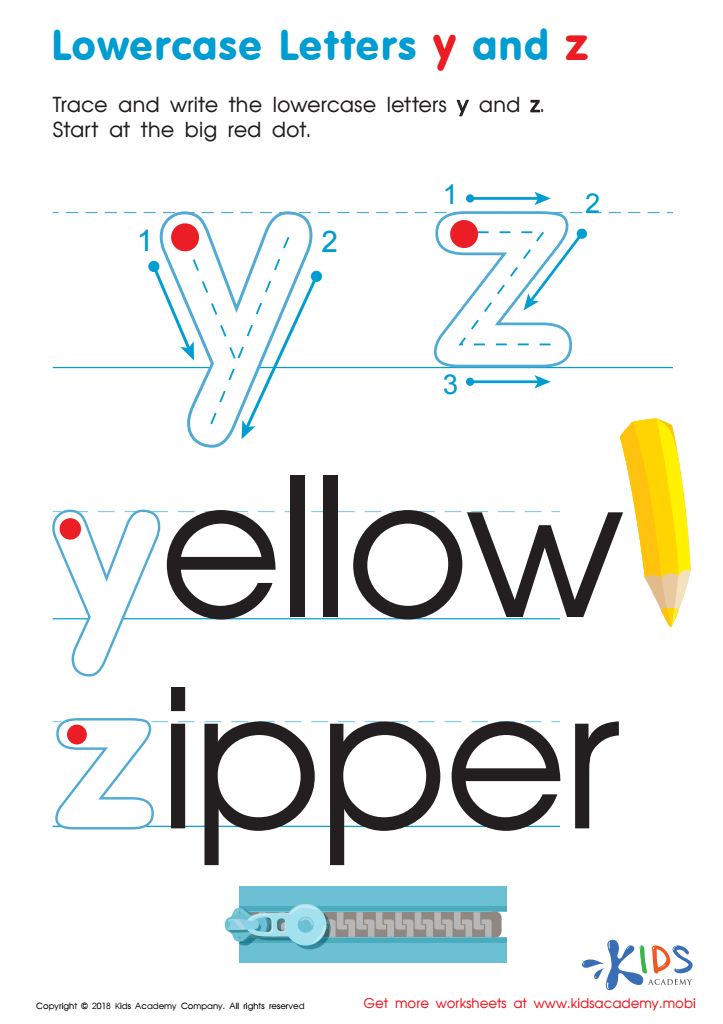
Lowercase Letters y z Worksheet
Help your child get a good start in writing and reading by tracing and writing the lowercase letters y and z. With this activity, they will learn the alphabet, which is essential for literacy success. Guide them through the worksheet and make sure they form the letters correctly. This will help them learn the basics needed to write and read fluently.
Lowercase Letters y z Worksheet
Worksheet
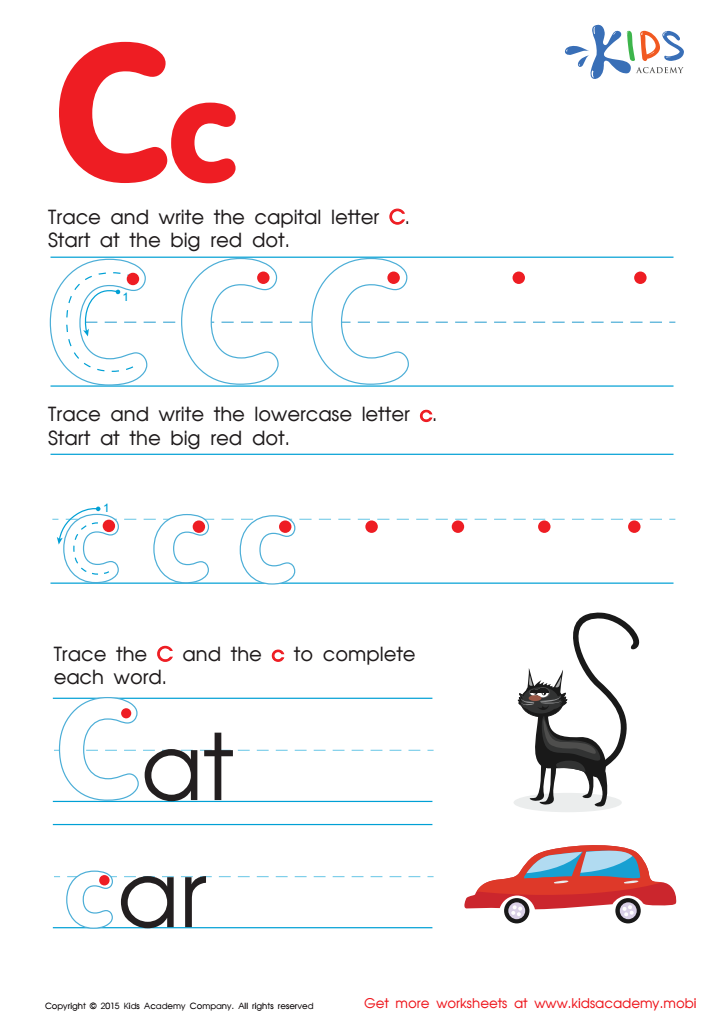
Letter C Tracing Page
Trace and write the letter 'C'! Put the pencil at the red dot then follow the lines – the capital letter first then the lowercase one. Cats love it and so will you! Get more free printables to practice tracing and writing.
Letter C Tracing Page
Worksheet
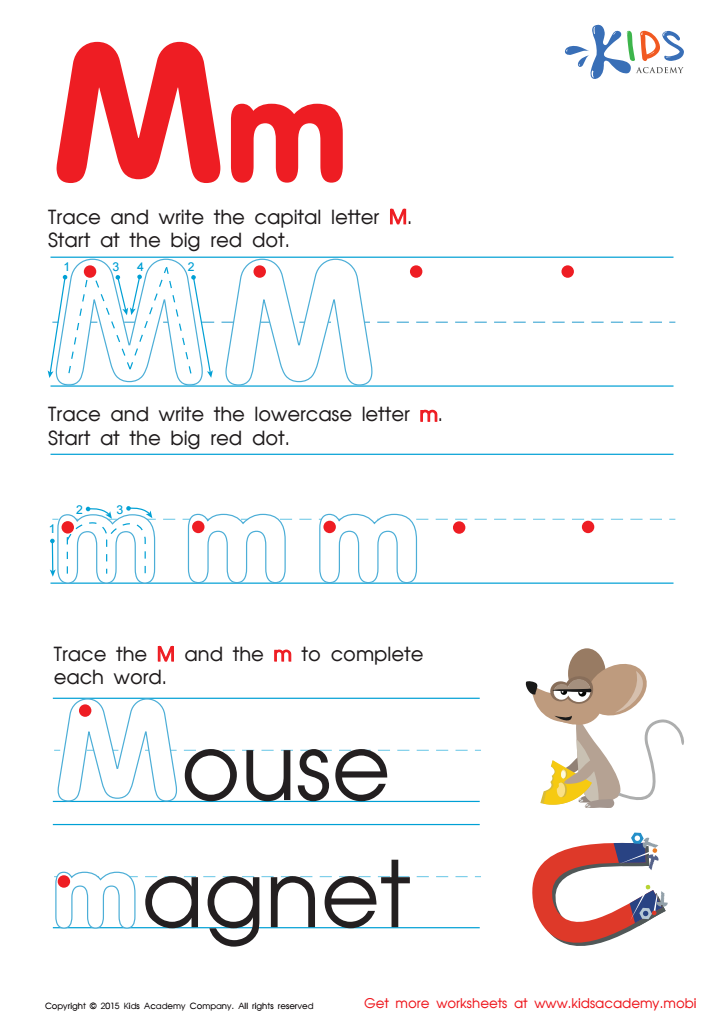
Letter M Tracing Page
Trace and write the letter "M" to help kids learn the alphabet. Start at the red dot and practice several times. Trace the capital letter first, then move on to the lowercase. Complete words like "mouse" and "magnet" in the further exercise. Get more free printables here.
Letter M Tracing Page
Worksheet
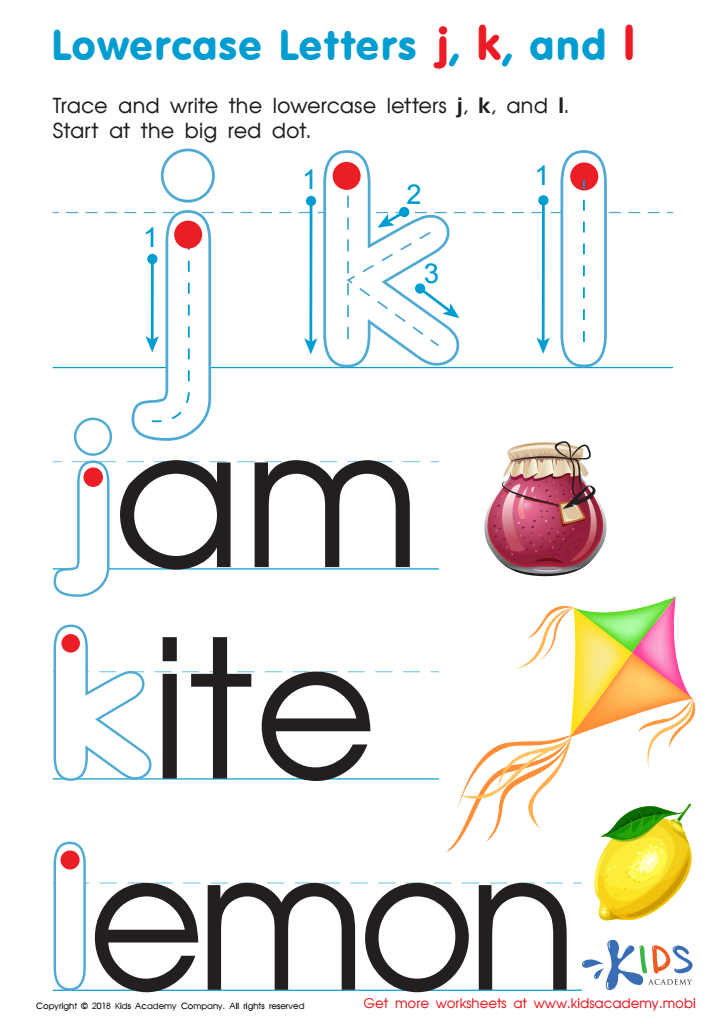
Lowercase Letters j k l Worksheet
Teach your child the difference between uppercase and lowercase letters. Have them trace and write the lowercase letters j, k, and l, starting at the red dot. Guide your child's hand to form the letters correctly.
Lowercase Letters j k l Worksheet
Worksheet
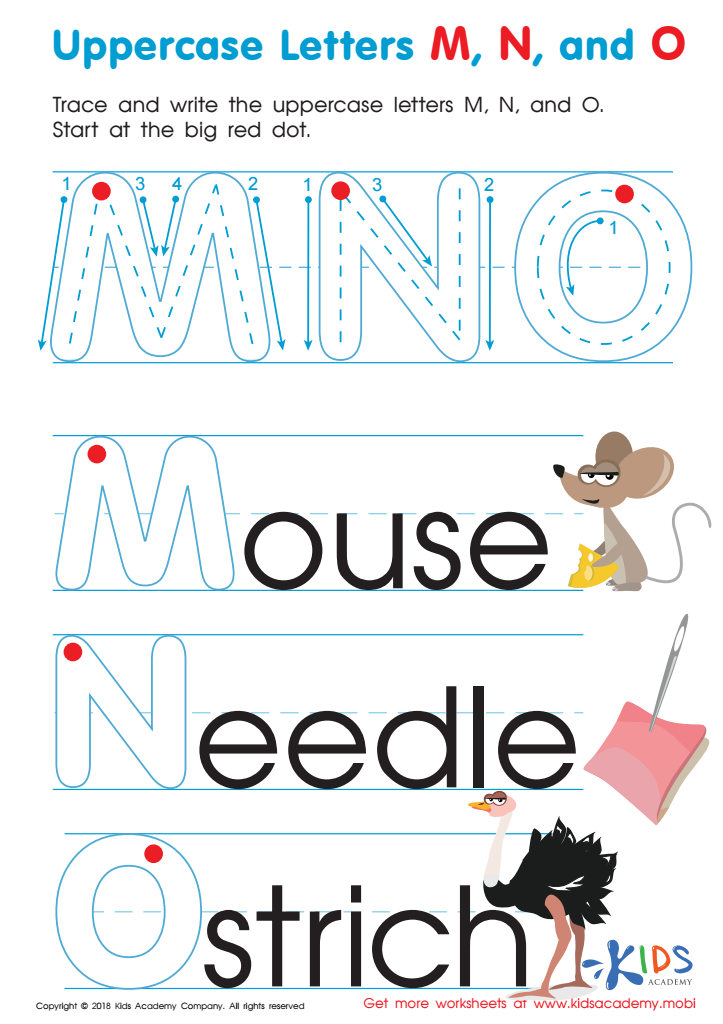
Uppercase Letters M, N, and O Worksheet
Download our easy-to-understand worksheet to help kids write M and N with ease! They'll trace dotted lines and follow arrows as they fill in the letters using a big red dot as a guide. The cute graphics will help them remember sounds too! Get your child writing quickly and confidently with this fun activity.
Uppercase Letters M, N, and O Worksheet
Worksheet
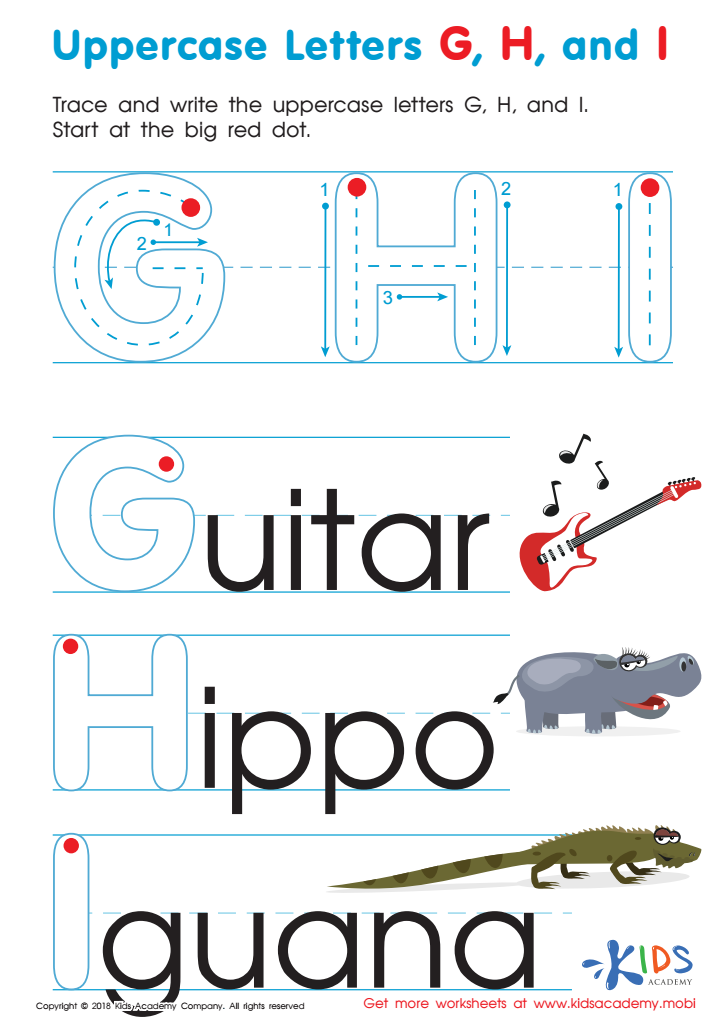
Uppercase Letters G, H, and I Worksheet
Trace each letter with the big red dot, connecting them to sounds as you go. Then write G to I. Congrats on a job well done! Rock on with a cute hippo and iguana while working on this delightful kindergarten worksheet!
Uppercase Letters G, H, and I Worksheet
Worksheet
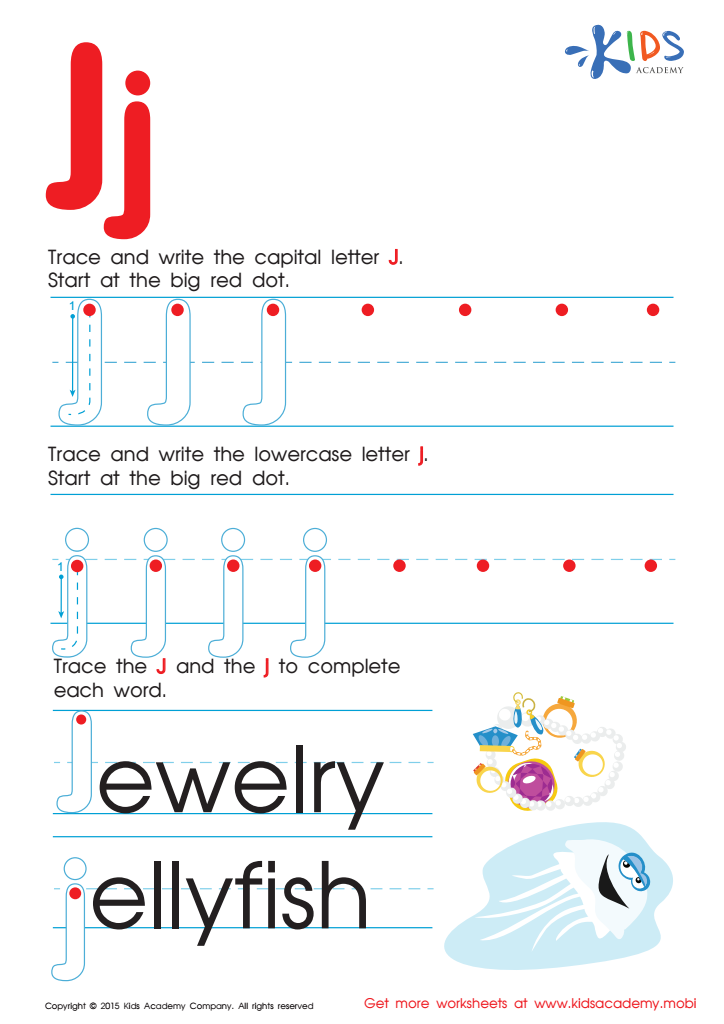
Letter J Tracing Page
Trace and write the letter "J" with our ABC worksheet - start at the big red dot! Have fun completing words like jewelry, jellyfish and more. Check out our kindergarten activities for more alphabet practice.
Letter J Tracing Page
Worksheet
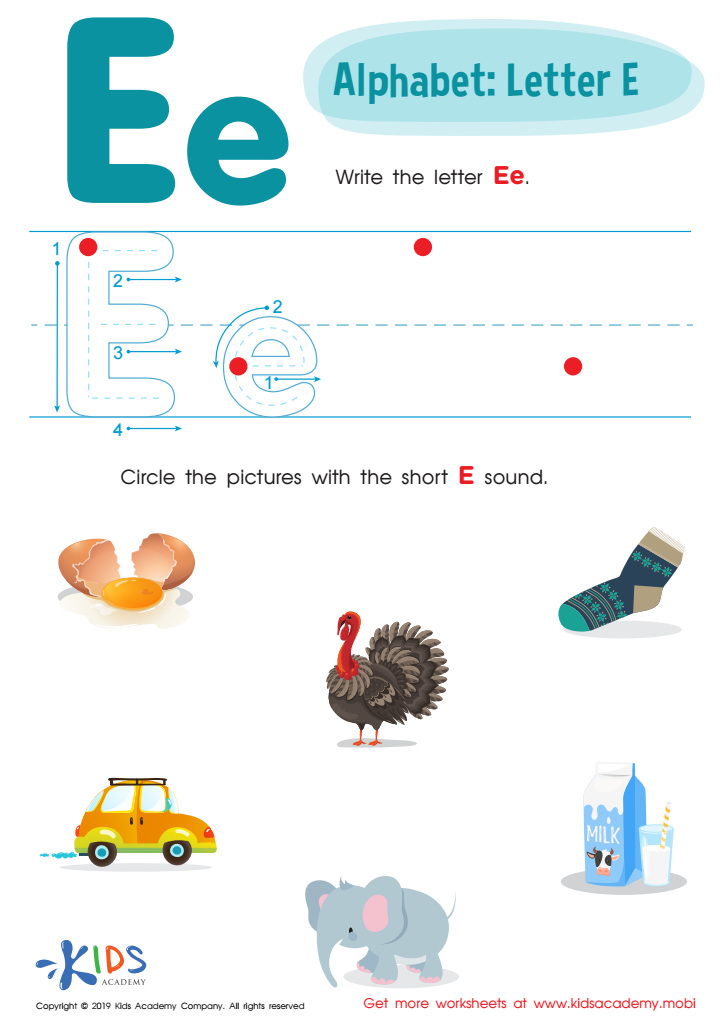
Letter E Tracing Worksheet
Students trace and write uppercase and lowercase letter E. They sound out "E" words, choosing those with short "E" sounds. Preschoolers identify the difference between the 'E' sounds in words like "egg" and "turkey." A tracing sheet helps them to understand.
Letter E Tracing Worksheet
Worksheet
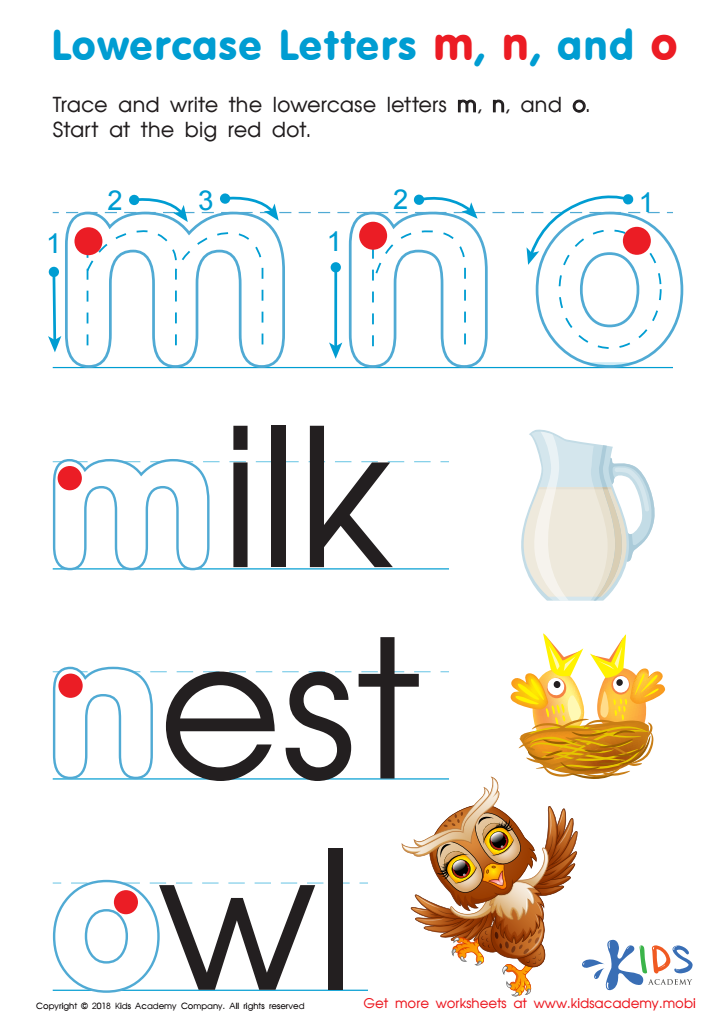
Lowercase Letters m n o Worksheet
Help your child learn the alphabet with letter tracing. Show them the difference between uppercase and lowercase letters by working through this free worksheet, tracing and writing lowercase m, n and o.
Lowercase Letters m n o Worksheet
Worksheet
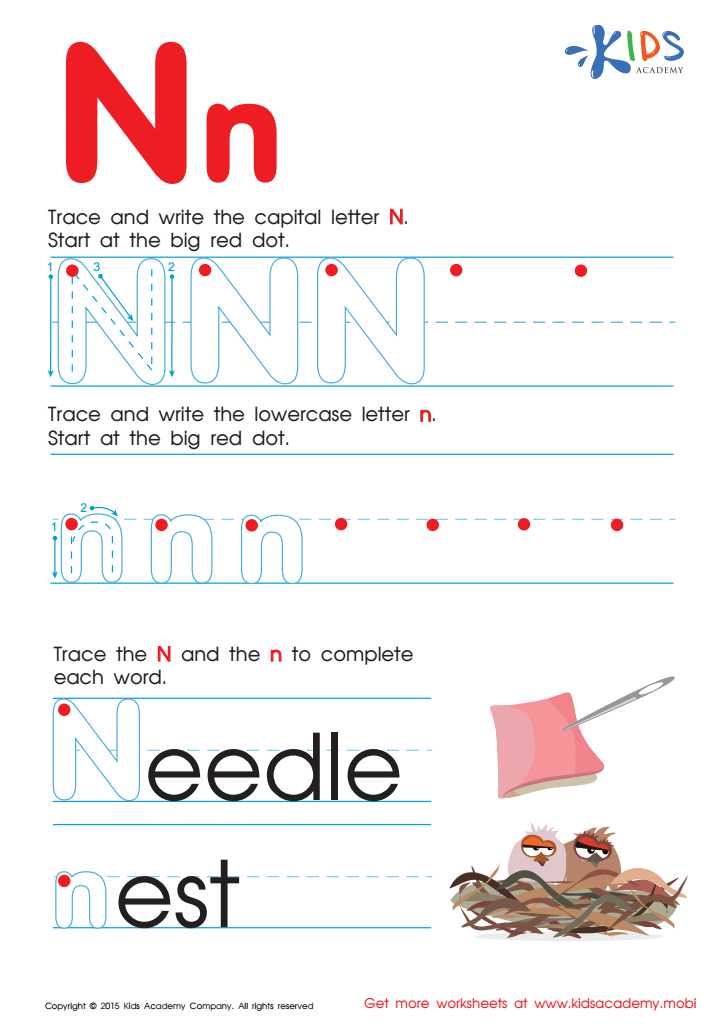
Letter N Tracing Page
Trace and write capital "N" and lowercase "n" several times. Then try forming words like "needle" and "nest". Master letter writing with Kids Academy's collection of ABC worksheets for kindergarten.
Letter N Tracing Page
Worksheet
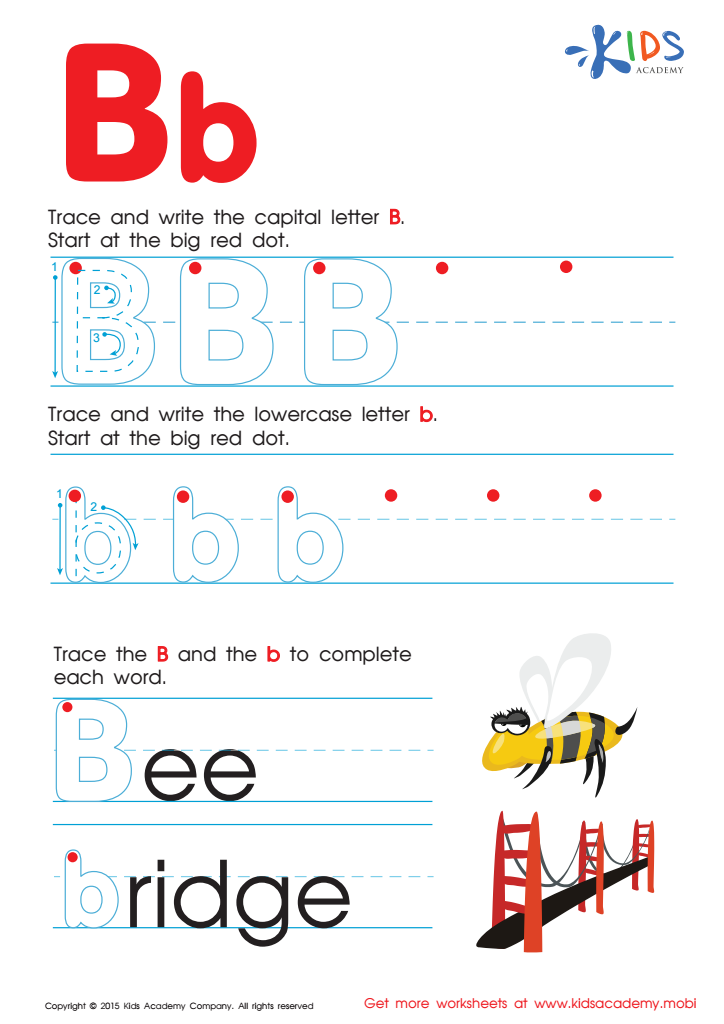
Letter B Tracing Page
Ready to learn the Alphabet? Put your pencil on the red dot and trace & write both capital & lowercase "B". Then have a look at the pictures. Catch the bee, cross the bridge & write the letters to complete the words. More ABC worksheets for kindergarten available!
Letter B Tracing Page
Worksheet
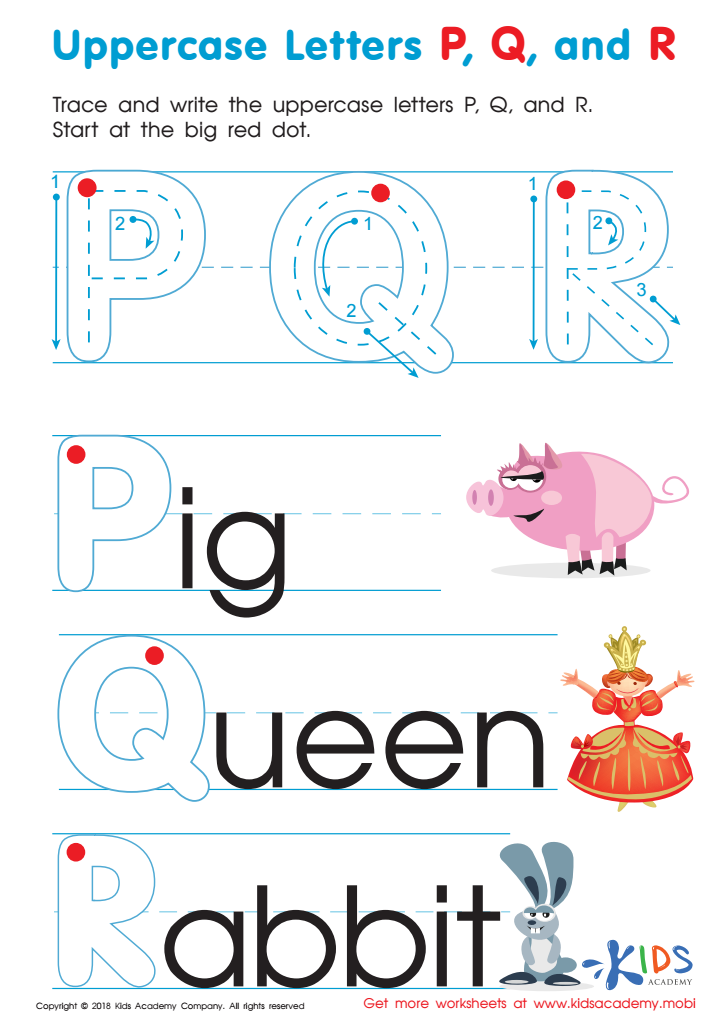
Uppercase Letters P, Q, and R Worksheet
Cute images of a pig, queen and rabbit make it fun to learn letter sounds. Follow the arrows to learn the strokes, then trace each letter from the big red dot. Perfect for kids to learn how to read and write P, Q, and R!
Uppercase Letters P, Q, and R Worksheet
Worksheet
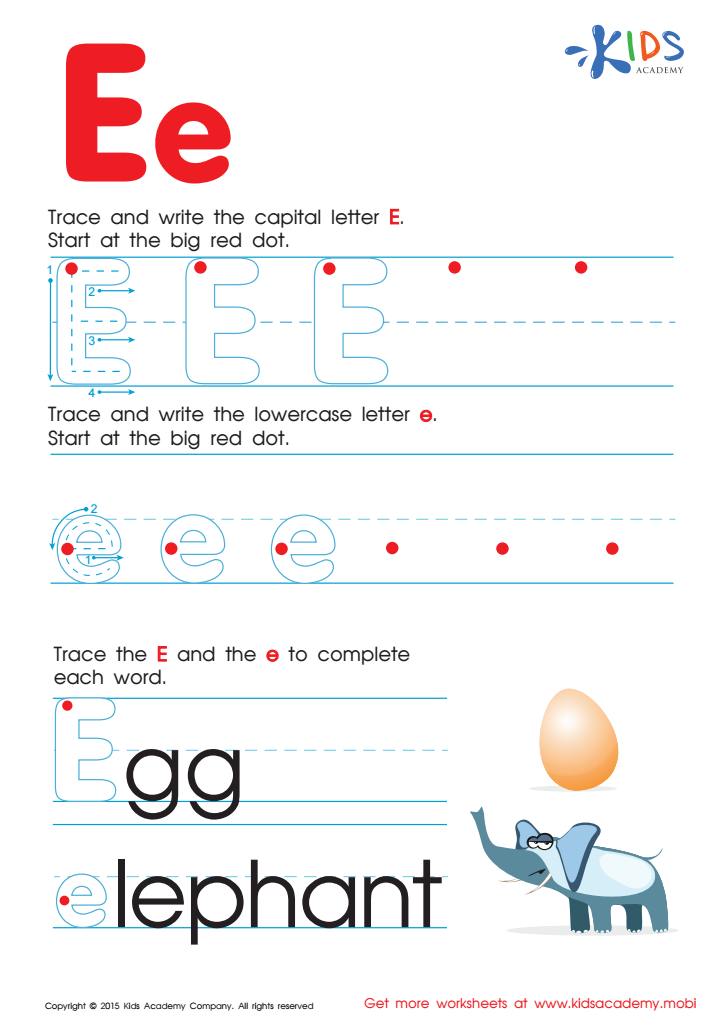
Letter E Tracing Page
Trace and write the uppercase and lowercase "E" starting at the big red dot. Complete words to perfect letter writing. Egg and Elephant must be written carefully. More alphabet worksheets for kindergarten are available for download to spend more time with your children learning.
Letter E Tracing Page
Worksheet
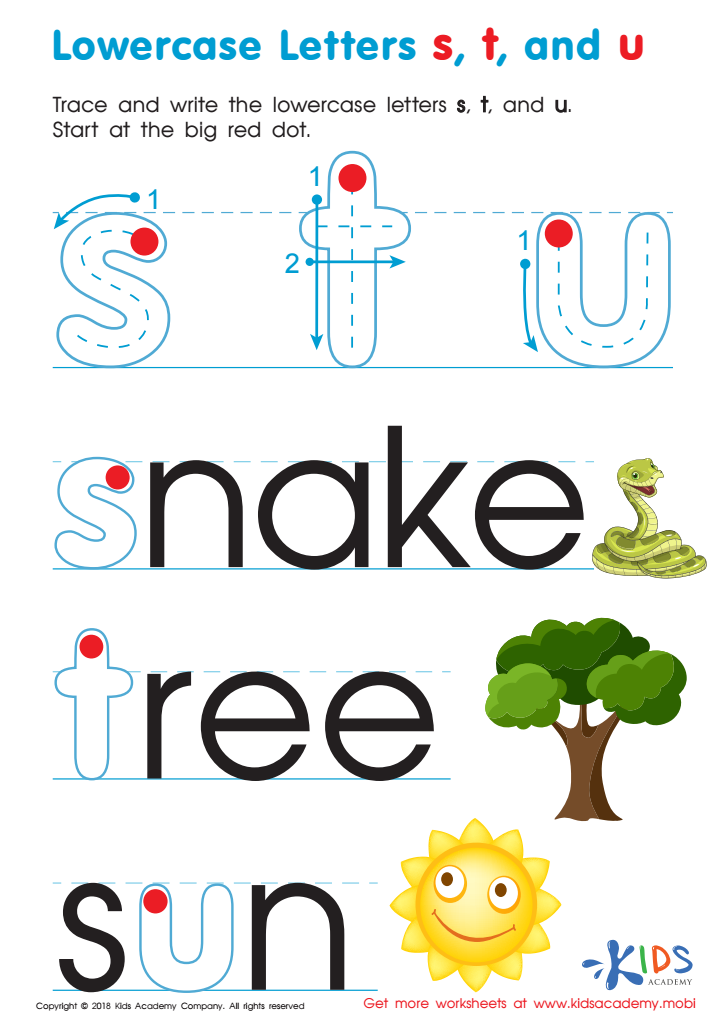
Lowercase Letters s t u Worksheet
Help your child trace lowercase letters s, t and u. Ask questions like: "What word starts with 's'? What about 't' and 'u'? Point out the snake, tree and sun pictures. Start tracing from the big red dot.
Lowercase Letters s t u Worksheet
Worksheet
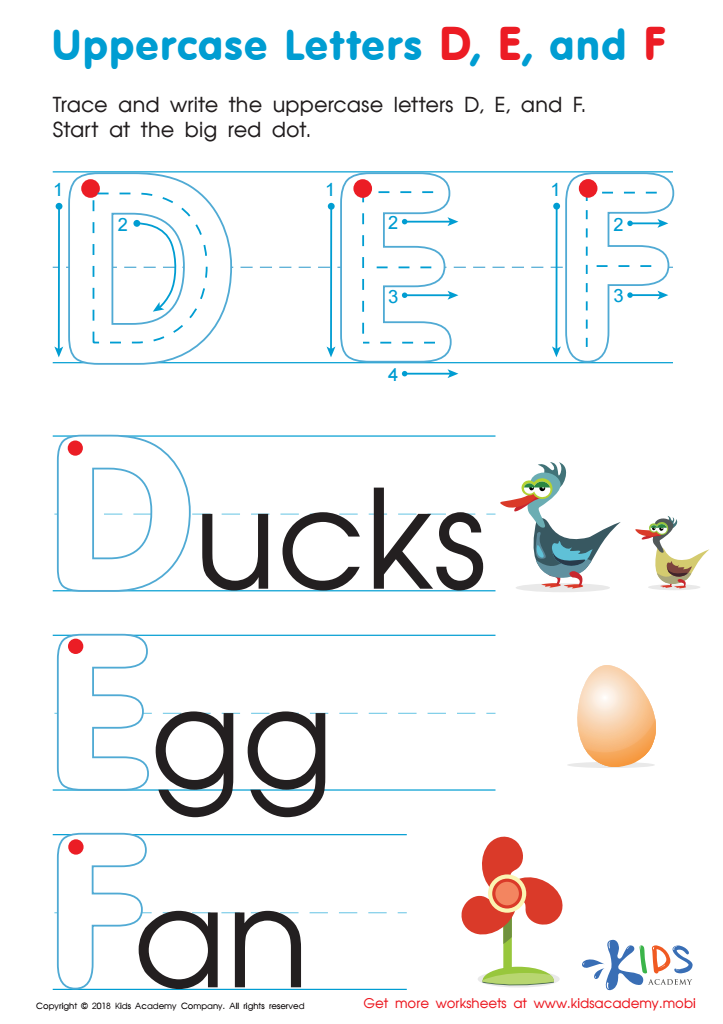
Uppercase Letters D, E, and F Worksheet
A-F are important letters! Get kids tracing with this free printable worksheet. Help them learn the right pencil strokes by following the tracing lines, starting at the big red dot. Reinforce letter sounds with the colorful pictures. 80 words.
Uppercase Letters D, E, and F Worksheet
Worksheet
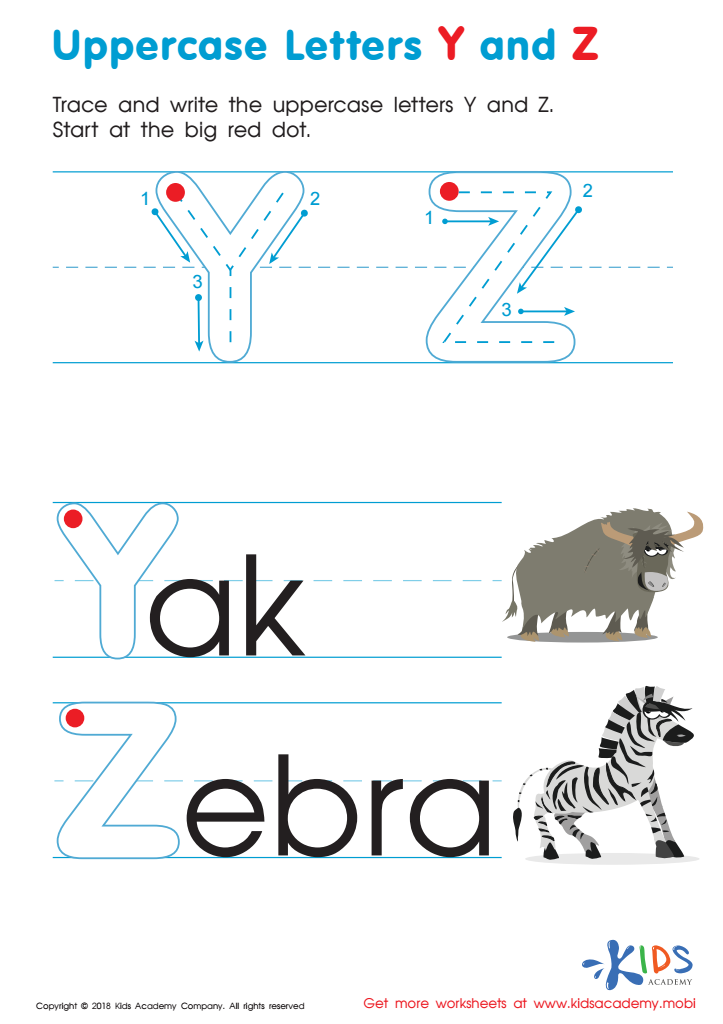
Uppercase Letters Y Z Worksheet
Help your child learn their ABCs with this fun tracing activity! They must trace and write Y and Z in uppercase form, starting from the red dot. Kids will love the fun images for extra engagement. Guiding their hand carefully will help them practice and perfect their writing skills.
Uppercase Letters Y Z Worksheet
Worksheet
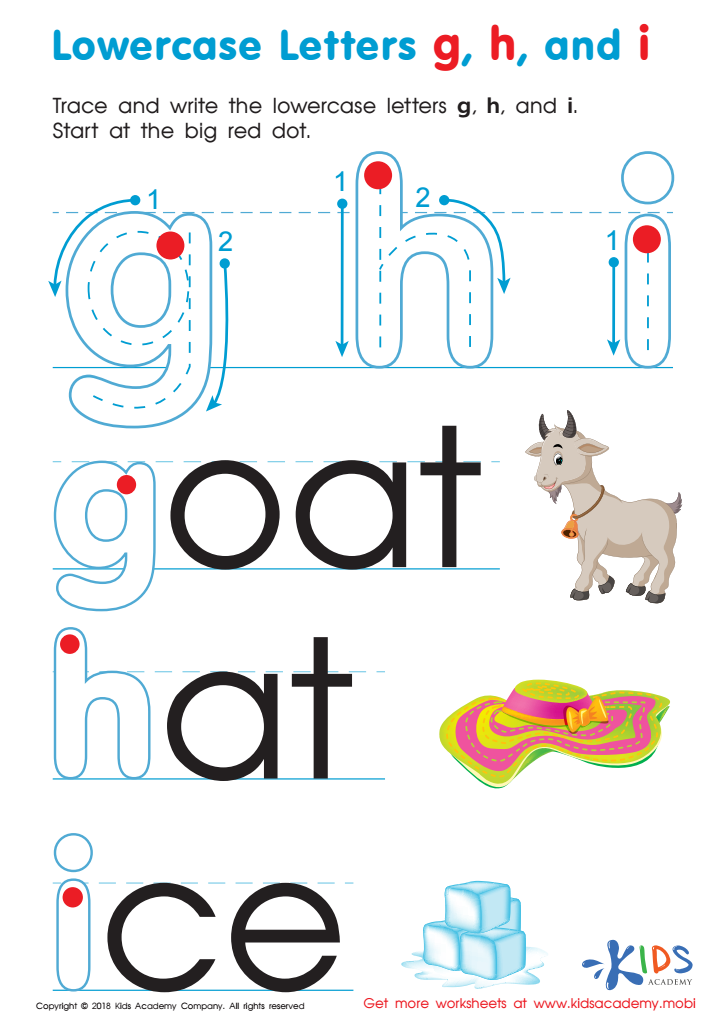
Lowercase Letters g h i Worksheet
Learning is fun for your youngster with color and an enjoyable exercise. Help them build their understanding of the alphabet by starting at the big red dot drawn on each letter and carefully following the dotted lines to draw g, h, and i.
Lowercase Letters g h i Worksheet
Worksheet
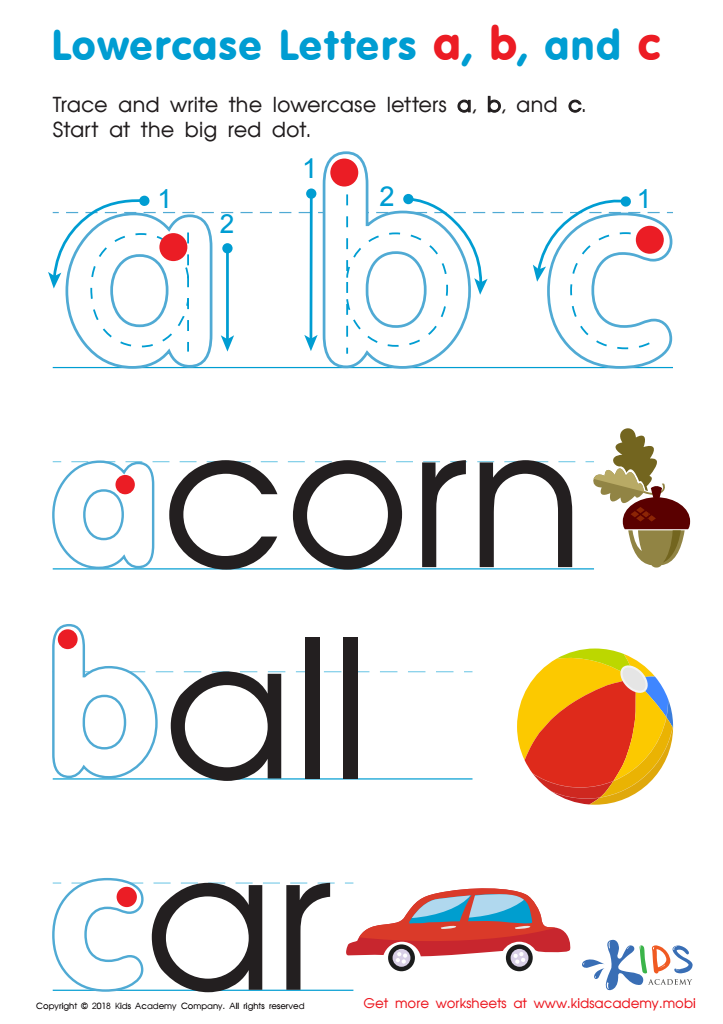
Lowercase Letters a b c Worksheet
Help your child trace and write the lowercase letters of the alphabet with this fun worksheet. Start by following the arrows and directions from the red dot, and watch them improve their writing skills! Vibrant illustrations make it easy and enjoyable.
Lowercase Letters a b c Worksheet
Worksheet
Join Kids Academy for Free
Who is primarily going to use this learning content?







Alphabet recognition and tracing letters are fundamental skills for children aged 6-9, as they lay the groundwork for reading and writing proficiency. Parents and teachers should prioritize these activities because they enhance cognitive development and literacy skills. Learning to recognize letters helps children understand how the written language operates, while tracing letters strengthens fine motor skills, which are essential for proper penmanship.
Additionally, mastery of the alphabet correlates with vocabulary acquisition and comprehension, promoting a love for reading. At this developmental stage, children are particularly receptive to language experiences, making it important to engage them in playful, interactive learning environments.
Incorporating alphabet recognition and letter tracing into daily routines can also bolster a child's self-confidence and independence as they start to read and write on their own. Moreover, these skills are vital for standardized assessments and future academic success. Collaborative efforts between parents and teachers can further reinforce these concepts, creating a consistent learning atmosphere that fosters improvement. By emphasizing alphabet recognition and tracing, we are equipping children with essential tools that will support their academic journey and lifelong learning.








