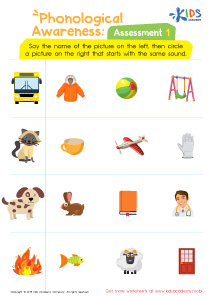
Spelling Skills Normal Vowels Worksheets for Ages 6-9
3 filtered results
Difficulty Level
Grade
Age
-
From - To
Subject
Activity
Standards
Unlock the wonders of language with our "Spelling Skills Normal Vowels Worksheets" designed specifically for children ages 6-9. These engaging worksheets focus on enhancing vowel recognition and spelling skills through fun, age-appropriate activities. With a variety of exercises, including fill-in-the-blanks, matching, and word unscrambles, your child will build confidence in their spelling abilities while exploring normal vowels. Perfect for classroom use or at-home learning, these worksheets aim to foster a love for reading and writing. Empower your little learner with the tools they need to succeed in their spelling journey – make learning fun and effective today!
Favorites
With answer key
Interactive
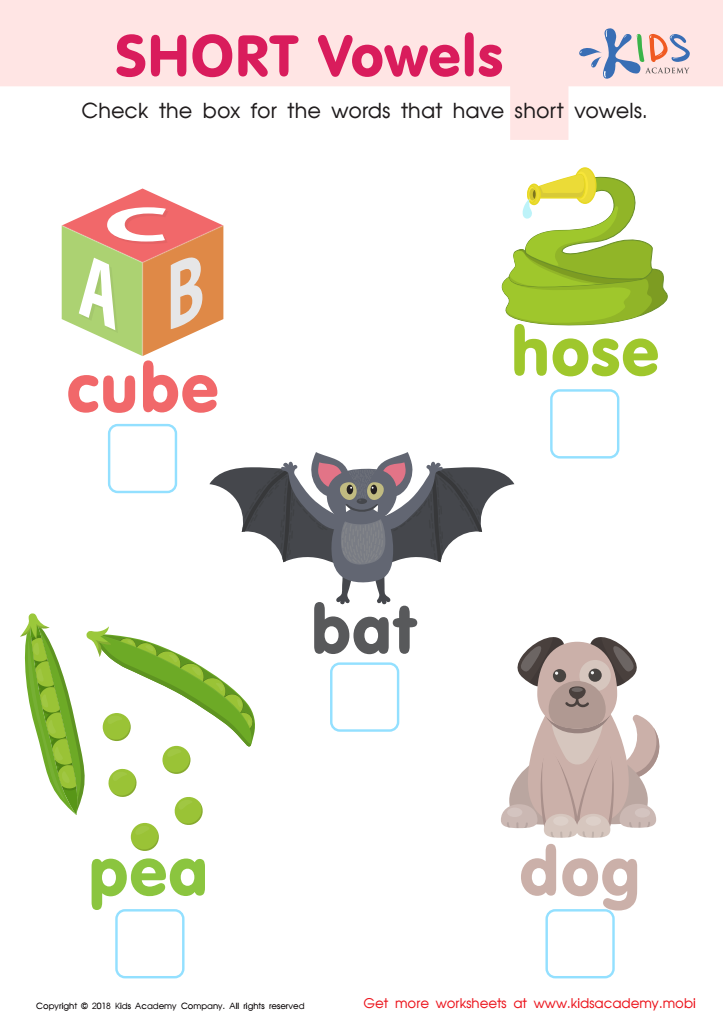
short vowels Worksheet
Say "dog" and notice how long it takes to pronounce the vowel. Is it short or long? Compare it to "pea" and use this worksheet to quickly assess your child's mastery. Have them name each picture and listen for the vowel sounds. Only check the boxes for words with short vowel sounds.
 Assign to My Students
short vowels Worksheet
Worksheet
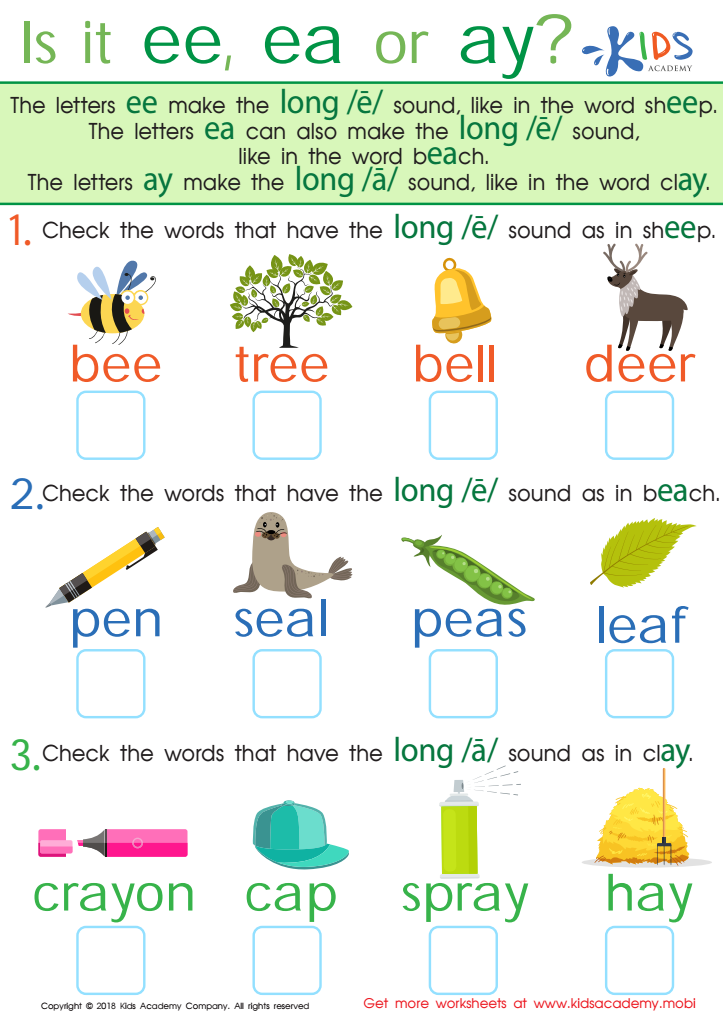
Is It EE, EA, or AY? Worksheet
When 'ee', 'ea' and 'ay' are in words, they usually make the long /e/ and /a/ sounds. Examples of words with 'ee' are "sheep", 'beach' and 'seat' with 'ea', and 'clay' and 'play' with 'ay'. Check this colourful worksheet with your kids; help them find the words that make the long /e/ sound like 'sheep'.
Is It EE, EA, or AY? Worksheet
Worksheet
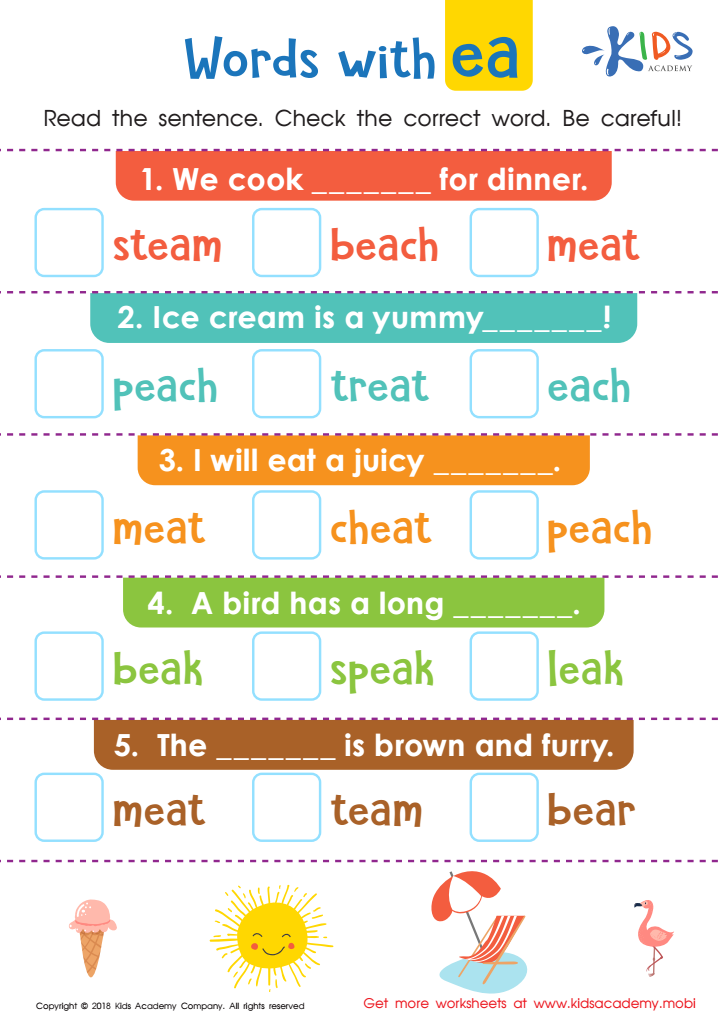
Words with ea Worksheet
Beginning readers may struggle with -ea vowel digraphs, which can have multiple sounds and be tricky to decode. This cheerful worksheet helps kids practice reading sentences with missing -ea words, using context clues to fill in the blanks. They'll also be exposed to various -ea sound examples, and build their sight word knowledge.
Words with ea Worksheet
Worksheet
Join Kids Academy for Free
Who is primarily going to use this learning content?





Spelling skills, particularly concerning normal vowels, are crucial for children aged 6-9 as they form the foundation of literacy. During this developmental phase, children are learning to decode and encode words, making it essential for them to understand vowel sounds and their functions in words.
Parents and teachers should care about these skills because mastering spelling at this stage not only enhances reading abilities but also boosts confidence in written communication. Children begin to encounter more complex vocabulary and will benefit from recognizing patterns in how vowels behave in different contexts, aiding their ability to read fluently and write independently.
In addition, strong spelling skills facilitate better comprehension. When children can spell words correctly, they are more likely to understand and retain the meaning of what they read, leading to improved performance in both academic and social contexts.
Finally, fostering a love for language during these formative years can ignite a lifelong passion for reading and writing. Engaging with children through games, activities, and exercises focused on vowel sounds makes learning fun and effective, further supporting their cognitive and linguistic development.