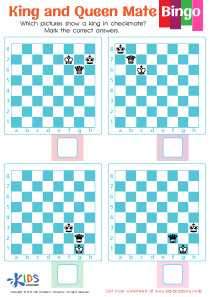
Chess strategy understanding Normal Chess Worksheets for Ages 6-9
3 filtered results
-
From - To
Unlock your child's potential with our "Chess Strategy Understanding" worksheets, specially crafted for ages 6-9! These engaging, printable materials help young learners grasp essential chess strategies, fostering critical thinking and problem-solving skills. Each worksheet offers age-appropriate activities designed to introduce kids to key concepts such as piece movement, board control, and tactical play. With colorful illustrations and easy-to-follow instructions, children will enjoy mastering the game of chess while enhancing their cognitive abilities. Perfect for home or classroom use, our worksheets ensure that learning is both fun and educational. Start your child's journey to becoming a chess strategist today!
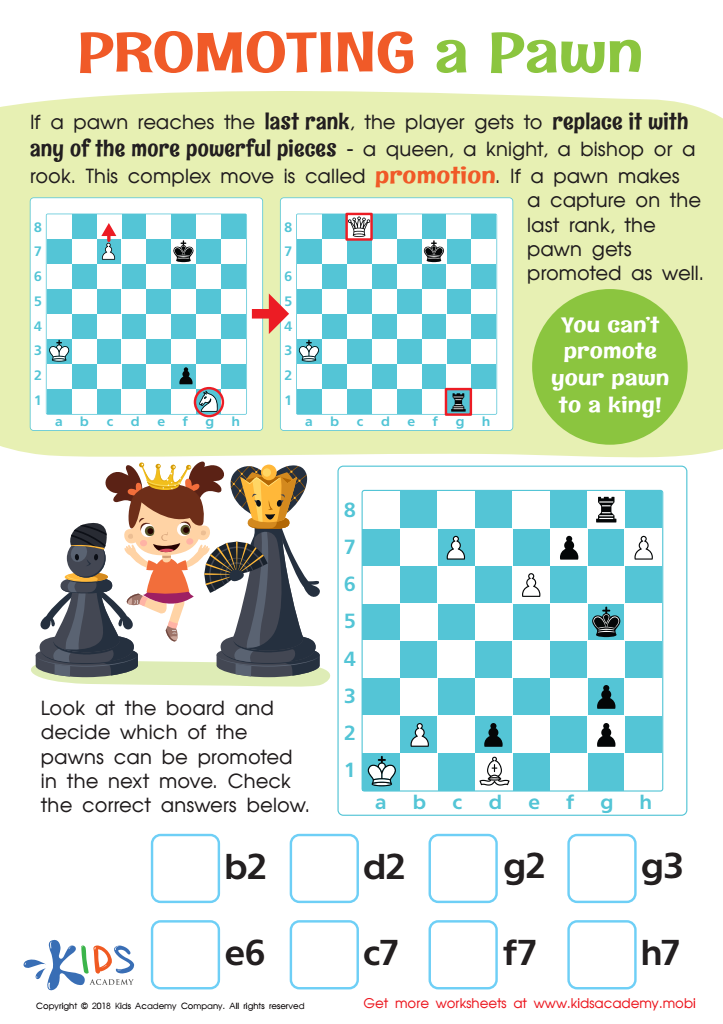
Promoting a Pawn Worksheet
 Assign to My Students
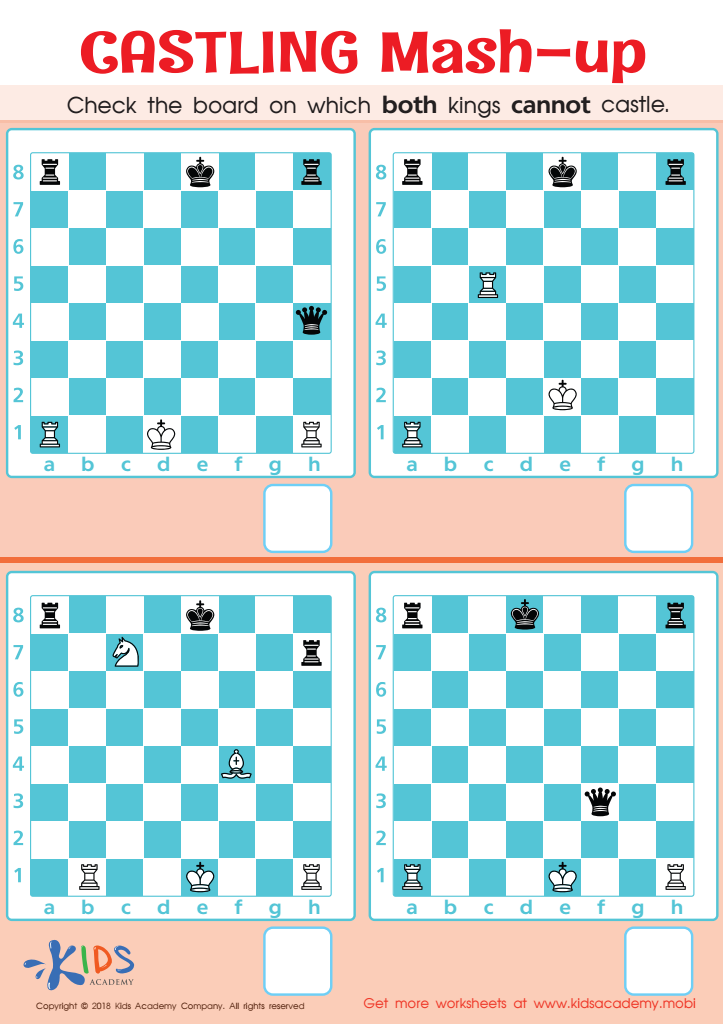
Castling Mash–up Worksheet
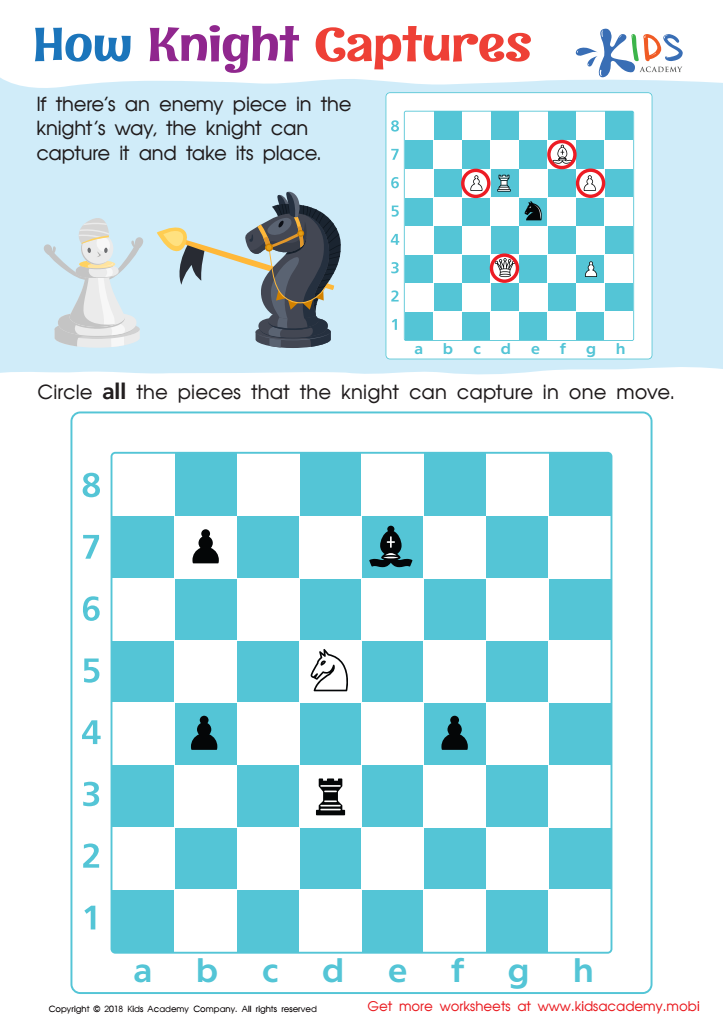
How Knight Captures Worksheet




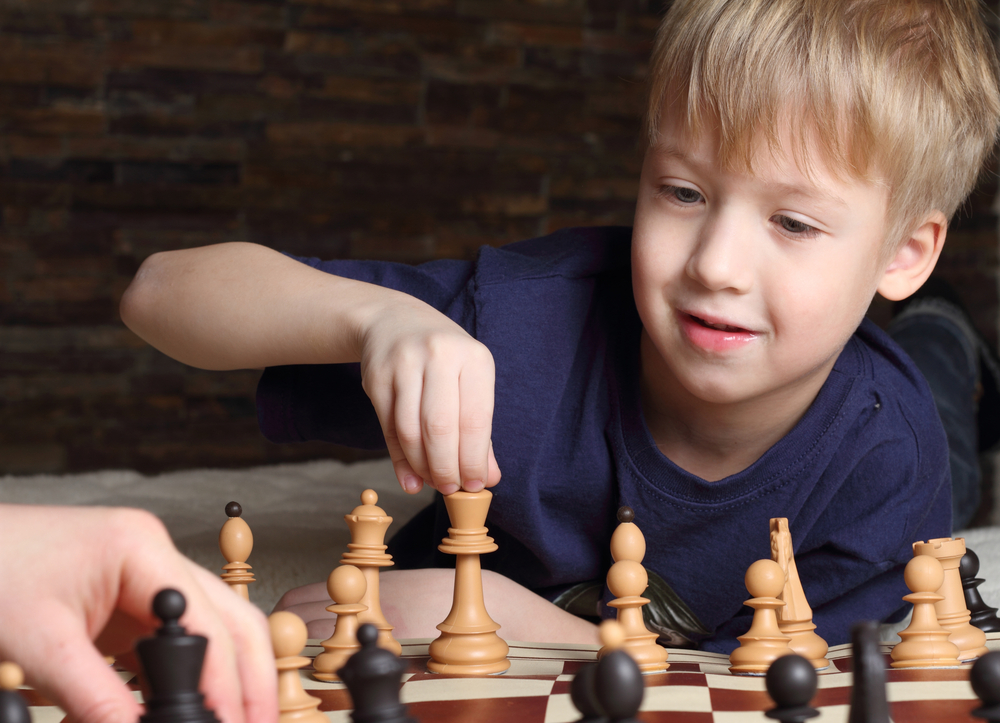


Chess is an excellent tool for developing critical thinking and problem-solving skills in children aged 6-9. Parents and teachers should care about children's understanding of chess strategy for several reasons. First, chess teaches basic cognitive skills such as concentration, patience, and discipline. As children learn to plan their moves and foresee potential outcomes, they enhance their ability to think ahead and consider multiple perspectives.
Moreover, chess fosters emotional intelligence. Kids encounter victories and losses, helping them learn resilience and sportsmanship. Bouncing back from setbacks in a game can translate into better coping mechanisms in real-life situations. Understanding chess strategy also encourages creativity, as children explore different ways to achieve their objective on the board.
Additionally, the game results in fine motor skills development and enhances memory as kids remember various pieces, their movements, and tactical strategies. Playing chess enhances social skills too, promoting interaction with peers in game settings, thus building friendships.
In summary, engaging children in chess strategy goes beyond just learning a game; it equips them with life skills essential for their academic and personal development. By promoting chess, parents and teachers can nurture well-rounded, strategic thinkers.