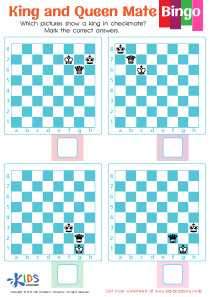
Problem-solving practice Normal Chess Worksheets for Ages 6-9
3 filtered results
-
From - To
Boost your child's critical thinking and strategic skills with our engaging Normal Chess Worksheets designed specifically for ages 6-9. These problem-solving practice worksheets provide young learners with fun puzzles and scenarios that challenge them to think ahead, develop strategies, and enhance their decision-making abilities. Each worksheet reinforces essential chess concepts in a playful format, making learning enjoyable and effective. Perfect for classrooms or at-home learning, our printable resources are easy to access and implement. Watch as your child gains confidence and deepens their understanding of chess while sharpening cognitive skills that will benefit them in other areas of study and life!
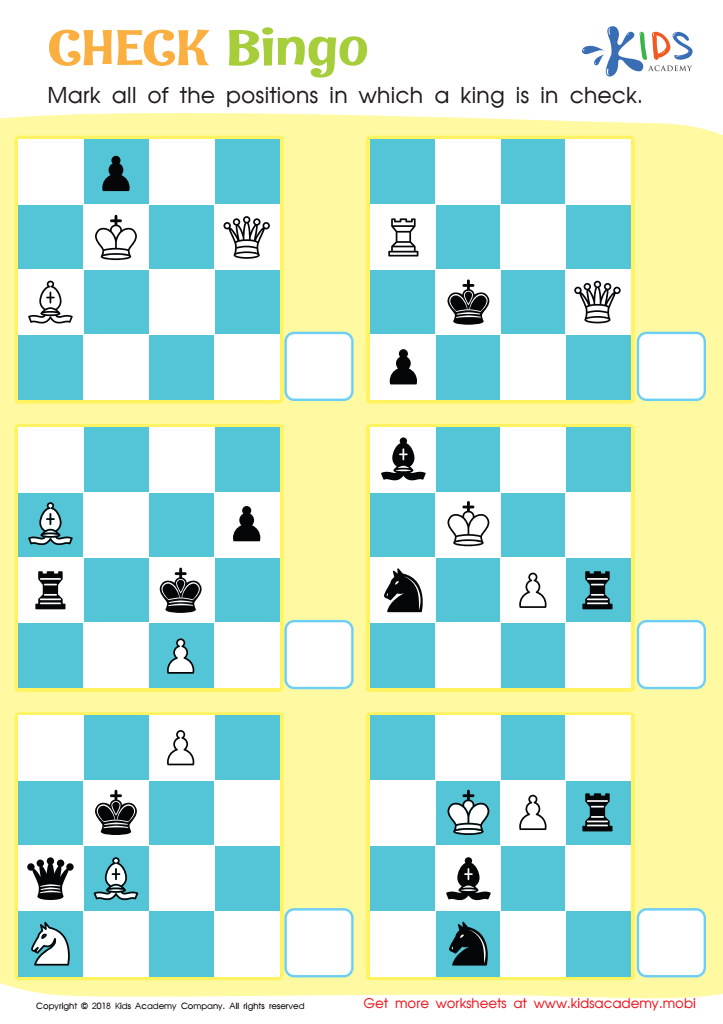
Check Bingo Worksheet
 Assign to My Students
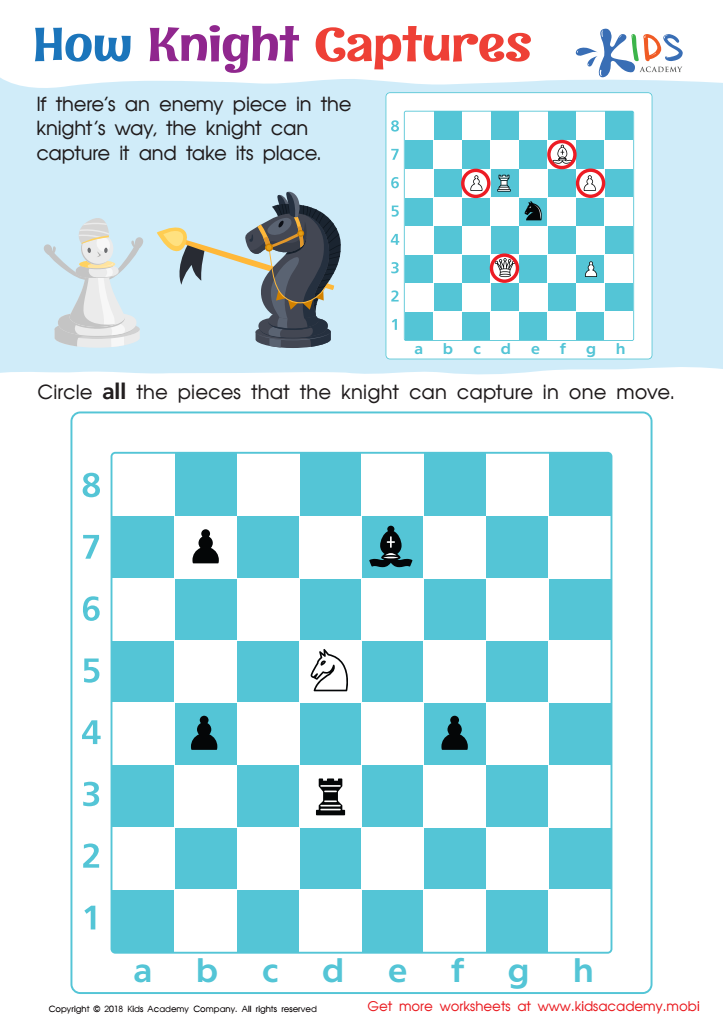
How Knight Captures Worksheet
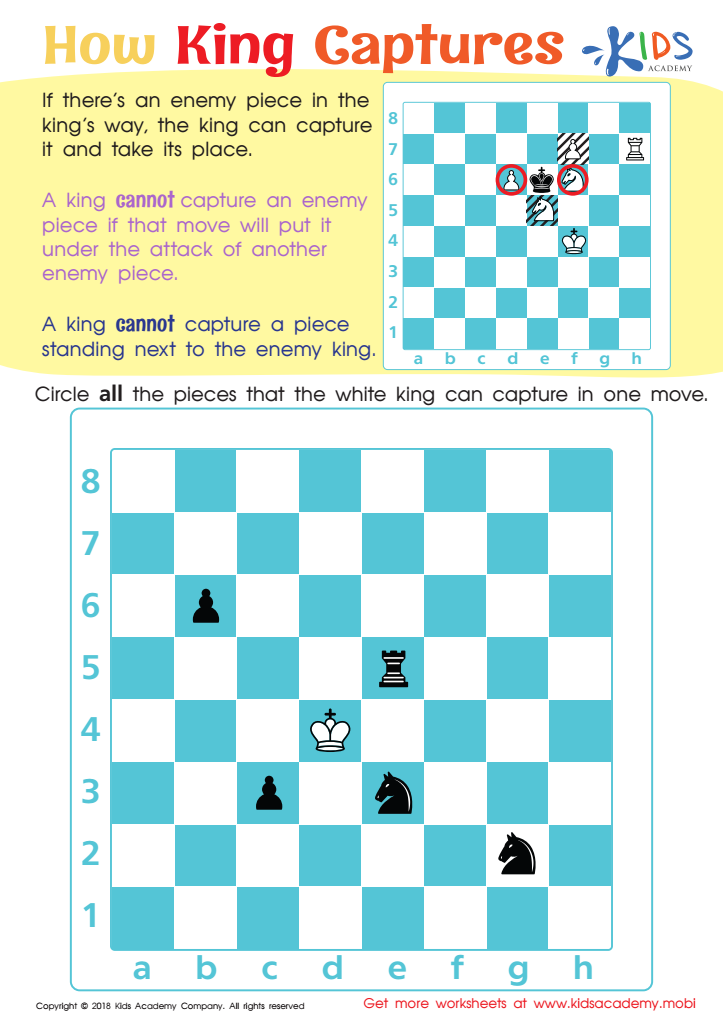
How King Captures Worksheet




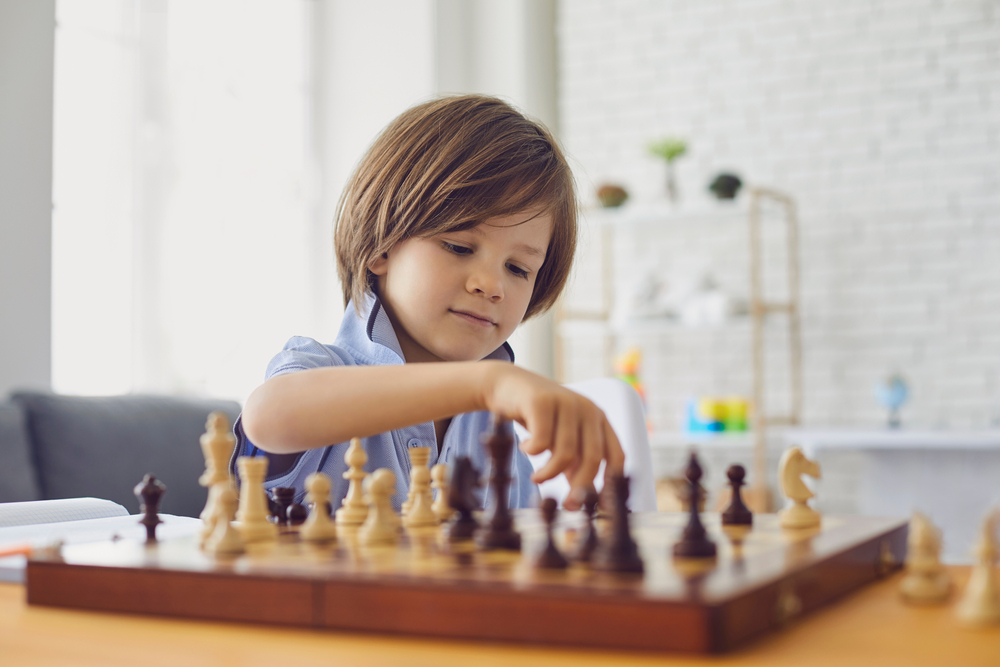

Problem-solving practice through chess is invaluable for children ages 6-9, as it fosters critical thinking, enhances cognitive abilities, and promotes emotional intelligence. At this developmental stage, children are naturally curious and eager to learn, making it an ideal time to introduce the strategic complexities of chess.
Chess encourages players to analyze situations, anticipate opponents' moves, and plan multiple steps ahead, which helps cultivate analytical thinking skills. As children engage in problem-solving, they learn to assess various outcomes, leading to improved decision-making capabilities both on and off the board.
Moreover, playing chess enhances focus and concentration, as each game requires sustained attention and strategic foresight. This improves not only academic performance but also general classroom behavior. Additionally, chess promotes patience and resilience; children learn to cope with setbacks as they analyze their losses and strive to improve.
From a social perspective, chess can serve as a bridge for building relationships—whether through friendly competition or collaborative learning. Ultimately, parents and teachers should value chess for its unique ability to nurture a well-rounded skill set in children, preparing them for future challenges in a fun and engaging way.