Animal knowledge Normal Worksheets for Ages 6-9
6 filtered results
-
From - To
Unlock the wonders of the animal kingdom with our "Animal Knowledge Normal Worksheets" tailored for children ages 6-9! These engaging and educational worksheets foster a love for animals while enhancing critical thinking and problem-solving skills. Featuring a variety of fun activities, including puzzles, matching games, and fact-finding missions, kids will explore different species, their habitats, diets, and behaviors. Ideal for classroom or home use, our worksheets encourage creativity and foster curiosity about wildlife and conservation. Perfect for young learners, our resource aims to enrich their understanding of the animal world while developing essential academic skills. Dive into animal knowledge today!
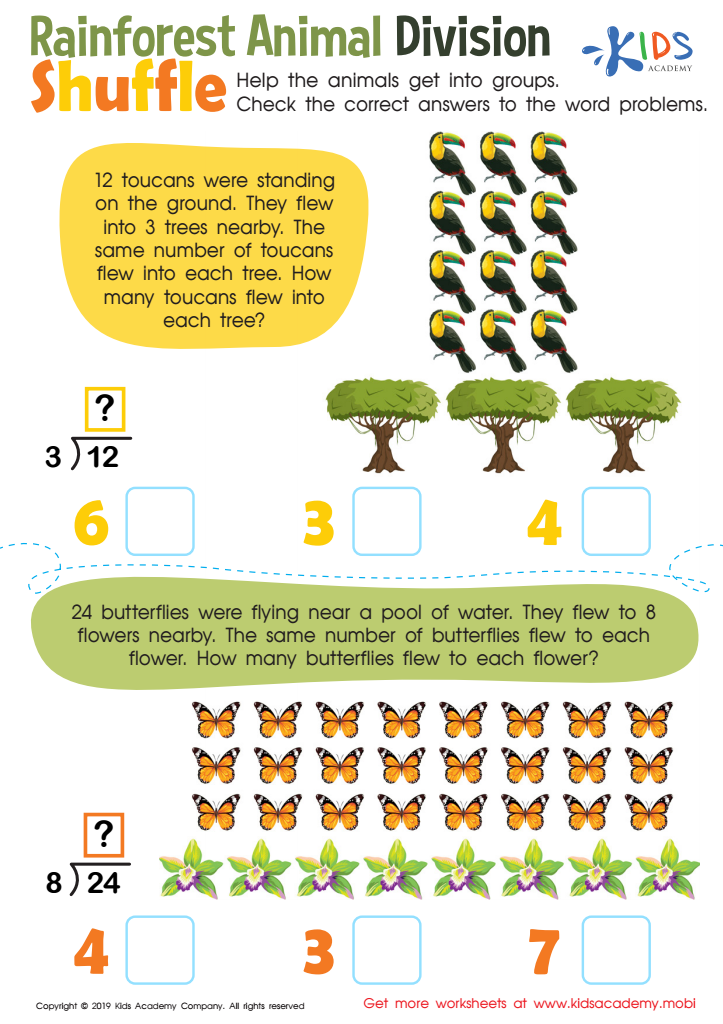
Rainforest Animal Division Worksheet
 Assign to My Students
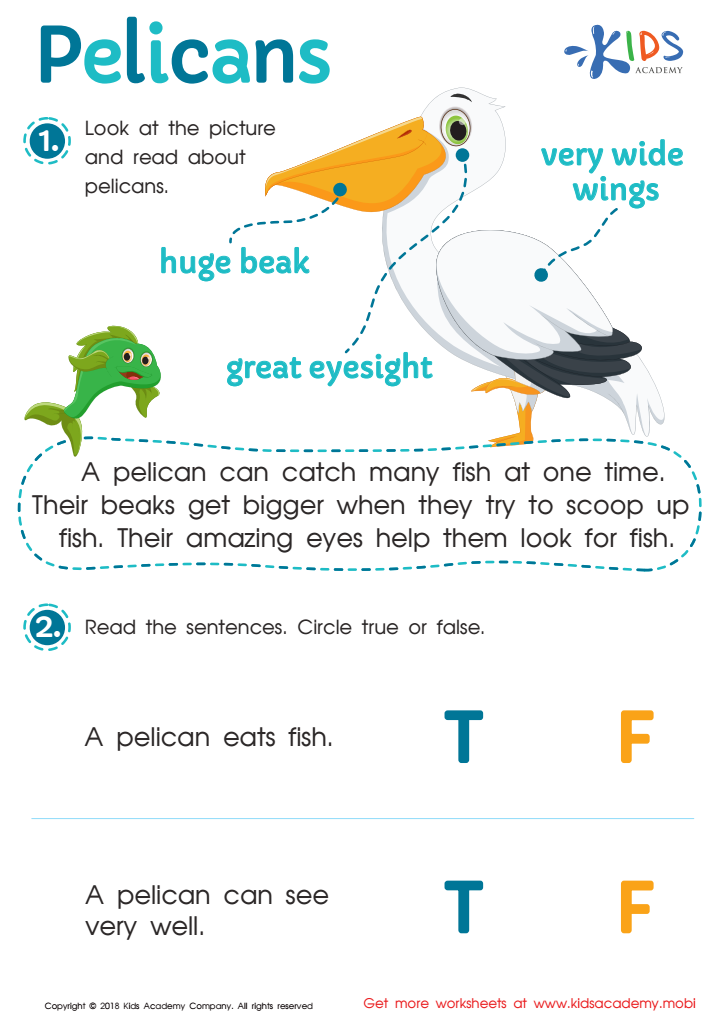
Pelicans Worksheet
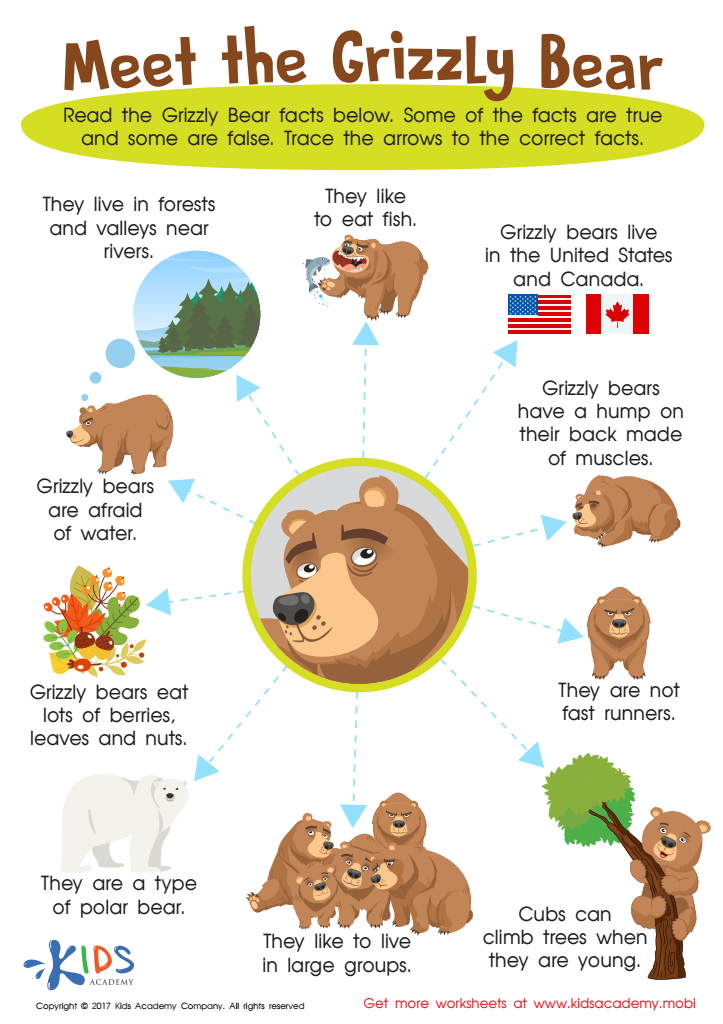
Grizzly Bear Facts Worksheet
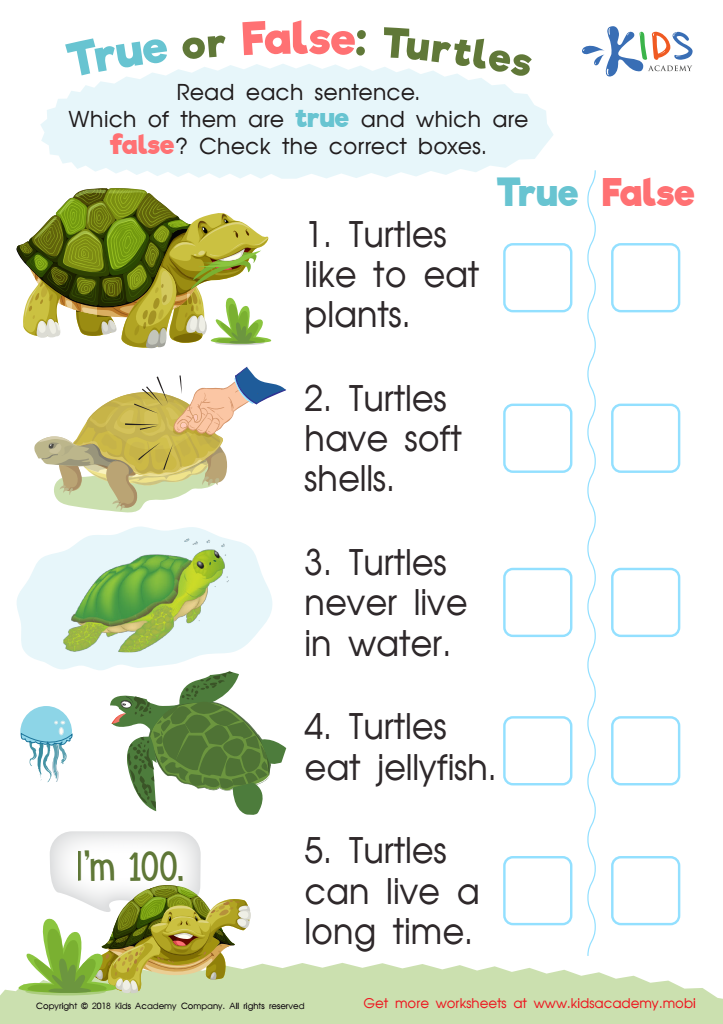
True or False: Turtles Worksheet
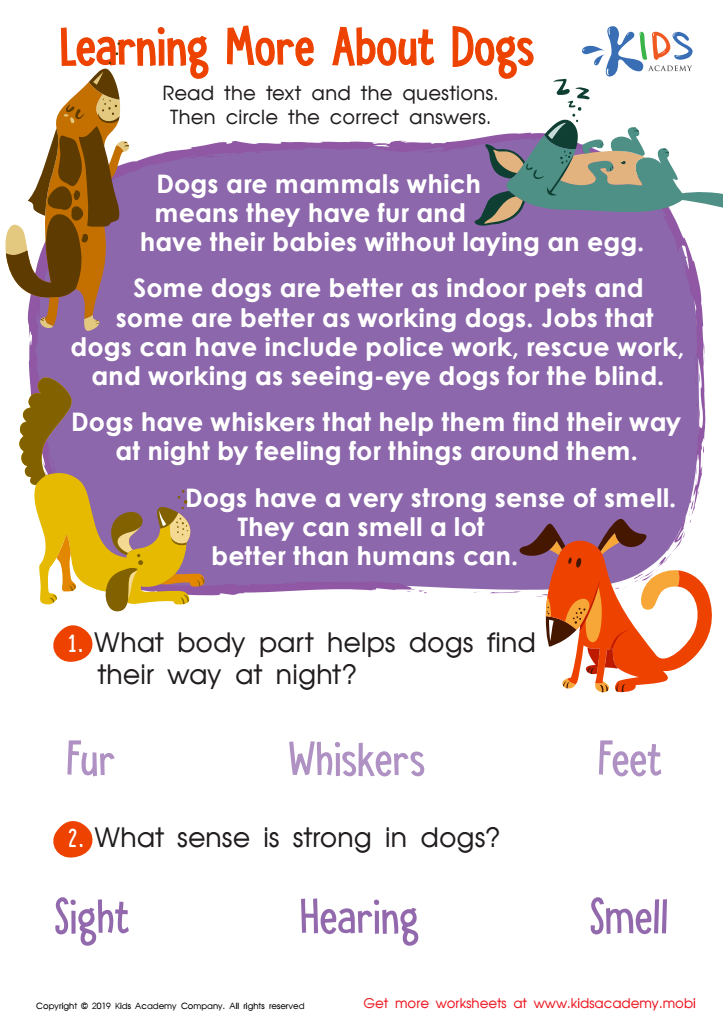
Learning More About Dogs Worksheet
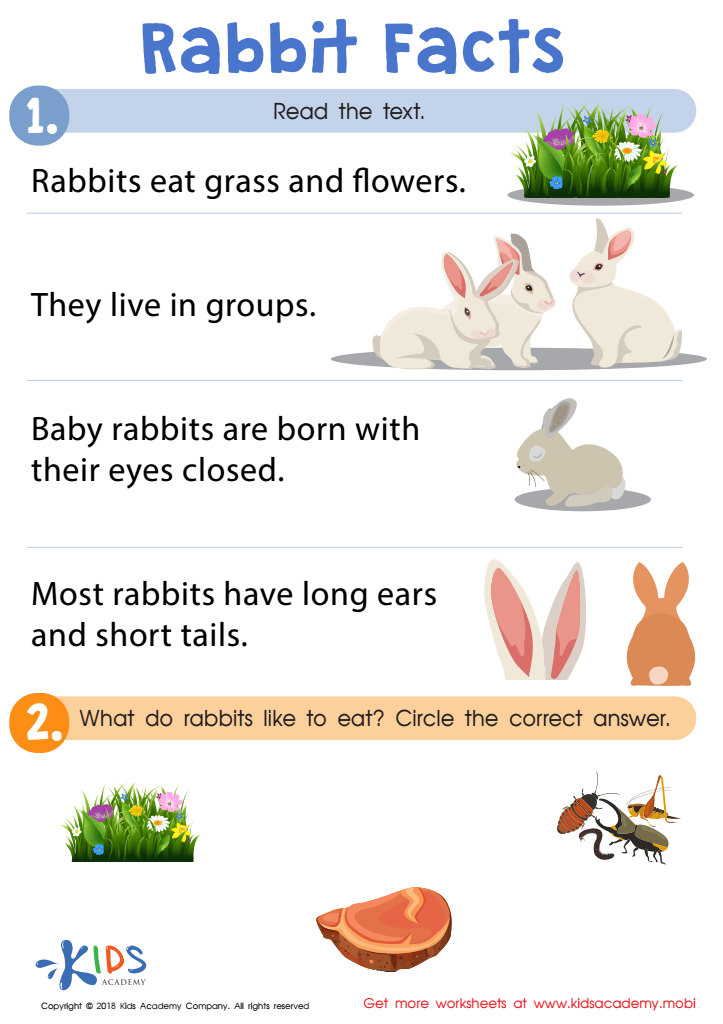
Rabbit Facts Worksheet





.jpg)

Animal knowledge is vital for children aged 6-9, as it lays the foundation for their understanding of the natural world and promotes empathy towards living beings. At this age, children are naturally curious about animals, which presents an excellent opportunity for learning. Knowledge about animals enhances their cognitive development, encouraging critical thinking and scientific inquiry. By understanding animal behavior, habitats, and ecosystems, children can develop a sense of responsibility towards wildlife and the environment.
Moreover, learning about animals fosters emotional and social skills. When children learn to empathize with animals, they are more likely to develop compassion and kindness towards their peers and others. Understanding how different animals contribute to our ecosystem instills a sense of interconnectedness, highlighting the importance of protecting biodiversity.
Additionally, animal knowledge can be linked to various subjects such as science, art, and literature, making learning more engaging. It can spark interest in outdoor activities, encouraging children to explore nature and develop healthy, active lifestyles. For parents and teachers, nurturing this knowledge equips children not only with academic skills but also essential life competencies that will guide them as responsible citizens in the future. In essence, fostering animal knowledge enriches the educational experience and supports holistic child development.








