Basic astronomy knowledge Normal Worksheets for Ages 6-9
3 filtered results
-
From - To
Discover our engaging Basic Astronomy Knowledge worksheets designed for children ages 6-9! These specially crafted resources encourage young learners to explore the wonders of space through fun activities. Each worksheet fosters essential skills while introducing fundamental concepts of astronomy, such as planets, stars, and the solar system. With vibrant graphics and interactive exercises, children will develop their observation and critical thinking skills. Perfect for homeschooling or classroom use, our Normal Worksheets provide an exciting way to ignite a passion for science. Unlock the mysteries of the night sky and watch your little astronomers thrive with these delightful learning tools!
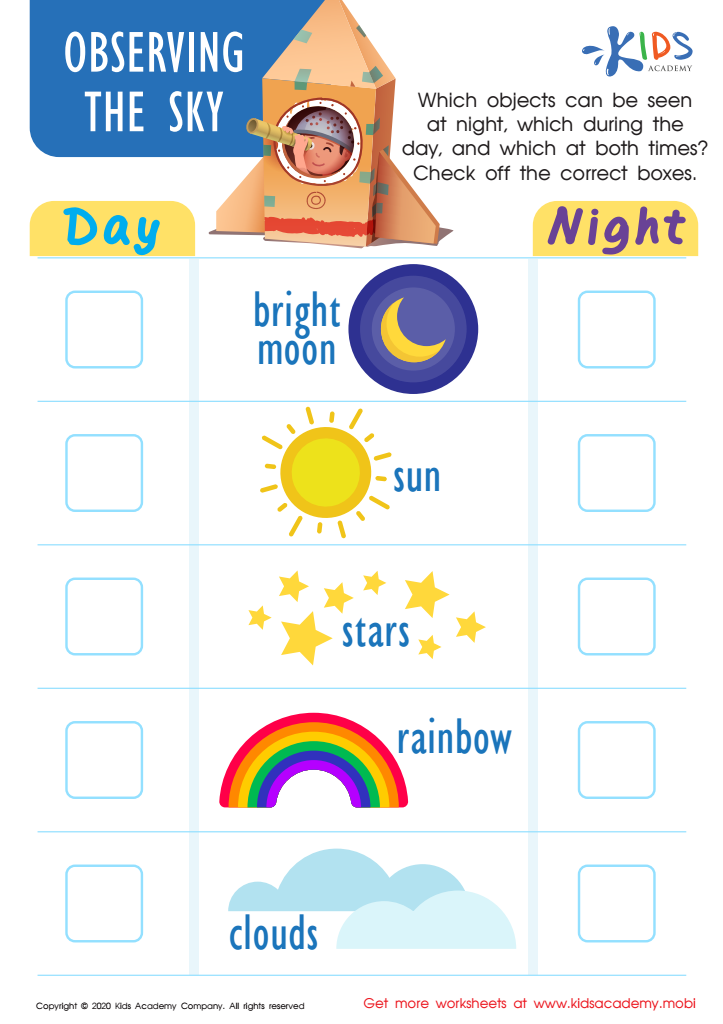
Observing the Sky Worksheet
 Assign to My Students
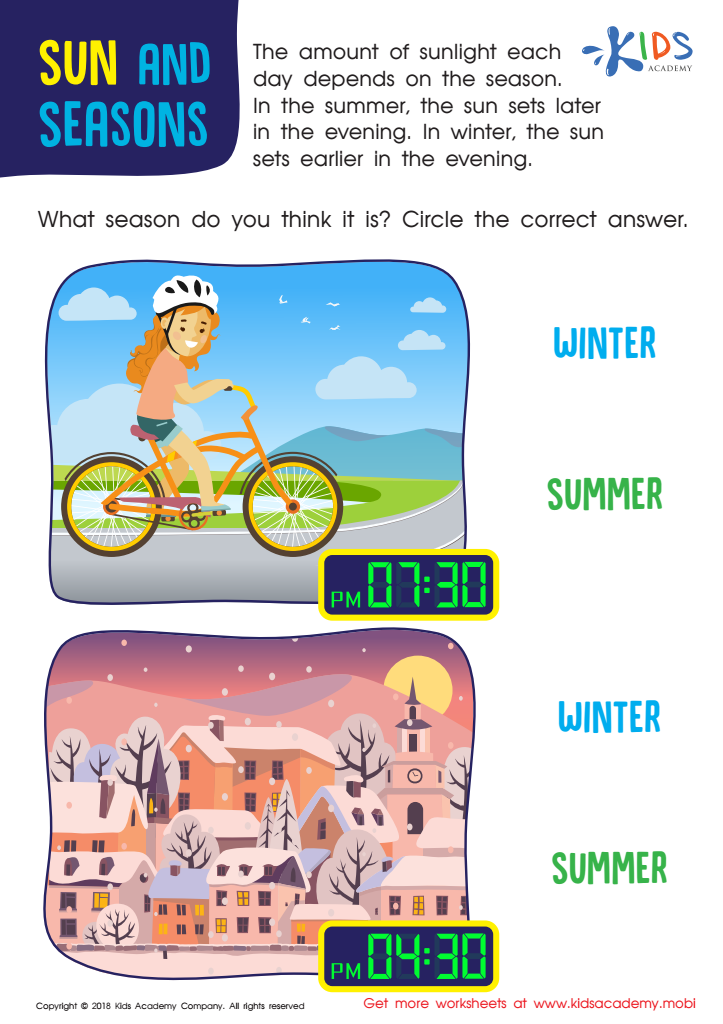
Sun and Seasons Worksheet
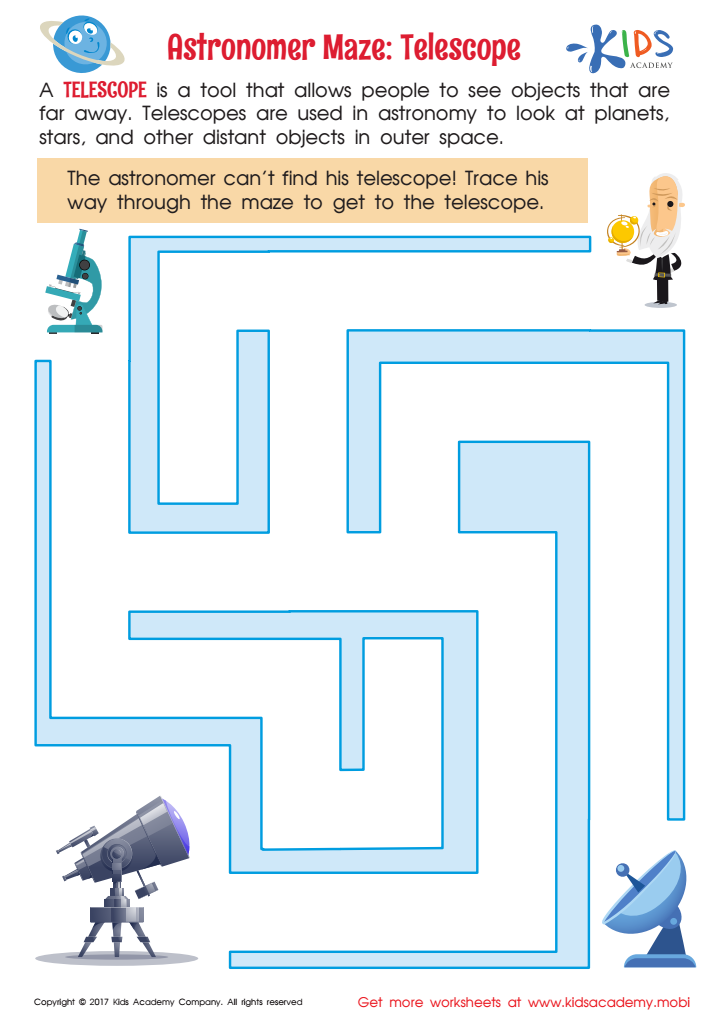
Astronomer Maze: Telescope Worksheet








Basic astronomy knowledge is important for parents and teachers, especially for children ages 6-9, as it fosters curiosity and wonder about the universe. At this age, children are naturally inquisitive, and learning about stars, planets, and galaxies helps nurture their love for science. Understanding astronomy can enhance critical thinking skills, encouraging children to ask questions like “What makes day and night?” or “Why do the stars twinkle?”
Additionally, astronomy lessons can be tied to everyday experiences and cultural stories, making learning relatable and exciting. By engaging children in stargazing or discussing celestial events, parents and teachers can promote family bonding while also inspiring future learning.
Basic astronomy education can also lay the foundation for STEM (Science, Technology, Engineering, Mathematics) skills, which are crucial in today’s across all fields. Moreover, understanding our position in the universe fosters a sense of humility and responsibility towards our planet, promoting environmental stewardship.
By investing time in basic astronomy with children, parents and teachers not only enhance their educational experiences but also enrich their worldview, creativity, and awareness of the greater universe. This empowerment can shape their lifelong learning journeys and appreciation for science.








