
Capitalization rules Normal Worksheets for Ages 6-9
3 filtered results
Difficulty Level
Grade
Age
-
From - To
Subject
Activity
Standards
Enhance your child's writing skills with our "Capitalization Rules" worksheets for ages 6-9. Each worksheet is designed to help young learners understand the basics of proper capitalization, integrating fun and engaging activities that keep them motivated. Our resources cover essential rules, such as capitalizing the first word of a sentence, proper nouns, days of the week, and months. Perfect for classroom or home use, these worksheets offer a sequential learning process, ensuring kids build a strong foundation in writing conventions. Explore our comprehensive collection to give your child the tools they need for successful writing.
Favorites
With answer key
Interactive
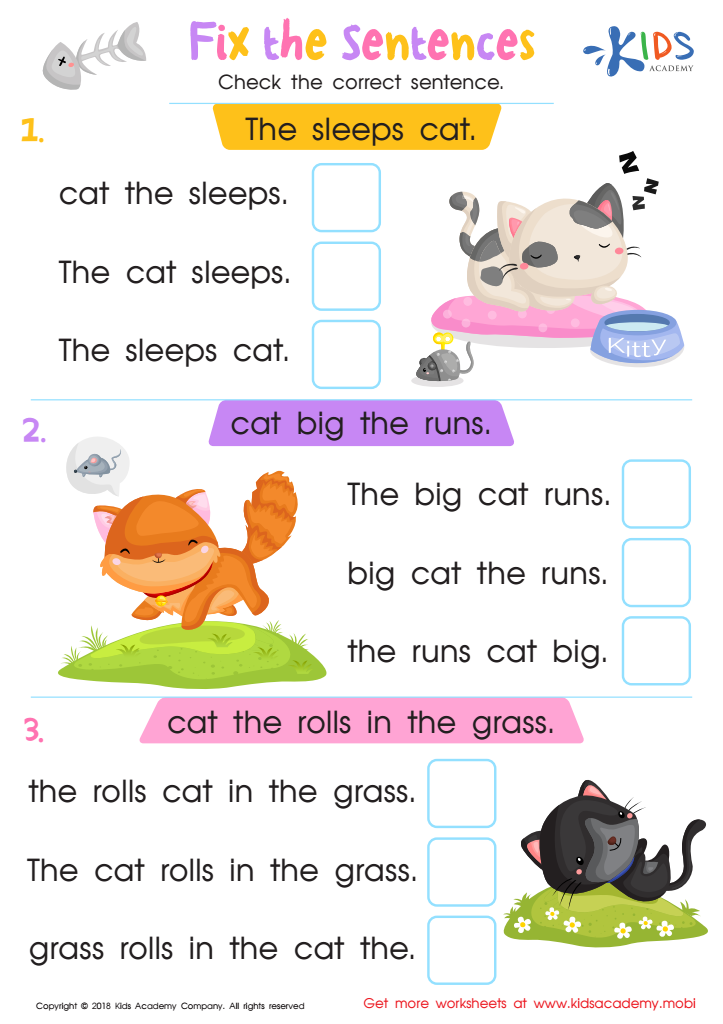
Fix the Sentences Worksheet
Once your students know the alphabet, teach them words. Then move on to constructing sentences. If they have a handle on sentence structure, give them this worksheet. Ask them to read the sentences and check the correct one.
 Assign to My Students
Fix the Sentences Worksheet
Worksheet
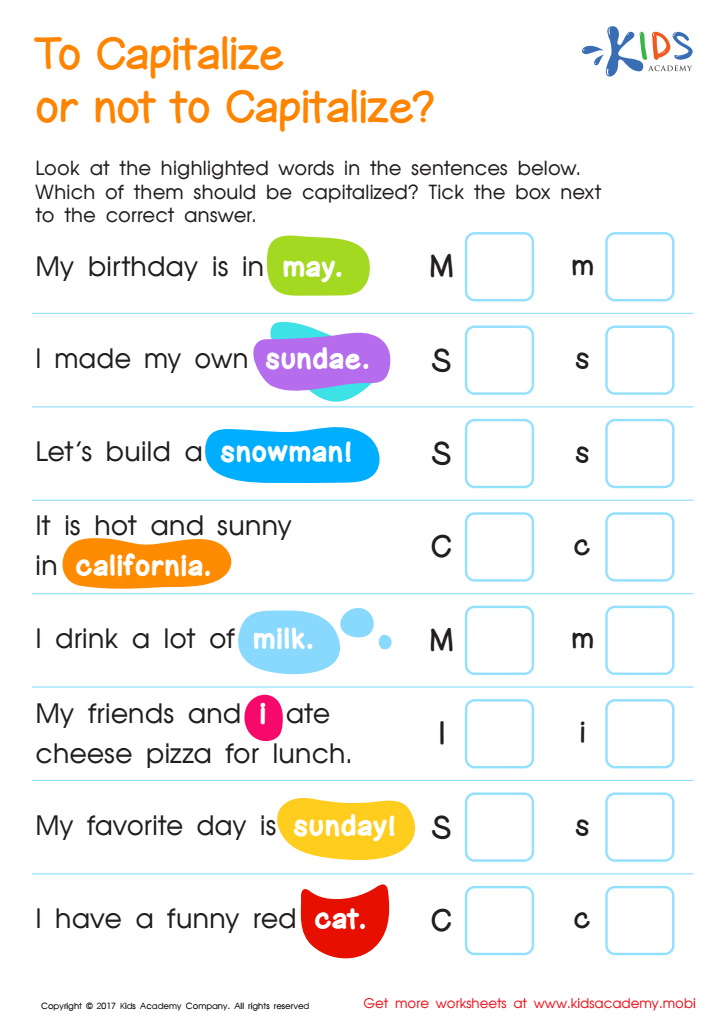
Capitalization: To Capitalize or Not? Printable
Have them answer the questions in "To Capitalize or Not to Capitalize" to check their understanding.
Capitalization: To Capitalize or Not? Printable
Worksheet
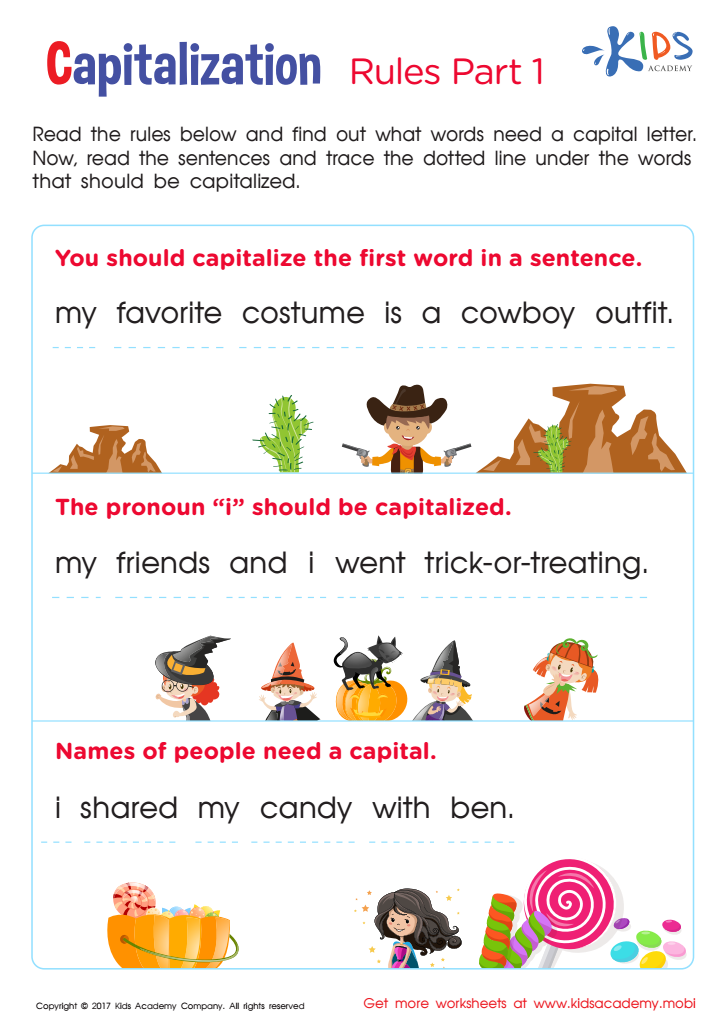
Capitalization Rules: Part 1 Worksheet
Kids entering high school with poor capitalization skills? Equip your 1st grader with the tools to combat this now! This capitalization worksheet will give them the knowledge they need to understand the importance of proper grammar rules and get their writing up to scratch.
Capitalization Rules: Part 1 Worksheet
Worksheet
Join Kids Academy for Free
Who is primarily going to use this learning content?




.jpg)



Understanding and following capitalization rules is essential for children aged 6-9 as it lays the foundation for effective written communication. First and foremost, proper capitalization helps young learners write sentences that are easily understandable. Capital letters serve as visual cues, indicating the start of a new sentence, a proper noun, or significant titles like "Mr." or "Mrs." This not only helps the reader follow the text more easily but also teaches children about the structure and flow of written language.
Moreover, learning capitalization rules early instills a sense of discipline and attention to detail, skills that are beneficial far beyond language arts. Correct capitalization demonstrates respect for conventional forms of writing, reflecting a student's ability to follow established guidelines. This respect for rules can translate into other academic subjects and environmental settings, encouraging better organizational and cognitive skills.
Parents and teachers also play a key role in fostering children’s reading and writing confidence. When children confidently apply capitalization rules, their writing appears more polished and professional, making them more likely to engage in written tasks without anxiety or confusion. Overall, instilling proper capitalization habits in children aged 6-9 equips them with a vital tool for academic success and effective communication.








