Categorizing animals Normal Worksheets for Ages 6-9
3 filtered results
-
From - To
Welcome to our "Categorizing Animals Normal Worksheets" for ages 6-9! Designed to enhance young learners' critical thinking and classification skills, these engaging worksheets make animal categorization fun and educational. Children will explore various animal types, from mammals to reptiles, developing their understanding of habitats and characteristics. Each worksheet encourages creativity and observation while providing valuable practice in sorting and grouping different species. Aligned with educational standards, our resources make learning about the animal kingdom exciting and interactive. Perfect for classroom or home use, these worksheets support early childhood development in a playful way. Download and inspire a love for animals today!
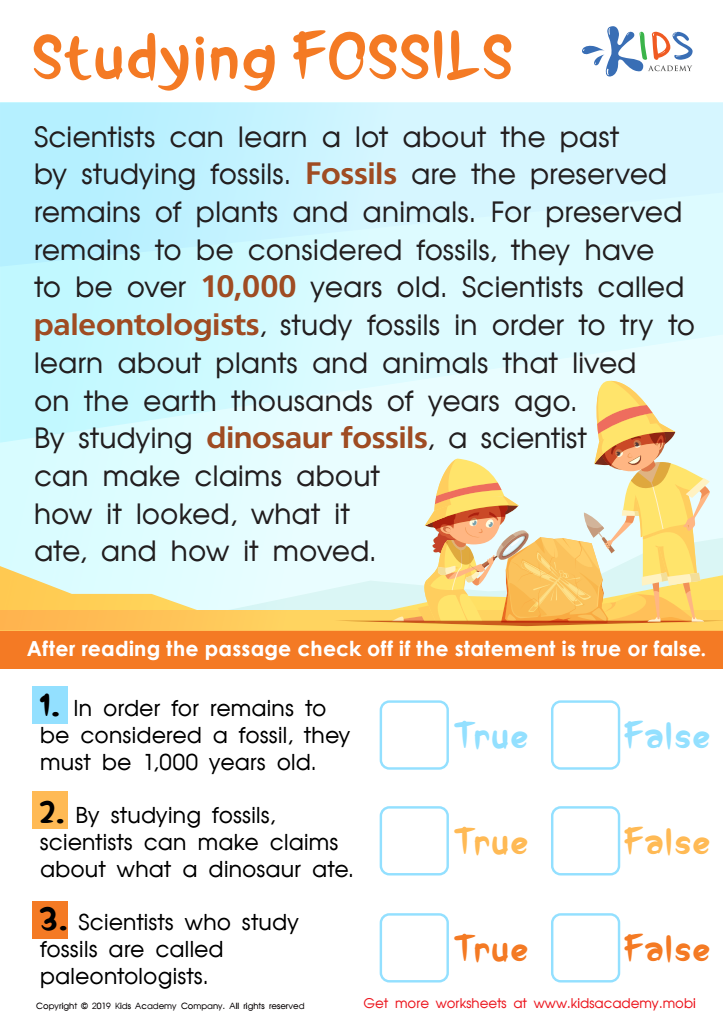
Studying Fossils Worksheet
 Assign to My Students
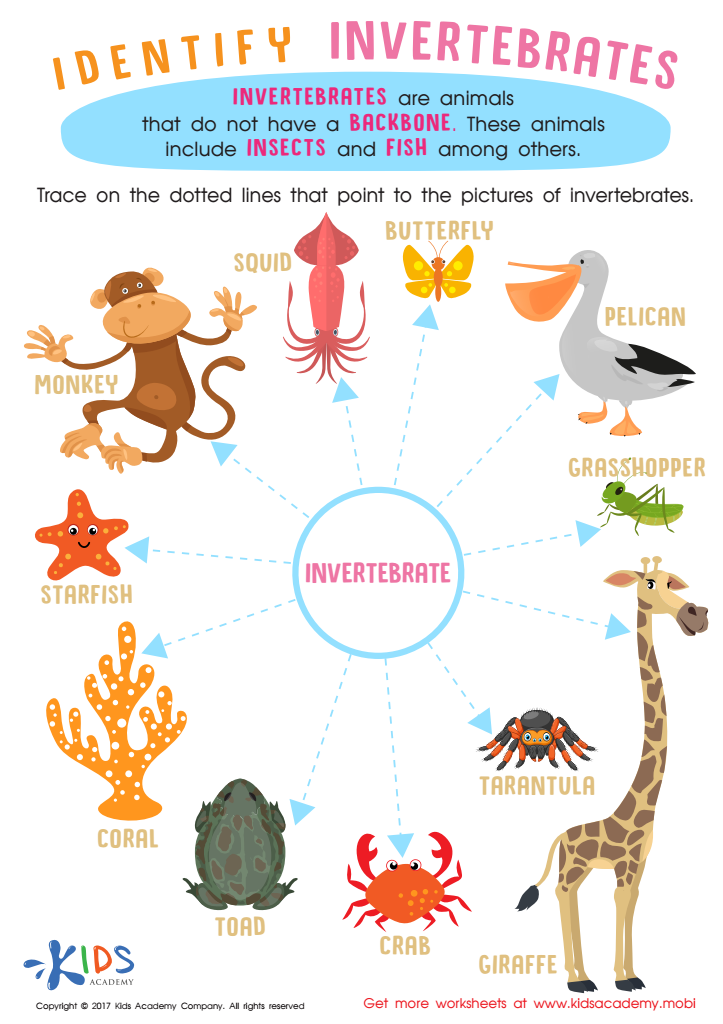
Invertebrates Worksheet for Grade 3
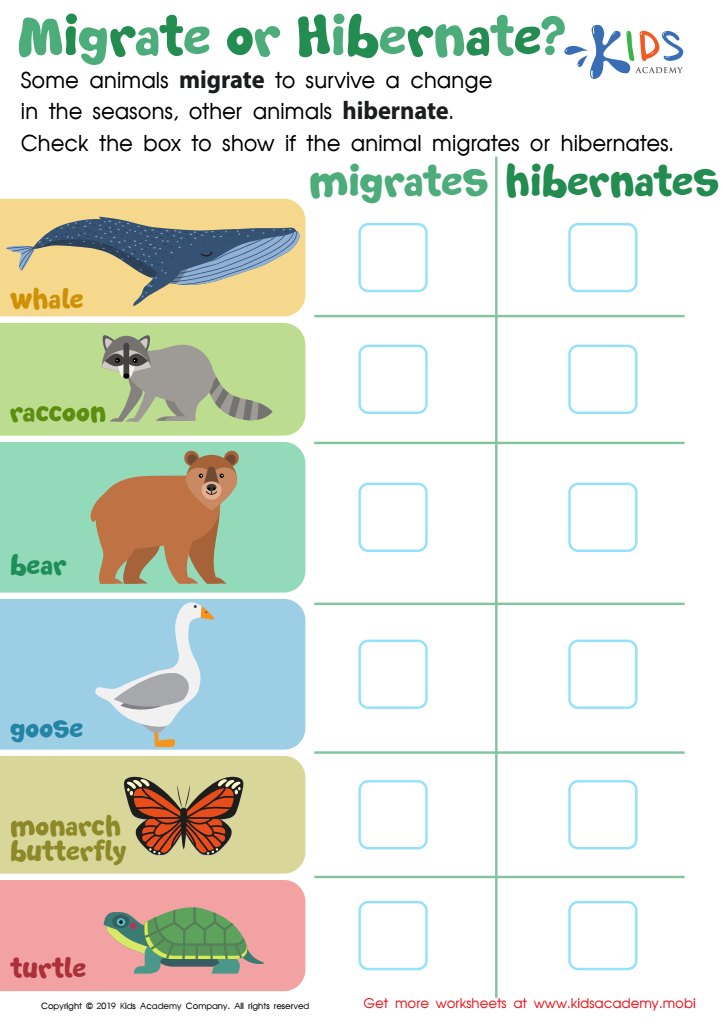
Migrate or Hibernate? Worksheet




.jpg)

Understanding how to categorize animals is essential for children aged 6-9, and both parents and teachers play a crucial role in this learning process. Firstly, categorizing animals fosters critical thinking skills. Children learn to identify similarities and differences among species, promoting analytical skills that are foundational for future learning.
Additionally, categorization enhances vocabulary and cognitive development. As children explore various animal groups—such as mammals, birds, reptiles, amphibians, and fish—they encounter new terms and concepts, broadening their knowledge and understanding of the natural world.
Engagement with animal classification also instills a sense of curiosity and wonder about the environment. By learning about diverse species and their habitats, children develop an appreciation for biodiversity and an understanding of ecosystems, which can lead to lifelong environmental stewardship.
Including topics like animal categories in educational activities can also spark enthusiasm for science and nature, encouraging exploration, observation, and inquiry. Moreover, comprehending these classifications improves students’ ability to communicate effectively about wildlife, fostering discussions about conservation and the importance of protecting different species. Thus, investing in this area of knowledge enriches children’s educational experiences and prepares them for a world where interconnectedness and ecological awareness are vital tools for understanding the planet.








