Differentiating goods/services Normal Worksheets for Ages 6-9
3 filtered results
-
From - To
Welcome to our "Differentiating Goods/Services Normal Worksheets" designed for children ages 6-9! These engaging and colorful worksheets equip young learners with essential skills to distinguish between goods and services through fun activities and relatable examples. Each worksheet encourages critical thinking, enhances comprehension, and supports early economic understanding. Tailored to foster creativity and collaboration, our resources promote interactive learning experiences—perfect for classrooms or at-home study. With variable complexities, they cater to diverse learning styles, ensuring every child can excel. Download and discover a world of learning that will empower your students with foundational knowledge for their future!
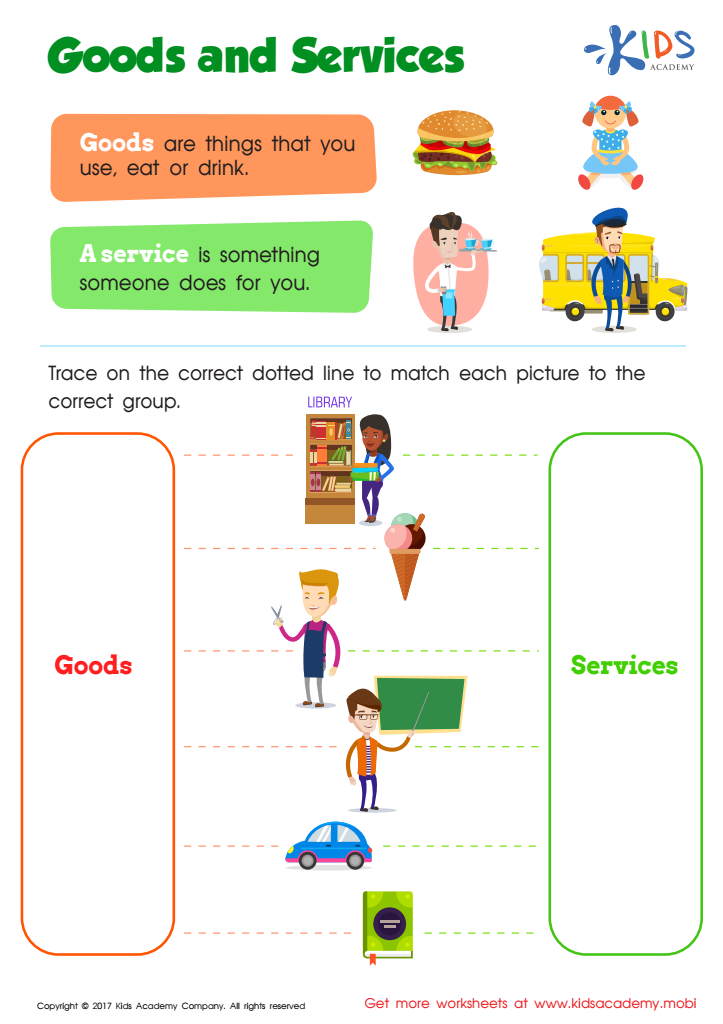
 Assign to My Students
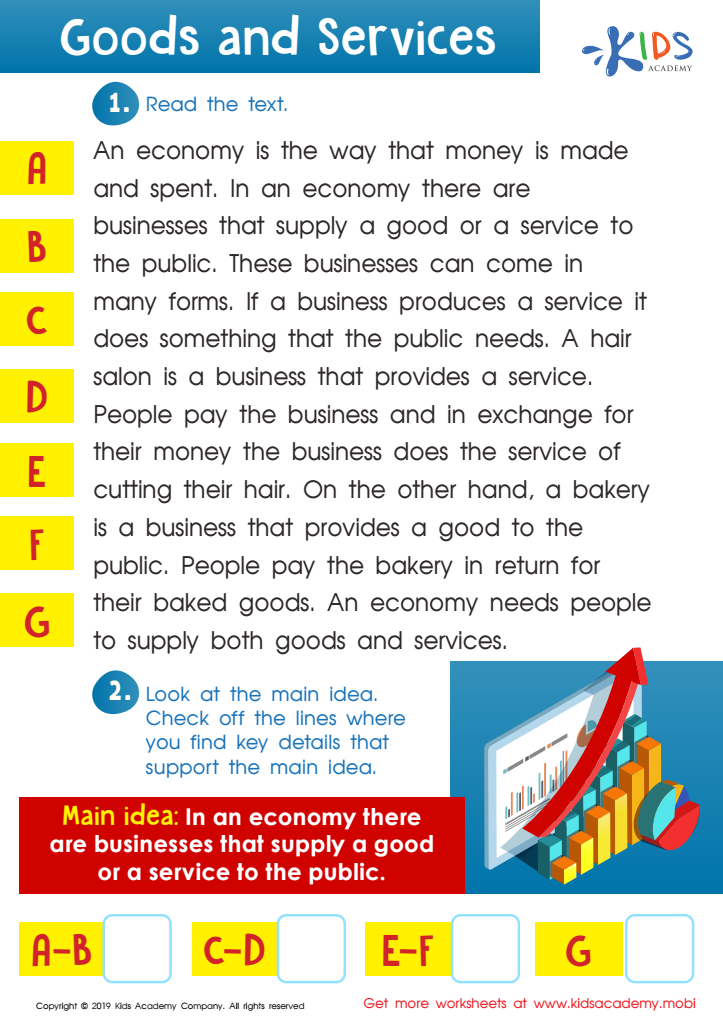
Goods and Services Worksheet
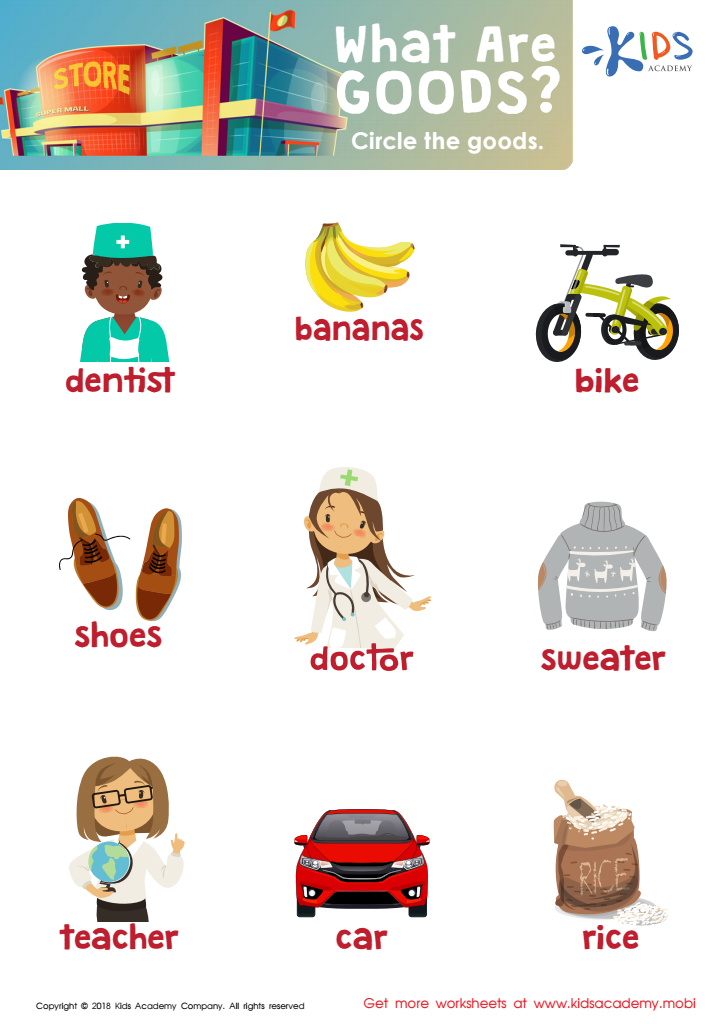
What Are Goods? Worksheet






Differentiating goods and services is essential for children aged 6-9, as this stage is crucial for developing critical thinking, problem-solving, and social skills. Parents and teachers should care because differentiation enables tailored learning experiences that cater to diverse interests and learning styles among children.
At this age, children are beginning to explore their identities and preferences. When goods and services, such as educational materials or extracurricular activities, are differentiated, they can be matched to each child's individual strengths and needs. This encourages engagement and intrinsic motivation, making learning more enjoyable and effective.
Furthermore, exposure to various differentiated goods and services promotes inclusivity. Children learn about appreciation for diversity and the importance of respecting differing opinions, perspectives, and backgrounds during this stage. It also helps them understand the value of consumer choice and decision-making.
Ultimately, by emphasizing differentiated goods and services, parents and teachers foster a more personalized approach to education and development. It lays the groundwork for enhanced learning outcomes and cultivates both emotional intelligence and social skills, equipping children to navigate their environments successfully as they grow.








