Fine motor development Normal Worksheets for Ages 6-9
4 filtered results
-
From - To
Unlock your child's potential with our "Fine Motor Development Normal Worksheets for Ages 6-9." Designed to enhance dexterity, these expertly crafted worksheets focus on vital fine motor skills through engaging activities. Perfect for young learners, each worksheet combines fun with functionality, ensuring your child enjoys practicing handwriting, cutting, drawing, and other essential tasks. Our guided exercises help build coordination, precision, and confidence, setting a strong foundation for academic success. These worksheets are ideal for parents and educators aiming to support children's growth in a structured yet enjoyable way. Tackle fine motor challenges with our effective and age-appropriate resources!

Uppercase Letters J, K, and L Worksheet
 Assign to My Students
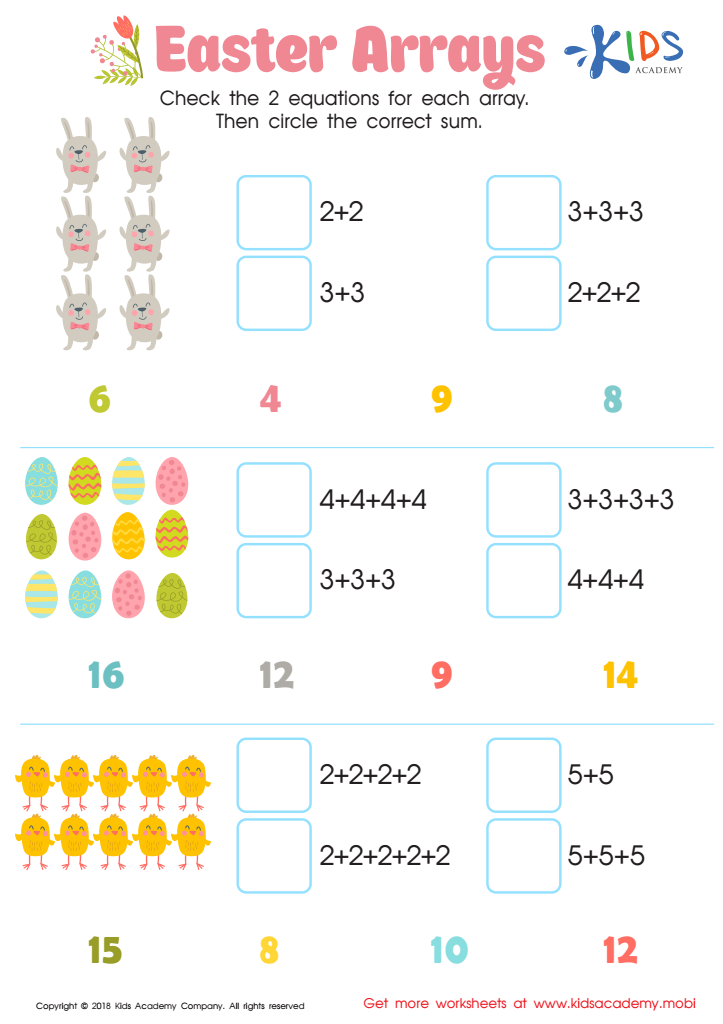
Easter Arrays Worksheet

Check Bingo Worksheet

Kindergarten Number Tracing: Medow Flowers Worksheet








Fine motor development refers to the coordination of small muscles involving the hands and fingers, which is crucial for performing everyday tasks like writing, cutting, and buttoning clothes. For children aged 6-9, honing these skills is especially important as it directly impacts their academic performance and self-esteem.
Parents and teachers play a pivotal role in fostering this development. Strong fine motor skills enable children to write legibly and at a pace that keeps up with class activities, promoting better academic outcomes. Furthermore, these skills are fundamental for handling classroom tools and technologies, thereby supporting diverse learning styles and keeping children engaged.
Moreover, proficient fine motor skills contribute to greater independence in self-care tasks such as tying shoelaces and using utensils, which can significantly boost a child's confidence and self-reliance. Emotional and social development also ties into this, as children who can participate easily in arts and crafts, sports, and practical tasks feel more included and competent.
Neglecting fine motor development might result in difficulties that can hamper academic success and social participation. Therefore, incorporating activities that strengthen fine motor skills into daily routines and curricula can provide children with the foundational tools necessary for both educational and personal growth. This proactive approach ensures they are well-prepared for more complex tasks in later stages of their education.








