Identifying story elements Normal Worksheets for Ages 6-9
3 filtered results
-
From - To
Unlock the magic of storytelling with our "Identifying Story Elements Normal Worksheets" designed specifically for children aged 6-9. These engaging, printable worksheets help young learners recognize essential story components such as characters, settings, and plot. By enhancing comprehension skills, these activities encourage creativity and analytical thinking. Perfect for both classroom settings and at-home learning, our worksheets offer diverse exercises that make learning fun. Foster a love for reading and storytelling with our thoughtfully crafted materials, designed to captivate young minds and empower them with the skills they need to understand and appreciate narratives. Explore our resources today and inspire your child's literary journey!
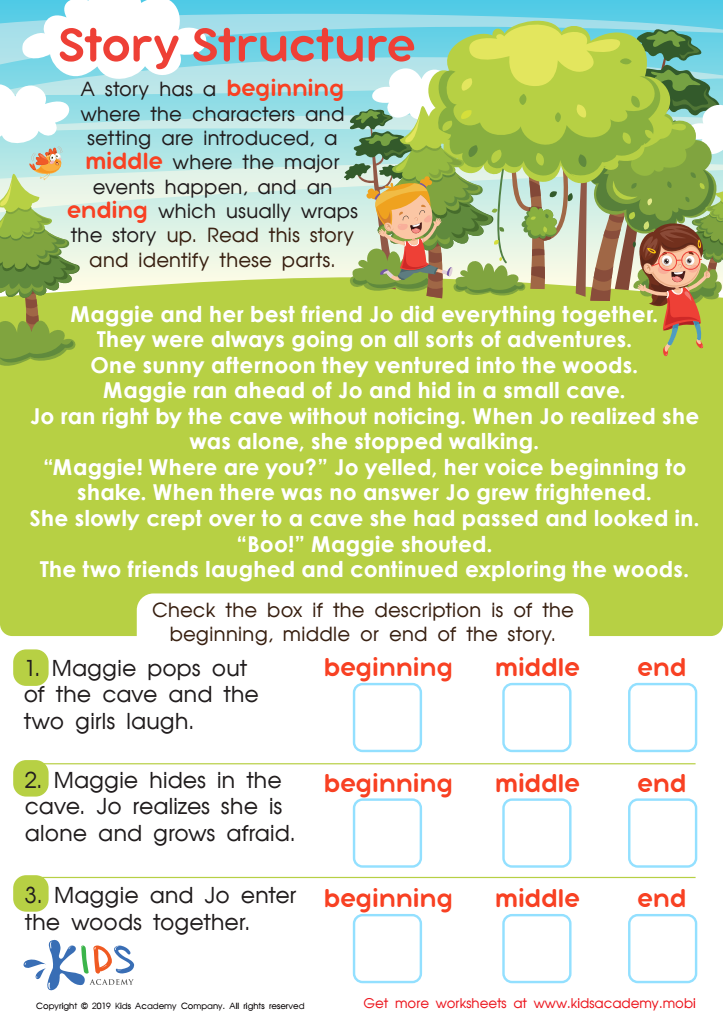
Story Structure Worksheet
 Assign to My Students
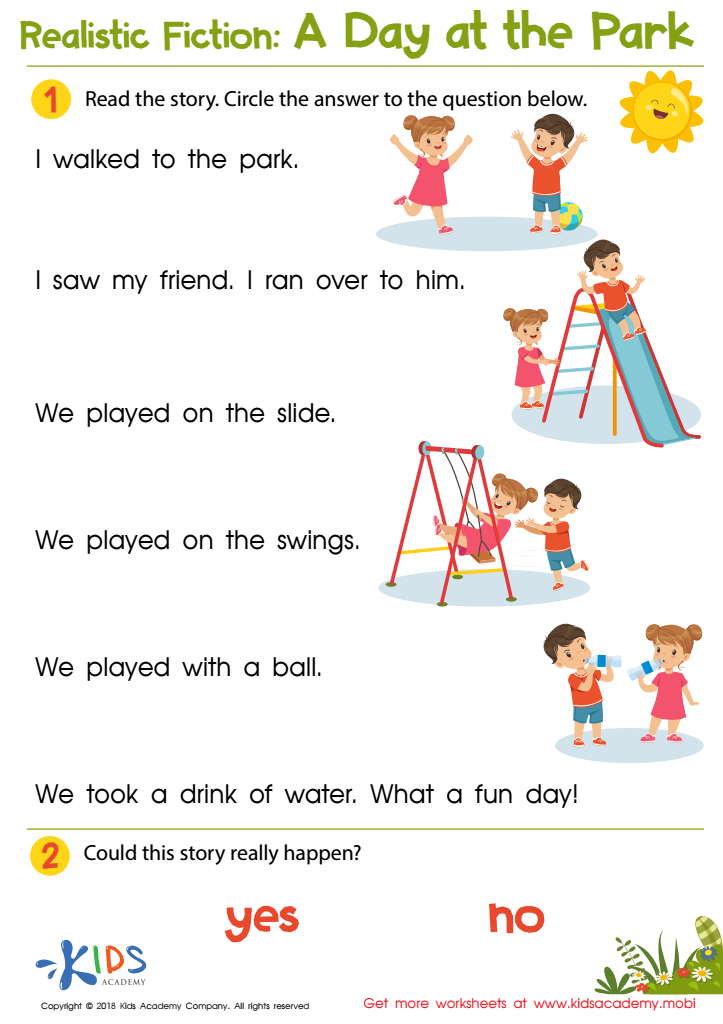
A Day at the Park Worksheet
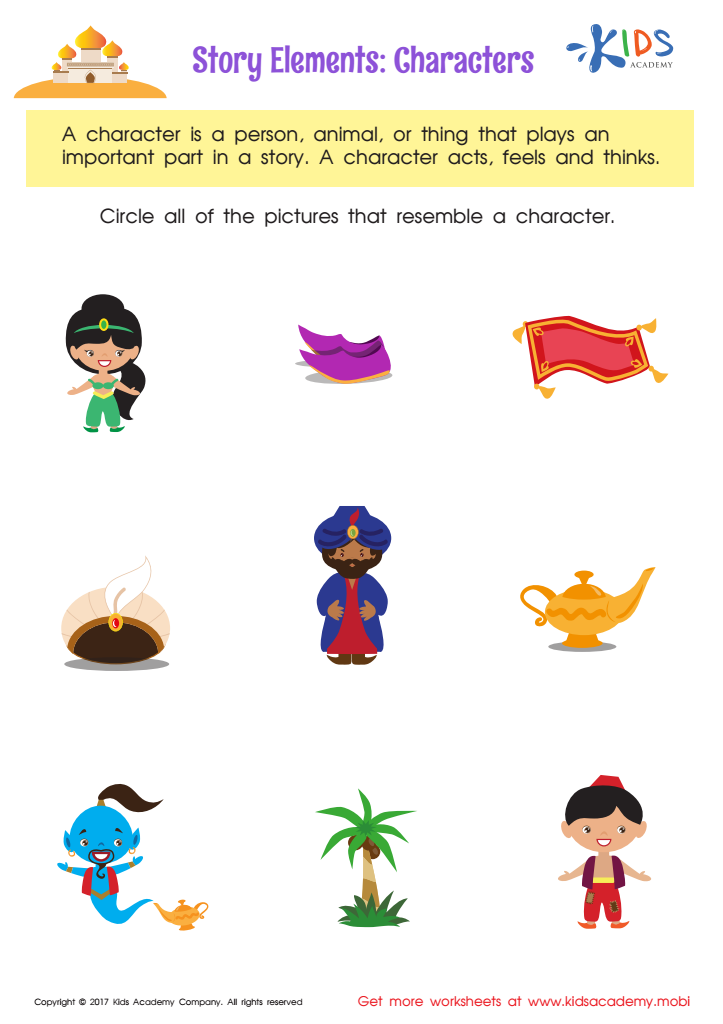
Story Elements Printable





Identifying story elements is crucial for children aged 6-9 as it enhances their literacy skills and comprehension. Parents and teachers should prioritize this because understanding components like characters, setting, plot, conflict, and resolution allows young readers to grasp the overall message and themes in stories.
When children can identify these elements, they become active participants in their reading, fostering engagement and critical thinking. This skill not only helps them navigate texts more effectively but also supports their ability to summarize and retell stories, reinforcing comprehension and retention.
Moreover, recognizing story elements enriches children's creativity. When they understand how stories are constructed, they can begin to create their own narratives, leading to better writing skills. It opens avenues for imaginative play and storytelling, reinforcing the interconnection between reading and creative expression.
In a broader perspective, identifying story elements cultivates a love of reading. Engaged learners are more likely to develop a lifelong appreciation for books. Therefore, by focusing on story elements, parents and teachers can help children build foundational literacy skills while fostering a joy for reading that resonates throughout their lives.








