Sound recognition Normal Worksheets for Ages 6-9
13 filtered results
-
From - To
Enhance your child's auditory skills with our Sound Recognition Normal Worksheets for Ages 6-9! Designed to make learning fun, these printable worksheets help kids identify and differentiate various sounds, boosting their listening and cognitive abilities. With engaging exercises tailored specifically for developing learners, these resources support critical early learning skills essential for academic success. Ideal for classroom and home practice, these worksheets encourage attentive listening and better comprehension. Visit Kids Academy to download and print these valuable tools, ensuring your child excels in sound recognition and beyond. Embrace learning with our expertly crafted resources!
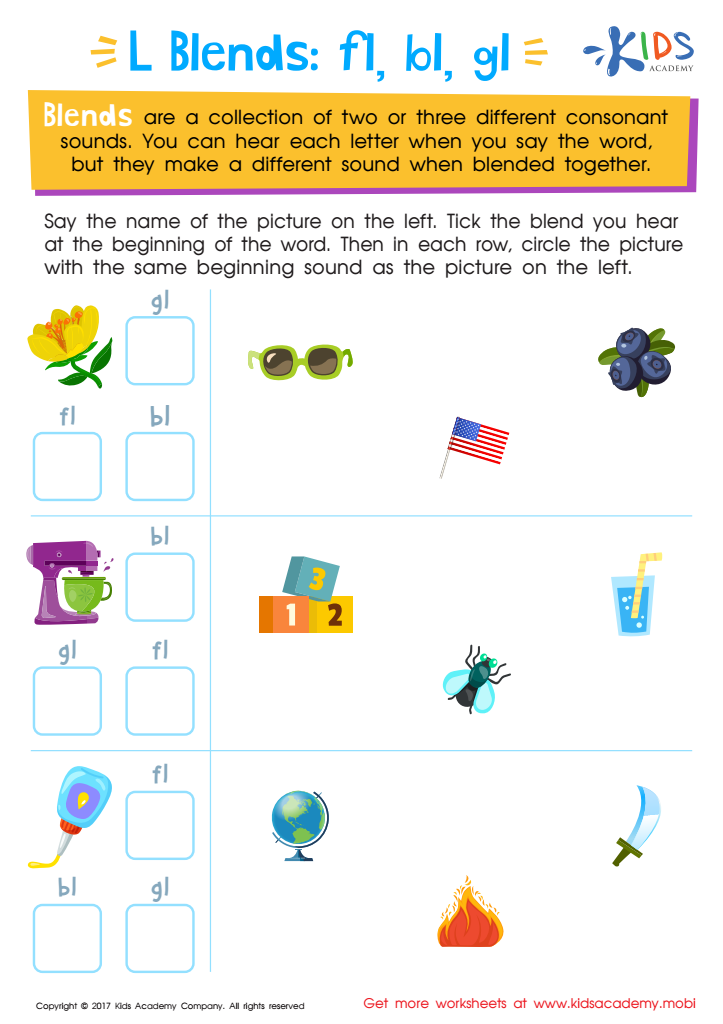
Blending Consonants: "Fl", "Bl" and "Gl" Printable
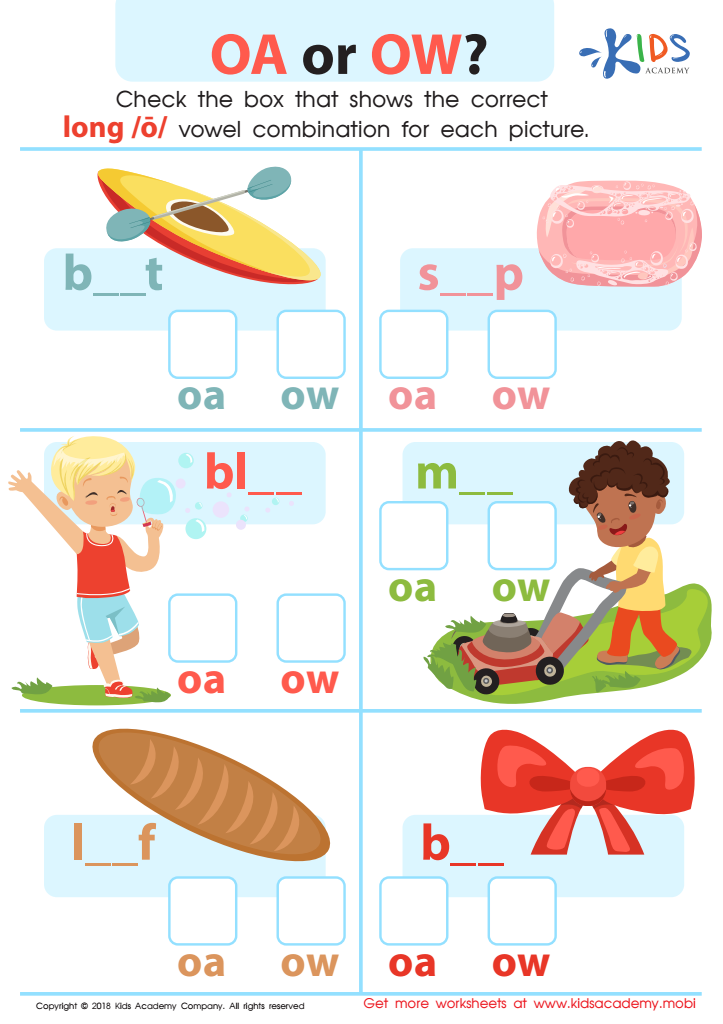
Reading: OA or OW Worksheet
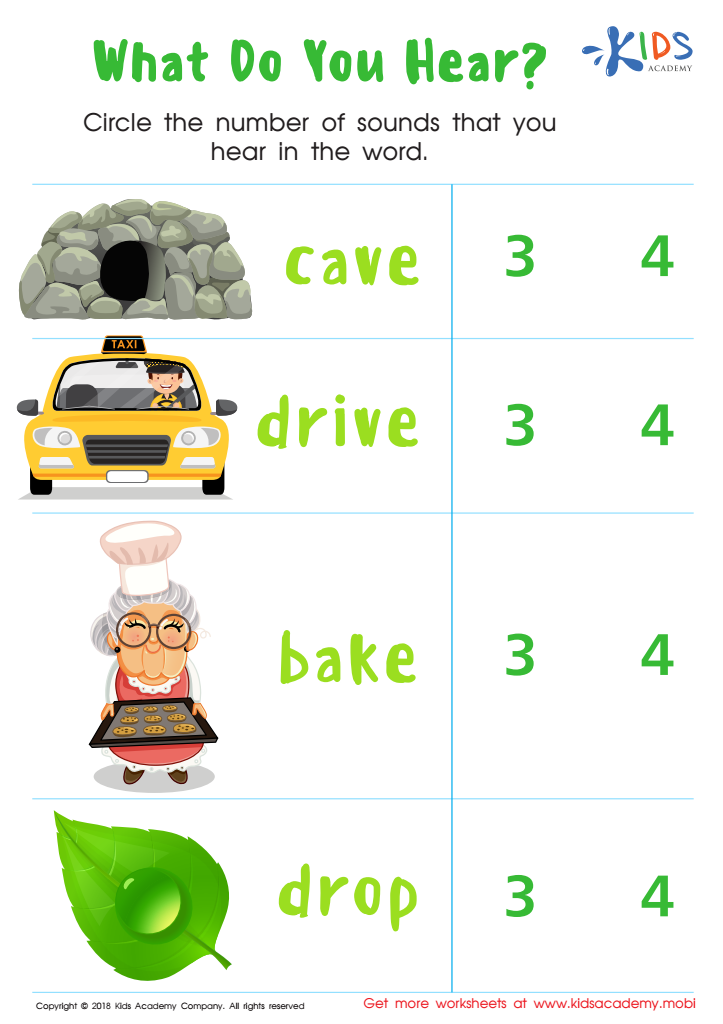
What Do You Hear? Worksheet

Rhyming Words Rhyming Worksheet
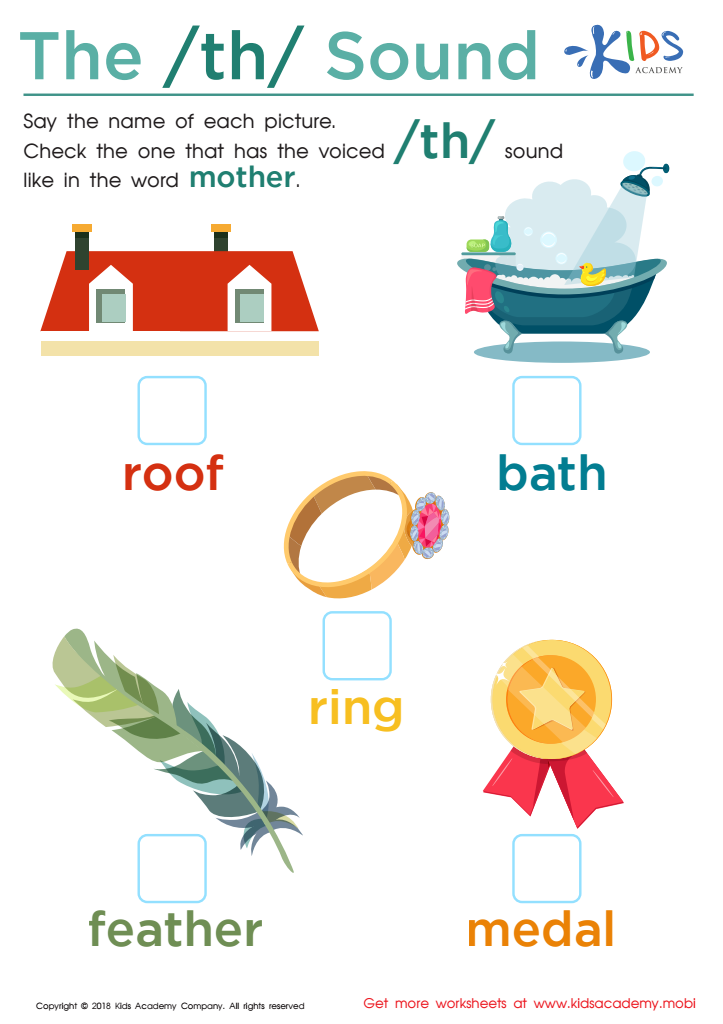
The /th/ Sound Worksheet
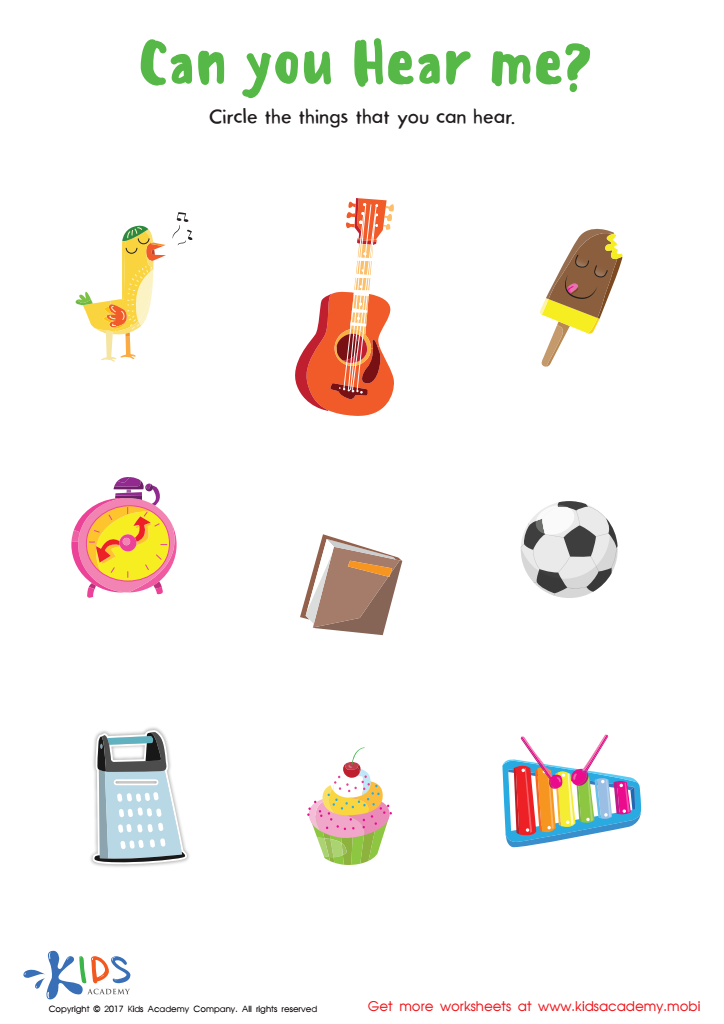
Can You Hear Me Worksheet
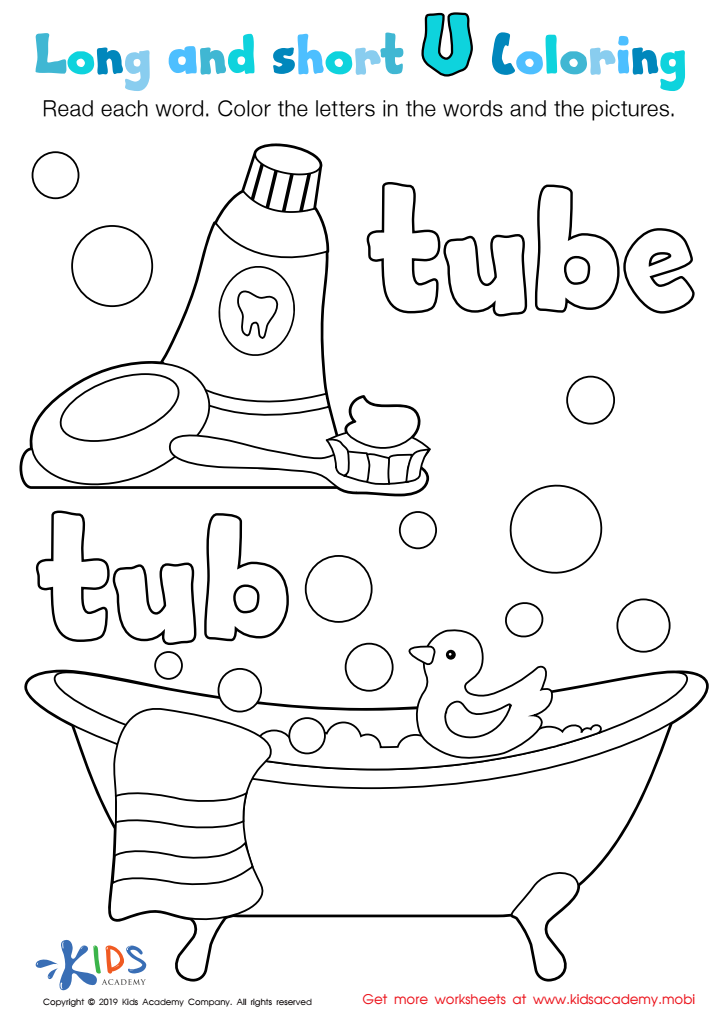
Long and Short U Worksheet
 Assign to My Students
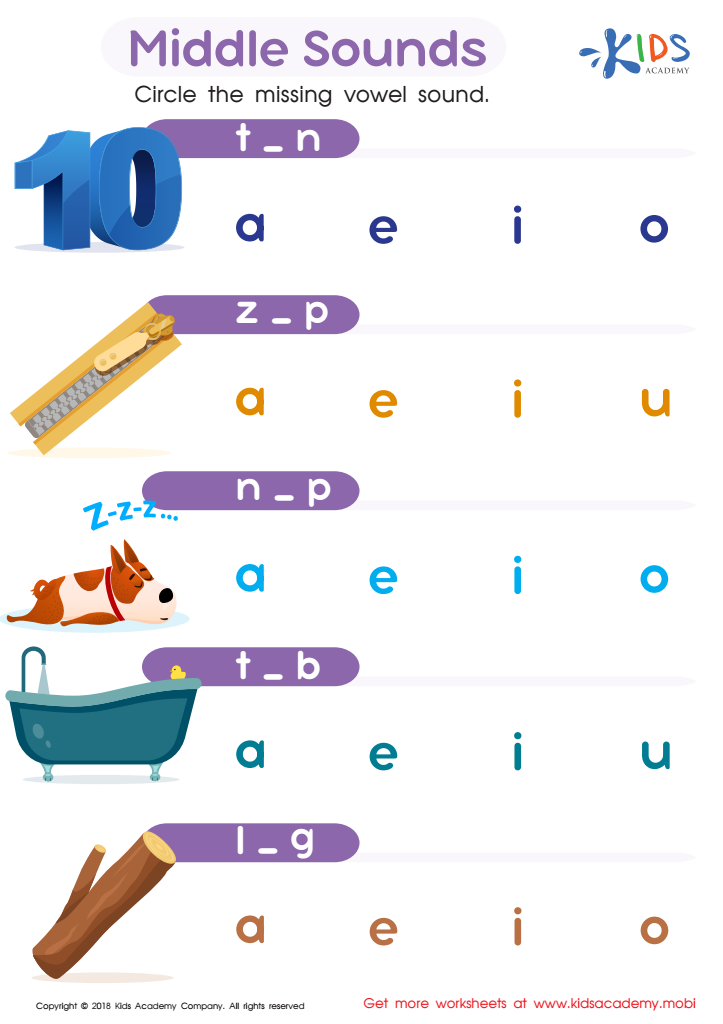
Middle Sounds Worksheet

First Words: Picture Rhymes Worksheet
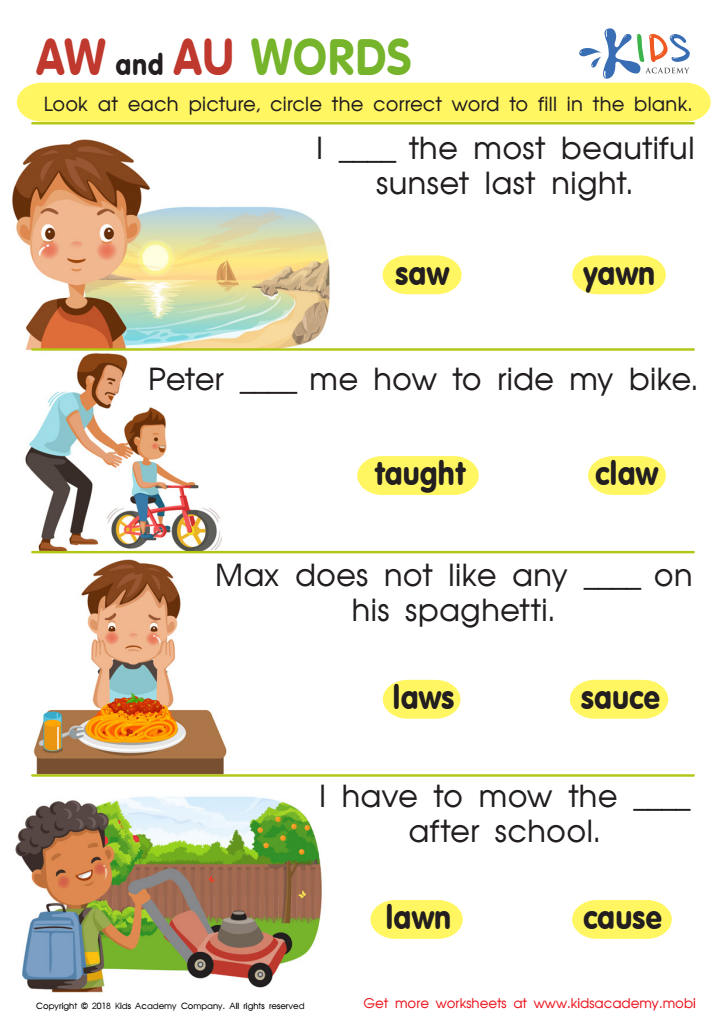
Reading: AW and AU Words Worksheet
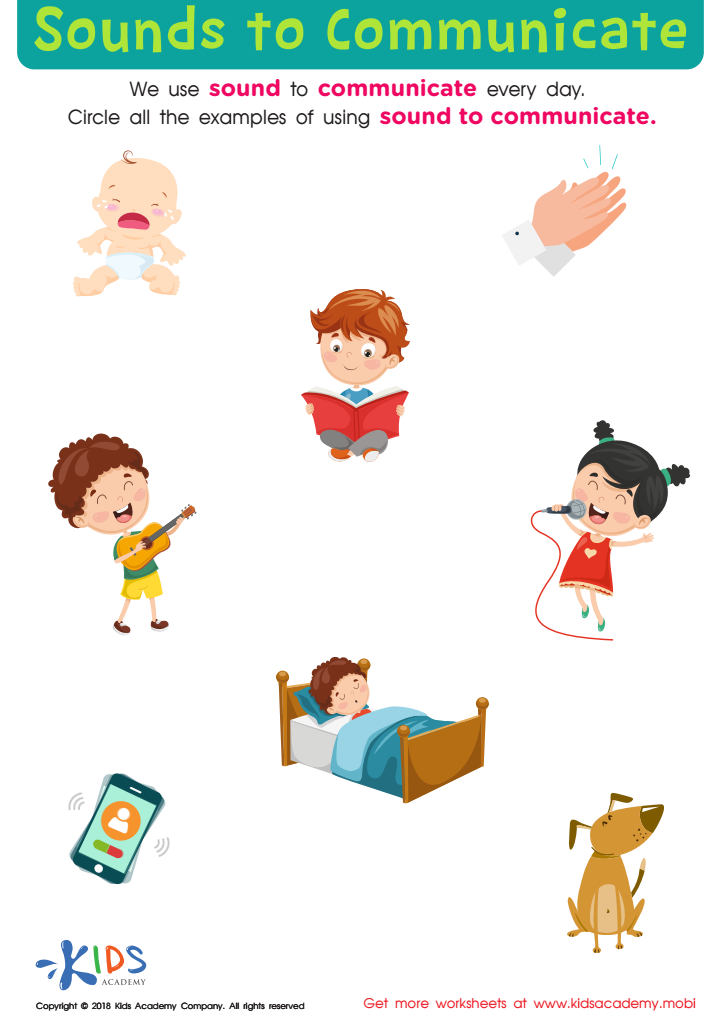
Sounds to Communicate Worksheet
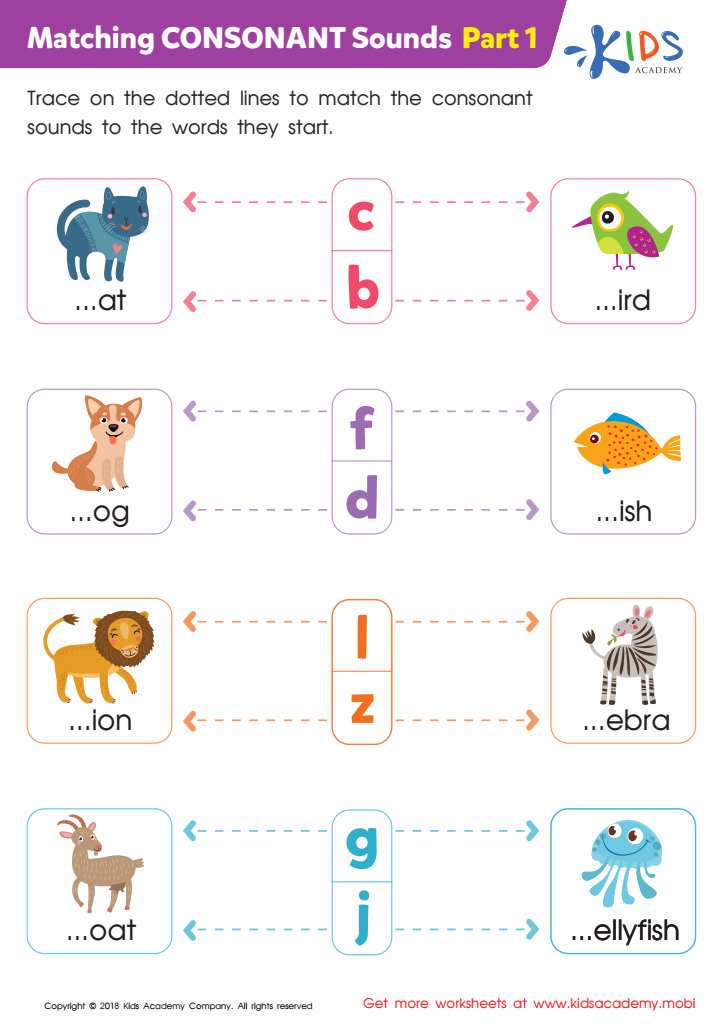
Matching Consonant Sounds: Part 1 Worksheet
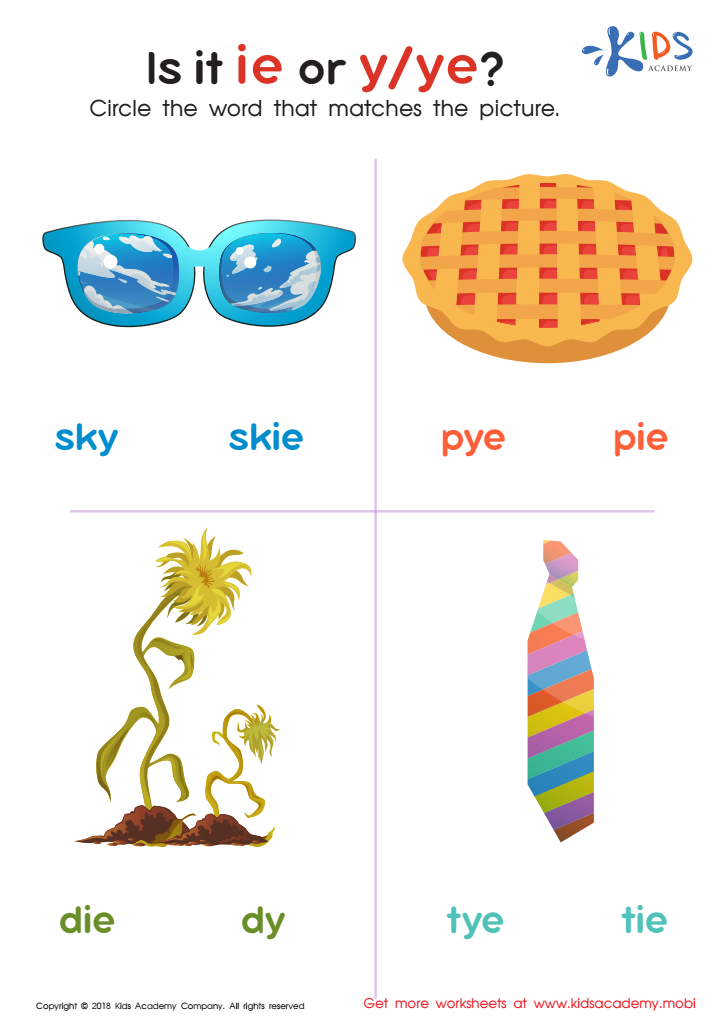
Is It IE or Y/Ye? Worksheet








Sound recognition is a crucial skill for children aged 6-9 because it supports essential areas of development, particularly reading and language acquisition. At these ages, children are in a critical period for learning to read and write, where phonemic awareness plays a foundational role. Phonemic awareness is the ability to hear, identify, and manipulate individual sounds (phonemes) in spoken words, which is vital for decoding words and understanding phonics. Proper sound recognition enables children to break down words into their component sounds, facilitating more effective and efficient reading skills.
Additionally, proficient sound recognition is linked to better spelling and writing abilities. When children can accurately distinguish and understand different sounds, they are more likely to spell words correctly and express themselves clearly in writing.
Moreover, sound recognition is pivotal for listening skills and verbal communication, helping children follow instructions, learn new concepts, and engage socially. When teachers and parents focus on developing and assessing sound recognition, they are investing in the foundational skills that have far-reaching implications for a child's academic success and overall communication abilities. Sound-based activities, like rhymes, alliteration games, and auditory discrimination exercises, can significantly boost these skills, laying a robust groundwork for future learning.








