
Spatial Orientation Normal Worksheets for Ages 6-9
4 filtered results
Difficulty Level
Grade
Age
-
From - To
Subject
Activity
Standards
Explore our comprehensive collection of Spatial Orientation Normal Worksheets designed specifically for children ages 6-9. These engaging resources help young learners strengthen their spatial awareness skills through fun and interactive activities. The worksheets feature a variety of exercises that include identifying directions, understanding positions, and recognizing shapes in different orientations. Ideal for enhancing critical thinking and problem-solving abilities, these exercises promote cognitive development while keeping kids entertained. Whether in the classroom or at home, our Spatial Orientation worksheets provide an excellent way for children to improve their spatial reasoning and lay the foundation for future math and science concepts. Start your exploration today!
Favorites
With answer key
Interactive
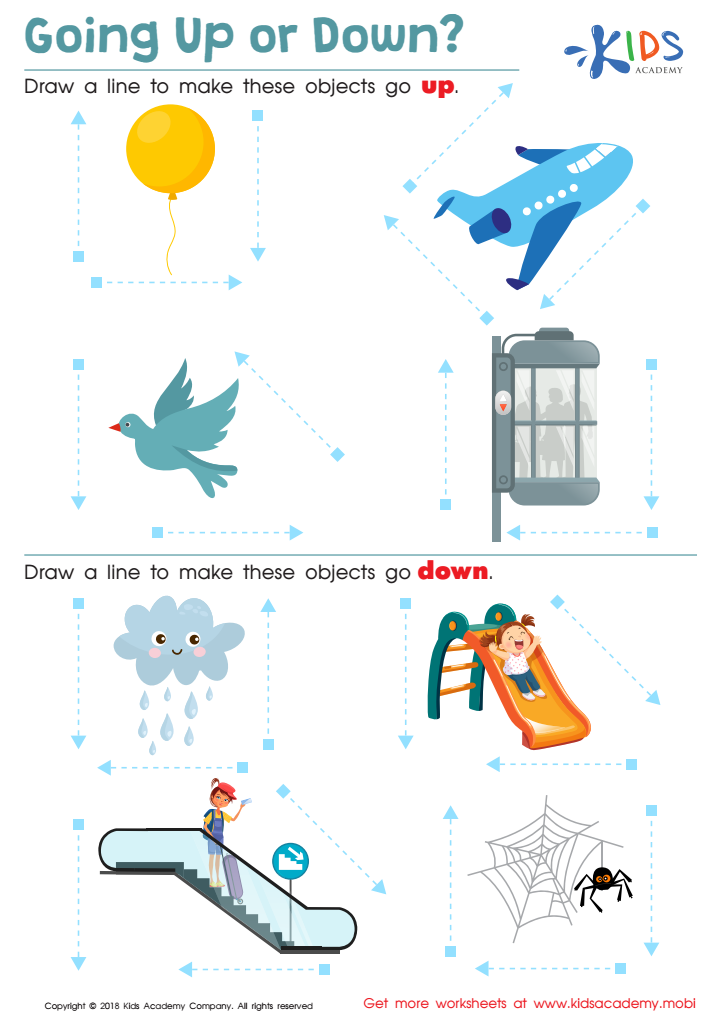
Going up or Down? Worksheet
Young students learn the concept of up and down with this geometry worksheet. They trace lines to identify relative positioning as an object travels. Kids can use position words to describe an object's movement, enhancing their spatial relationship skills - an important geometry foundation.
 Assign to My Students
Going up or Down? Worksheet
Worksheet
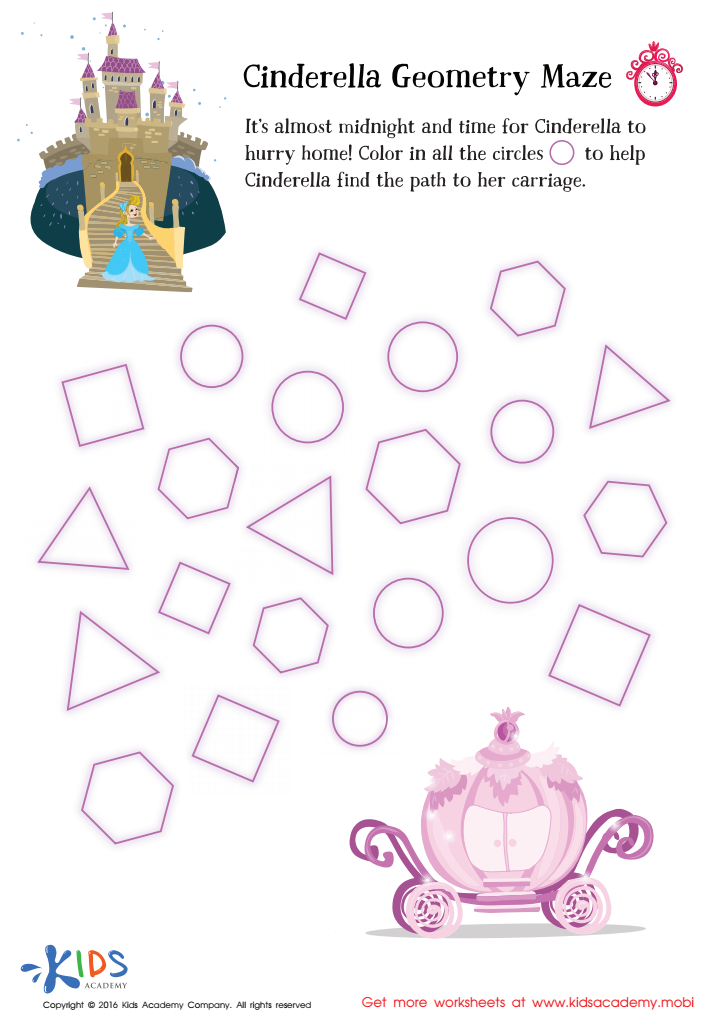
Cinderella Geometry Maze Worksheet
Help Cinderella hurry home! Your preschooler will have fun problem-solving and sorting shapes in this geometric maze. As they shade in the circles, they'll be helping their favorite princess reach her carriage on time. Not only that, but they'll strengthen their logic skills in the process. Get this and other fairy tale mazes to keep them entertained while learning.
Cinderella Geometry Maze Worksheet
Worksheet
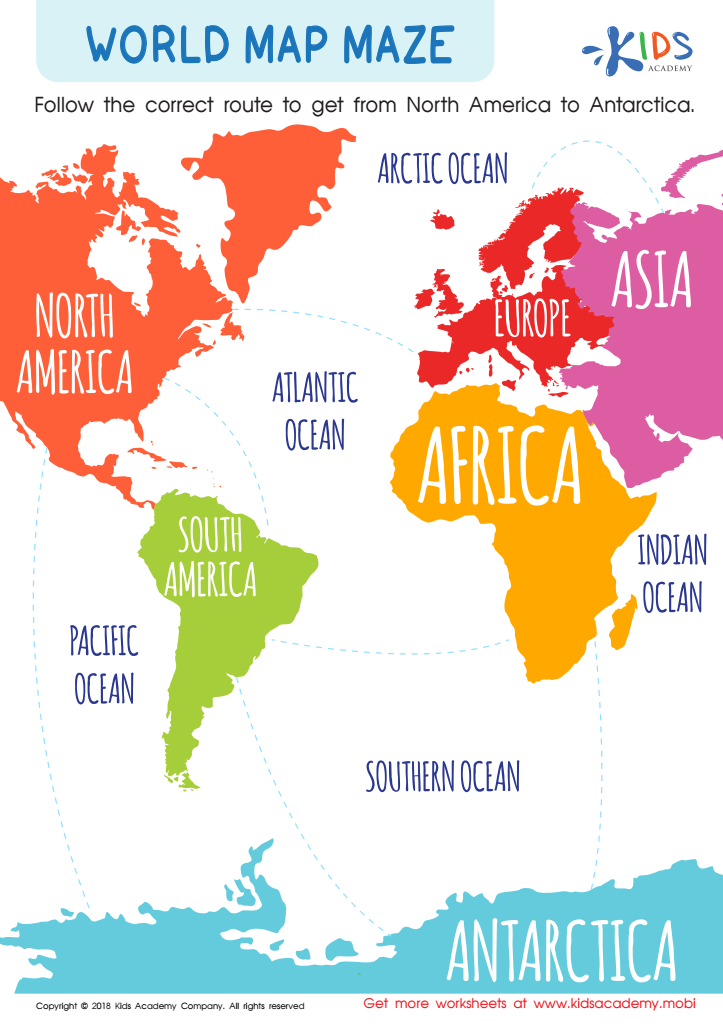
World Map Maze Worksheet
Explore the world with your kids and this free colorful world map maze. Have them trace the lines and travel from North America to Antarctica, learning the locations and names of oceans and continents. It's an exciting expedition!
World Map Maze Worksheet
Worksheet
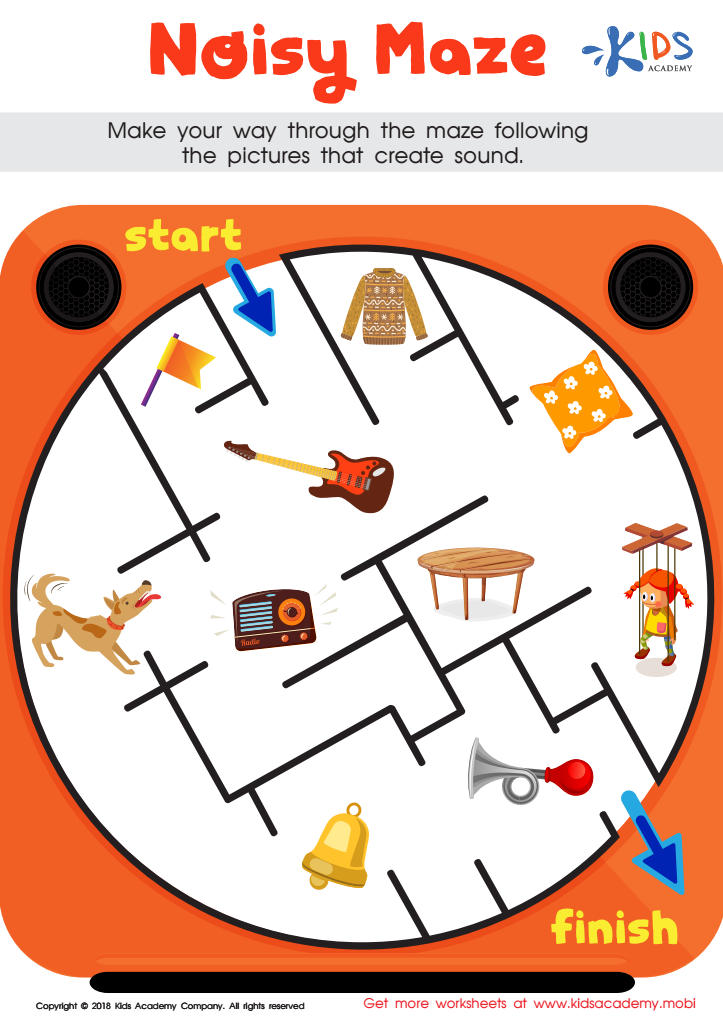
Noisy Maze Worksheet
Have your kids name some objects that make noise? Then, look at the worksheet with them and help them identify each object. Guide them through the maze, following the sound-producing pictures.
Noisy Maze Worksheet
Worksheet
Join Kids Academy for Free
Who is primarily going to use this learning content?








Spatial orientation is crucial for children aged 6-9 as it lays the foundation for a variety of cognitive and physical skills. This developmental stage targets a child's ability to understand their position in space, which affects their daily activities and overall learning.
Parents and teachers should care about spatial orientation because it directly influences motor skills and coordination. Activities like riding a bicycle, playing sports, and navigating playgrounds require strong spatial awareness. Furthermore, spatial orientation is essential for success in subjects such as mathematics and geometry, where children need to understand shapes, sizes, and positions.
Promoting spatial skills can boost a child's confidence and independence. When children can effectively navigate their environment, they are more likely to explore and engage with the world around them, encouraging curiosity and creative thinking. Additionally, strong spatial orientation helps with social interactions; it aids in understanding personal boundaries and recognizing the spatial dynamics in group play or activities.
By fostering spatial awareness through games, puzzles, and hands-on activities, parents and teachers can equip children with valuable tools for their academic, social, and personal development. Overall, spatial orientation is a key aspect of childhood growth that supports well-rounded learning experiences and lifelong skills.








