Syllable identification Normal Worksheets for Ages 6-9
6 filtered results
-
From - To
Enhance your child's reading skills with our Syllable Identification Normal Worksheets for ages 6-9, designed to make learning interactive and fun. These engaging worksheets help young learners recognize and count syllables, fostering essential early literacy skills. Tailored to invigorate curiosity, each activity presents colorful illustrations and a variety of words to ensure children stay motivated. By mastering syllable identification, students build a strong foundation for fluent reading and accurate pronunciation. Ideal for classroom use or at-home practice, our expertly crafted worksheets support every young reader's journey toward confident literacy. Download now at Kids Academy and watch your child thrive!
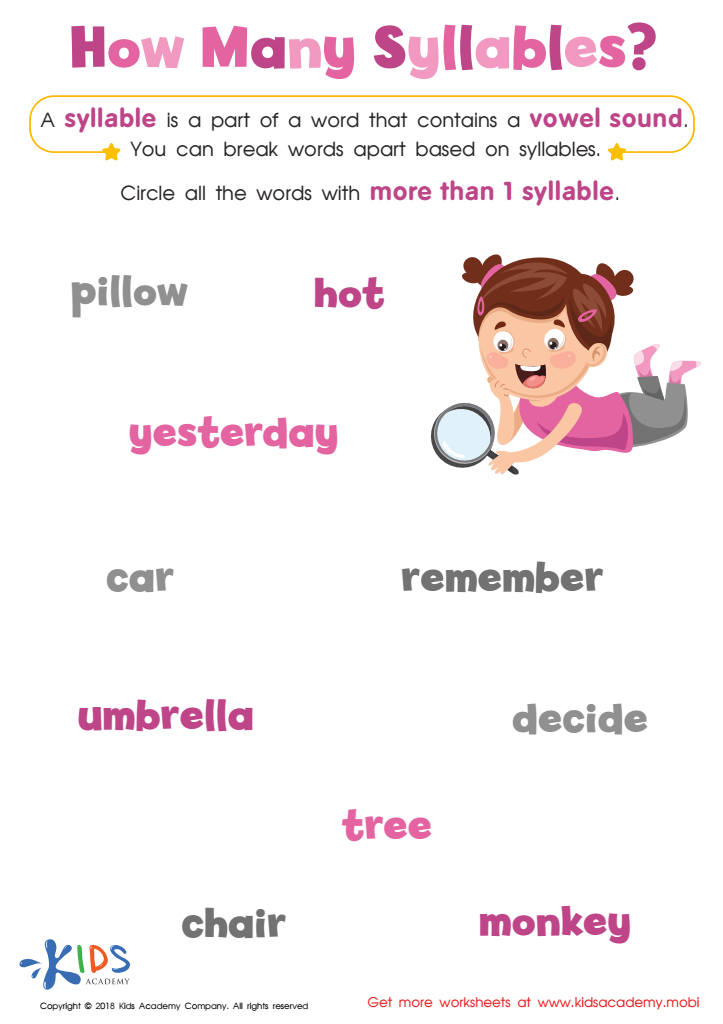
Reading: How Many Syllables Worksheet
 Assign to My Students
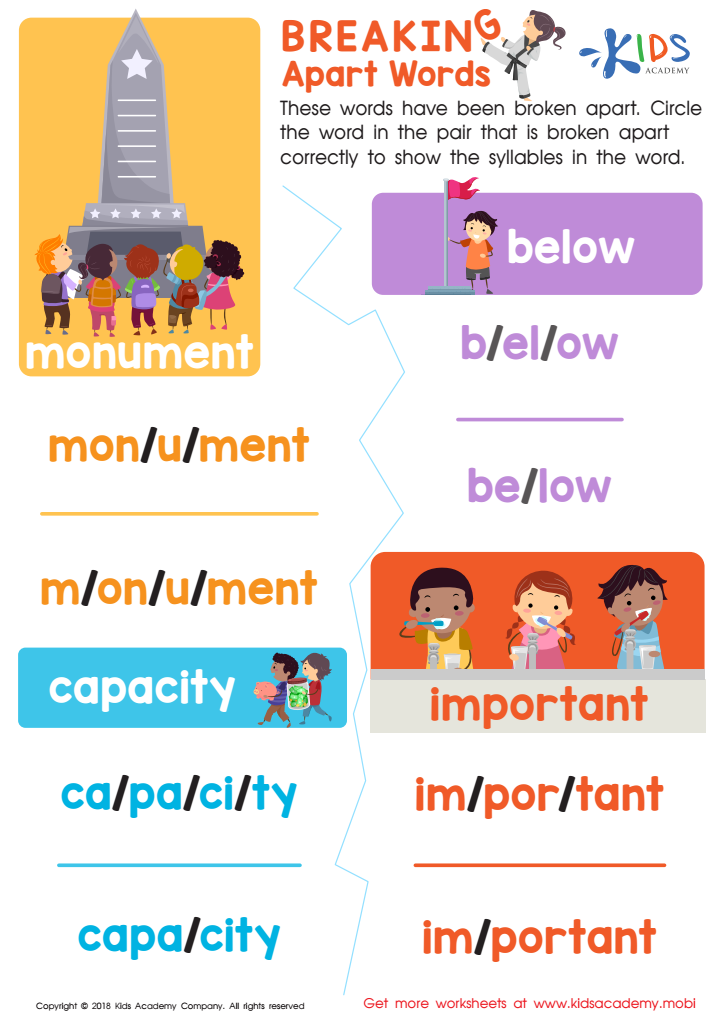
Breaking Apart Words Worksheet
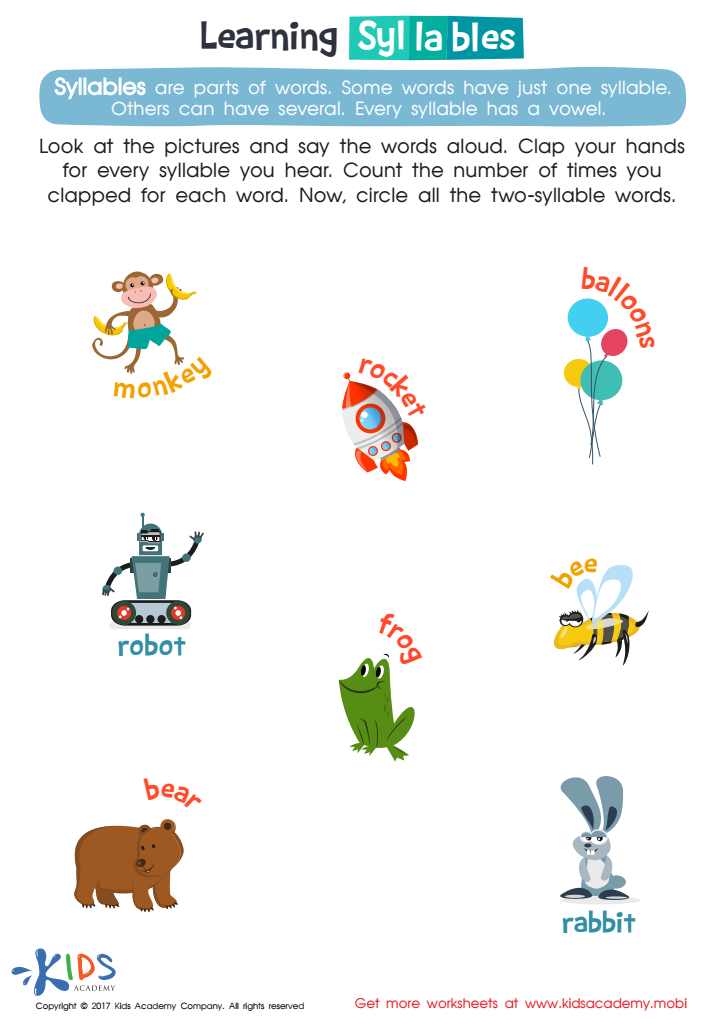
Learning Syllables Word Structure Worksheet
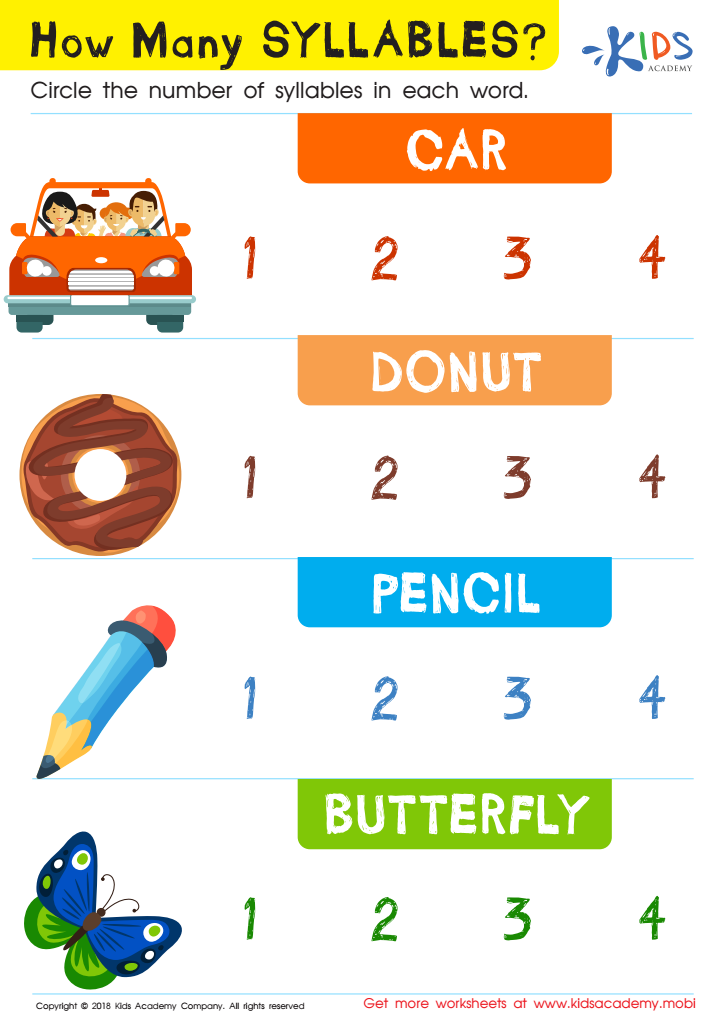
How Many Syllables? Worksheet
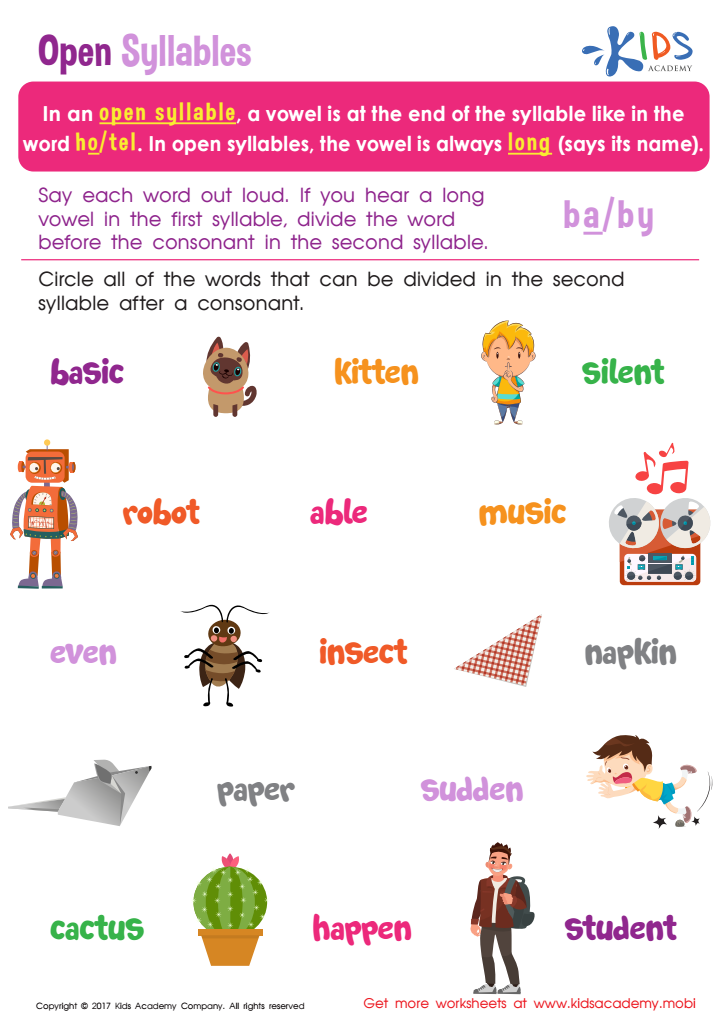
Open Syllable Printable Worksheet
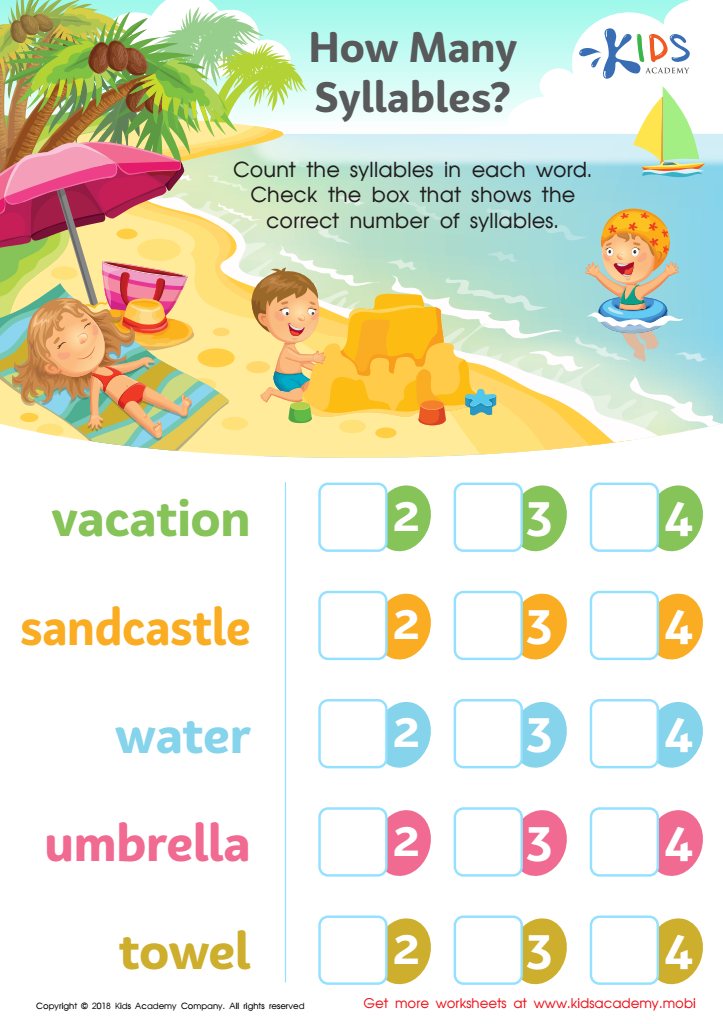
How Many Syllables Worksheet








Syllable identification is crucial for young learners, aged 6-9, as it serves as a foundational skill for reading development and language acquisition. Parents and teachers should care about this skill because it greatly impacts a child's ability to decode and understand written words. Knowing how to identify syllables helps children break down complex words into manageable parts, making it easier for them to read smoothly and with proper intonation.
Early mastery of syllable identification enhances a child’s phonological awareness, which is the ability to recognize and work with sounds in spoken language. This ability is directly linked to later reading success, as it aids in learning spelling patterns and improving vocabulary. Children who can proficiently identify syllables are less likely to struggle with reading comprehension, as they can accurately and quickly sound out unfamiliar words.
Furthermore, syllable identification supports creative aspects of language learning, such as writing and poetry, where rhythm and ease with word formation are critical. For educators and parents aiming to cultivate strong readers and confident communicators, investing time and effort into teaching syllable identification is not just beneficial but necessary. It's a stepping stone that fosters a love for reading, language exploration, and continuous learning throughout a child’s academic journey.








