Understanding economics Normal Worksheets for Ages 6-9
3 filtered results
-
From - To
Explore our "Understanding Economics Normal Worksheets" designed specifically for children aged 6 to 9. These engaging and interactive worksheets introduce fundamental economic concepts in a fun, relatable way, encouraging young learners to grasp the basic principles of economics. Topics include needs vs. wants, the concept of money, and saving strategies. Each worksheet is tailored to promote critical thinking and enhance problem-solving skills. Perfect for teachers and parents, our resources stimulate discussion and practical understanding, making learning about economics enjoyable for young minds. Dive into the world of economics today and inspire a future generation of savvy thinkers!
 Assign to My Students
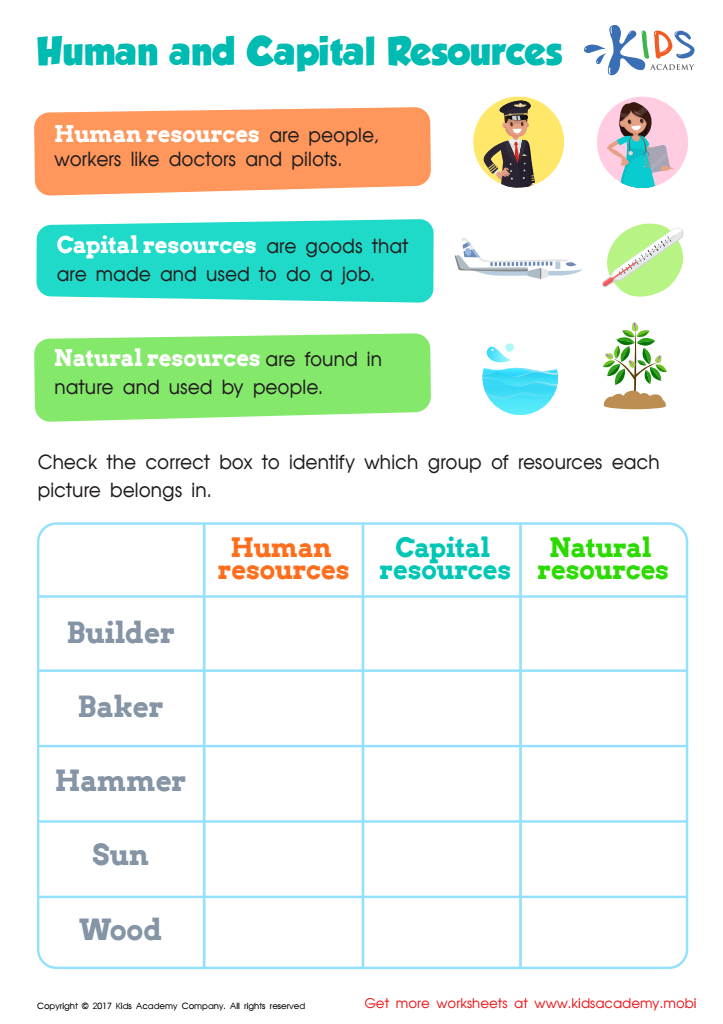
Human and Capital Resources Worksheet
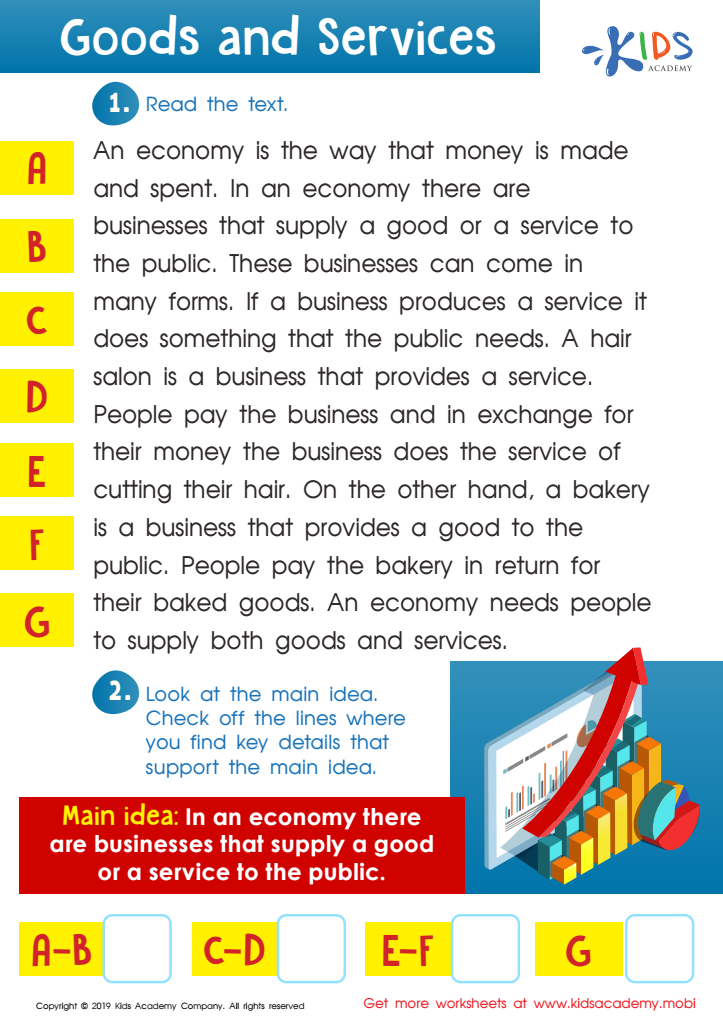
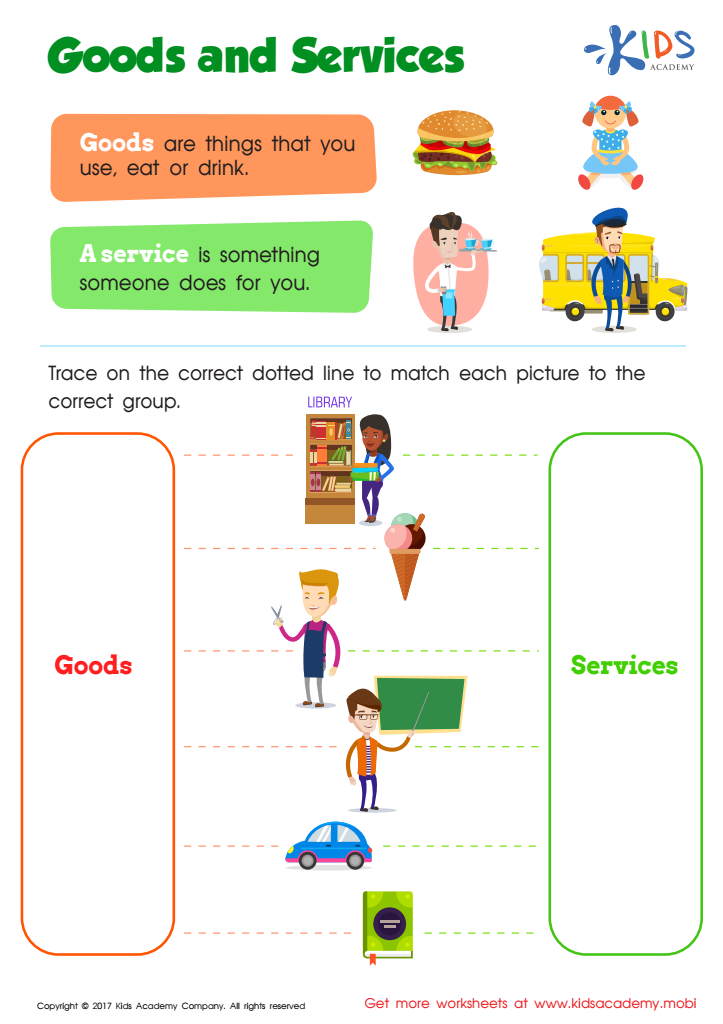
Goods and Services Worksheet








Understanding economics is essential for children aged 6-9, as it lays the foundation for their future decision-making and problem-solving skills. At this age, children are naturally curious about how the world works, including the concepts of money, goods, and services. Learning basic economic principles fosters critical thinking and creativity, helping them to grasp how choices affect their lives.
Parents and teachers play a vital role in introducing these concepts in a simplified manner, which can be integrated into everyday activities. For instance, simple practices like budgeting weekly allowance or organizing a classroom store can help children understand supply and demand, pricing, and value. This engagement not only enhances their mathematical skills but also instills a sense of responsibility.
Additionally, grasping economic principles cultivates empathy and social awareness. Children learn the importance of helping others and making informed choices about their resources, influencing their future behaviors as consumers and citizens. Overall, when parents and teachers prioritize economic understanding, they empower children with essential life skills that promote financial literacy, responsible citizenship, and proactive problem-solving, ultimately preparing them to navigate the complexities of adulthood with confidence.








