Vocabulary development Normal Worksheets for Ages 6-9 - Page 3
49 filtered results
-
From - To
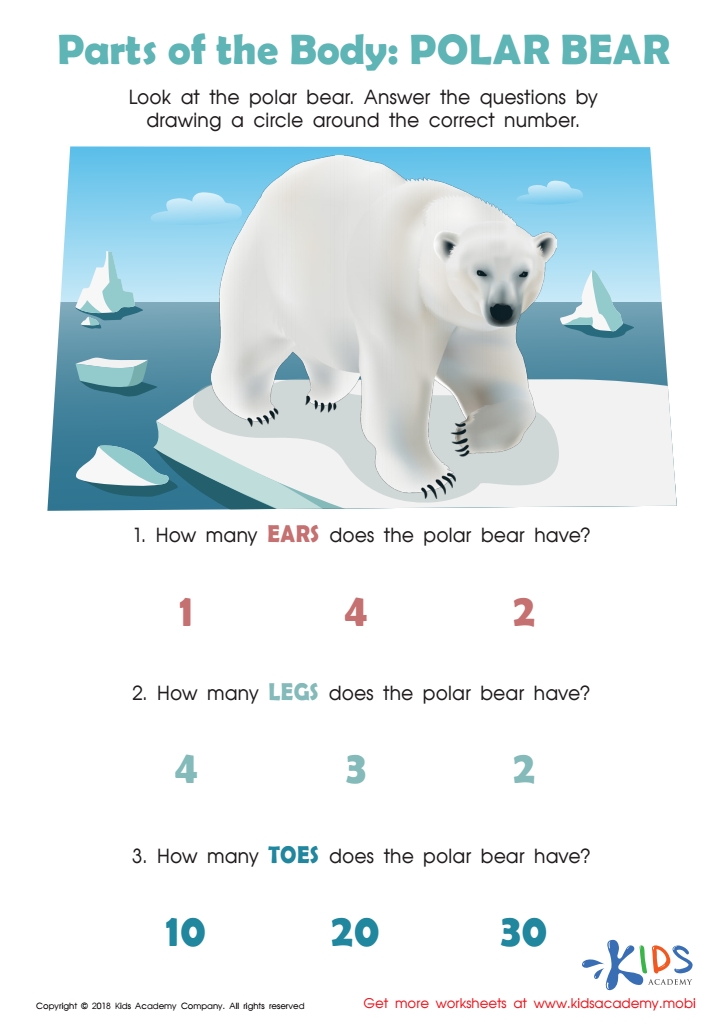
Parts of the Body: Polar Body Worksheet
 Assign to My Students







Vocabulary development is crucial for children aged 6-9 as it significantly influences their overall academic success and effective communication skills. At this stage, children's language skills expand rapidly, forming the foundation for reading comprehension, writing proficiency, and critical thinking. A rich vocabulary enables children to express themselves more clearly, articulate their thoughts, and engage in meaningful discussions, fostering their confidence and social skills.
Parents and teachers should prioritize vocabulary development as it directly impacts learning across all subjects. A strong vocabulary is synonymous with better understanding of texts, which boosts reading comprehension and allows children to obtain information and engage with stories more deeply. Moreover, diverse vocabulary enhances writing skills, as children can significantly improve their storytelling, creative expression, and even persuasion when they utilize a broader array of words.
Additionally, a robust vocabulary aids in cognitive development; understanding nuanced meanings of words fosters analytical reasoning. During these formative years, children are at a disposition to absorb language. Involving children in rich language experiences, such as engaging conversations, reading varied literature, and creative play, empowers them to thrive academically and socially. Therefore, investing in vocabulary development during this critical period reaps lifelong educational and interpersonal benefits.








