Counting practice Normal Geometry Worksheets for Ages 6-9
3 filtered results
-
From - To
Enhance your child's math skills with our "Counting Practice Normal Geometry Worksheets" designed for ages 6-9! These engaging worksheets combine foundational geometry concepts with counting exercises, making learning fun and interactive. Children will practice identifying shapes, counting sides, and recognizing geometric figures, all while developing critical thinking skills. Perfect for classroom activities or home learning, our worksheets offer a variety of exercises that cater to different learning styles. Foster your child's confidence in mathematics and geometry as they explore shapes and numbers through vibrant illustrations and engaging tasks. Download our worksheets today and watch your child's skills blossom!
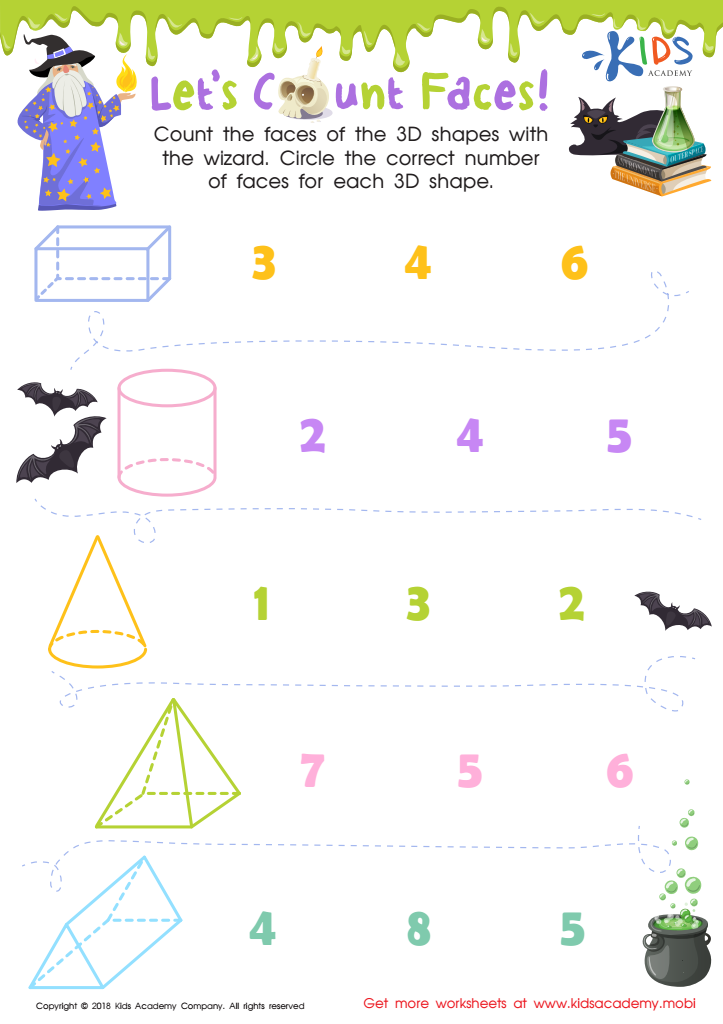
Let's Count Faces! Worksheet
 Assign to My Students











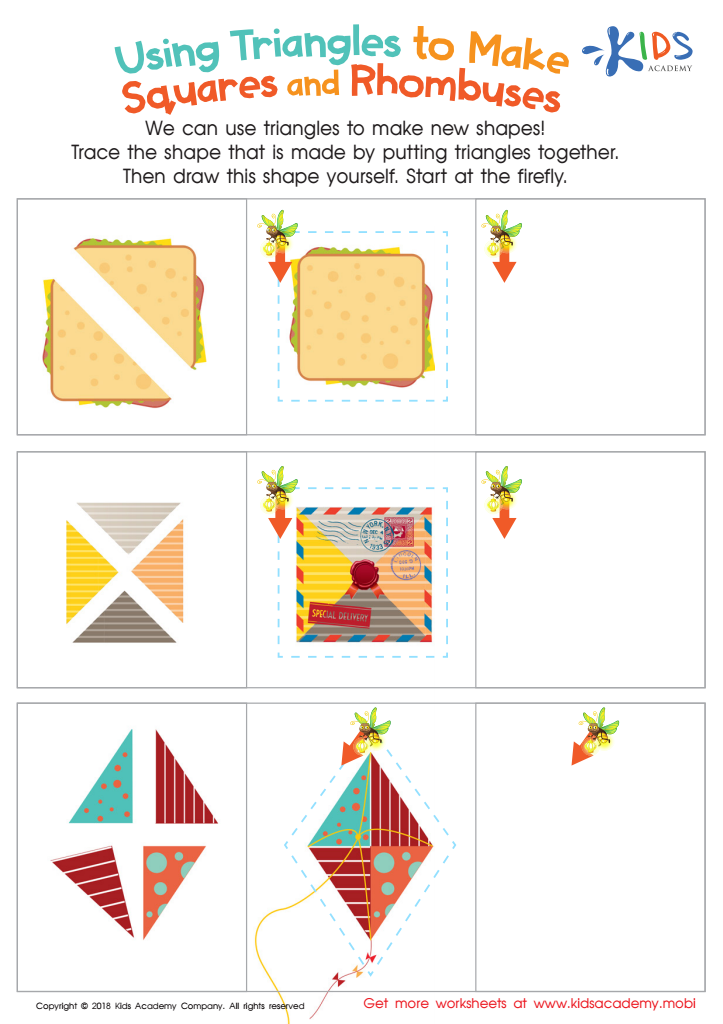
Using Triangles to Make Squares and Rhombuses Worksheet
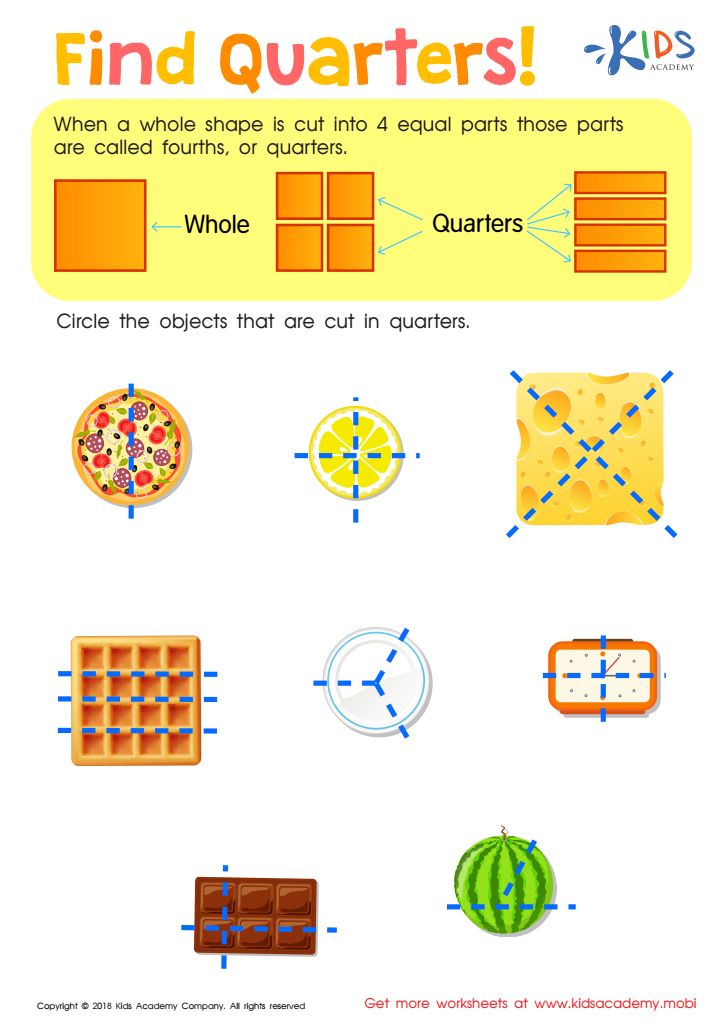
Find Quarters Worksheet








Counting practice and basic geometry are crucial foundational skills for children ages 6-9. During these years, children develop essential numerical understanding and the ability to recognize and manipulate shapes, which supports their overall cognitive development.
Firstly, counting practice enhances children's arithmetic abilities. By mastering counting, children gain confidence in their mathematical skills, enabling them to tackle more complex concepts such as addition and subtraction. Establishing this foundation early equips children to approach later math topics with ease.
Secondly, engaging with basic geometry helps children understand spatial relationships and properties of shapes. This understanding is not only vital for math but is also applicable in real-world scenarios, such as navigation and object manipulation. Activities that involve identifying, comparing, and sorting shapes deeply enrich children's observational and analytical skills.
Moreover, a strong grounding in these concepts nurtures critical thinking and problem-solving abilities. Encouraging children in playful, hands-on activities related to counting and geometry fosters an enthusiasm for learning. Parents and teachers play a significant role in supporting this growth, as their involvement can stimulate children's interest and promote a positive attitude toward math, setting the stage for lifelong learning and success in the subject.








