Differentiating shapes Normal Geometry Worksheets for Ages 6-9
3 filtered results
-
From - To
Expand your child’s understanding of geometry with our "Differentiating Shapes Normal Geometry Worksheets for Ages 6-9." Designed specifically for young learners, these engaging worksheets focus on recognizing and distinguishing basic shapes such as circles, squares, triangles, and more. Each exercise promotes critical thinking and visual-spatial skills through drawing, matching, and real-life connections. Ideal for classroom or at-home learning, these activities make geometry fun and interactive. Empower your young mathematicians with essential geometry skills, fostering a strong foundation for future math success. Download now for a comprehensive, educational, and enjoyable experience in learning about shapes!
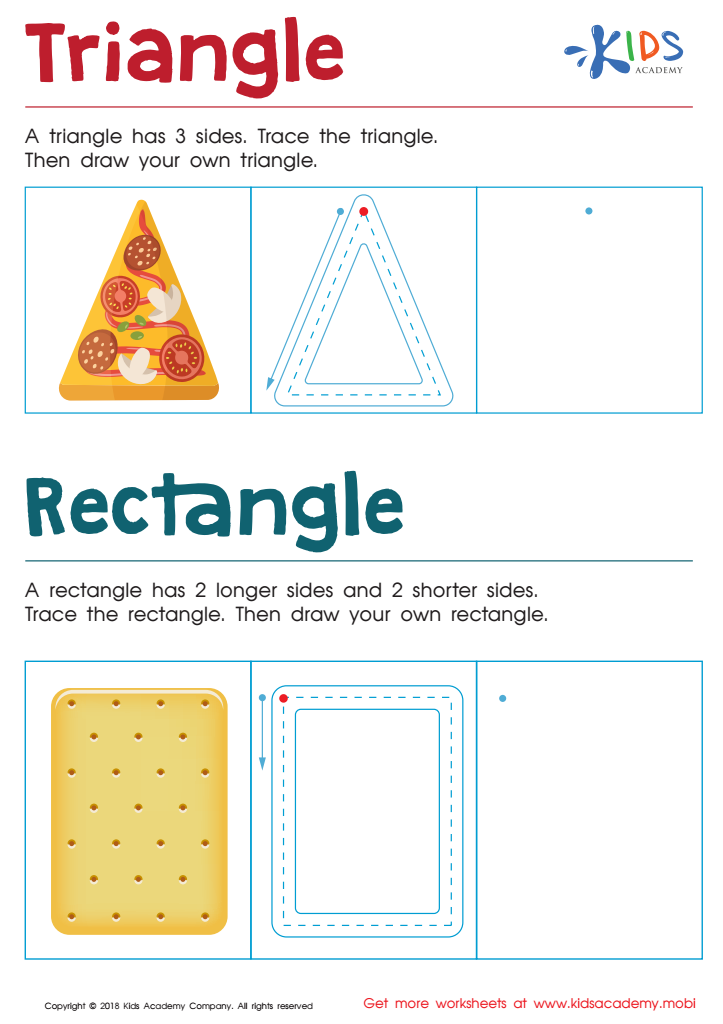
Triangle Rectangle Worksheet
 Assign to My Students











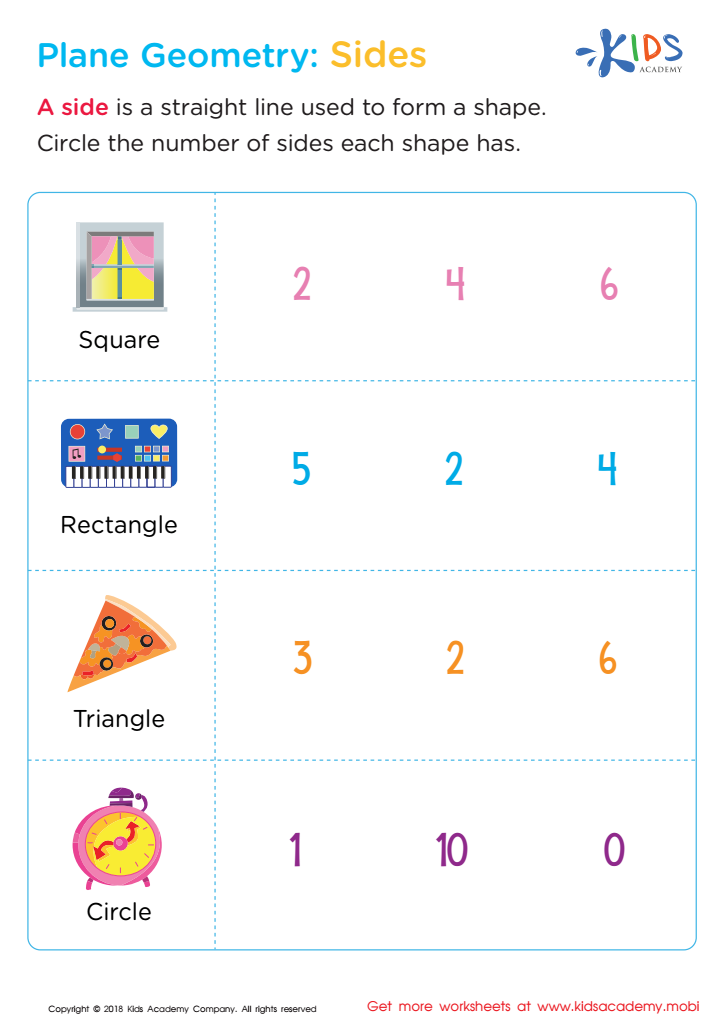
Plane Geometry: Sides Worksheet
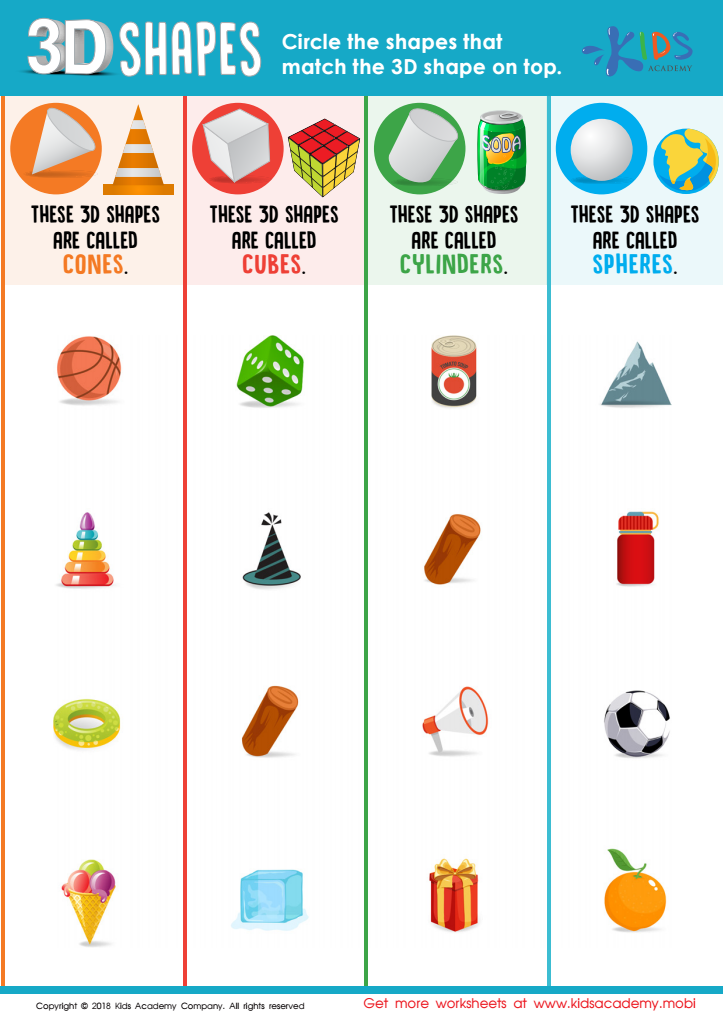
3D Shapes Worksheet








Parents and teachers should care about differentiating shapes in normal geometry for ages 6-9 because it lays the foundation for essential cognitive and academic skills. At this developmental stage, children are naturally curious and their brains are particularly receptive to learning new concepts. Understanding shapes enhances spatial awareness, an ability critical for everyday tasks such as navigating environments and organizing space.
Teaching shape differentiation fosters problem-solving skills and logical reasoning. As children identify, compare, and classify shapes, they are practicing critical reasoning and analytical thinking. These activities help them understand relationships and patterns, fundamentally important for grasping more complex mathematical concepts later in life.
Moreover, familiarity with shapes underpins many reading and writing tasks. Recognizing that letters and numbers are composed of shapes can improve early literacy and numeracy skills. For example, knowing that the letter "O" is a circle can help in reading and writing.
Socially, engaging lessons involving shapes can build collaboration and communication skills as kids often work in groups to solve puzzles or design projects. Finally, early success in geometry boosts confidence, making children more likely to embrace learning challenges positively. Therefore, investing time and attention in teaching shapes fundamentally supports comprehensive childhood development.








