Spatial reasoning Normal Geometry Worksheets for Ages 6-9
3 filtered results
-
From - To
Enhance your child’s spatial intelligence with our engaging Spatial Reasoning Normal Geometry Worksheets for ages 6-9. Designed to boost critical thinking and problem-solving skills, these printable materials focus on understanding shapes, patterns, and spatial relationships. Each worksheet is tailored to make learning fun and interactive, helping children grasp fundamental geometry concepts. Whether identifying shapes, visualizing objects from different angles, or solving puzzles, these activities will keep young learners captivated while building a strong foundation in math. Perfect for both classroom use and at-home practice, our worksheets support children in developing profound spatial awareness skills essential for future learning.
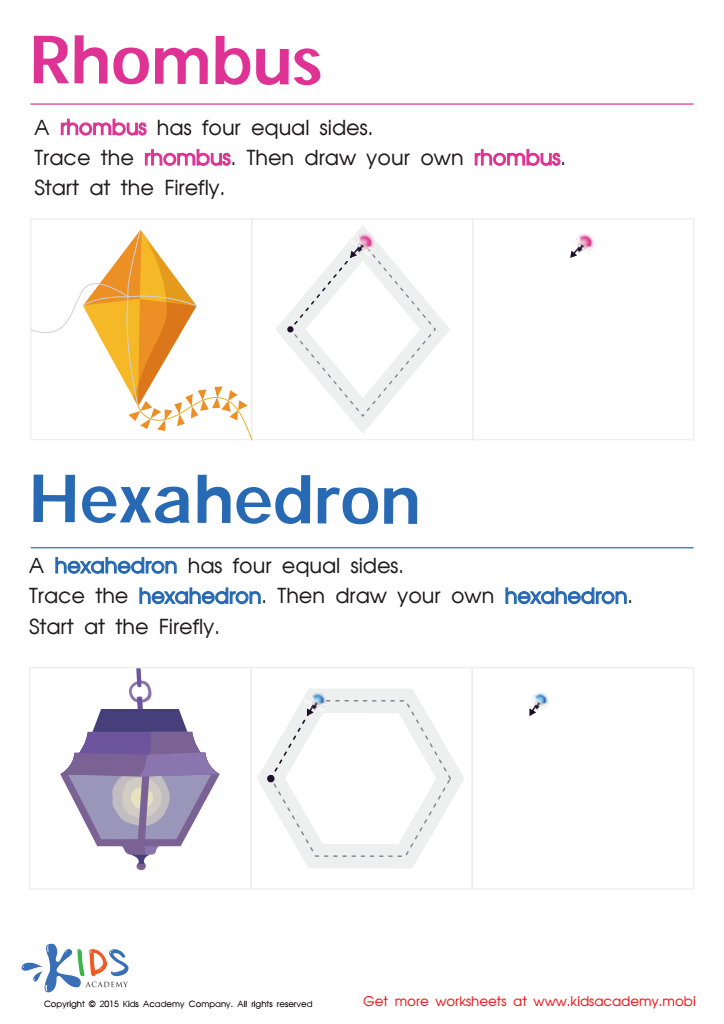
Draw a Rhombus And a Hexahedron Printable
 Assign to My Students











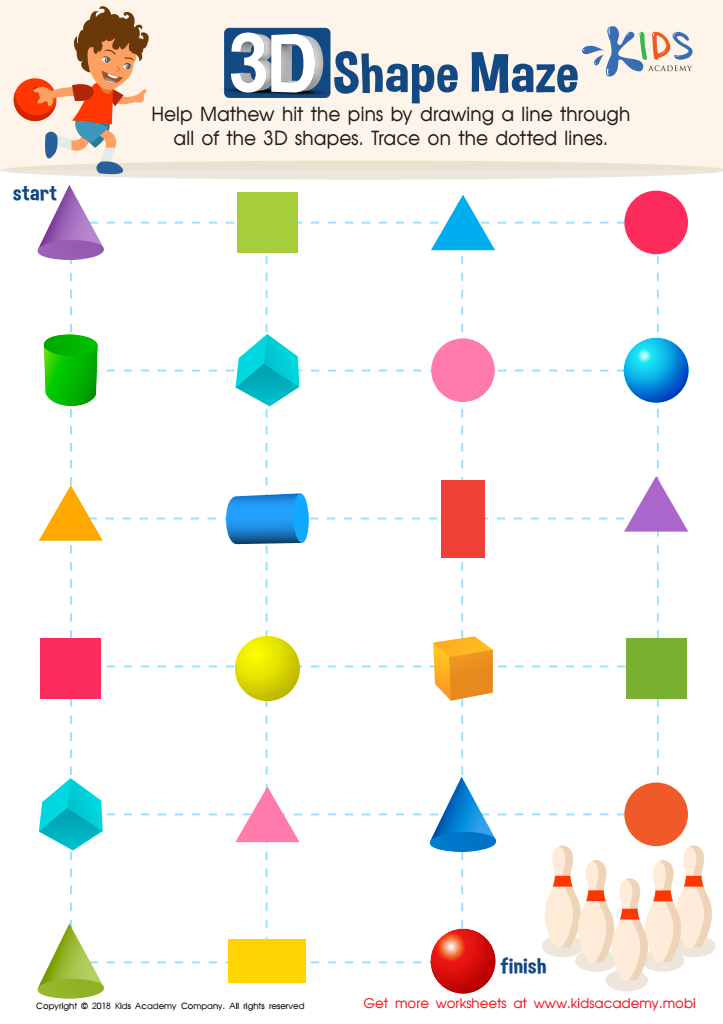
Shapes Maze Geometry Worksheet
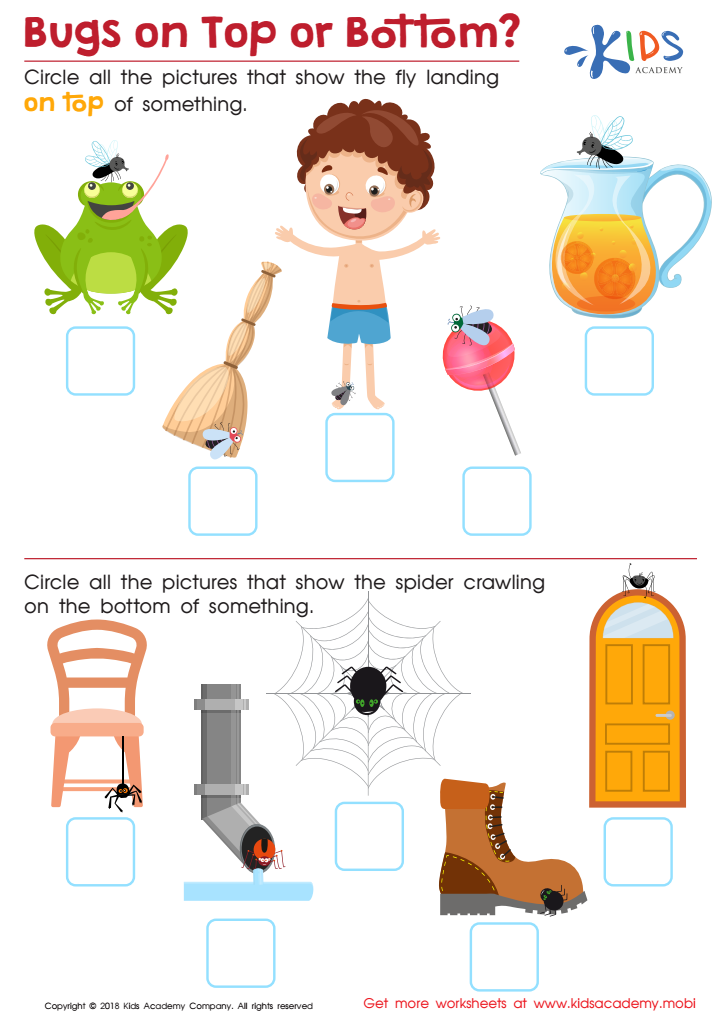
Bugs on Top or Bottom? Worksheet








Spatial reasoning in early childhood is crucial for cognitive development and future academic success, particularly in STEM (Science, Technology, Engineering, and Mathematics) fields. For children ages 6-9, building strong spatial reasoning skills helps them visualize and manipulate objects mentally, contributing to better problem-solving and critical thinking abilities. This form of reasoning underpins basic concepts of geometry, which is a foundational aspect of mathematics.
Engagement with spatial activities during these formative years enhances understanding of shape, size, orientation, and the relationships between objects—all essential for comprehending more complex mathematical concepts later. Skills such as reading maps, understanding graphs, and visualizing transformations lay the groundwork for advanced topics like algebra and calculus.
Additionally, fostering spatial skills can improve performance in everyday tasks and other academic domains. For instance, it supports reading comprehension through better eye-movement control and understanding of text structures. Furthermore, hands-on experiences with spatial concepts, such as playing with building blocks or solving puzzles, can make learning fun and interactive, fostering a positive attitude towards math.
As teachers and parents encourage activities that develop spatial reasoning, they help build a strong educational foundation, cultivating children's ability to navigate and interpret the world around them thoughtfully and effectively.








