Number comparison Normal Numbers Worksheets for Ages 6-9
5 filtered results
-
From - To
Discover engaging Number Comparison Normal Numbers Worksheets tailored for children aged 6-9 at Kids Academy! These worksheets are perfect for early learners to build essential math skills by comparing numbers effectively. With a variety of interactive activities, kids will learn to identify larger and smaller numbers through fun exercises and visuals. Our worksheets promote critical thinking and improve number recognition while keeping learning enjoyable and interactive. Designed to align with educational standards, these resources ensure that young learners build a solid foundation in mathematics. Explore our carefully crafted worksheets today and empower your child with essential number comparison skills!
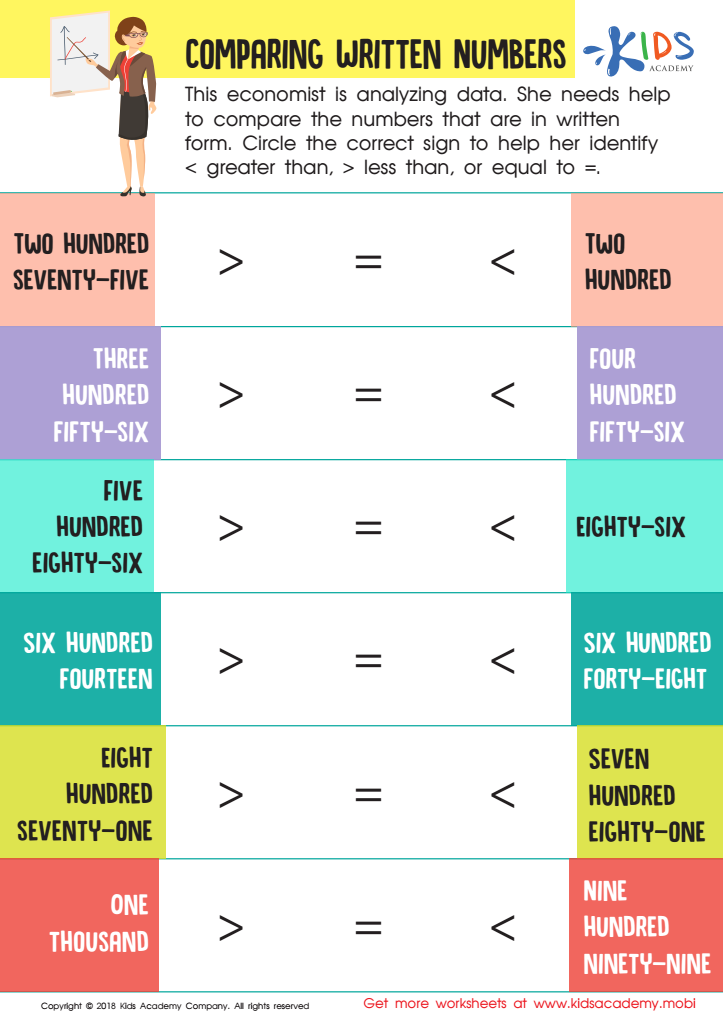
Comparing Written Numbers Worksheet
 Assign to My Students
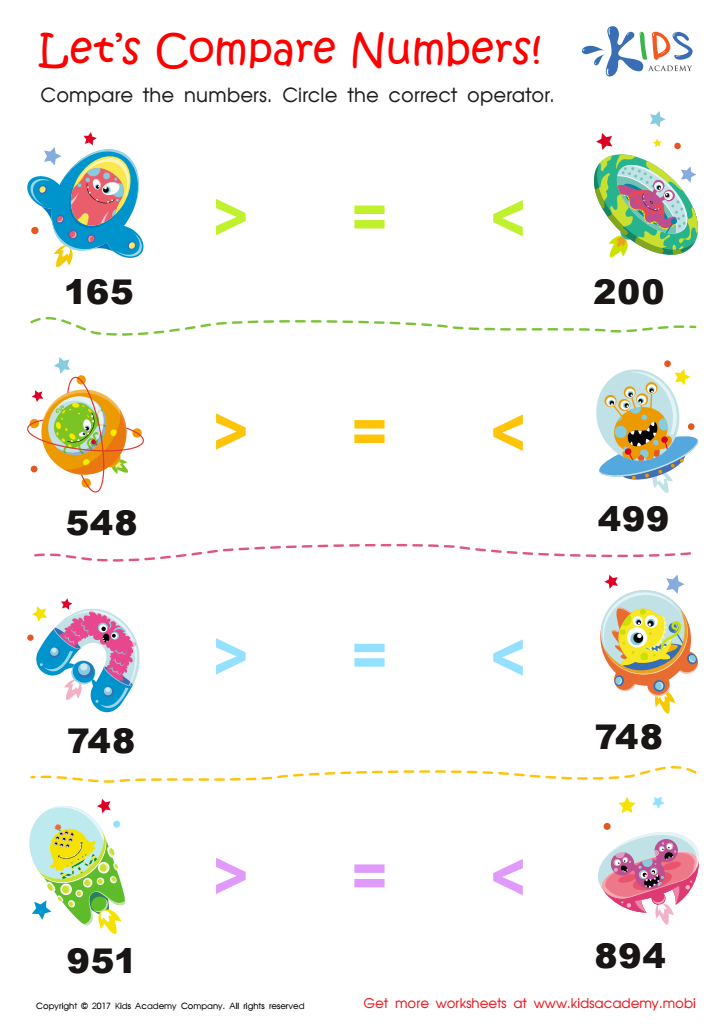
Comparing Numbers Worksheet for 2nd Grade
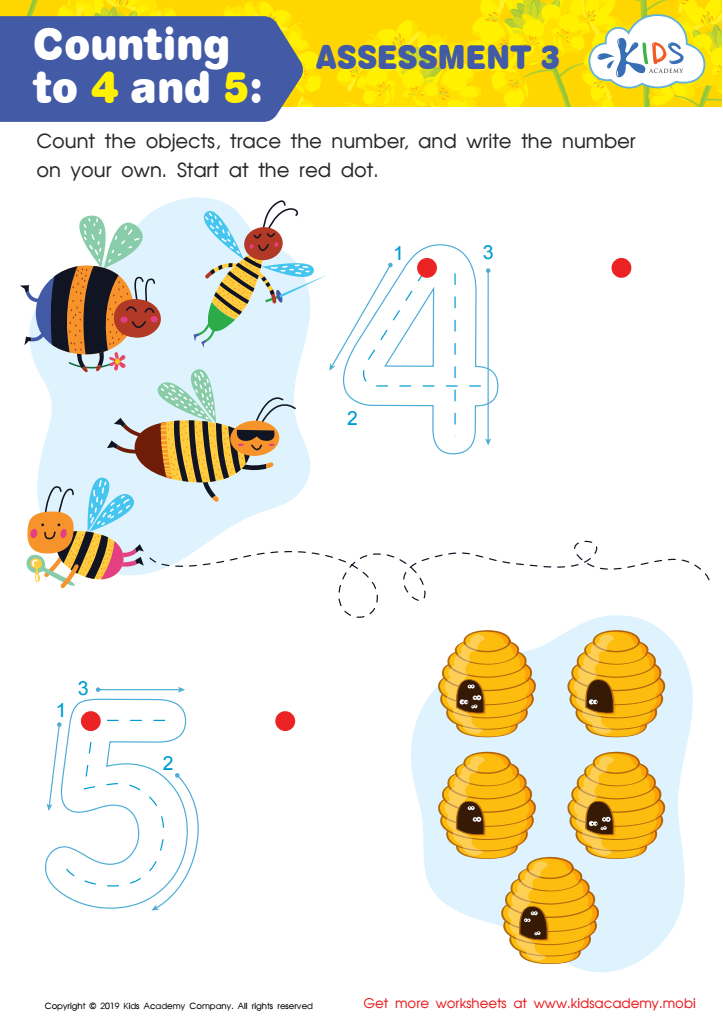
Counting to 4 and 5: Assessment 3 Worksheet
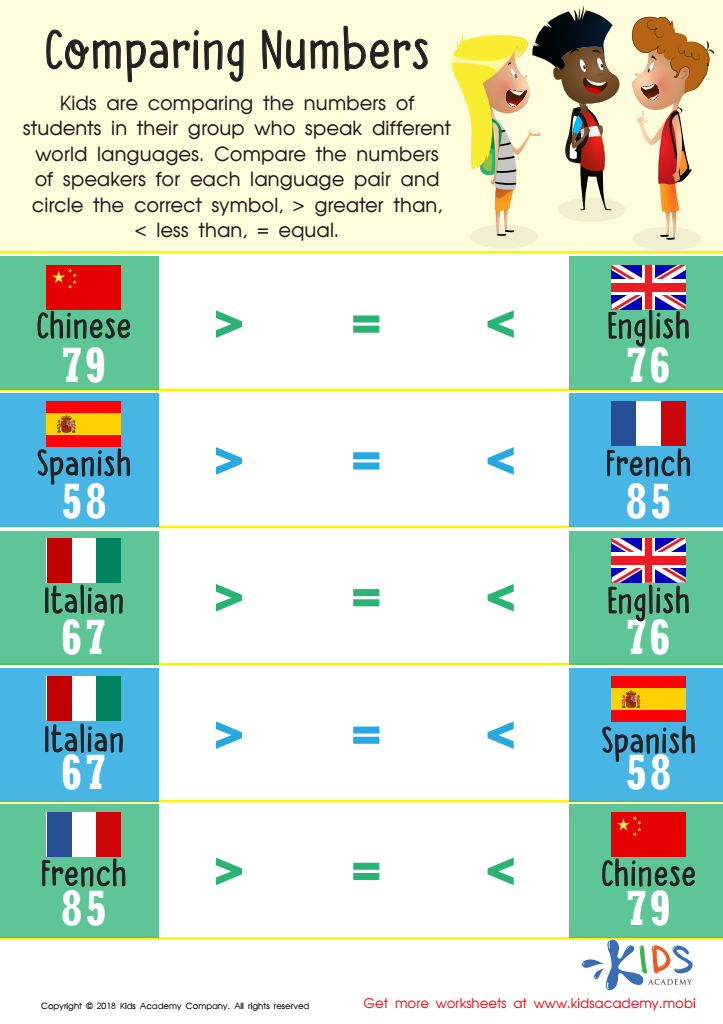
Comparing Numbers Worksheet for 1st Grade
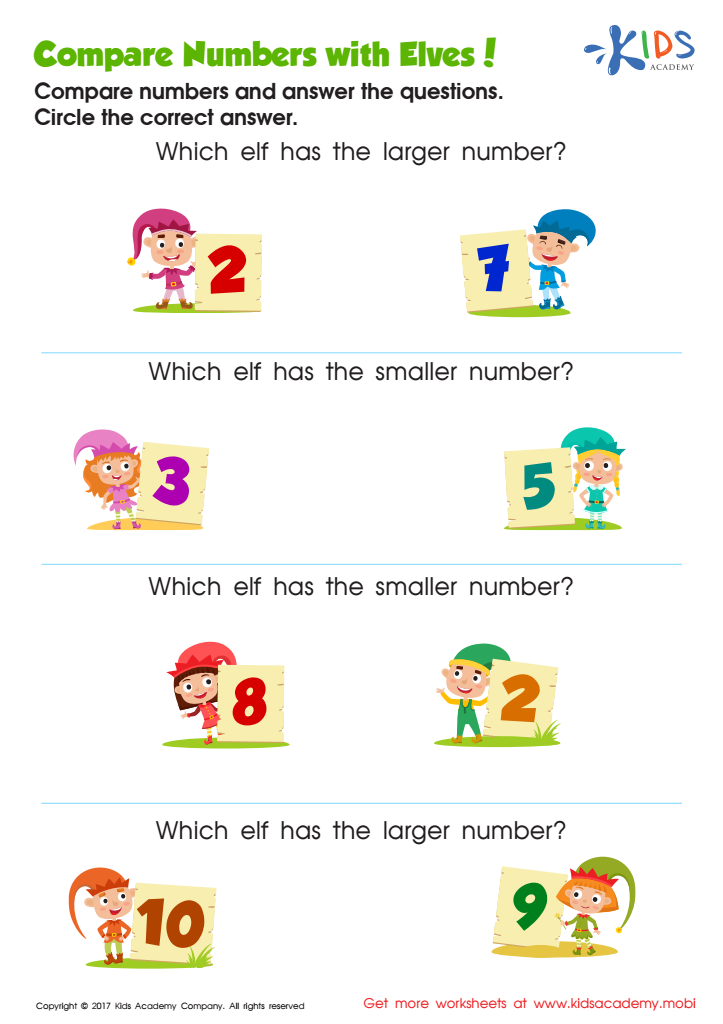
Comparing Numbers Worksheet for Kindergarten







Understanding number comparison is crucial for children aged 6-9 as it forms the foundation for their mathematical comprehension and critical thinking skills. At this developmental stage, children are beginning to grasp basic arithmetic, and mastering the concept of normal numbers is essential for helping them make sense of the world around them. Number comparison teaches children to evaluate and differentiate between quantities, enabling them to perform actions such as counting, addition, subtraction, and ultimately, tackling more complex math.
Parents and teachers should care about this concept because it impacts a child’s confidence and attitude towards mathematics. Engaging with number comparisons prepares students for real-life situations, such as budgeting, measuring, and estimating, thereby enhancing their problem-solving abilities. Early experiences with number comparisons lay the groundwork for future mathematical understanding, especially as children transition to more abstract concepts in higher grades.
Moreover, it cultivates logical thinking and encourages children to ask questions, fostering a sense of curiosity and exploration. By promoting strong foundational skills in number comparison, parents and teachers can instill a love for learning and equip children with the essential tools for academic success and daily life.








