Comparative analysis Normal Math Worksheets for Ages 6-9
3 filtered results
-
From - To
Explore our comprehensive comparative analysis of normal math worksheets designed specifically for children aged 6 to 9. These engaging resources focus on building essential mathematical skills through a variety of activities that promote critical thinking and problem-solving abilities. Our analysis emphasizes the effectiveness of different worksheet formats, covering key concepts such as addition, subtraction, and basic geometry. Whether you're a teacher, tutor, or parent, our findings will help you select the best worksheets to support your child's learning journey. Discover how these educational tools can enhance math comprehension and foster a love for learning in your young mathematicians today!
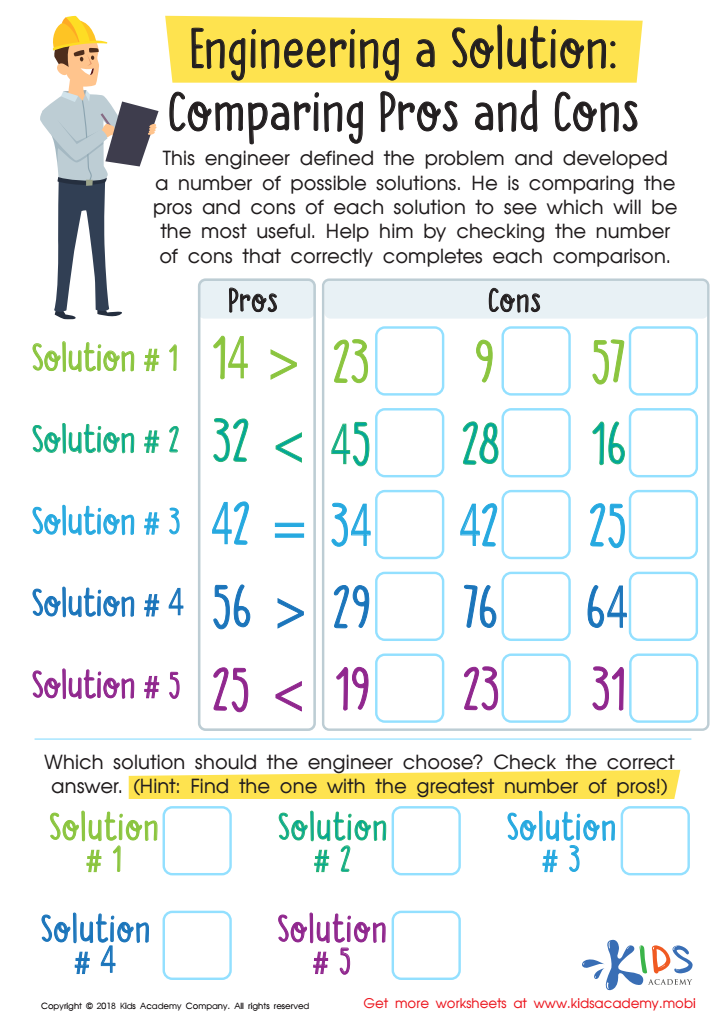
Engineering a Solution: Comparing Pros and Cons Worksheet
 Assign to My Students
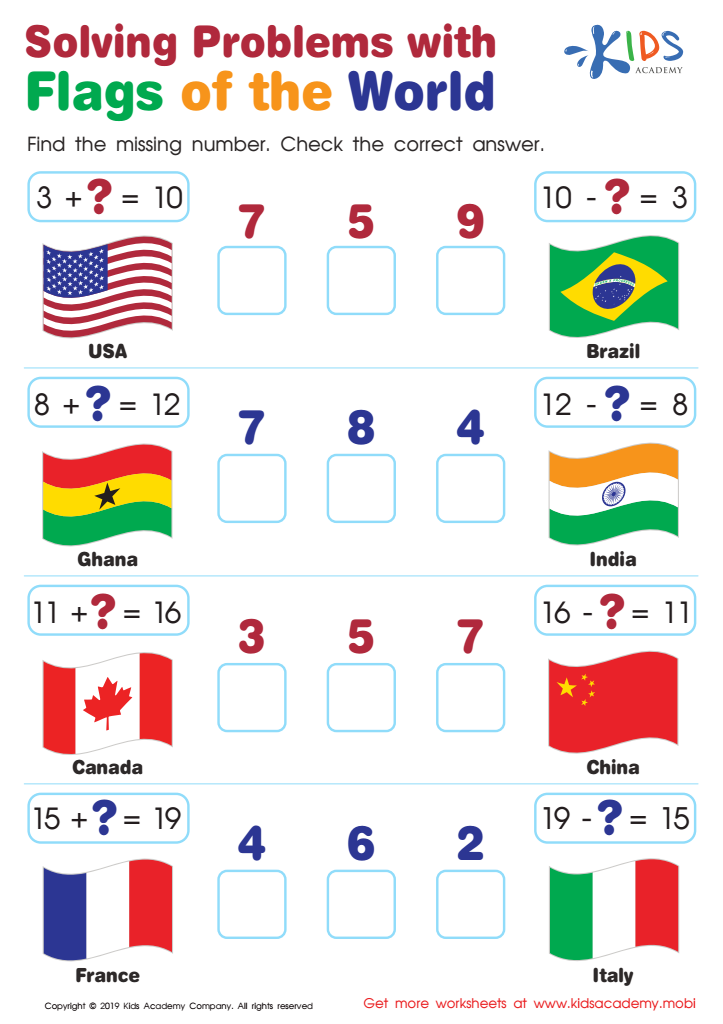
Solving Problems with Flags of the World Worksheet
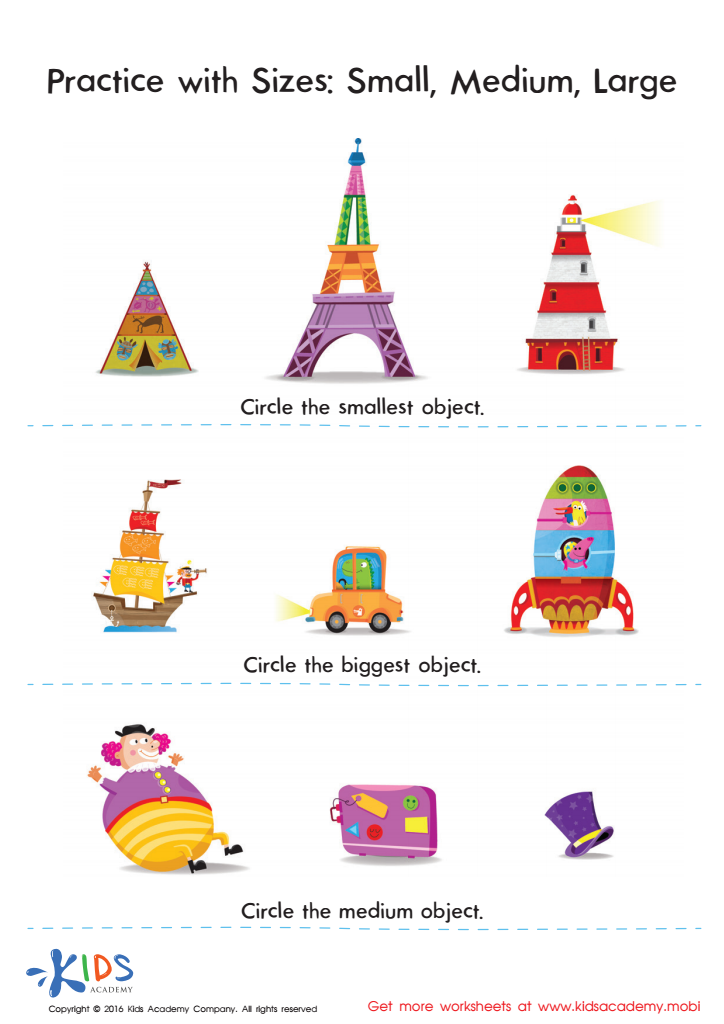








Parents and teachers should prioritize understanding Comparative Analysis in normal math for ages 6-9 because it lays a foundational skill set critical for a child's cognitive development. At this age, children develop the ability to compare different values and make connections between numbers, which enhances logical reasoning and critical thinking skills. Understanding concepts like "greater than," "less than," and "equal to" nurtures their ability to recognize patterns and relationships, assisting in problem-solving.
Moreover, a strong grasp of comparative analysis can improve a child's math fluency and comprehension, allowing them to tackle more advanced mathematical concepts down the road. This skill also boosts their confidence, as they can engage actively in classroom activities and discussions. Incorporating comparative analysis in regular math education supports varied learning styles, enabling both visual and auditory learners to gain a more profound understanding of integer relationships.
Additionally, parental involvement in fostering these skills maximizes a child’s educational success. Engaging in comparative discussions at home encourages a culture of continuous learning and inquisitiveness. Such a foundation empowers our youth to navigate a world increasingly driven by data and analytical reasoning, ultimately leading to informed and capable individuals.








