Enhancing observation skills Normal Math Worksheets for Ages 6-9
5 filtered results
-
From - To
Enhance your child's observational skills with our expertly designed Normal Math Worksheets for ages 6-9. These engaging printables are crafted to sharpen attention to detail while bolstering essential early math skills. Each worksheet presents fun, educational challenges that require keen observation to solve math problems and recognize patterns. Perfect for young learners, these activities make learning enjoyable while fostering critical thinking and improving concentration. Boost your child's confidence in math with tasks specifically tailored to develop their abilities in a structured yet stimulating environment. Visit Kids Academy and help your child flourish in their mathematical journey with our comprehensive worksheets.
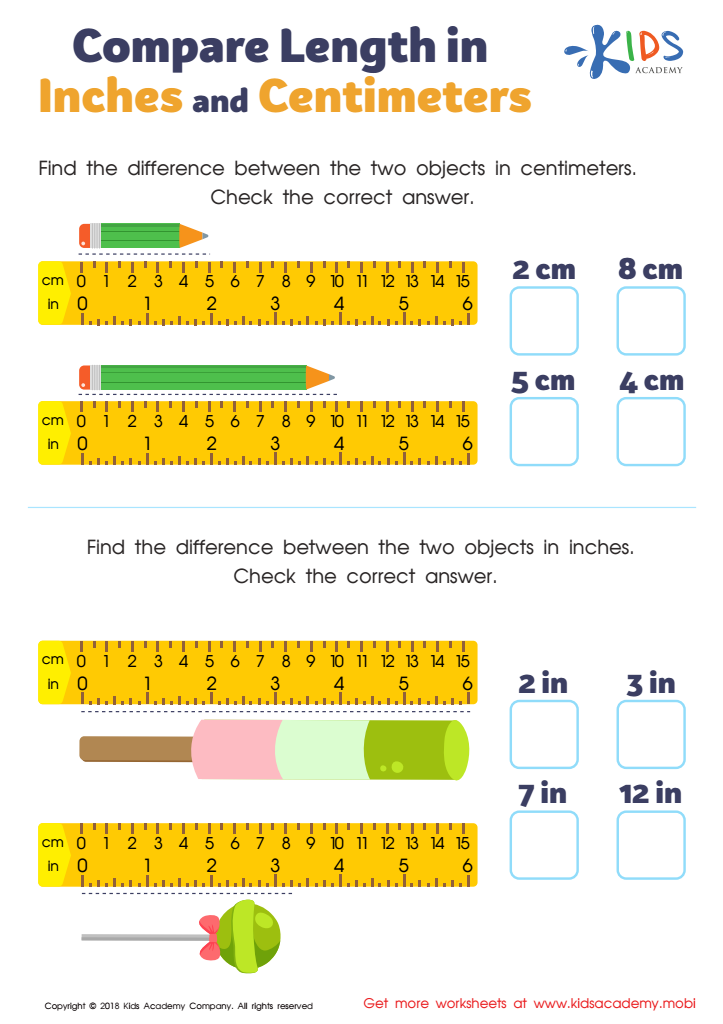
Compare Length in Inches and Centimeters Worksheet
 Assign to My Students
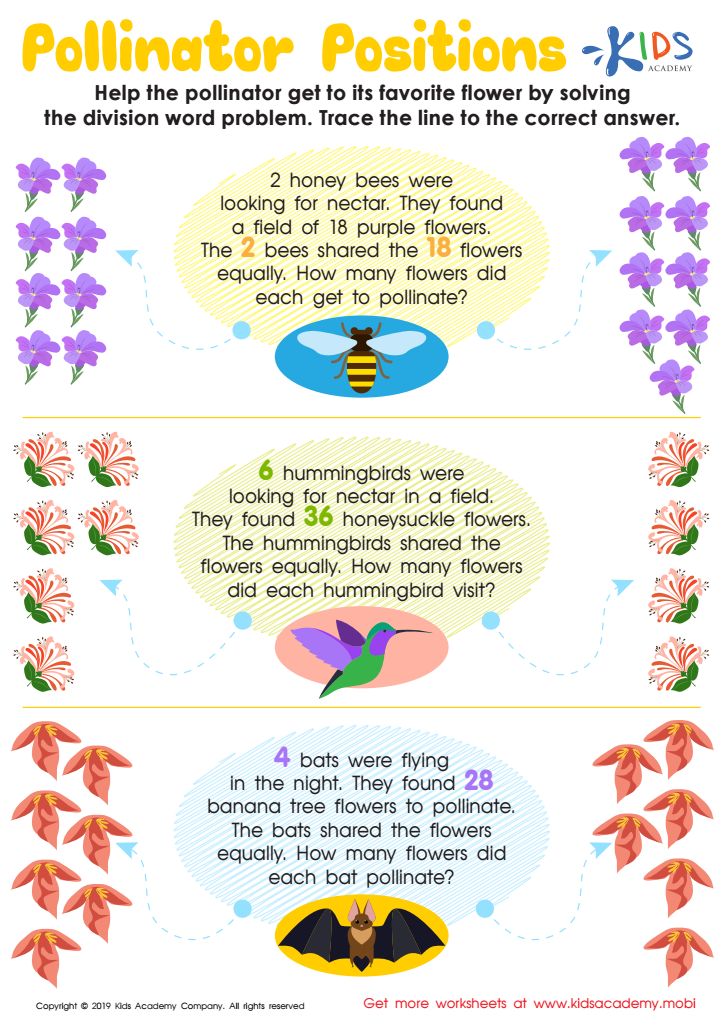
Pollinator Positions Worksheet
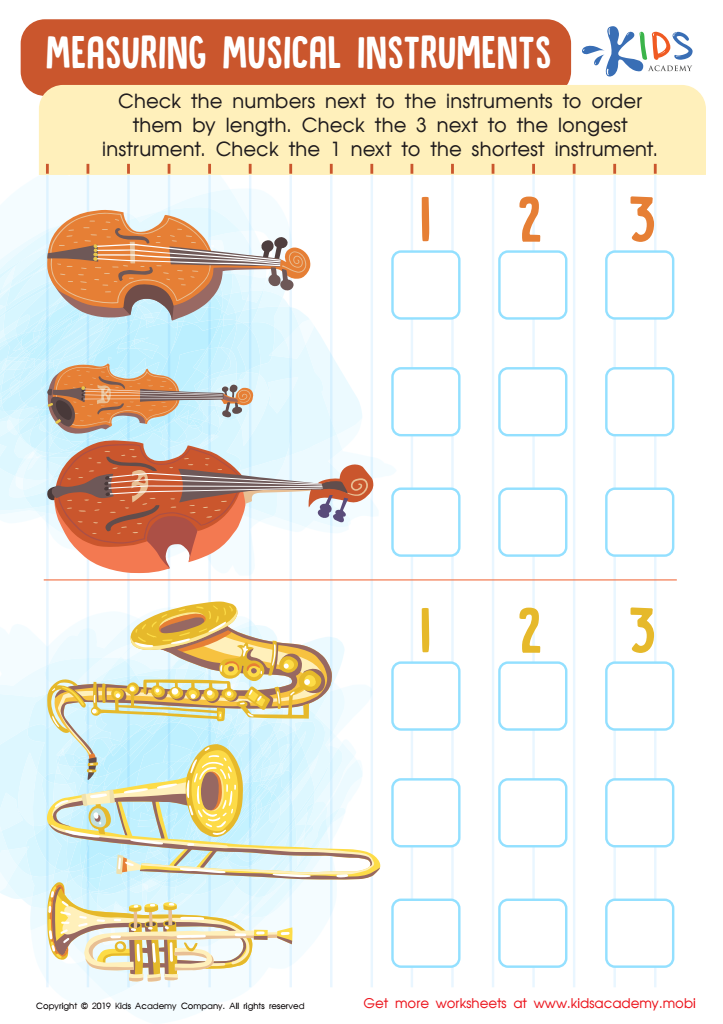
Measuring Musical Instruments Worksheet
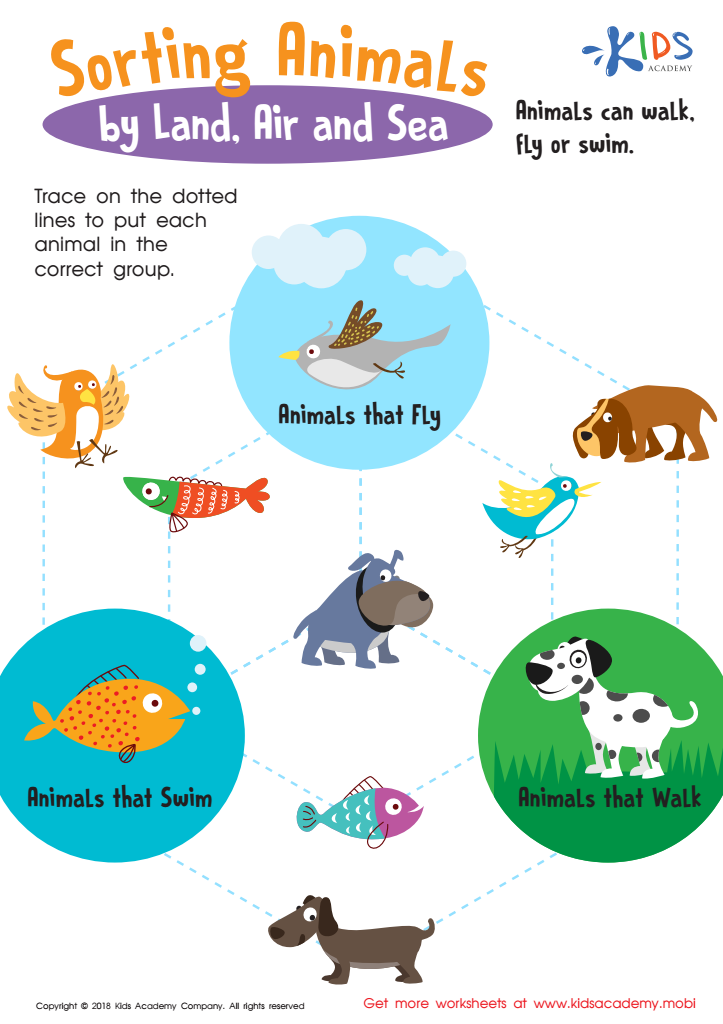
Sorting Animals by Land, Air and Sea Worksheet
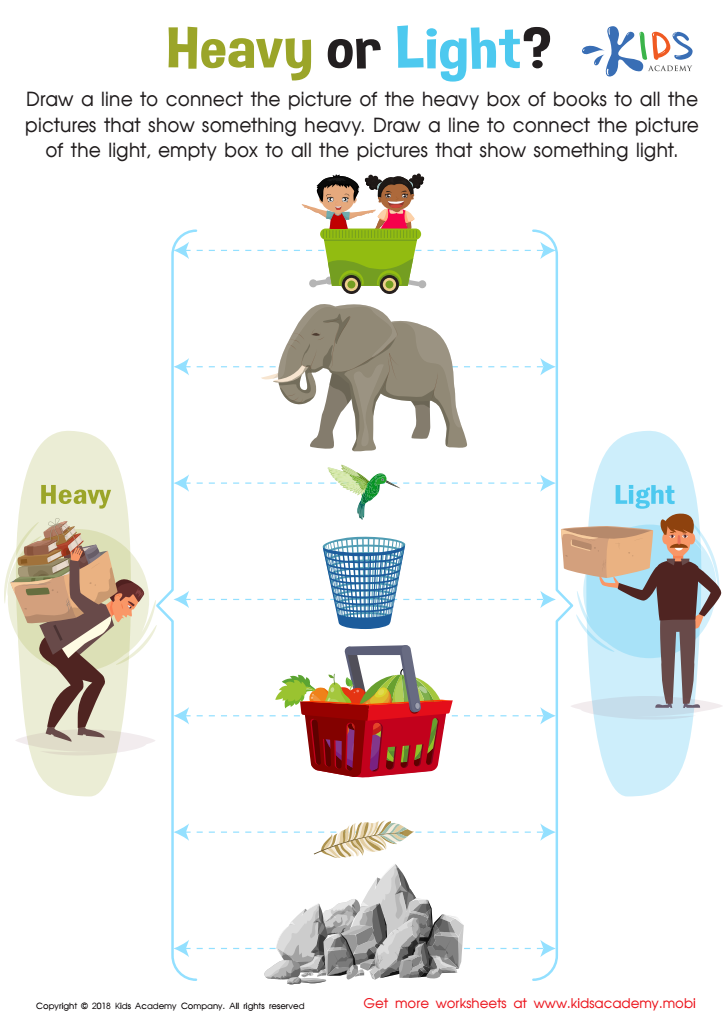
Heavy or Light? Worksheet








Enhancing observation skills in children ages 6-9 is essential because it lays a critical foundation for their overall learning and cognitive development. For example, in mathematics, being observant allows children to notice patterns, understand spatial relationships, and grasp fundamental concepts more quickly. Observation skills enable children to pay attention to details and make sense of the problems they are tasked with solving, which directly impacts their ability to comprehend more complex ideas as they progress in their education.
In addition, enhanced observation skills help children learn to analyze their environment critically. These skills are not only beneficial for math but also for everyday problem-solving and decision-making. Children who are observant are better at noticing and understanding non-verbal cues, identifying the steps in various processes, and discovering relationships between different elements in a scenario. This acute awareness enhances their social skills, supports their creativity, and strengthens their ability to make connections across different areas of study.
Parents and teachers play a pivotal role in fostering these skills by providing opportunities for children to explore and by encouraging them to ask questions and express what they observe. Games, puzzles, hands-on activities, and interactive learning tools can make observing an engaging and educational process, thereby promoting better academic and personal growth.








