
Fine motor skills (writing numbers) Normal Math Worksheets for Ages 6-9
3 filtered results
Difficulty Level
Grade
Age
-
From - To
Subject
Activity
Standards
Our "Fine Motor Skills (Writing Numbers)" math worksheets are designed to enhance handwriting capabilities and number formation for children aged 6-9. These engaging activities help fine-tune motor skills, ensuring precise control over writing instruments. Perfect for early graders, the worksheets incorporate numeracy exercises that instill foundational math concepts while boosting coordination and hand strength. With a variety of fun, educational printables, children will trace and write numbers, gradually mastering the art of neat numerical handwriting. Equip your child with the skills they need for success in math and beyond with our carefully crafted worksheets.
Favorites
With answer key
Interactive
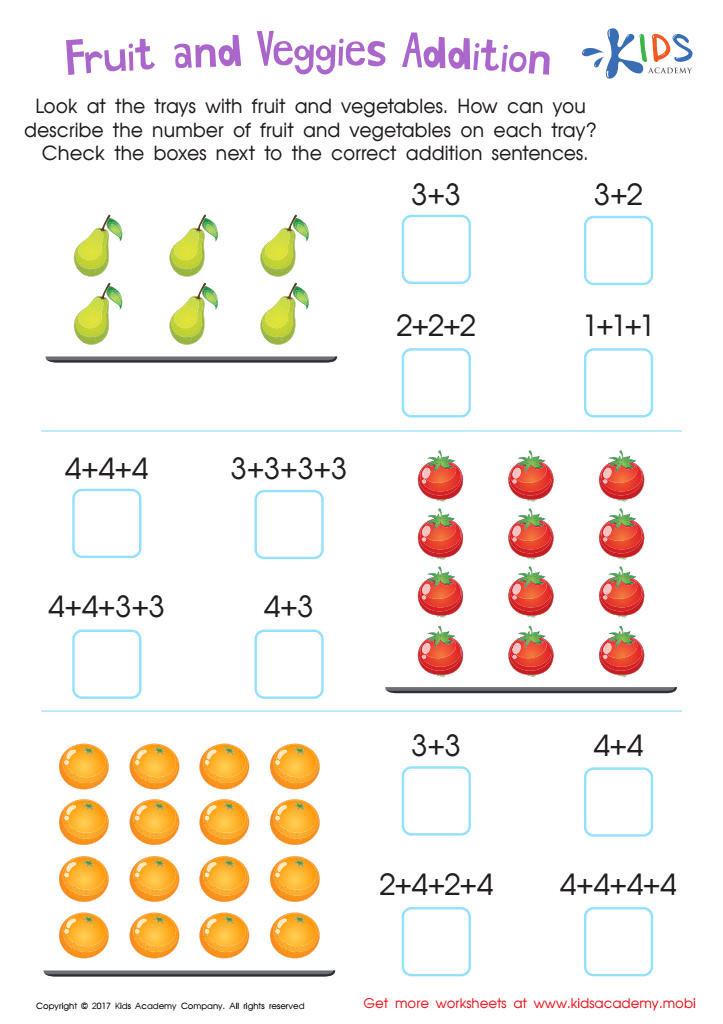
Fruit and Veggies Worksheet
It promotes problem-solving and analytical skills as kids match pictures to correct addition sentences. Help your child go beyond simple addition with this PDF worksheet!
 Assign to My Students
Fruit and Veggies Worksheet
Worksheet

Finding 4 in the Forest Worksheet
Before starting, have your kids count as high as they can. Ask them to identify the setting and point out the 4s. Trace 4 and draw your own. Help your kids circle all the 4s they can find in the forest. How far can they count? How well did they find the hidden 4s?
Finding 4 in the Forest Worksheet
Worksheet
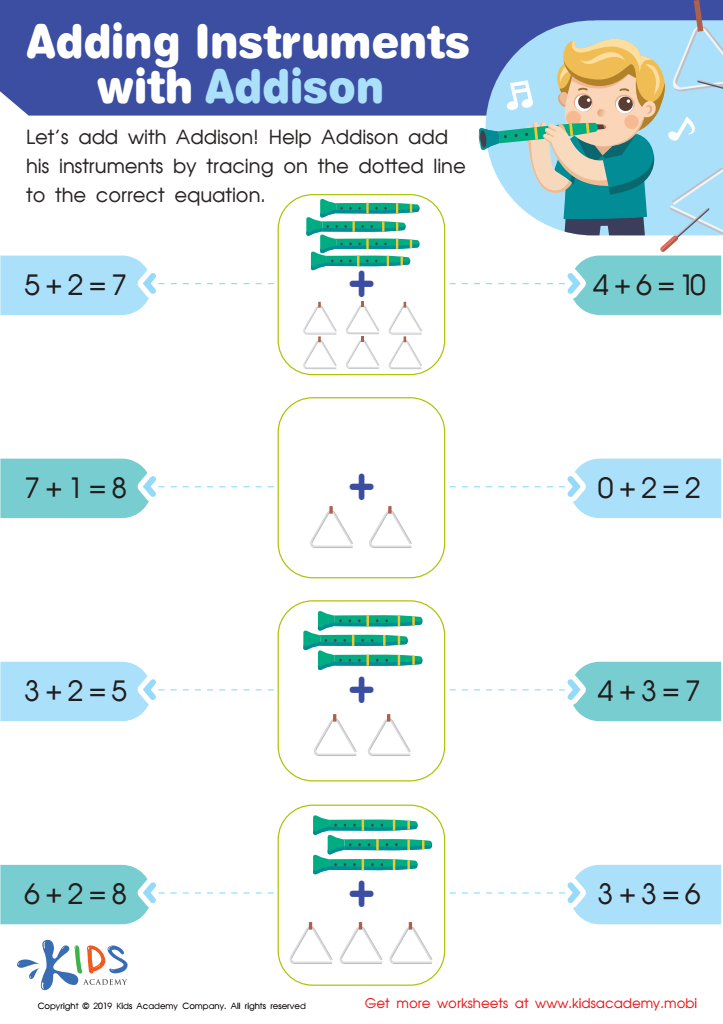
Adding Instruments with Addison Worksheet
Your math stars will enjoy assisting Addison as he adds his instruments. This worksheet has 10 basic addition problems with pictures of instruments to aid children. They match the pics and sentences, then connect them to the correct problem using the lines. A fun way to learn and practice addition!
Adding Instruments with Addison Worksheet
Worksheet
Join Kids Academy for Free
Who is primarily going to use this learning content?








Fine motor skills, which involve the coordination of small muscles in tasks like writing, are critical for children aged 6-9 as they directly impact academic and everyday activities. Developing fine motor skills, including the ability to write numbers neatly and accurately, lays a strong foundation for mathematical learning and overall educational progress.
Firstly, writing numbers correctly is essential for math accuracy. Miswritten digits can lead to calculation errors and misunderstandings in problem-solving. Mastery in writing ensures that children can clearly communicate their mathematical thinking, fostering better teacher assessments and peer interactions.
Improvement in fine motor skills also boosts a child’s confidence and independence. Tasks like pencil grip, paper placement, and fine motor dexterity lead to better handwriting quality, which in turn enhances overall academic performance across subjects. These skills support other daily activities such as tying shoelaces, buttoning clothes, and using utensils, adding practical value beyond the classroom.
Additionally, fine motor practice encourages perseverance and focus, attributes crucial for later academic and personal success. By nurturing fine motor development, parents and teachers help children gain precision and control, establishing key competencies that contribute to a child's holistic development and paving the way for lifelong learning and adaptability.








