Matching skills Normal Math Worksheets for Ages 6-9
7 filtered results
-
From - To
Enhance your child's learning experience with our Matching Skills Normal Math Worksheets, designed specifically for ages 6 to 9. These engaging and interactive worksheets promote essential cognitive abilities through fun matching activities that strengthen number recognition, visual discrimination, and reasoning skills. Perfect for reinforcing classroom lessons or keeping young learners engaged at home, these worksheets are tailored to captivate budding mathematicians. Each worksheet features colorful illustrations and varied exercises, making math both enjoyable and educational. Help your child build a strong foundation in math with our thoughtfully crafted resources, available for instant download and easy printing. Start matching today!
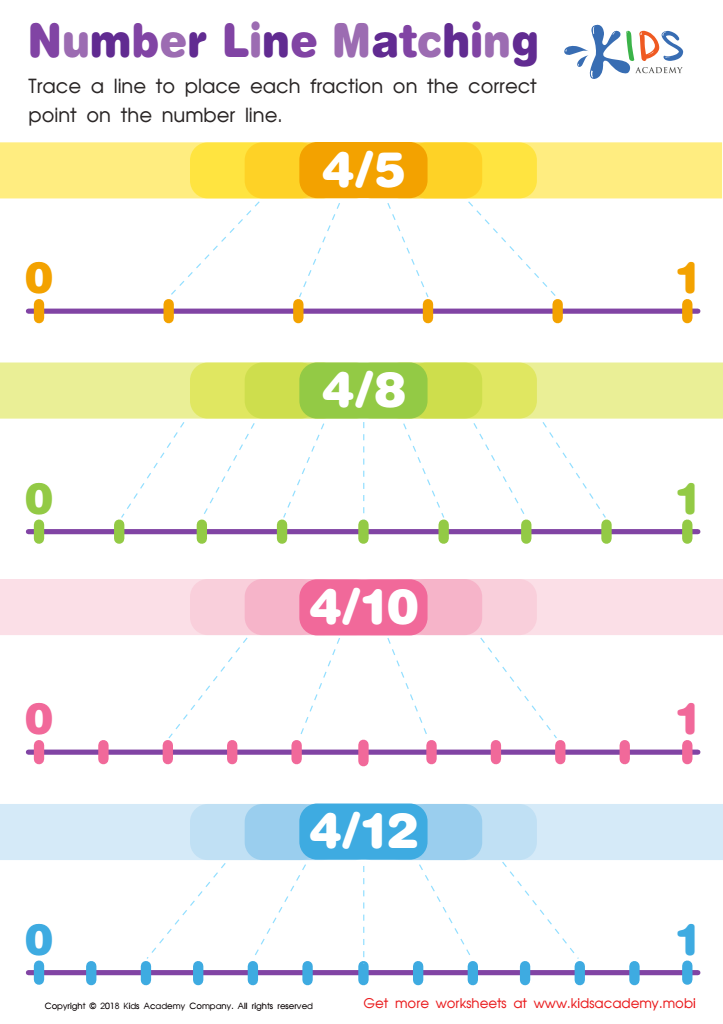
Number Line Matching Worksheet
 Assign to My Students
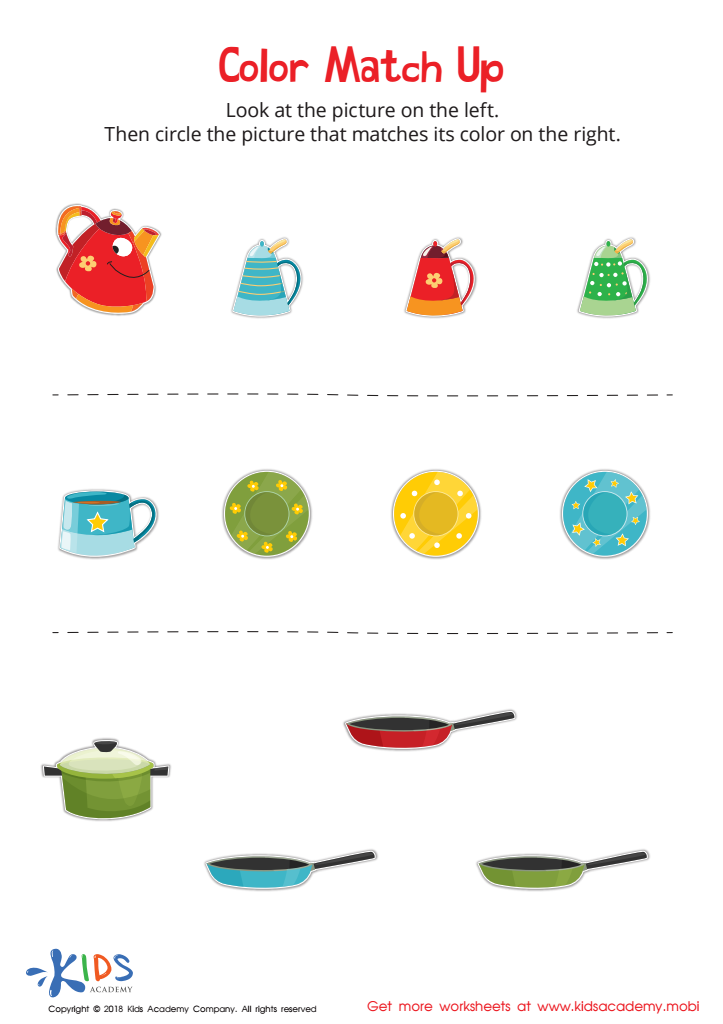
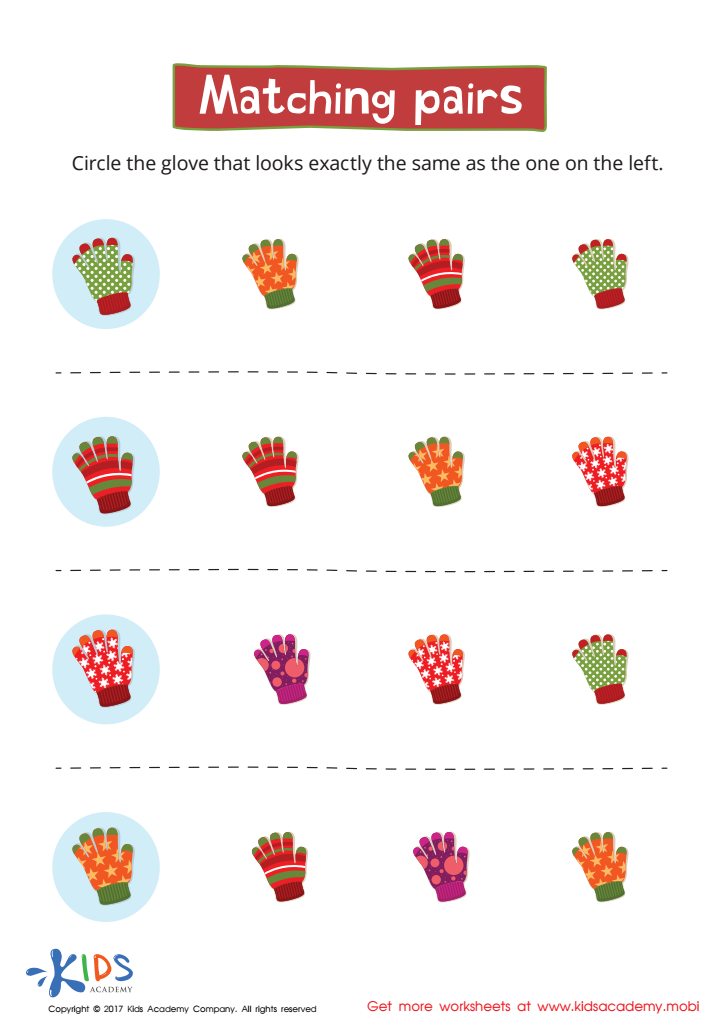
Matching: Matching Pairs Worksheet
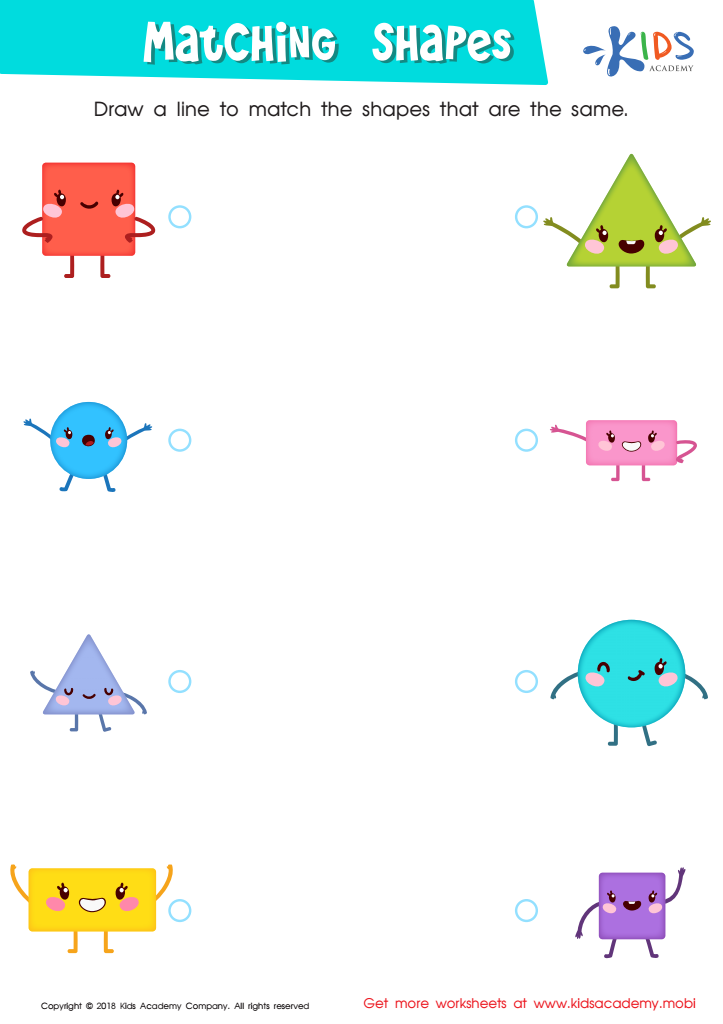
Matching Shapes Worksheet
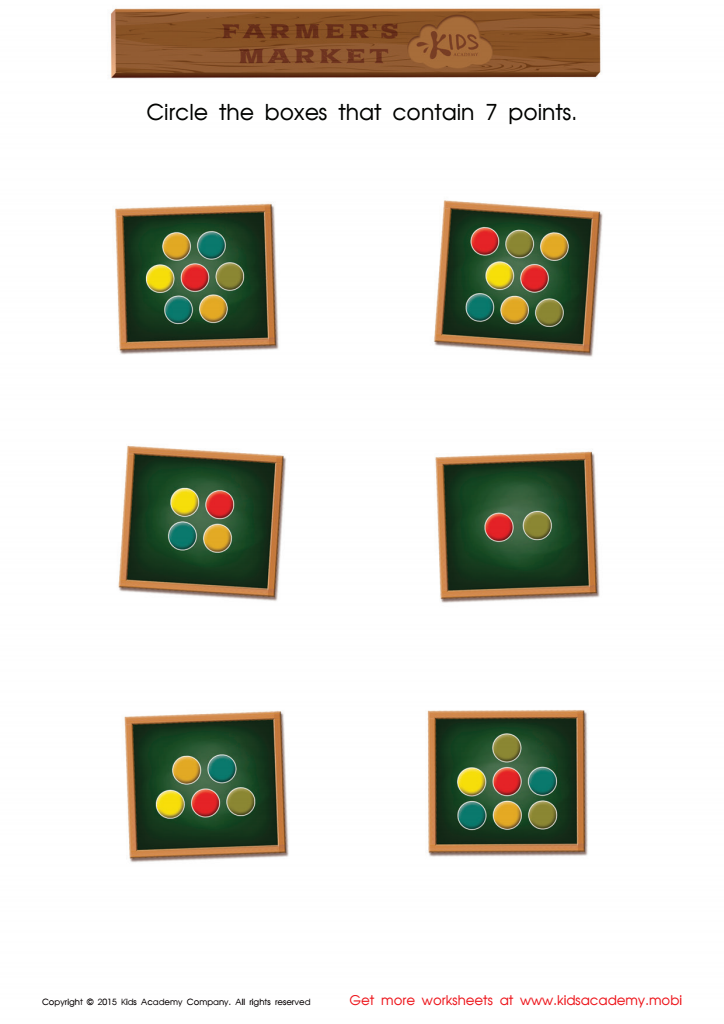
Count and Match Points 7 Math Worksheet
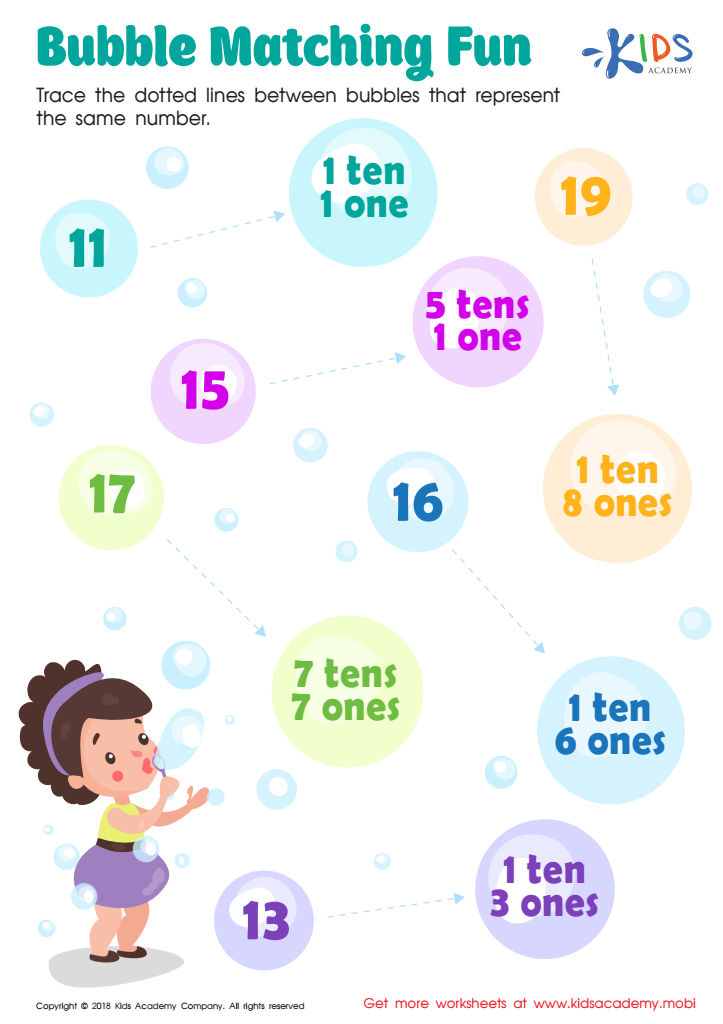
Bubble Matching Fun Worksheet
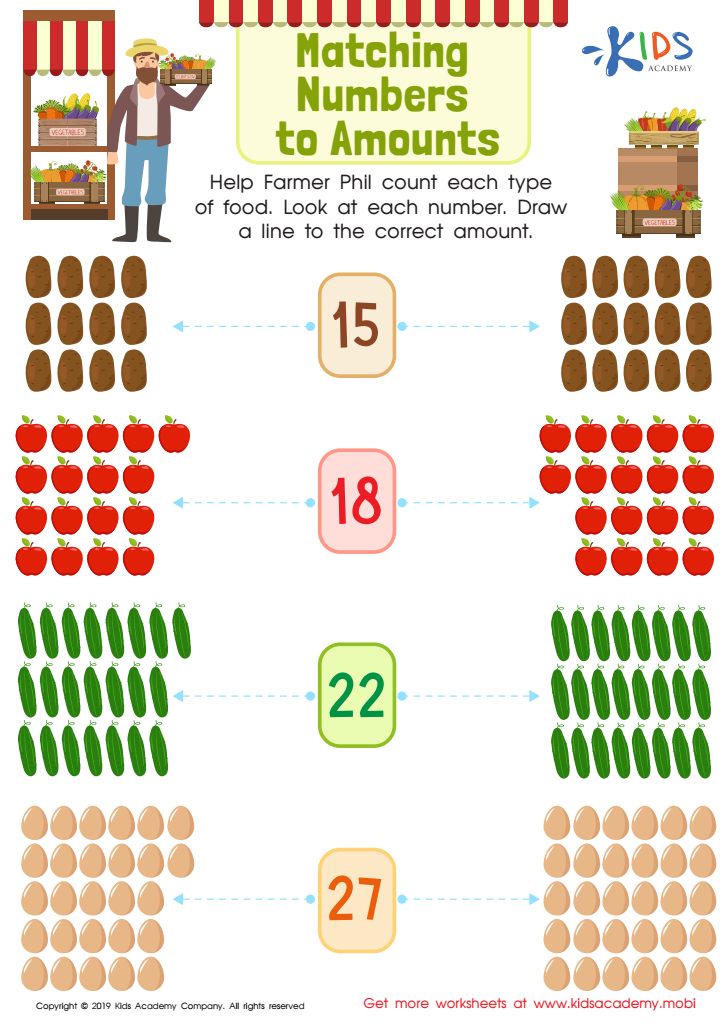
Matching Numbers to Amounts Worksheet





Parents and teachers should prioritize matching skills in the context of normal math for children aged 6-9 because these skills serve as a foundational element for more complex mathematical concepts. At this developmental stage, children experience cognitive growth that allows them to recognize patterns and relationships, crucial for their understanding of numbers and operations.
Matching skills, which involve pairing similar items or identifying relationships among numbers, enhance critical thinking and problem-solving abilities. By engaging children in activities that involve matching shapes, quantities, or even simple equations, educators and parents foster a sense of numerical confidence. This can reduce math anxiety and make learning enjoyable.
Additionally, mastering matching skills supports early literacy in math. Recognizing and categorizing help children make sense of mathematical concepts and develop effective techniques for estimation and measurement. Reinforcing these skills at home or in school ensures that children build the necessary momentum to tackle more challenging math topics as they progress.
Overall, by caring about matching skills, parents and teachers contribute to creating a robust mathematical foundation, encouraging lifelong positive attitudes towards math and enhancing academic performance in future grades.








