Reading analog clocks Normal Math Worksheets for Ages 6-9
3 filtered results
-
From - To
Help your child master the art of telling time with our "Reading Analog Clocks" worksheets, designed specifically for kids aged 6 to 9. These engaging and interactive worksheets from Kids Academy offer a hands-on approach to learning how to read traditional clocks. With vibrant illustrations and easy-to-follow instructions, children will build confidence in identifying hours and minutes, enhancing their time-telling skills. Perfect for both home and classroom use, our worksheets make learning fun while laying a strong foundation for future math success. Download now and watch your child's understanding of time flourish!
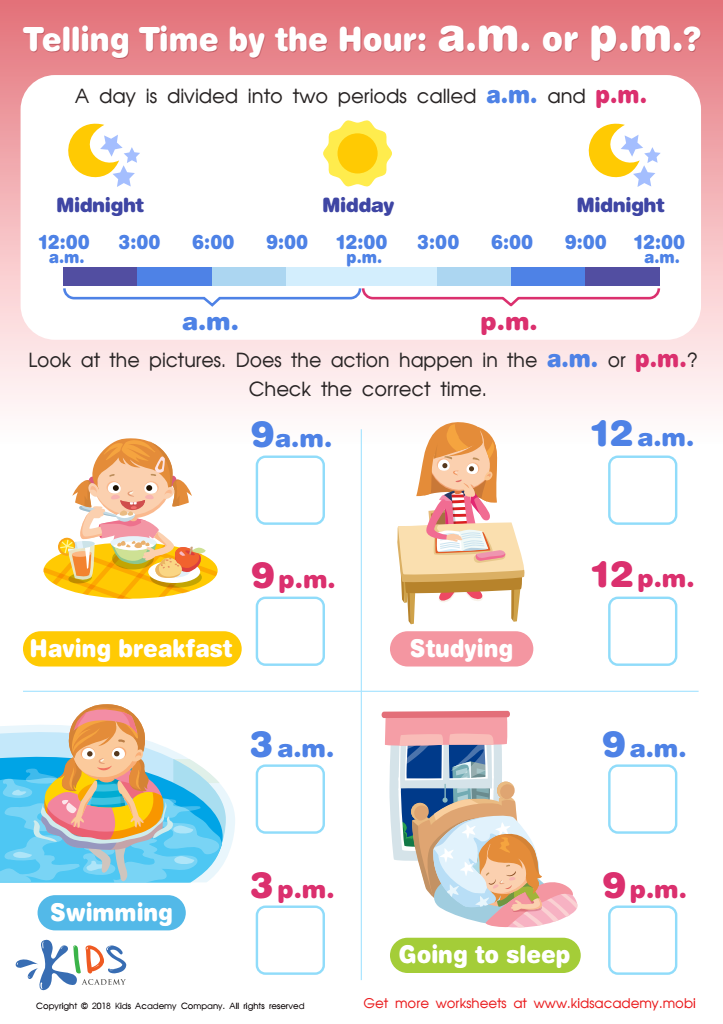
Tilling Time by the Hour: a.m. or p.m.? Worksheet
 Assign to My Students
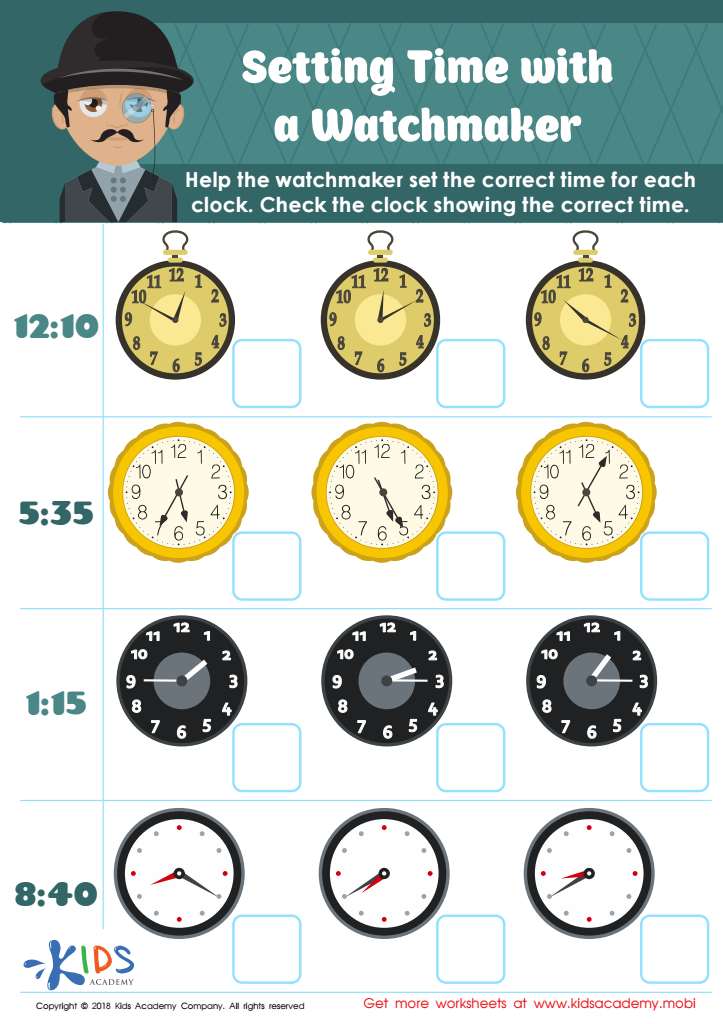
Setting Time with Watchmaker Worksheet
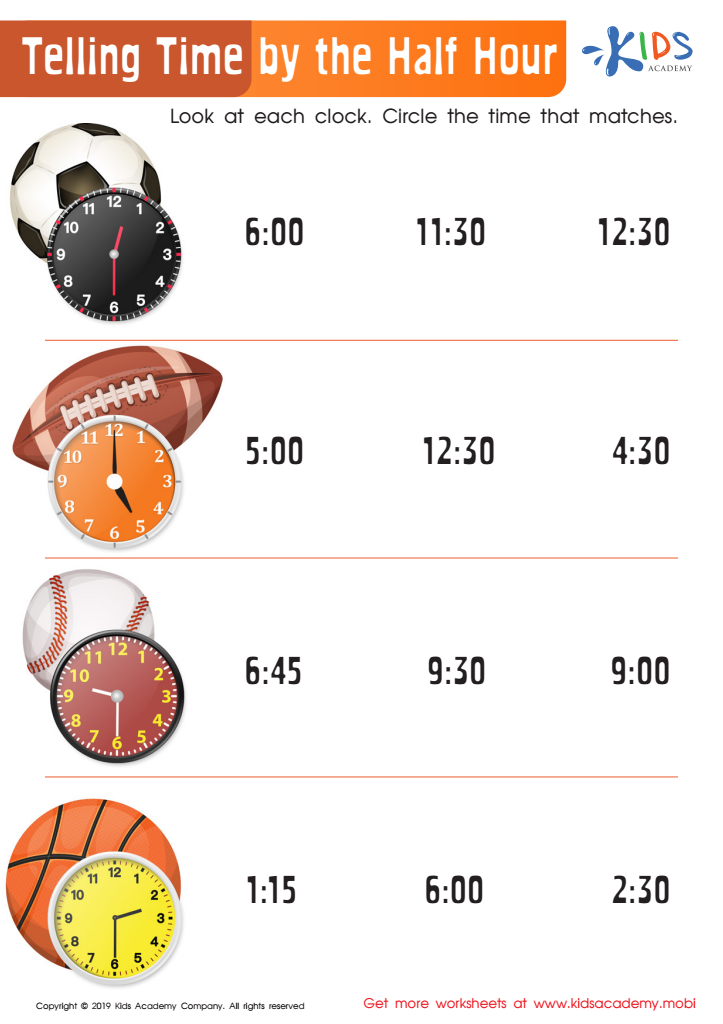
Telling Time by the Half Hour Worksheet







Understanding how to read analog clocks is a fundamental skill for children ages 6-9, integrating both practical and cognitive benefits. For parents and teachers, ensuring that children grasp this skill is crucial for several reasons.
Firstly, reading analog clocks helps develop a child's number sense and their ability to understand time concepts. This foundational math skill not only aids in daily routines—such as knowing when it's time to go to school or play—but also strengthens their capacity to comprehend more complex time-related concepts as they grow, like elapsed time and scheduling.
Secondly, analog clocks teach children about the passage of time in a visual and tactile way that digital clocks do not. By manipulating the hands of the clock, children can physically see the movement of time, which helps improve their spatial reasoning and fine motor skills.
Furthermore, learning to read analog clocks reinforces attentiveness to detail and patience, as children must pay close attention to both the hour and minute hands. This practice builds focus and endurance, traits that are beneficial in all areas of education.
Moreover, reading analog clocks connects kids to historical and cultural aspects of timekeeping, enriching their overall knowledge and understanding of the world. Thus, teachers and parents play a crucial role in ensuring children master this timeless, essential skill.








