Shape identification Normal Math Worksheets for Ages 6-9
6 filtered results
-
From - To
Unlock your child's potential with our Shape Identification Normal Math Worksheets designed for ages 6-9. These engaging worksheets help young learners master the fundamentals of shapes, fostering essential geometry skills and spatial awareness. Developed by the educational experts at Kids Academy, each worksheet offers an interactive and enjoyable way to recognize, identify, and draw various shapes. Perfect for classroom or at-home practice, our highly-structured activities ensure comprehensive understanding. Boost your child’s confidence in math and support their overall academic success with our top-tier worksheets, making learning both fun and effective.
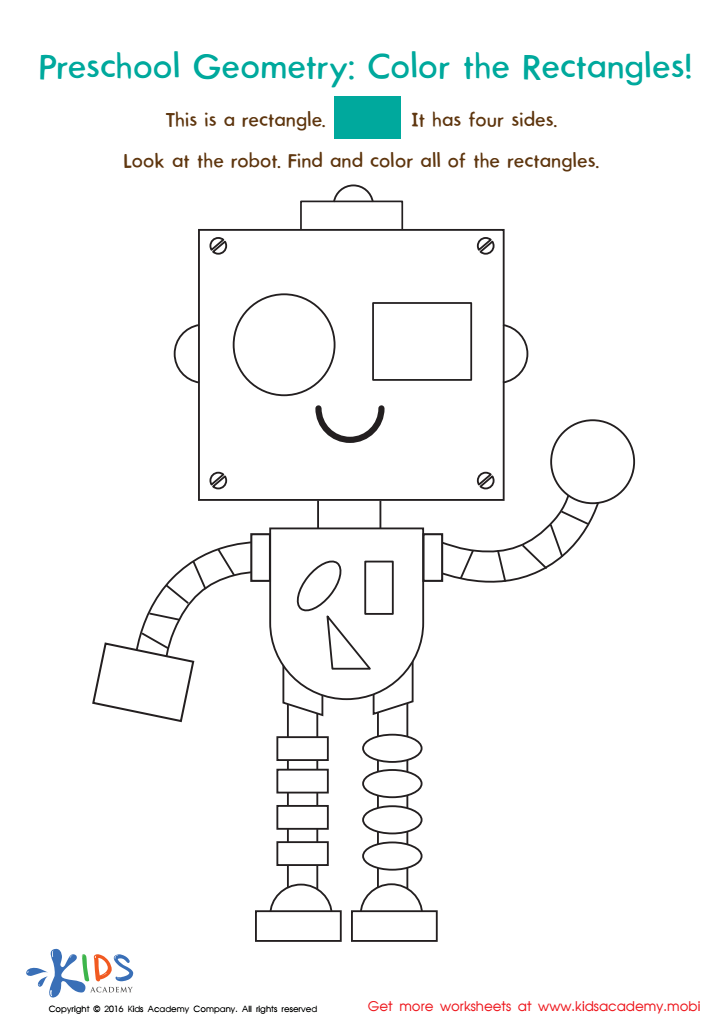
Geometry Worksheet
 Assign to My Students
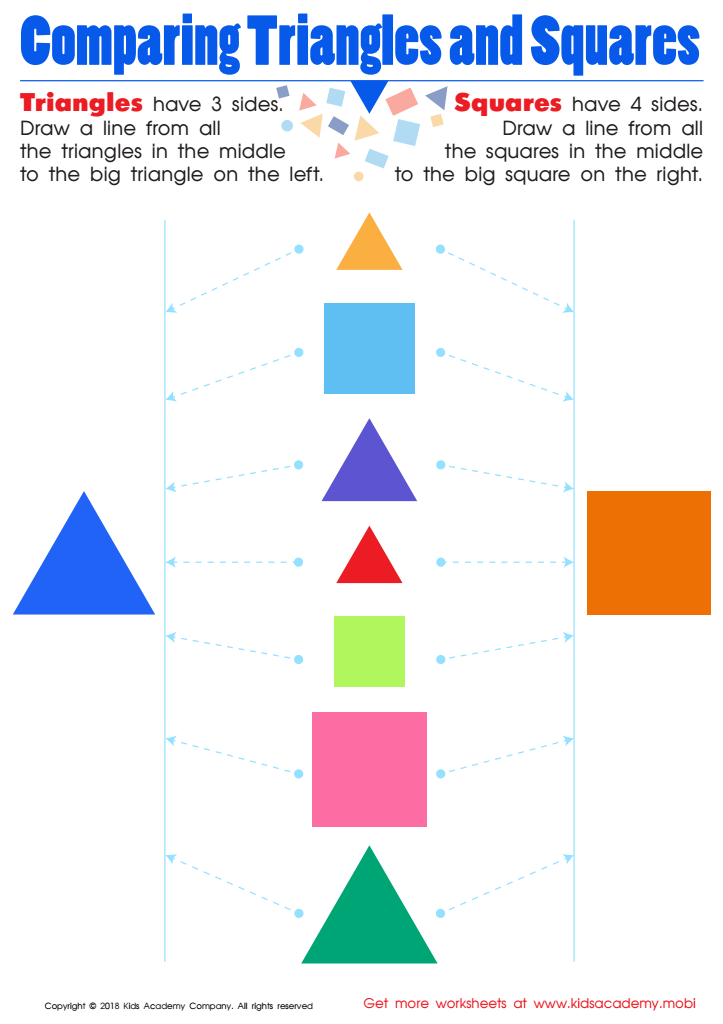
Comparing Triangles Squares Worksheet
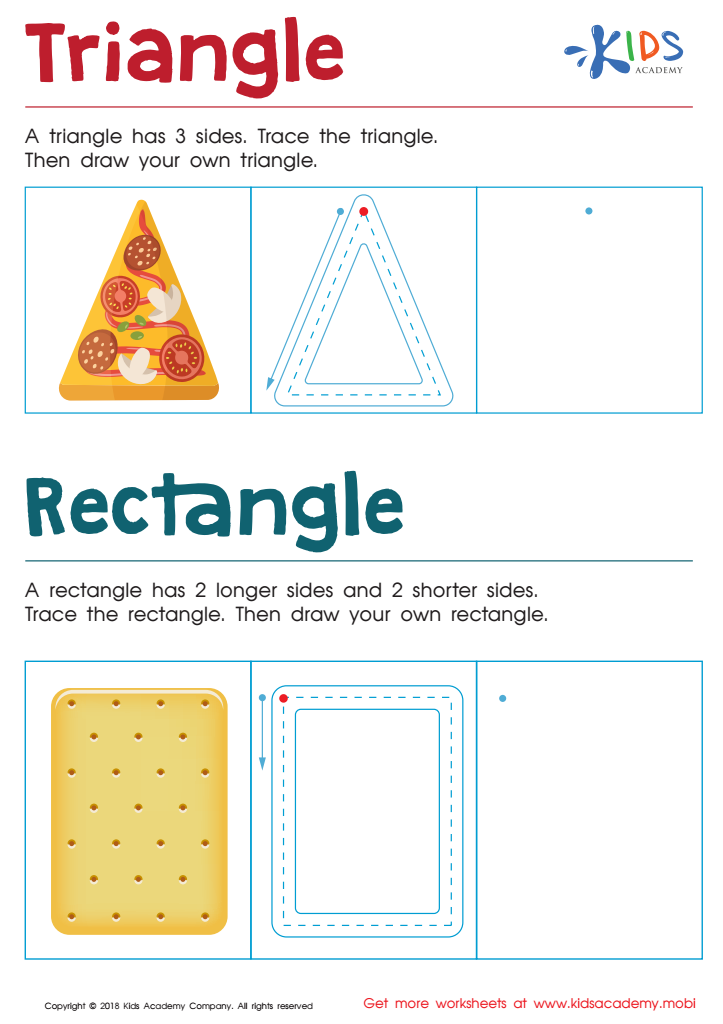
Triangle Rectangle Worksheet
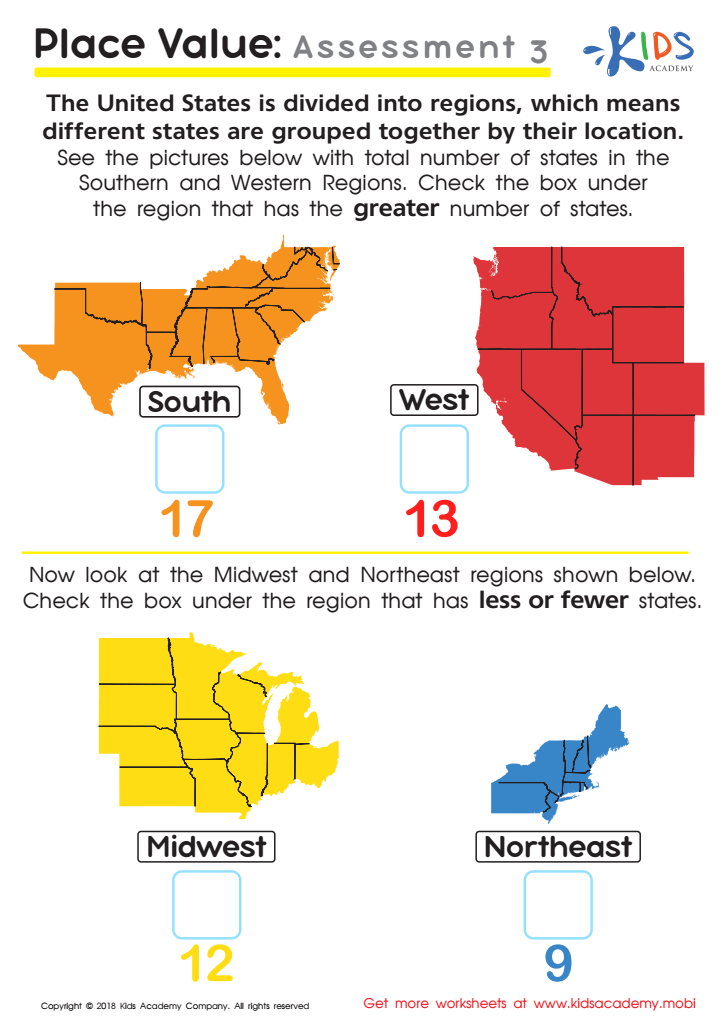
Place Value: Assessment 3 Worksheet
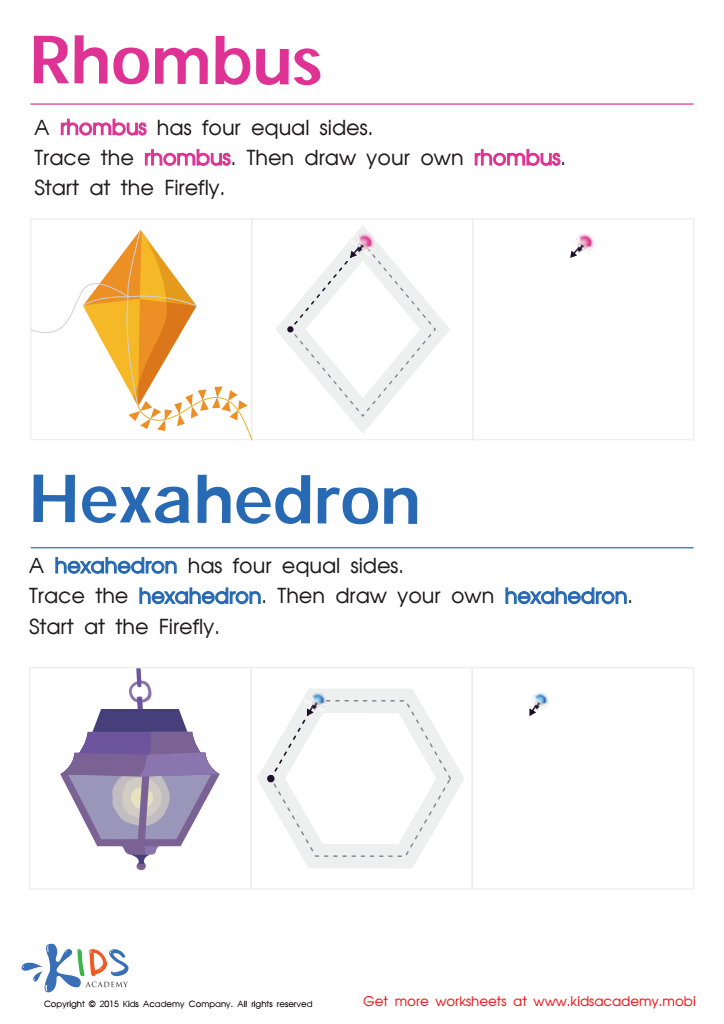
Draw a Rhombus And a Hexahedron Printable
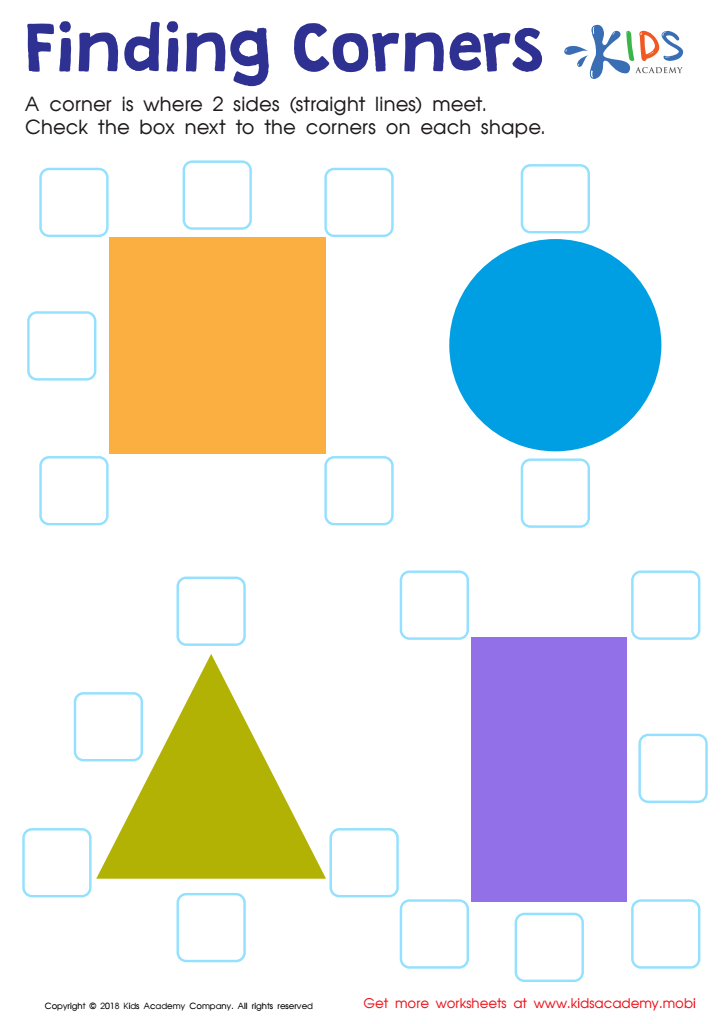
Finding Corners Worksheet








Shape identification in early-grade math is crucial for the foundational cognitive and academic development of children aged 6-9, making it essential for parents and teachers to understand its significance. Firstly, recognizing shapes helps young students improve their spatial awareness—an important skill for everyday activities such as navigating spaces or understanding maps. This awareness supports more complex skills later in life, such as geometry, which is fundamental in various fields including engineering and art.
Furthermore, the ability to identify and describe shapes strengthens language skills. When children describe shapes, they use specific vocabulary (like "sides," "corners," and "angles"), enhancing their descriptive and communicative abilities.
Shape identification also promotes logical thinking and problem-solving. When children differentiate shapes and notice their attributes, they engage in analytical thinking—skills critical for overall learning and development.
Moreover, these activities often involve hands-on manipulation of shapes (cutting, stacking, patterning), supporting fine motor skill development. Matching or grouping shapes can enhance organizational skills and attention to detail.
Parents and teachers who prioritize shape identification help equip children with a wide range of skills that extend beyond the math classroom. This balanced approach nurtures both cognitive and motor skills, fostering all-round educational growth and setting the stage for future academic and life success.








